

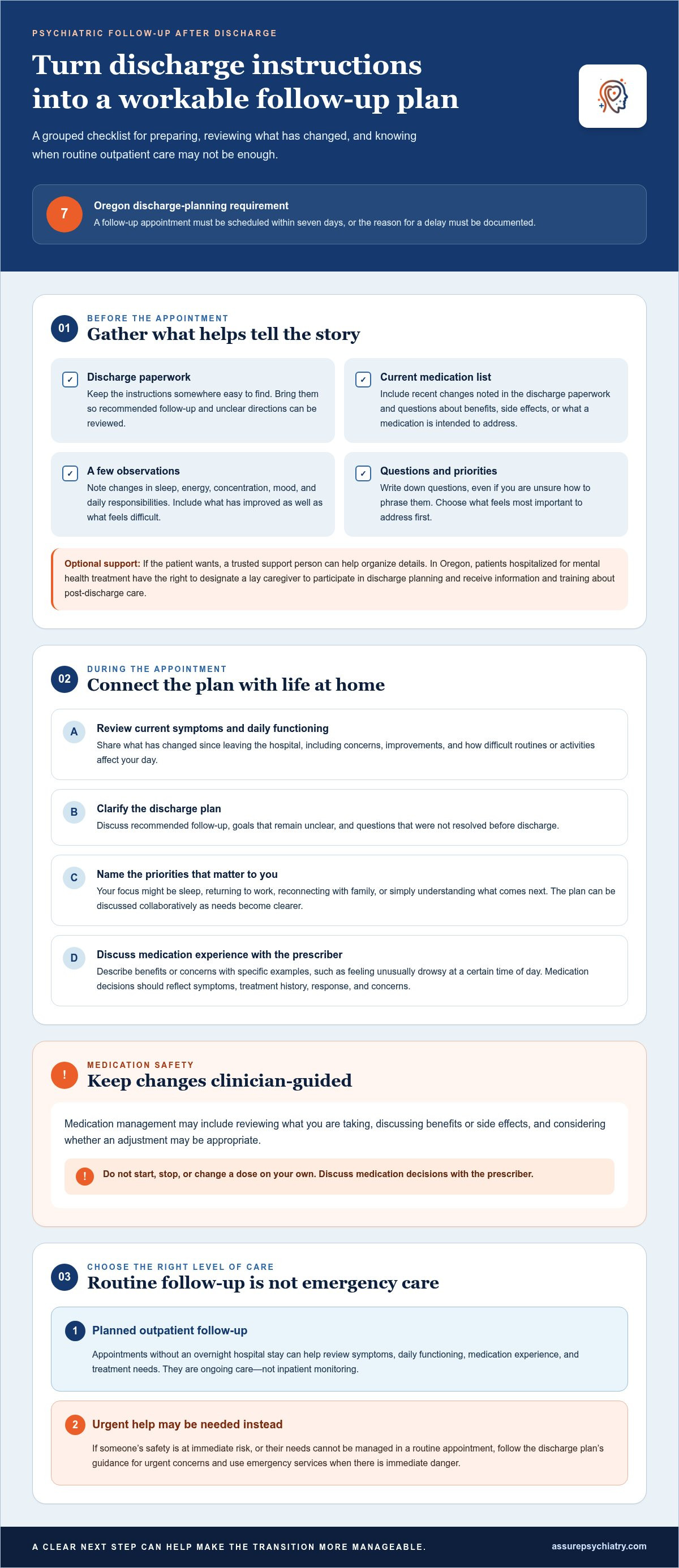
What should happen after the hospital door closes and you’re back home? If you’re looking for follow up care after psychiatric hospitalization Portland, it’s understandable to feel unsure about who to contact, what medication changes mean, or how to turn discharge instructions into a plan. The transition can feel like a lot to manage, but outpatient follow-up can help clarify the next steps. In Oregon, hospital discharge planning requires a follow-up appointment to be scheduled within seven days, or the reason for a delay to be documented.
A steady transition home starts with care that reflects your current needs and safety. This article explains what outpatient follow-up may address, how a psychiatric evaluation and medication management can support ongoing care, and what to gather before an appointment. You’ll also find practical ways to organize discharge instructions, learn about in-person and virtual outpatient visits in Portland, and understand when routine follow-up may not be enough and urgent help is needed. You don’t have to solve everything at once; one clear next step can help you move forward.
Key Takeaways
- Learn what a psychiatric follow-up can cover, from current symptoms and medication experience to priorities for ongoing care.
- Prepare for your appointment by organizing discharge paperwork, noting questions, and planning visit logistics.
- Understand when a planned outpatient visit may help and when urgent support is needed instead.
- Explore how follow up care after psychiatric hospitalization Portland can include an outpatient evaluation and ongoing medication management.
- See how Assure Psychiatry’s in-person and virtual appointments can support an individualized plan for next steps.
Why follow-up care after psychiatric hospitalization matters in Portland
Leaving the hospital can bring relief, but you may also feel tired, uncertain, or unsure how to put the discharge plan into practice. Follow-up care is planned outpatient support after discharge. It gives you and a clinician an opportunity to review how you’re doing, revisit treatment goals, and discuss questions that weren’t resolved before you left. It isn’t a continuation of inpatient monitoring, and you aren’t expected to manage every next step alone.
For people seeking follow up care after psychiatric hospitalization Portland, practical details matter as much as the appointment itself. The plan depends on the discharge instructions, current symptoms, treatment history, and individual clinical needs. One person may need to review a medication change; another may want help clarifying follow-up appointments or deciding which concerns to raise first. There isn’t one discharge experience or plan that fits everyone.
What changes when someone leaves psychiatric hospitalization?
In the hospital, care is structured around close support and regular contact with the treatment team. At home, more day-to-day tasks shift to the person and the people they choose to involve. Reestablishing routines can take time, especially after an intense period of care. A Psychiatric hospital can provide a general overview of these settings, but each person’s transition home is shaped by their circumstances.
Discharge may bring several tasks at once: understanding written instructions, following a medication plan, arranging appointments, rebuilding sleep or meal routines, and identifying whom to contact with questions. If the patient wants, a trusted support person can help organize these details. In Oregon, patients hospitalized for mental health treatment have the right to designate a lay caregiver to participate in discharge planning and receive information and training about post-discharge care.
It’s reasonable if the plan feels like a lot to remember. Keep the discharge paperwork somewhere easy to find and focus first on the steps identified by the hospital team. If an instruction is unclear, write down the question and raise it with the appropriate clinician.
What does outpatient follow-up mean?
Outpatient psychiatric care takes place through appointments without an overnight hospital stay. A clinician can discuss current symptoms, daily functioning, medication experience, and treatment needs, then consider which steps make sense. Sharing changes since discharge, including concerns and improvements, makes the conversation more specific. The purpose is to continue care in a setting suited to your current needs, not to assume the hospital’s plan must remain unchanged.
Planned outpatient follow-up supports ongoing care; it isn’t emergency care or inpatient monitoring. If someone’s safety is at immediate risk or their needs can’t be managed in a routine appointment, they may need urgent help instead. Follow the discharge plan’s guidance for urgent concerns, and use emergency services when there’s immediate danger.
What psychiatric follow-up appointments can address after discharge
A follow-up appointment is a chance to make the discharge plan useful in everyday life, not simply repeat what happened in the hospital. You and the clinician can review current symptoms, how daily activities are going, medication experiences, and what feels most important to address next. Bring questions even if you’re not sure how to phrase them. A psychiatric evaluation can help clarify current needs and guide discussion of an individualized treatment plan, without guaranteeing a particular diagnosis or result.
Before the visit, jot down a few observations. Note changes in sleep, energy, concentration, mood, or ability to manage daily responsibilities. Include what has improved, too. These details give the clinician a fuller picture than a list of concerns alone.
Reviewing symptoms, goals, and the discharge plan
Bring the discharge instructions if you have them. You and the clinician can review recommended follow-up, discuss what has changed since leaving the hospital, and identify instructions or goals that remain unclear. If a routine or activity is still difficult, describe how it affects your day. Your priorities matter: one person may want to focus on sleep, while another may be concerned about returning to work or reconnecting with family.
It’s fine if your main goal is simply to understand what comes next. You can discuss care collaboratively and adjust the plan as your needs become clearer. For readers seeking follow up care after psychiatric hospitalization Portland, this conversation can connect recent discharge guidance with current symptoms and practical treatment priorities.
Medication follow-up and safety questions
Medication management can involve reviewing what you’re taking, discussing benefits or side effects, and considering whether an adjustment may be appropriate. Bring a current medication list, including recent changes noted in your discharge paperwork. Write down questions such as what a medication is intended to address, what effects you’ve noticed, or what to do if you’re concerned. Don’t start, stop, or change a dose on your own; discuss those decisions with the prescriber.
Medication follow-up is individualized: decisions should reflect your symptoms, treatment history, response, and concerns. Specific examples can help if you’re unsure how to describe an effect, such as feeling unusually drowsy at a certain time of day. For more context about this aspect of care, explore this guide to medication management in Portland.
Assure Psychiatry offers psychiatric evaluations and medication management in Portland, with in-person and virtual visits. An outpatient psychiatric evaluation provides a setting to discuss current needs and possible next steps.
When outpatient follow-up is and isn’t appropriate
Routine outpatient psychiatry provides planned care, such as reviewing symptoms or medication with a clinician. It has limits: medication management is not emergency stabilization or inpatient monitoring. If symptoms worsen or safety becomes uncertain, you may need more immediate support than a scheduled appointment can provide. The right level of care depends on the situation and a clinical assessment, not a checklist in an article.
Signs that a planned outpatient appointment may fit
A scheduled visit may be appropriate for concerns that can be addressed in an appointment, such as questions about a treatment plan, changes in sleep or mood, medication effects, or difficulty returning to usual routines. Follow-up can help review these concerns and consider next steps. This information isn’t a way to diagnose yourself or decide on your own that a particular level of care is sufficient.
Use this distinction as a general guide, not a personal assessment:
| Planned outpatient follow-up | Urgent or emergency support |
|---|---|
| Discussing ongoing symptoms, treatment goals, or medication concerns at a scheduled visit | Responding to immediate danger or a situation where someone can’t stay safe |
| Reviewing care needs when the person can participate in a routine appointment | Getting help when symptoms are escalating or waiting for a routine visit feels unsafe |
| Monitoring treatment and considering next steps with a prescriber | Seeking immediate assessment rather than relying on outpatient medication management |
When to seek urgent or emergency help
If there’s immediate danger or someone can’t stay safe, call 911 now. Don’t wait for a routine appointment or rely on an outpatient medication visit to manage an emergency. If the concern involves suicidal thoughts, emotional distress, or another mental health crisis but there isn’t immediate danger, call or text 988 to reach the Suicide & Crisis Lifeline. A person in crisis can contact 988 directly, or someone concerned about them can reach out for guidance.
If you’re unsure whether a situation is urgent, take the concern seriously and seek immediate guidance rather than trying to make a diagnosis. Follow any crisis instructions in the discharge plan, and involve a trusted support person when that’s helpful and safe. For follow up care after psychiatric hospitalization Portland, keep routine outpatient planning separate from urgent response: each serves a different need, and an emergency requires appropriate immediate support.
When the person is safe and ready to plan ongoing care, an outpatient psychiatric evaluation can help review current needs and treatment options. Assure Psychiatry offers psychiatric evaluations and medication management in Portland, with in-person and virtual appointments. An outpatient psychiatric evaluation can be a starting point for discussing a manageable next step.
How to prepare for psychiatric follow-up after discharge
A little preparation can make a follow-up visit feel more manageable, especially while you’re settling back into daily life. You don’t need every document or answer ready. Focus on collecting what’s available and identifying the questions that matter most. Discharge paperwork can help an outpatient clinician understand recent care and recommendations, while your observations add context about how things have been going at home.
Use this sequence as a flexible guide for preparing for follow up care after psychiatric hospitalization Portland:
- Review the discharge instructions. Mark follow-up recommendations, medication directions, and anything that’s unclear or difficult to carry out.
- Gather available information. Bring discharge paperwork, current medication details, and relevant prior records if you have them. Records can add helpful context, but missing paperwork shouldn’t keep you from arranging care.
- Write down changes and questions. Note shifts in symptoms, sleep, daily functioning, or medication effects. Add questions about concerns, side effects, and follow-up recommendations.
- Choose a priority. Identify one or two topics you most want to discuss, such as understanding the next treatment step or reviewing a concern that has persisted since discharge.
- Plan the logistics. Consider transportation, appointment reminders, and any support that would make it easier to attend.
What information can help make the visit useful?
Discharge instructions, a medication list, and relevant prior records can help the clinician understand what care came before the appointment. If you don’t have everything, bring what you can and describe what’s missing. It may also help to record when a symptom occurs, how sleep has changed, or what you’d like to feel more able to do. Your notes don’t need to be polished.
A psychiatric evaluation provides an opportunity to discuss current needs and possible next steps. This psychiatric evaluation guide in Portland offers more context about the process.
Making the appointment easier to attend
For an in-person visit, think through transportation and set a reminder that works for you. For a virtual appointment, choose a quiet, private place and allow time to get settled. If you’d like someone you trust to join or help you prepare, consider what role would feel supportive. Their involvement is your choice.
Assure Psychiatry offers in-person and virtual outpatient appointments in Portland. If you’re considering a virtual visit, this Oregon telepsychiatry guide can help you understand that format. A psychiatric evaluation is one way to discuss current needs and shape an individualized plan. Explore outpatient psychiatric care as you consider a next step.
Continuing outpatient psychiatric care with Assure Psychiatry in Portland
After discharge, ongoing outpatient care can offer a place to revisit your needs and consider what support makes sense now. Assure Psychiatry is a Portland outpatient mental health clinic offering psychiatric evaluations and medication management. This care is distinct from inpatient monitoring or emergency stabilization. If immediate safety concerns arise, seek urgent or emergency help rather than waiting for a routine outpatient appointment.
Follow up care after psychiatric hospitalization Portland can look different for each person. An outpatient plan may focus on understanding current symptoms, reviewing treatment priorities, or monitoring how medication is working. You can share what feels most pressing and take part in discussing options. The goal is an individualized path forward, not a predetermined outcome.
How an outpatient psychiatric evaluation can support next steps
An evaluation gives you and a clinician time to discuss relevant history, current symptoms, daily functioning, and treatment needs. You can explain what has changed since discharge, what remains difficult, and what you hope will become more manageable. The clinician can use that conversation to help shape an individualized treatment plan and discuss possible next steps. A single evaluation doesn’t guarantee a particular diagnosis or treatment decision; it begins a collaborative review of your situation.
If medication is part of your care, follow-up can include discussing its effects, concerns, and whether the prescriber should consider any changes. Make decisions with the clinician rather than adjusting medication on your own. For more detail on this type of ongoing support, see the guide to psychiatric medication management in Portland.
Choosing a manageable way to continue care
Access can depend on what feels workable in your daily life. Assure Psychiatry offers in-person visits in Portland and virtual telepsychiatry appointments. An in-person visit may suit someone who prefers meeting face-to-face, while a virtual appointment offers another format for outpatient care. The right option depends on personal needs and practical circumstances.
Assure Psychiatry accepts most major insurance plans, though coverage and out-of-pocket benefits vary by individual plan. This can be one consideration as you plan ongoing care, alongside the appointment format that feels manageable and the treatment questions you want to discuss.
You don’t need to have everything figured out before taking a next step. You can start with a conversation about current needs and what kind of outpatient support may be appropriate. Explore outpatient psychiatric care with Assure Psychiatry in Portland.
Take one manageable step toward continued support
After a hospital stay, moving forward doesn’t require having every answer today. Begin by choosing one next step that feels possible, such as identifying the main concern you want help with or deciding what kind of ongoing support feels comfortable. Let your needs guide the pace of the conversation. Your plan can be revisited as things change, and asking questions is part of taking an active role in your care.
Finding follow up care after psychiatric hospitalization Portland can be part of building steadier support after discharge. Assure Psychiatry offers outpatient psychiatric evaluations and medication management in Portland, with in-person and virtual appointments. These services can help you discuss current needs and possible next steps.
Explore outpatient psychiatric care with Assure Psychiatry to take a manageable next step.
Frequently Asked Questions
How soon should follow-up care happen after psychiatric hospitalization?
In Oregon, the hospital’s discharge planning process requires a follow-up appointment to be scheduled no later than seven days after discharge for mental health treatment. If an appointment can’t be scheduled within that timeframe, the reason must be documented in the medical record. Check your discharge paperwork for the planned visit and who arranged it. If the date or provider isn’t clear, contact the hospital team listed in your paperwork for clarification.
What if I leave the hospital without an outpatient appointment?
Contact the hospital’s discharge planning team or the contact listed in your paperwork and explain that you don’t have an appointment arranged. Ask what follow-up was recommended and what steps remain. If you designated a lay caregiver, you can ask them to help make the call or organize the information. You can also seek outpatient psychiatric care in Portland to discuss your needs, but don’t delay urgent help if safety is at risk.
Can a psychiatrist change medication after a hospital stay?
Yes, a psychiatrist or other authorized prescriber can review your medication and discuss whether a change is appropriate. They may consider what was prescribed at discharge, what you’re experiencing, and relevant treatment history before making a decision. Don’t adjust or stop medication on your own, even if you’re concerned about an effect. If a reaction feels severe or dangerous, seek urgent medical guidance rather than waiting for a routine appointment.
Can family members be involved in psychiatric follow-up?
Yes, you can involve a family member or another trusted person if you want their support. They might help you remember questions, take notes, or share observations that you choose to discuss. In Oregon, patients hospitalized for mental health treatment have the right to designate a lay caregiver for involvement in discharge planning and post-discharge information and training. You can decide what role feels comfortable and what information you want to share.
Does insurance cover outpatient psychiatric follow-up in Portland?
Coverage depends on your plan and the specific service. Oregon’s mental health parity protections require coverage for mental health treatment to be comparable to coverage for physical health conditions, while individual benefits still vary. The Oregon Health Plan covers a range of mental health services for eligible members, often at no or low cost. Assure Psychiatry accepts most major insurance plans, but that doesn’t guarantee coverage for a particular visit under your plan.
Is virtual psychiatric follow-up possible after hospitalization?
Yes, virtual psychiatric appointments can be an option for ongoing outpatient care after hospitalization. Assure Psychiatry offers telepsychiatry alongside in-person visits in Portland. For people returning home to Portland or elsewhere in Oregon, a private space and reliable internet connection can make it easier to speak openly and participate. If you’re considering a virtual visit, review the discharge plan and discuss whether this format fits your follow-up needs and circumstances.
What should I do if symptoms worsen between follow-up appointments?
If there’s immediate danger or someone can’t stay safe, call 911. For a mental health crisis without immediate danger, call or text 988 for support. If symptoms are worsening but there’s no immediate danger, use the contact instructions in your discharge plan or reach out to the clinician managing your care for guidance. Don’t wait for the next routine visit if the situation feels unsafe or is rapidly escalating.
Recent Comments