

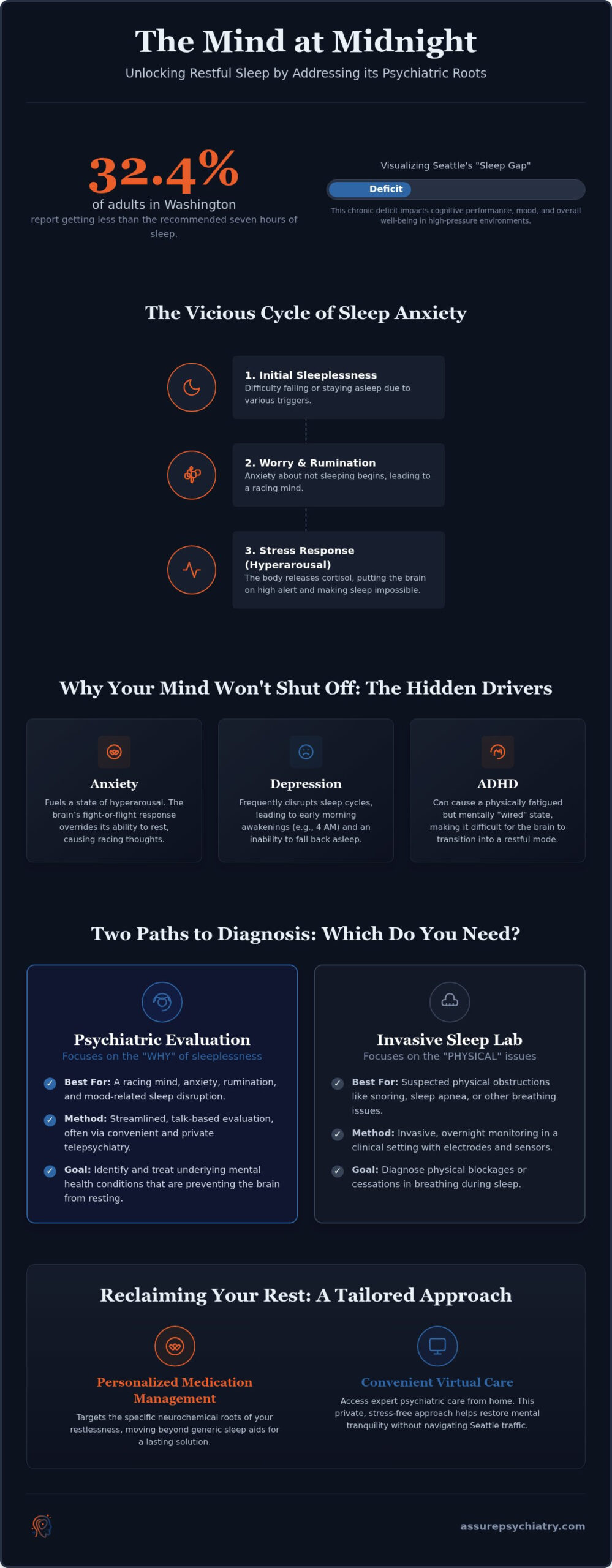
It’s 3 AM in Seattle, and while the city’s tech hubs are momentarily quiet, your mind is racing at full speed. You’ve tried the blackout curtains, the white noise machines, and the generic advice to just relax, yet you’re still staring at the ceiling, calculating how many hours of sleep you’ll get if you drift off right now. You aren’t alone in this struggle, as 32.4% of adults in Washington report getting less than seven hours of rest nightly.
We understand that this isn’t just about being tired; it’s about the heavy fog that settles over your performance and your peace of mind. It feels like a cycle you can’t break on your own, especially when daytime fatigue starts affecting your career and relationships. You deserve more than a temporary fix or a one size fits all suggestion. By focusing on the psychiatric roots of your restlessness, you can finally achieve the mental tranquility needed for deep, restorative rest.
This article explains how specialized medication management for sleep disorders Seattle residents can access through telepsychiatry provides a personalized path to waking up refreshed. We’ll look at how addressing the intersection of anxiety and insomnia helps you fall asleep naturally without the usual midnight dread. It’s time to move beyond generic tips and discover a plan tailored to your unique mental health needs from the comfort of your home.
Key Takeaways
- Understand why chronic insomnia is often a symptom of underlying mental health conditions rather than just a physical habit.
- Learn when you actually need an invasive sleep lab versus a streamlined psychiatric evaluation to address a racing brain.
- Discover how personalized medication management for sleep disorders Seattle residents can access from home targets the root causes of restlessness.
- Identify how conditions like ADHD or anxiety might be the hidden drivers behind your inability to stay asleep.
- Explore how virtual care offers a private, stress-free way to restore your mental tranquility without navigating Seattle traffic.
Understanding Insomnia and Sleep Disorders in Seattle
Insomnia is often misunderstood as just a few nights of tossing and turning. For many in the Pacific Northwest, it’s a persistent disruption that bleeds into every hour of the day. True insomnia involves difficulty falling asleep, staying asleep, or waking up too early for at least three nights a week over several months. Understanding Insomnia requires looking beyond the bedroom; it involves evaluating how your brain processes stress and environmental cues.
Seattle residents face a unique “sleep gap.” Our competitive tech market and high pressure work environments demand constant cognitive performance. Simultaneously, our geographic location brings long, dark winters that can confuse the body’s internal clock. While many clinics focus solely on physical issues like snoring or apnea, these factors often ignore the reality that your environment and your mind are the primary drivers of wakefulness. Distinguishing between primary insomnia and secondary sleep disorders, where sleep is disrupted by another condition like anxiety, is the first step toward relief.
Common Sleep Disorders Beyond Snoring
While sleep apnea is a well known concern, many people suffer from disorders that don’t involve breathing issues. In our practice, we often see patients struggling with these specific patterns:
- Chronic Insomnia: A persistent state where the brain stays in hyperarousal, making rest impossible.
- Circadian Rhythm Disorders: These are especially common during Seattle’s dark winters when a lack of sunlight disrupts melatonin production.
- Restless Leg Syndrome (RLS): A condition that often overlaps with psychiatric symptoms and can be exacerbated by stress.
For those struggling with these complex patterns, seeking professional medication management for sleep disorders Seattle can provide the stability needed to reset these biological rhythms and find peace.
The Emotional Toll of Sleep Deprivation
Living without rest erodes your mental tranquility and makes daily challenges feel insurmountable. It’s easy to fall into a vicious cycle of sleep anxiety, where you worry so much about not sleeping that the stress itself keeps you awake. Many Seattle professionals try to “power through” using caffeine or sheer willpower, but this isn’t a sustainable strategy. This approach only deepens the exhaustion and increases the risk of burnout.
Recognizing when to seek help is an act of self care. If your daytime performance is slipping or your mood is consistently low, a psychiatric evaluation can offer clarity. Professional medication management for sleep disorders Seattle provides a way to address the root causes of your sleeplessness, helping you regain the resilience you need for your daily life.
The Psychiatric Connection: Why Your Mind Won’t Shut Off
Have you ever felt physically exhausted yet mentally wired? This disconnect is rarely just about “bad sleep hygiene.” For many, insomnia is a primary symptom of underlying mental health conditions that prevent the brain from transitioning into a restful state. While many clinics focus on physical obstructions like sleep apnea, a psychiatric approach looks at the neurochemical drivers of wakefulness. The American Psychiatric Association provides a comprehensive overview of sleep disorders that highlights how mood and sleep are deeply intertwined.
When the mind won’t shut off, it’s often because the brain’s “off switch” is being bypassed by emotional distress. Depression, for example, frequently disrupts sleep cycles, leading to early morning awakenings where you find yourself alert at 4 AM, unable to return to rest. This isn’t a failure of will; it’s a physiological symptom of a shifting internal clock. Identifying these psychiatric roots is essential for finding a solution that actually lasts.
Anxiety and the Hyperarousal State
When you’re anxious, your body remains in a state of hyperarousal. Your adrenal glands pump out cortisol, the “stress hormone,” which keeps you on high alert. This fight-or-flight response is useful if you’re facing a physical threat, but it’s devastating when you’re trying to rest at 3 AM. Breaking this cycle of rumination often requires professional intervention. Just as anxiety treatment in Portland and Seattle addresses the root of panic, targeted psychiatric care can quiet the racing mind. Utilizing medication management for sleep disorders Seattle residents trust can help regulate these stress responses, allowing your nervous system to finally power down.
ADHD and Delayed Sleep Phase
For neurodivergent individuals, the struggle is often biological. The ADHD brain frequently experiences a “delayed sleep phase,” where the natural internal clock is shifted much later than the standard 11 PM bedtime. Traditional advice like “putting the phone away” often fails because the brain’s dopamine levels are seeking stimulation even in the dark. Consulting an ADHD psychiatrist in Portland or Seattle can reveal why your sleep architecture is different. Professional medication management for sleep disorders Seattle can align your circadian rhythm with your daily responsibilities, providing the structure your brain needs to find rest.
If you’re tired of being told to just “relax more” while your mind continues to race, it’s time to explore a more clinical perspective. A comprehensive psychiatric evaluation can offer the medical insight you’ve been missing, moving you closer to the tranquility you deserve.
Psychiatric Evaluation vs. Sleep Labs: Which Do You Need?
Deciding how to address chronic exhaustion often leads people to a crossroads: do they need a physical sleep lab or a psychiatric evaluation? A traditional sleep lab, known as polysomnography, is an intensive process that monitors your body’s mechanics. These labs are essential if there’s a suspicion of obstructive sleep apnea or narcolepsy, as they track oxygen levels, heart rate, and physical limb movements during the night. However, for many Seattle professionals, the results of these labs often come back “normal,” leaving them frustrated and still unable to rest.
If your sleeplessness is driven by a racing mind or emotional weight, a psychiatric evaluation is frequently the more effective path. Virtual evaluations allow you to discuss your symptoms from the comfort of your own home, which eliminates the “white coat” anxiety often triggered by clinical lab environments. This setting provides a more accurate reflection of your cognitive patterns and daily stressors, helping a provider see the full picture of your mental tranquility. By focusing on the brain’s role in sleep, you can skip the invasive wires of a lab and move directly toward a solution that addresses the root cause of your insomnia.
Comparing the Diagnostic Paths
Physical labs focus on the body’s hardware, checking for mechanical failures in breathing or movement. In contrast, a psychiatric evaluation examines the “software”—the thoughts, moods, and life stressors that keep your brain in a state of hyperarousal. For many, starting with a psychiatric assessment is the most streamlined and cost effective way to begin. It’s a less invasive starting point that prioritizes your emotional well being while identifying the specific psychiatric drivers of your restlessness.
The Role of Medication Management
Many people turn to over the counter aids, but these generic options often fail to address the underlying mental health triggers. Professional medication management in Portland and Seattle offers a more sophisticated approach. By seeking specialized medication management for sleep disorders Seattle residents can trust, you ensure that your treatment is supervised by an expert who understands the complex relationship between mood and rest. This collaborative process balances immediate relief with long term safety, ensuring you aren’t just masking symptoms but are actually restoring your brain’s natural ability to find peace. When you choose medication management for sleep disorders Seattle clinics provide, you’re opting for a plan that respects your individual identity and long term health goals.
Reclaiming Your Rest: What to Expect During Treatment
Starting your journey toward rest shouldn’t feel like another chore on your to-do list. We’ve designed a process that is supportive, steady, and focused on your unique needs. It begins with an initial psychiatric evaluation where we map your sleep history in detail. This isn’t just about counting hours; it’s about understanding the quality of your wakefulness and the emotional weight you carry during the day. We look for the patterns that generic advice often misses.
The second step involves identifying co-occurring conditions. For many, insomnia doesn’t exist in a vacuum. It’s often fueled by ADHD, Anxiety, or PTSD. By treating these “silent partners” of sleep deprivation, we can address the root causes of your restlessness. Once we have this comprehensive view, we move to step three: creating a personalized plan. This often includes specialized medication management for sleep disorders Seattle professionals need to stay sharp and resilient. Finally, we maintain a rhythm of ongoing follow-ups to fine-tune your path to tranquility, ensuring your treatment evolves as you do.
Preparing for Your First Appointment
You can take an active role in your recovery before we even meet. Consider keeping a simple sleep diary for a week. Track your bedtime, wake times, and any specific thoughts that kept you up at 3 AM. This record provides a clear window into your experience during your psychiatric evaluation in Portland or Seattle. Don’t be afraid to bring a list of questions. You might want to discuss why previous sleep aids didn’t work or what specific results you hope to see in the first month. Reviewing your past history together helps us build a more effective, safe strategy from day one.
A Collaborative Path to Wellness
In our practice, we don’t just give orders; we build partnerships. You are the expert on your own life, and we provide the clinical expertise to guide you. This collaborative approach ensures that your plan respects your individual identity and lifestyle. We work together to set realistic goals, recognizing that restoring your natural sleep architecture takes time. This specialized medication management for sleep disorders Seattle residents rely on ensures that your care is both safe and effective.
By gaining a deeper understanding of your brain chemistry, you’ll feel empowered rather than defined by a diagnosis. When you’re ready to move toward a more peaceful life, you can schedule your comprehensive psychiatric evaluation to begin the process.
Comprehensive Sleep and Insomnia Care with Assure Psychiatry
Seattle’s geography and high performance culture create a unique set of challenges for rest. At Assure Psychiatry, we meet you where you are. We serve the Seattle community through a model that prioritizes your time and your comfort. By removing the need to navigate I-5 traffic or find parking in a crowded downtown core, we lower the barriers to receiving specialized care. Our focus is on restoring your mental tranquility through a lens of clinical excellence and deep empathy.
We believe that inclusive care is essential. Your background, identity, and life experiences shape how you experience stress and sleep. Dr. Olumide Aruwajoye leads our practice with a commitment to culturally competent care, ensuring every patient feels seen and heard. When you choose medication management for sleep disorders Seattle residents can access virtually, you’re choosing a partner who respects your individual journey. We don’t just provide a diagnosis; we offer a collaborative path forward that recognizes your unique identity.
Seattle Telepsychiatry: Care on Your Terms
The transition to virtual care has revolutionized how we manage mental health. Much like telepsychiatry in Oregon and Washington bridges the gap for remote residents, our platform brings expert care directly to your living room. You only need a secure internet connection and a private space for our sessions. This format allows for a level of privacy that traditional clinics can’t always provide. Scheduling follow up visits becomes a seamless part of your day, whether you’re at home or in your office between meetings.
Your Journey Toward Tranquility Starts Here
Our psychiatric approach to sleep and insomnia is built on the belief that peace is the foundation of health. We move beyond the mechanical measurements of sleep labs to address the cognitive and emotional drivers of your exhaustion. Assure Psychiatry is the right choice for brain based sleep issues because we treat the whole person, not just the symptom of wakefulness. We understand that a diagnosis does not define you, but finding the right treatment can empower you.
You don’t have to face this exhaustion alone. The cycle of racing thoughts and daytime fatigue can be broken with the right guidance and support. By utilizing medication management for sleep disorders Seattle patients can find a stable environment where their mental well being is the priority. We invite you to step into a new chapter of restorative rest and enduring mental tranquility. Your path to a better night’s sleep is just a consultation away.
Embrace a Future of Restorative Rest
Restoring your sleep architecture is about more than just closing your eyes; it’s about quietening the internal noise that keeps you alert. Chronic insomnia often stems from underlying psychiatric conditions like anxiety or ADHD. These require a solution that addresses the brain’s neurochemistry rather than just the physical symptoms. By choosing a path that prioritizes your mental tranquility, you can move past the frustration of generic advice and invasive sleep labs.
Assure Psychiatry acts as your collaborative guide in this journey. Through specialized medication management for sleep disorders Seattle residents can access via telepsychiatry, we provide a safe and private environment to begin your recovery. Our commitment to compassionate, culturally competent psychiatric care ensures that you feel seen as an individual. You don’t have to face the fog of exhaustion on your own anymore.
When you’re ready to reclaim your nights and wake up feeling truly capable, we’re here. Schedule your sleep evaluation with Assure Psychiatry today and take the first step toward lasting peace. It’s time to rediscover the clarity and energy that come with a mind at rest.
Frequently Asked Questions
Is insomnia considered a mental health disorder?
Chronic insomnia is frequently classified as a psychiatric concern because it involves the brain’s inability to regulate arousal and rest. While it can be a standalone diagnosis, it often serves as a primary indicator of conditions like depression or anxiety. We view it as a vital sign of your mental well being. Addressing it through a psychiatric lens allows us to treat the neurochemical imbalances preventing your tranquility.
Can an insomnia clinic in Seattle help if I do not have sleep apnea?
Absolutely, as many sleep struggles are cognitive rather than physical. If you’ve been told your breathing is normal but you still can’t rest, the issue likely resides in your brain’s inability to power down. Our clinic specializes in these non-respiratory sleep disorders. We focus on the racing thoughts and emotional stressors that keep you awake, providing a path to rest that doesn’t involve CPAP machines.
How do I know if my sleep issues are caused by anxiety or ADHD?
Differentiating between these causes requires a professional assessment of your cognitive patterns. Anxiety often manifests as 3 AM rumination or racing thoughts, while ADHD may involve a naturally delayed sleep phase where your brain feels most alert late at night. This clarity is essential for effective medication management for sleep disorders Seattle residents use to finally align their internal clocks with their daily lives and professional responsibilities.
What happens during a psychiatric evaluation for sleep disorders?
You can expect a deep, supportive conversation about your sleep history and daily emotional state. We don’t just look at the hours you spend in bed; we explore your life stressors, mood, and any previous treatment attempts. This comprehensive review helps us identify if conditions like PTSD or ADHD are driving your insomnia. We then work together to build a personalized plan that respects your individual identity and health goals.
Does Assure Psychiatry offer telepsychiatry for Seattle residents?
Yes, we provide secure telepsychiatry services for all residents across Washington. This virtual format allows you to receive expert care from the comfort and privacy of your Seattle home. It eliminates the stress of commuting through city traffic, which can often exacerbate anxiety before an appointment. You’ll have the same high level of clinical expertise and personal connection as an in person visit, all through a secure video platform.
Will I be prescribed sleeping pills immediately?
Medication is a collaborative choice made after a thorough evaluation of your needs and safety. We don’t believe in simply masking symptoms with generic sedatives. Instead, our goal is to find the most effective and sustainable path to rest. This might involve medication management for sleep disorders Seattle patients find helpful for long term stability. We prioritize your safety and will only prescribe treatments that align with your overall mental health plan.
How long does it typically take to see improvements in sleep quality?
Every individual responds differently, but many patients begin to notice improvements within the first few weeks of treatment. Restoring your natural sleep architecture is a steady process rather than an overnight fix. As we fine tune your medication and wellness plan, your sleep quality will gradually stabilize. We maintain consistent follow up appointments to monitor your progress and ensure you’re moving toward the mental tranquility you deserve at your own pace.
Do you accept insurance for sleep disorder consultations in Seattle?
We recommend contacting our office directly to verify your specific insurance coverage and benefits. While we work with various plans, coverage for psychiatric evaluations can vary based on your individual provider and policy. Under the No Surprises Act, we also provide a Good Faith Estimate for those who are uninsured or choosing to self pay. Our team is here to help you understand the costs so you can focus on your journey toward rest.
Recent Comments