

Grief care isn’t about forcing you to move on. A psychiatrist for complicated grief and depression in Oregon can assess how loss is affecting your mood, daily life, and mental health, then discuss care suited to your needs. Medication may be considered when depression symptoms are part of the picture, but it isn’t the only way to approach support.
If grief has made ordinary tasks feel harder or left you unsure whether depression is also involved, those experiences deserve thoughtful attention. You’ll learn how psychiatric care can help with grief and depression, what to consider when choosing a Beaverton specialist, and how medication may fit into a broader plan. The right conversation can start with understanding what you’re experiencing and what kind of support feels appropriate for you.
Key Takeaways
- A psychiatric assessment can help distinguish grief-related distress from depression and guide a care plan that reflects your circumstances.
- When choosing a Beaverton specialist, consider how their approach addresses grief, depression, and the support you’re seeking.
- Medication may be considered for depression symptoms during grieving, with its role shaped by your needs and treatment goals.
- Learn how psychiatric evaluation, depression treatment, and medication management can support a next step toward feeling more steady.
How can psychiatrists help with grief?
A psychiatrist can assess how grief affects mood, sleep, concentration, relationships, and daily functioning, then shape a treatment plan around your needs. Grief can follow the death of a loved one, a relationship ending, job loss, or a change in identity. There is no set sequence: sadness or anger may return even as you build resilience and connection over time.
During an assessment, the psychiatric provider asks about the loss, emotional symptoms, mental health history, and changes in everyday life. Fatigue and difficulty concentrating, for example, can help clarify how distress is affecting work or relationships. The next step is a personalized plan that may include medication or evidence-based therapy, depending on your needs. Cognitive behavioral therapy can help examine thoughts connected with loss; acceptance and commitment therapy can support coping strategies that reflect personal values.
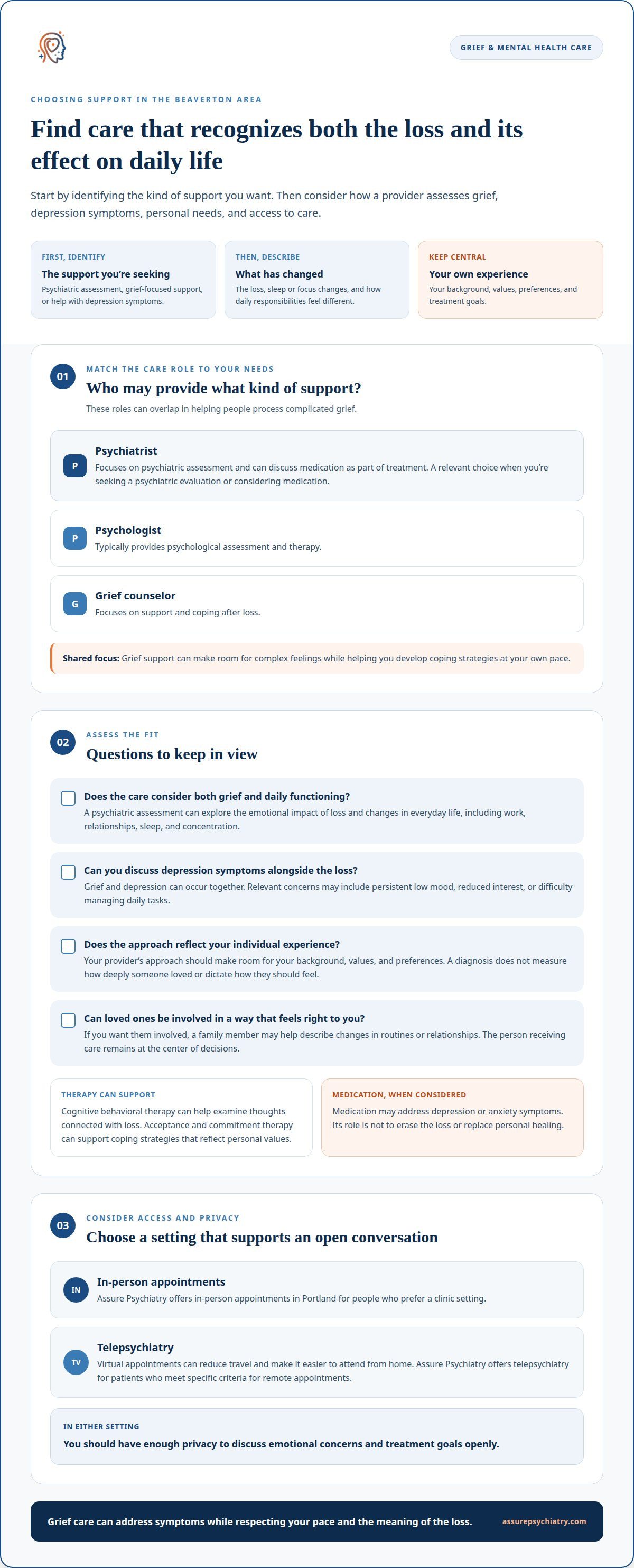
A psychiatrist focuses on psychiatric assessment and can discuss medication as part of treatment. A psychologist typically provides psychological assessment and therapy, while a grief counselor focuses on support and coping after loss. These roles can overlap in helping people process complicated grief. A psychiatrist is a relevant choice when you’re seeking a psychiatric evaluation or considering medication as part of care.
Access can also shape your choice. In Oregon, Assure Psychiatry offers in-person appointments in Portland and telepsychiatry for patients who meet specific criteria for remote appointments. In-person visits suit people who prefer a clinic setting; virtual visits can reduce travel and make it easier to attend from home. Either way, you should have enough privacy to discuss emotional concerns and treatment goals openly.
Safety needs immediate attention. People experiencing a life-threatening emergency are advised to call 911, according to the National 911 Program. For a mental health emergency, call 988 for the Suicide and Crisis Lifeline, according to the Substance Abuse and Mental Health Services Administration. If someone has attempted suicide, call 911 immediately, according to the National Library of Medicine.
Choosing a grief and loss specialist in Beaverton, OR
In Beaverton, look for care that recognizes both the loss and its effects on daily life. A useful first step is identifying whether you want psychiatric assessment, grief-focused support, or help addressing depression symptoms.
Finding a Psychiatrist for Grief Support
Choose a psychiatrist when you want a professional to assess mental health symptoms and consider whether medication may fit your care. At the initial appointment, describe the loss, changes in sleep or focus, and how responsibilities feel different. These details help clarify your concerns and treatment goals. Your provider’s approach should make room for your background, values, and individual experience.
Prolonged Grief Disorder Support
Support for prolonged grief disorder focuses on distress connected with loss that continues to affect functioning. A diagnosis does not measure how deeply someone loved or dictate how they should feel. A psychiatric evaluation can explore symptoms, emotional impact, and other mental health concerns before discussing next steps. Look for care that addresses the condition without reducing you to a label.
Depression and Grief Support
Grief and depression can occur together, so care should consider both the loss and symptoms such as persistent low mood, reduced interest, or difficulty managing daily tasks. A psychiatrist can evaluate how these concerns affect your life and discuss treatment options. For example, someone struggling to work after a major life change may need support that accounts for both bereavement and depression.
Loved ones can be involved in support if the grieving person wants them to be. A family member may help describe changes in routines or relationships, while the person receiving care remains at the center of decisions. Grief counseling can provide space to explore complex feelings and work toward meaning, connection, and hope. These supports can help you develop coping strategies while respecting your pace.
Medication and antidepressants during grieving
Medication may be considered when grief occurs alongside depression or anxiety symptoms. Its role is to address symptoms, not erase the loss or replace personal healing.
Medication During Grieving
Medication or therapy may be considered as part of an individualized approach to grief. A psychiatrist may recommend an SSRI antidepressant to help regulate mood during grieving. The decision focuses on symptoms and their effect on daily life, rather than treating grief itself as an illness. For example, persistent low mood or anxiety may be discussed as part of an individualized plan. Compassionate care respects your identity and the meaning of the loss.
Medication can be one part of support, not a measure of how deeply someone cared. Grief may also involve trauma, changes to routines, or less connection with others. A thoughtful treatment plan makes room for these experiences while considering whether medication could support daily functioning. The goal is to foster a steadier daily life, not set a timetable for healing.
Psychiatric Medication Prescribing
Medication decisions begin with understanding your symptoms, mental health history, current medications, and treatment priorities. Your psychiatric provider can explain the purpose of a proposed medication, relevant considerations, and how its effects will be reviewed. Sharing changes in mood, sleep, or anxiety helps guide medication management over time. Your questions and preferences belong in that conversation.
Ongoing medication management considers whether treatment continues to meet your needs. If symptoms change or unwanted effects arise, your prescriber can review the plan and discuss appropriate adjustments. This can be especially relevant when depression and grief overlap, or when anxiety or trauma also affects daily functioning. Thoughtful care means listening carefully, explaining decisions clearly, and treating you with respect.
Medication does not offer a grief-specific solution, and it is not the only possible support. A psychiatric evaluation can help clarify whether depression symptoms, anxiety, or other concerns warrant considering medication. Your goals, health history, and response to treatment guide ongoing discussions. This collaborative approach keeps care focused on the whole person, not just a prescription.
Oregon psychiatric providers treating depression and grief
Oregon providers may include psychiatrists and psychiatric nurse practitioners, with different clinical backgrounds and approaches. For severe depression or suicidal thoughts, call 988 for the Suicide and Crisis Lifeline, according to the Substance Abuse and Mental Health Services Administration. If someone has attempted suicide, call 911 immediately, according to the National Library of Medicine.
Oregon Psychiatric Provider Directory
A directory can help distinguish psychiatrists from psychiatric mental health nurse practitioners and identify providers whose clinical focus includes depression or grief. Compare their stated treatment focus with the support you need, such as medication management or therapy. Assure Psychiatry, a Portland-based psychiatric practice, focuses on psychiatric evaluations and medication management, rather than long-term grief counseling. This distinction can help you decide what kind of support to seek.
Provider Locations and Appointment Availability
Location and appointment timing can affect whether care fits daily routines. A psychiatric nurse practitioner in Keizer reports appointment availability in approximately 3-5 weeks. Providers in Salem and Marion County may have different backgrounds and schedules, so consider travel distance alongside the type of care sought. For online appointments, confirm that virtual care suits your needs and allows a private conversation about stress, mood, and relationships.
Providers Serving the Area
Provider biographies can clarify experience and areas of interest without making years in practice the only measure of fit. One provider listed for Marion County reports 13 years of healthcare experience; a psychiatrist listed there reports more than 20 years in the field. A registered nurse listed for the county reports twenty-five years in psychiatric and memory care. These details offer context, while a clinical conversation can clarify fit.
Psychiatric care may focus on evaluation and medication, while counseling or therapy can address grief and coping. To explore whether a psychiatric evaluation for depression fits your needs, request psychiatric care.
Assure Psychiatry: Depression Treatment
Assure Psychiatry provides depression treatment for people whose grief is accompanied by symptoms affecting daily life. A psychiatric evaluation can help clarify your concerns and inform a personalized care plan. When appropriate, medication management may be part of that plan.
If persistent low mood, loss of interest, or difficulty functioning has become part of your experience, psychiatric care can help you explore options with a professional. Discuss your symptoms, background, and goals during an evaluation, then consider care that aligns with your needs. The focus is on understanding the whole person, not defining you by a diagnosis.
Contact Assure Psychiatry to discuss depression treatment and psychiatric care.
Take a Next Step at Your Own Pace
You don’t need to have every feeling neatly explained before seeking support. Begin with what feels most difficult right now, whether that’s getting through the day, managing changes in mood, or understanding how grief is affecting you. A psychiatrist for complicated grief and depression in Oregon can help you discuss these concerns and consider a way forward that respects your needs.
Before an appointment, consider noting the changes you’ve noticed and the questions you hope to explore. There is no perfect way to describe loss. Sharing what feels manageable can help keep the conversation useful and grounded in your priorities.
If you’re ready to explore psychiatric care, contact Assure Psychiatry to discuss a next step. You deserve care that meets you with understanding, and taking that first step can open space for steadier days ahead.
Frequently Asked Questions
Does insurance cover psychiatrist visits in Oregon?
Some Oregon insurance plans cover psychiatric visits, but benefits depend on your specific plan. Assure Psychiatry accepts most major insurance plans; verify your coverage for the type of visit you need. For example, your plan may handle an initial evaluation and a medication management follow-up differently. Review your behavioral health benefits and any applicable cost-sharing before scheduling.
How long does depression from grief last?
There is no single timeline for depression symptoms connected with grief. Their course can depend on your mental health, daily functioning, circumstances surrounding the loss, and available support. If low mood, loss of interest, or difficulty managing responsibilities persists or worsens, a psychiatric evaluation can help assess what’s happening. You don’t need to wait for a particular milestone to seek help.
Which Oregon psychiatrists treat prolonged grief disorder and depression?
Psychiatrists and psychiatric mental health nurse practitioners may evaluate depression symptoms that occur alongside grief. A provider’s stated clinical interests can help you identify relevant experience, though a directory listing alone does not explain their approach to care. In Portland, Assure Psychiatry provides psychiatric evaluations and depression treatment, with medication management rather than long-term grief counseling.
What credentials and treatment approaches should a psychiatrist for complicated grief have?
Review the provider’s psychiatric credentials and whether their role includes the evaluation or medication care you’re seeking. A psychiatric mental health nurse practitioner with PMHNP-BC credentials is one type of psychiatric provider. Your provider should discuss your symptoms, mental health history, and treatment preferences, then explain the reasoning behind proposed care. Clear communication helps you make informed decisions together.
How much does psychiatric care for grief and depression cost in Oregon?
Cost depends on the type of visit, follow-up needs, and insurance benefits. Assure Psychiatry provides pricing after a quote request, and discounted cash rates are available for uninsured patients. For a useful estimate, distinguish the initial evaluation from recurring medication management visits and consider how your plan handles each. The amount you pay depends on your circumstances and coverage.
Recent Comments