
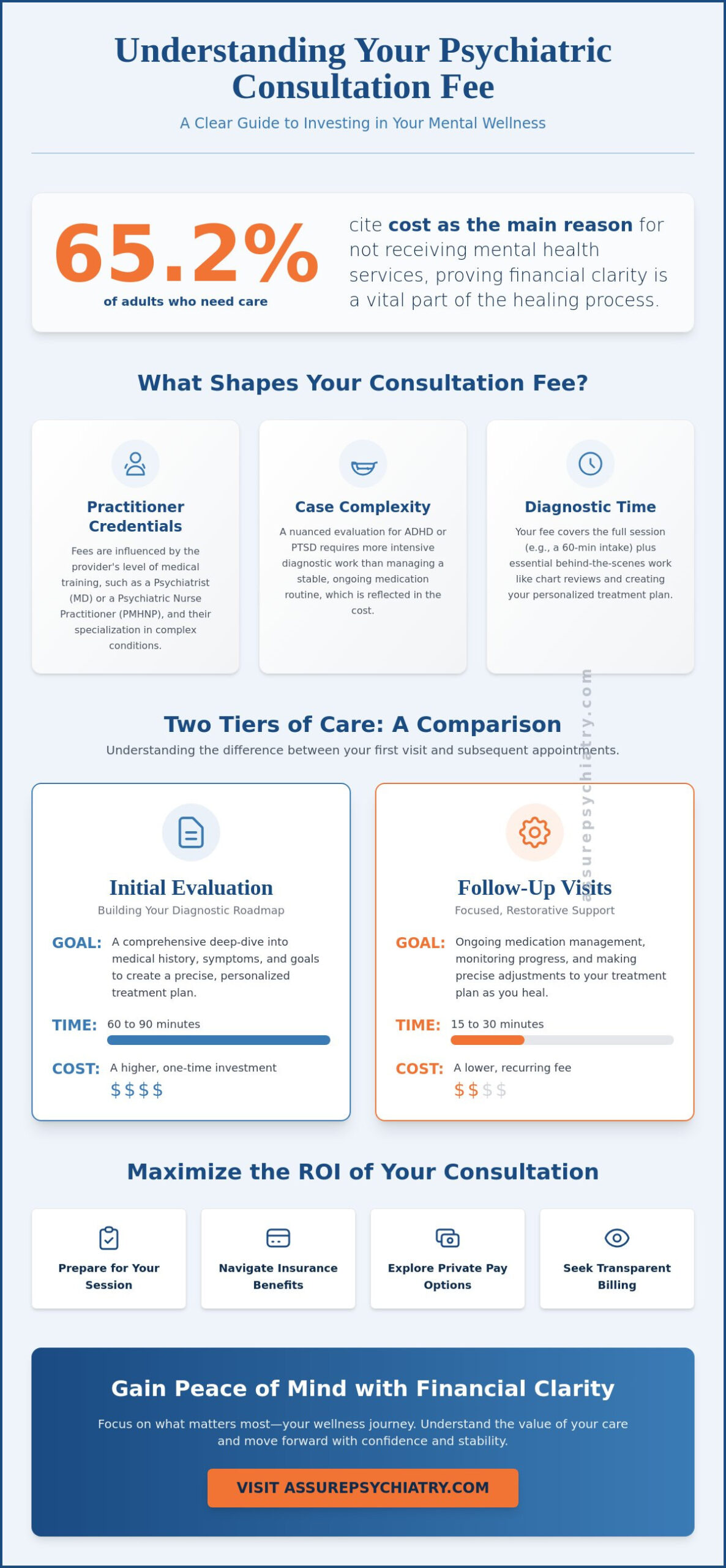
You’ve finally reached a point where you’re ready to prioritize your well-being, but the simple act of booking an appointment feels stalled by a single question: what will the psychiatric consultation fee actually look like? It’s a heavy weight to carry when you’re already seeking peace. Recent data shows that 65.2% of adults who don’t receive the care they need cite cost as the main reason, proving that financial clarity is a vital part of the healing process.
We agree that you shouldn’t have to decipher a maze of insurance terms just to find relief. This guide promises to give you total clarity on psychiatric billing, from initial evaluation fees to insurance navigation, so you can focus entirely on your wellness. We’ll walk through the differences between intake and follow-up costs, explain how 2026 parity laws protect your access to care, and show you how to maximize your benefits with confidence. By understanding the true value of a comprehensive diagnostic roadmap, you can move forward with the stability and tranquility you deserve.
Key Takeaways
- Understand how practitioner credentials and appointment complexity shape the psychiatric consultation fee, ensuring you feel confident and informed before your first visit.
- Distinguish between the comprehensive diagnostic roadmap of an initial evaluation and the focused, restorative support of ongoing medication management.
- Learn how to navigate in-network benefits and private pay options in the Pacific Northwest to ensure your insurance works effectively for your specific needs.
- Discover how to prepare for your session to maximize the value of your time and build a stable foundation for long-term mental tranquility.
- Gain peace of mind through a clear understanding of how transparent billing practices support your journey in treating conditions like anxiety, depression, or ADHD.
What Determines a Psychiatric Consultation Fee?
When you look at a psychiatric consultation fee, you’re seeing more than just a price tag for a single hour. You’re looking at the cost of years of specialized medical training and the focused attention required to map out your recovery. Why does one provider charge more than another? It usually comes down to a combination of clinical credentials, the complexity of your specific needs, and the administrative depth involved in modern types of mental health services. Medical billing often uses a mix of time-based codes and complexity-based assessments. This ensures that a patient seeking a nuanced ADHD evaluation receives the same level of rigorous diagnostic care as someone managing a stable medication routine. This complexity is why your first visit is always the most significant investment; it sets the stage for every subsequent check-in.
The Value of Specialized Diagnostic Time
In the Pacific Northwest, a 60-minute intake is often considered the gold standard for a thorough psychiatric evaluation. This isn’t just a casual chat. It’s a deep dive into your medical history, current symptoms, and lifestyle factors. Your fee also covers the work that happens behind the scenes, such as detailed chart reviews and the creation of a personalized treatment plan. Investing in this level of detail early on is a smart financial move. It helps prevent the costly trial-and-error of misdiagnosis, guiding you toward mental tranquility much sooner.
Credentials and Their Impact on Cost
The specific letters after your provider’s name will often influence the psychiatric consultation fee you see on your statement. Psychiatrists (MD or DO) have completed medical school and residency, while Psychiatric Mental Health Nurse Practitioners (PMHNP) have advanced nursing degrees with a specialized focus on behavioral health. Both are highly qualified to provide medication management and diagnostic evaluations. However, specialized care for complex conditions like PTSD, OCD, or bipolar disorder may require more intensive clinical oversight, which can affect the rate. Beyond credentials, look for a provider who values inclusive care. A practitioner who understands the cultural nuances of your identity isn’t just providing a service; they’re acting as a collaborative guide in a space where you feel truly seen and heard.
Understanding these variables helps remove the mystery from your medical bills. When you know that your fee supports a stable, reliable environment and a provider who is deeply invested in your progress, the cost becomes a clear step toward health. It’s about finding a balance between expert clinical authority and the compassionate support you need to feel whole again. This transparency allows you to focus on what matters most: your wellness journey.
Initial Evaluation vs. Medication Management: Fee Structures
One of the most confusing parts of seeking care is seeing a wide range of prices for a “visit.” You might see an average price online that seems low, but these numbers often fail to distinguish between a deep-dive diagnostic session and a brief check-in. It’s helpful to view these as two separate tiers of care. Many people feel a sense of sticker shock when they see their first psychiatric consultation fee, but that’s often because they’re comparing it to the cost of a standard follow-up. One is a high-intensity diagnostic session, and the other is a steady, supportive check-in. Both are necessary to ensure you’re thriving rather than just surviving.
The Comprehensive Initial Intake
Think of your first session as the building of a clinical foundation. This isn’t just a casual conversation; it’s a 60 to 90-minute exploration of your medical history, current symptoms, and long-term goals. Because this session requires the highest level of diagnostic expertise and administrative documentation, the cost reflects that intensity. This is the most critical stage for a psychiatric evaluation portland patients receive. It involves coordinating with your primary care physician, reviewing previous treatment records, and establishing a safe starting point. A comprehensive psychiatric assessment at this stage ensures your care plan is built on facts rather than guesswork, giving you the personalized roadmap you need to move forward with confidence. It’s a one-time investment that ensures your care plan is built on facts rather than guesswork.
Medication Management and Follow-Up Costs
Once the foundation is set, your sessions shift into a different rhythm. These follow-up appointments are typically shorter, usually lasting between 15 and 30 minutes. While the initial psychiatric consultation fee covers the heavy lifting of diagnosis, follow-up costs are generally lower and more focused. During the stabilization phase, you might meet with your provider more frequently to monitor how your body responds to a new treatment. This ongoing medication management portland providers offer is essential for your safety. As you reach a state of stability, these visits often transition to a quarterly maintenance schedule. In 2026, many of these sessions are held via telehealth, which now accounts for 58% of all mental health visits, offering a more accessible path to mental tranquility.
The goal is always to move you from a state of distress to one of quiet strength. By separating these two fee structures, providers ensure you aren’t overpaying for routine check-ins while still receiving the dedicated time you need during your initial diagnosis. If you’re ready to begin this collaborative process, you can explore our medication management services to see how we prioritize your safety and peace of mind. Each step forward is an investment in a future where you feel stable, supported, and heard.
Insurance vs. Private Pay: Navigating Costs in the PNW
Deciding how to pay for your care is a personal choice that involves more than just looking at your bank balance. In the Pacific Northwest, patients often find themselves weighing the immediate convenience of in-network insurance against the long-term privacy of the private pay model. Both paths are valid. Your choice simply depends on which one offers you the most stability and peace of mind as you begin your treatment journey. Whether you’re based in Portland or Seattle, understanding the local insurance environment helps ensure your psychiatric consultation fee is handled effectively, letting you focus on your restorative progress.
Understanding In-Network Benefits
If you have a plan through common PNW insurers like Aetna, Blue Cross Blue Shield, or Providence, your coverage may significantly reduce your out-of-pocket costs. However, it’s vital to ask the right questions before your first session. Don’t assume that “behavioral health” coverage automatically covers every type of visit. Ask your provider about your specific deductible. In 2026, many plans require you to pay the full psychiatric consultation fee until you meet a specific threshold. Strengthened federal rules under the Mental Health Parity and Addiction Equity Act now require insurance companies to treat mental health benefits with the same fairness as medical surgeries, but you’ll still want to verify your individual copay and prior authorization requirements to avoid unexpected bills.
The Benefits of the Private Pay Model
Many individuals in Oregon and Washington choose to bypass insurance altogether, opting for the “Private Pay” or “Self-Pay” model. This approach offers a level of confidentiality that insurance-based care cannot always match. When you pay directly, your provider doesn’t have to submit a “medical necessity” justification to a third-party company to approve your sessions. This means you and your practitioner have total flexibility over the length and frequency of your appointments. For professionals in high-visibility roles, this enhanced privacy is often worth the direct investment. It ensures that your treatment plan is guided by your needs, not by an insurance company’s rigid mandates.
If you choose a provider who is out-of-network, you can often still receive partial reimbursement. Most providers can issue a “Superbill,” which is a detailed receipt you submit to your insurance company. Many private plans with out-of-network benefits reimburse between 50% and 75% of the cost for each session. Additionally, using a Health Savings Account (HSA) or Flexible Spending Account (FSA) allows you to use pre-tax dollars to cover your consultation costs. This effectively lowers the financial barrier to care while maintaining the high standards of a personalized diagnostic evaluation. By leveraging these tools, you can build a stable foundation for your wellness without the fear of financial surprises.
Maximizing the ROI of Your Psychiatric Consultation
Think of your initial appointment not as a standard expense, but as a strategic investment in your future stability. When you pay a psychiatric consultation fee, you’re securing a personalized diagnostic roadmap that can prevent years of costly trial and error. By ensuring your provider has the right information from the start, you can streamline your path toward recovery and avoid the financial strain of untreated symptoms. It’s about more than just a prescription; it’s about gaining the clarity you need to move forward with confidence.
Preparation Tips for New Patients
To get the most out of your time, come prepared. Gather your previous medical records, a list of current medications, and any specific goals you have for treatment. If you’ve felt unheard in the past, knowing how to switch psychiatrists efficiently can help you transition to a provider who aligns with your needs without duplicating unnecessary costs. Writing down your symptoms beforehand ensures that no detail is missed during the session, allowing your practitioner to provide the most accurate assessment possible. For a comprehensive walkthrough of exactly what to bring and what to expect, our guide on how to prepare for a psychiatric evaluation can help you walk in feeling organized and confident. This collaborative approach makes every minute of your consultation more productive and restorative.
The value of an accurate diagnosis is especially clear when treating specific conditions like ADHD or PTSD. For example, finding an expert adhd psychiatrist portland ensures that your testing is rigorous and precise from day one. Misdiagnosis in these areas often leads to prescriptions that don’t work, which results in more appointments and higher long-term costs. Accurate testing is a powerful preventative measure that saves you both time and money in the long run.
Long-Term Savings Through Better Health
Untreated mental health conditions carry a heavy economic burden that often goes unnoticed until a crisis occurs. In 2024, the estimated annual cost of untreated mental illness in the U.S. reached $477.5 billion, largely due to lost earnings and decreased productivity. By prioritizing your health now, you’re protecting your career, your relationships, and your overall quality of life. Effective medication management reduces the likelihood of emergency interventions, which are far more expensive and distressing than routine consultations.
Achieving mental tranquility isn’t just a clinical goal; it’s a foundation for a more productive and fulfilling life. When your mind is at peace, you can focus on your professional and personal growth with renewed energy. We believe in total transparency when it comes to your care, and we encourage you to ask for a fee schedule upfront so you can plan with ease. If you’re ready to take this step, you can schedule your psychiatric evaluation today and begin building the foundation for your long-term wellness.
Transparent Care at Assure Psychiatry
At Assure Psychiatry, we believe the road to mental tranquility begins with a foundation of trust. That trust is built through clear, honest communication about every aspect of your care, including your psychiatric consultation fee. We don’t want you to feel the weight of financial uncertainty while you’re trying to heal. Our team is dedicated to ensuring you understand exactly what your investment covers, from the clinical expertise of our providers to the administrative support that keeps your treatment plan on track. Whether you’re visiting us in person in Portland or utilizing telepsychiatry oregon services, you’ll find a stable environment where your wellness is the only priority.
A Collaborative Path to Wellness
Dr. Olumide Aruwajoye and our clinical team prioritize diagnostic accuracy over quick prescriptions. We understand that a diagnosis doesn’t define you; it’s simply a tool to help us find the right path forward together. By focusing on the individual rather than just a set of symptoms, we provide care that respects your unique identity and experiences. This inclusive approach ensures that diverse populations throughout the Pacific Northwest feel seen, heard, and validated. We’re here to act as your collaborative guide, offering a blend of high-level medical authority and deeply human empathy. Whether you’re seeking help for depression, anxiety, or PTSD, our goal is to help you reclaim a sense of order and peace.
Scheduling Your Evaluation
We’ve designed our scheduling process to be as low-pressure as possible. We know that the barrier to seeking help is often high, so our online booking system is straightforward and accessible. Once you’ve requested an appointment, you’ll receive a confirmation call from our team. This is a dedicated time for us to answer your questions about the psychiatric consultation fee, verify your insurance details, and help you complete any necessary paperwork. This predictability helps reduce the anxiety often associated with starting mental health services. We’ll walk you through everything so there are no surprises on the day of your visit.
Your journey toward restorative health doesn’t have to be a solo effort. By choosing a partner who values transparency and clinical excellence, you’re taking a vital step toward a more stable future. We’re ready to support you with expert medication management and comprehensive evaluations tailored to your life. Take that first step today and see how clear communication can make all the difference in your recovery. View our services and schedule your consultation today.
Invest in a Foundation of Lasting Peace
Navigating the financial side of mental health care shouldn’t be a barrier to your recovery. By understanding how a psychiatric consultation fee reflects specialized diagnostic expertise and administrative rigor, you’re empowered to make informed decisions for your future. We’ve explored how a thorough initial evaluation prevents the high costs of misdiagnosis and how modern insurance parity laws in 2026 are making care more accessible than ever before. Whether you choose the privacy of a private pay model or utilize your in-network benefits, the goal is the same: providing you with a stable, supportive environment where you can truly thrive.
At Assure Psychiatry, we’re proud to act as a collaborative ally in your wellness journey. We accept major insurance plans and offer flexible telehealth options across Oregon and Washington to ensure expert care for ADHD, anxiety, and PTSD is always within reach. You don’t have to carry the weight of uncertainty alone. Our team is here to provide the clinical authority and human-centered empathy you deserve as you move toward a life defined by mental tranquility.
Begin Your Journey to Mental Tranquility: Schedule Your Consultation
Frequently Asked Questions
How much does a typical psychiatric consultation fee cost in Portland?
The cost of a psychiatric consultation fee in the Portland area varies depending on the provider’s credentials and the complexity of the diagnostic evaluation. Generally, you’ll find that initial intake sessions require a higher investment because they involve a comprehensive review of your medical history and the creation of a personalized treatment roadmap. Follow-up appointments for medication management are typically shorter and carry a lower cost than the first diagnostic visit.
Does Assure Psychiatry accept insurance for initial evaluations?
Assure Psychiatry is in-network with several major insurance providers to help make your care more accessible. We currently accept plans from Aetna, Cigna and Evernorth, First Health, Moda, OHP-CareOregon, Optum, and UnitedHealthcare. It’s always a good idea to verify your specific behavioral health benefits before your first session to understand your individual coverage levels and any potential out-of-pocket responsibilities.
What is the difference between a copay and coinsurance for mental health?
A copay is a fixed dollar amount you pay for each visit, such as $30, while coinsurance is a percentage of the total cost of the session that you’re responsible for paying. For example, if your plan has a 20% coinsurance requirement, you’ll pay that portion of the negotiated rate after your deductible is met. Understanding these terms helps you predict your costs more accurately and ensures there are no surprises when you receive your statement.
Can I use my HSA or FSA to pay for my psychiatric appointments?
You can absolutely use your Health Savings Account (HSA) or Flexible Spending Account (FSA) to cover your psychiatric consultation fee and follow-up visits. These accounts allow you to use pre-tax dollars for eligible medical expenses, which effectively reduces the overall cost of your care. It’s a practical way to manage your wellness budget while ensuring you receive the high-quality, expert care you need for your mental health journey.
What happens if I need to cancel my appointment? Is there a fee?
Most psychiatric practices, including those in the Pacific Northwest, require at least 24 to 48 hours’ notice for cancellations to avoid a late fee. This policy exists to ensure that other individuals seeking care can utilize that time slot in a stable and predictable way. When you book your evaluation, your provider will typically share their specific cancellation window so you can plan your schedule with confidence and respect for the collaborative process.
Are telepsychiatry fees different from in-person visit fees?
Fees for telepsychiatry are generally the same as in-person visits because the clinical expertise and time dedicated to your care remain constant regardless of the setting. In 2026, most insurance plans treat virtual consultations with the same parity as office visits, ensuring you have the flexibility to choose the environment that best supports your mental tranquility. This allows you to access expert care from the comfort of your home without any financial penalty.
Will my insurance cover ADHD testing and medication management?
Most insurance plans provide coverage for ADHD evaluations and ongoing medication management, though some may require prior authorization or specific documentation of medical necessity. Federal parity laws, which were strengthened in late 2024, require insurers to offer mental health benefits that are no more restrictive than those for medical or surgical care. We recommend contacting your member services representative to confirm the specific requirements of your plan before starting treatment.
What is a Superbill, and how do I use it for reimbursement?
A Superbill is a detailed medical receipt provided by out-of-network practitioners that includes the necessary clinical codes for insurance processing. If you choose a private pay model, you can submit this document to your insurance company to request partial reimbursement for your sessions. Many private plans with out-of-network benefits reimburse a significant portion of the cost, helping you maintain your privacy while still utilizing your insurance investment.
Recent Comments