

What if the most overwhelming part of your mental health journey isn’t the diagnosis, but the fear of being misunderstood during your first visit? It’s completely natural to feel a knot in your stomach when you think about how to prepare for a psychiatric evaluation, especially when you’re worried about forgetting a crucial symptom or feeling rushed. You deserve to feel seen and heard, not just processed through a clinical system.
We understand that the unknown can be daunting. You might be wondering if your insurance covers the visit or how this evaluation differs from long-term psychotherapy. This guide is here to replace that uncertainty with a sense of mental tranquility. We’ll show you exactly how to organize your medical history, manage your appointment anxiety, and advocate for the care you need. We’ll even touch on 2026 telehealth standards and insurance basics to ensure you feel fully prepared. By the time you finish reading, you’ll have a clear checklist of what to bring and the confidence to take this vital step toward your wellness journey.
Key Takeaways
- Understand that a psychiatric evaluation is a comprehensive medical assessment designed to create a personalized roadmap for your mental health journey.
- Learn exactly how to prepare for a psychiatric evaluation by organizing your medical records and a detailed medication list to ensure an accurate and efficient diagnosis.
- Reduce appointment anxiety by knowing what to expect during the 60-to-90-minute clinical interview, where your story is heard in a safe, non-judgmental space.
- Identify the key logistical differences and technical requirements for successful in-person visits versus virtual psychiatric assessments.
- Discover how a focus on mental tranquility and collaborative care empowers you to move beyond symptom management toward lasting emotional peace.
What is a Psychiatric Evaluation and Why Does it Matter?
Think of a psychiatric evaluation as a compassionate inquiry into your well-being. It is a comprehensive medical assessment that goes beyond surface-level observations to understand the intricate details of your mental health. This process is distinct from the regular sessions you might have with a therapist. While talk therapy offers a space for long-term emotional processing, a psychiatric assessment is a targeted diagnostic interview. It’s the moment where we gather the evidence needed to build your recovery. Knowing how to prepare for a psychiatric evaluation helps you feel like an active partner in this discovery rather than a passive observer.
The ultimate objective is to create a personalized treatment plan that respects your individual identity. We aren’t just looking for a clinical label; we’re looking for a solution that fits your life. This assessment serves as the vital starting point for a psychiatric evaluation in Portland. It’s where we lay the groundwork for your future mental tranquility. By the end of this session, you’ll have a clearer understanding of your symptoms and a professional perspective on the best next steps for your health.
The Role of the Psychiatrist vs. Other Professionals
Psychiatrists and Psychiatric Mental Health Nurse Practitioners (PMHNPs) bring a unique medical lens to your care. They don’t just listen to your story; they analyze how your biology, social environment, and psychology intersect. This medical background allows them to bridge the gap between emotional distress and physical health. When a provider understands the biological roots of your struggle, they can offer more precise medication management options. It’s a collaborative effort where your expertise on your own life meets their clinical authority. This partnership ensures that your treatment is both scientifically grounded and deeply personal.
Common Reasons for Seeking an Initial Evaluation
People seek evaluations for many reasons, but the desire for clarity is the common thread. You might be looking for an adult ADHD diagnosis to finally understand why daily tasks feel so heavy. Others struggle with treatment-resistant depression or anxiety that traditional self-care hasn’t touched. Learning how to prepare for a psychiatric evaluation is essential for these specific concerns. A precise diagnosis ensures you don’t waste time on treatments that aren’t right for you. It provides the validation you need to move forward with confidence, knowing that your care plan is built on a solid, professional foundation.
What to Expect During Your Initial Assessment
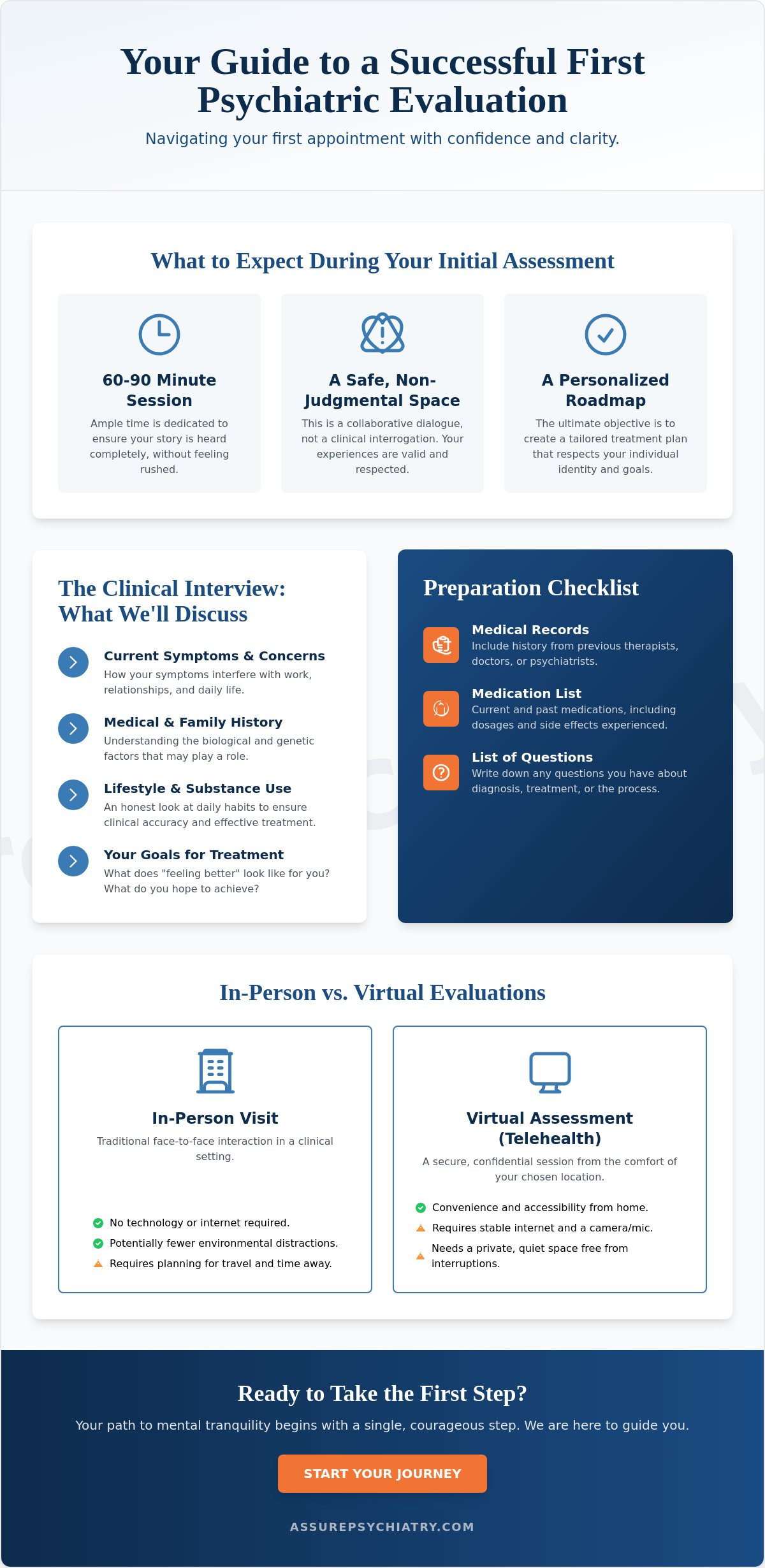
Walking into your first appointment might feel like entering the unknown, but having a map of the journey can help quiet those nerves. A typical initial session lasts between 60 and 90 minutes. This extended time isn’t meant to be exhausting. Instead, it ensures you have the space to speak without feeling rushed. Understanding how to prepare for a psychiatric evaluation means realizing this is a collaborative dialogue, not a clinical interrogation. It’s a dedicated window for you to feel seen and heard in a safe, non-judgmental environment.
During this time, your provider will conduct what is known as a Mental Status Exam. While the name sounds formal, it’s simply a professional observation of your current mood, thought patterns, and cognitive clarity. They are looking at the “weather” of your mind in the moment to see how symptoms manifest. Additionally, they may ask for collateral information, which refers to your medical records or insights from previous providers. This context is vital because your history isn’t just a list of past events; it’s the foundation we use to build your path to mental tranquility. A comprehensive psychiatric assessment is designed to be a collaborative discovery process, ensuring you are seen as a whole person rather than a collection of symptoms.
The Clinical Interview: Telling Your Story
This is the heart of the visit. Your provider will ask about your current symptoms and, more importantly, how they interfere with your ability to work, connect with others, or find joy. You’ll likely discuss your family history, as genetics often play a significant role in mental wellness. It’s essential to be open about lifestyle factors and substance use. This isn’t about judgment; it’s about clinical accuracy. When you’re honest about your daily habits, your provider can offer the most effective medication management tailored to your unique biology.
Formulating a Treatment Plan Together
As the session nears its end, the focus shifts toward restorative action. Your provider will share their diagnostic impressions and explain what they mean for your future. You’ll discuss various treatment options, including the potential risks and benefits of specific medications. This is your time to ask questions and voice concerns. Together, you will set collaborative goals for the next three to six months. This shared decision-making process ensures you leave the appointment feeling like an active participant in your own healing. Learning how to prepare for a psychiatric evaluation empowers you to advocate for a plan that truly aligns with your personal values.
A Checklist of What to Bring to Your Appointment
Preparing for your first visit is about more than just showing up on time. It’s about bringing the right tools to bridge the gap between how you feel and the clinical information your provider needs. Many patients experience “white coat amnesia,” a common phenomenon where the stress of the clinical setting causes you to forget specific symptoms or history the moment you sit down. By creating a physical or digital folder of your history, you ensure nothing gets lost in the conversation. This is a vital part of how to prepare for a psychiatric evaluation because it allows the provider to see the full picture of your health journey without the pressure of total recall.
Before you arrive, make sure to have your current insurance card and a clear understanding of the psychiatric consultation fee. Financial clarity is a powerful tool for reducing anxiety; it allows you to focus entirely on your wellness rather than logistical stressors. You should also bring copies of any previous psychiatric diagnoses or relevant medical records from your primary care doctor. If you’ve been keeping a symptom journal, bring that too. It acts as a reliable witness to your daily life, providing concrete examples of your mood, energy levels, or sleep patterns over several weeks.
Documenting Your Medication History
Your medication history is perhaps the most critical piece of data you can provide during an intake. It isn’t enough to just remember the names of current prescriptions. Your provider needs to know what you’ve tried in the past, the specific dosages you were on, how long you took them, and the reasons you stopped, such as side effects or lack of efficacy. Don’t forget to include over-the-counter vitamins and supplements; even natural products can significantly interact with psychiatric medications. Please make sure to note any specific allergic reactions you’ve had to previous medications. This level of detail ensures your new treatment plan is both safe and effective from day one.
Identifying Your Core Questions
An evaluation is a two-way street. While the provider is learning about you, you should also be learning about your path forward. We encourage you to write down at least three specific questions to ask during the session to ensure you leave with a sense of mental tranquility. You might ask, “How long will it take before I start to feel the benefits of this treatment?” or “What are the most common side effects I should watch for?” Having these written down empowers you to be an active participant in your recovery. It transforms the appointment from a clinical assessment into a collaborative partnership. Knowing how to prepare for a psychiatric evaluation in this way ensures that your voice remains central to your treatment plan.
Preparing for Virtual vs. In-Person Evaluations
Deciding between an office visit and a video call often depends on your personal comfort, commute, and daily schedule. Whether you choose to visit our Portland office or connect from the quiet of your home, the clinical standard remains the same. Knowing how to prepare for a psychiatric evaluation in each setting ensures you feel grounded and ready to share your story. Both paths are intentionally designed to provide a safe, non-judgmental space where your mental tranquility is the priority. Our goal is to make the process as seamless as possible so you can focus on your health.
Telehealth Success: Technology and Privacy
A virtual psychiatric evaluation offers the comfort of your own home, but it requires a few logistical steps to ensure a smooth session. We recommend testing your camera, microphone, and internet connection at least 15 minutes prior to the appointment. Finding a private room where you won’t be interrupted is essential for maintaining the sanctity of the clinical space. It’s also important to remember that you must be physically located in Oregon or Washington during the call due to state licensing laws. This ensures your care meets all professional and legal standards.
Setting up your physical space for vulnerability can make a significant difference in your comfort level. You might place a box of tissues nearby, ensure your lighting is clear so the provider can see your expressions, and use a headset for better audio privacy. Telepsychiatry in Oregon has become a highly reliable way to receive care, especially with current federal regulations allowing for the prescription of controlled substances via telemedicine through December 31, 2026. This flexibility ensures that your treatment plan isn’t interrupted by your choice of location or the need for an initial in-person visit.
In-Person Visits: Logistics and Comfort
For those who find comfort in the physical presence of a provider, in-person visits offer a structured and dedicated environment. When planning your trip to our Portland office, allow extra time for traffic and parking so you don’t arrive feeling frazzled. Completing your digital paperwork before you arrive is another excellent way to reduce stress. Our office is curated to be a stable, calming environment where you can feel secure while discussing your health. This physical transition from your daily life to the office can sometimes help in mentally preparing for the depth of the conversation.
If you notice “waiting room anxiety” starting to build, try a simple grounding exercise. Focus on three things you can see and two things you can hear to bring yourself back to the present moment. This preparation helps you enter the evaluation with a clear mind and a steady heart. If you’re ready to move toward a more balanced life, you can connect with our team to schedule your evaluation and begin a collaborative path toward wellness. We are here to support you in every step of this journey.
The Assure Psychiatry Difference: A Path to Mental Tranquility
Finding the courage to seek help is a profound act of self-care. While learning how to prepare for a psychiatric evaluation is a practical necessity, the most important part of your journey is finding a provider who sees you as a whole person, not just a set of symptoms. At Assure Psychiatry, Dr. Aruwajoye leads with a philosophy rooted in compassionate, culturally competent care. We recognize that your background, identity, and life experiences are inseparable from your mental wellness. Our approach isn’t about clinical distance; it’s about building a partnership where you feel validated and understood from the very first conversation.
We believe that the ultimate goal of treatment is mental tranquility. While many providers focus solely on symptom reduction, we strive for a state of restorative peace where you can truly thrive. This commitment to your long-term stability is why we maintain inclusive and diverse care standards, ensuring every patient finds a safe harbor here. Once you complete your initial assessment, the transition into medication management in Portland is designed to be seamless and supportive. We stay by your side, adjusting your plan as you grow and ensuring your path to wellness remains clear and consistent.
Beyond the Diagnosis: Personalized Wellness Plans
In our practice, a diagnosis is never a label that defines you. Instead, we view it as a powerful tool for empowerment. It provides the language we need to unlock the right resources and treatments for your specific needs. Your initial evaluation is simply the foundation for a personalized wellness plan that evolves with you. Follow-up appointments play a vital role in this process, allowing us to fine-tune your health and celebrate your progress. We focus on restorative action, looking beyond immediate relief to ensure you have the tools for lasting emotional stability and strength.
Taking the Next Step Toward Peace of Mind
It’s completely normal to feel a lingering sense of anxiety as you consider how to prepare for a psychiatric evaluation. Those feelings are valid and shared by many who are standing exactly where you are right now. We want you to know that you don’t have to carry the weight of “the unknown” by yourself. You’ve already taken the hardest step by deciding that your mental health matters.
We invite you to reach out when you’re ready. Our team provides a stable, reliable environment where your journey toward mental tranquility can finally begin. Whether you’re seeking clarity on a new struggle or looking for more consistent support for a long-term condition, you are not alone. We are ready to act as your collaborative guide, helping you transform clinical uncertainty into a clear, confident path forward. Your peace of mind is within reach, and we would be honored to help you find it.
Your First Step Toward Mental Tranquility
Navigating your mental health journey requires a balance of clinical expertise and personal advocacy. By organizing your medication history, documenting your symptoms, and identifying your core questions, you’ve already built the bridge toward a clearer path forward. Understanding how to prepare for a psychiatric evaluation isn’t just about logistics; it’s about reclaiming your voice in your own care and replacing uncertainty with a sense of order.
At Assure Psychiatry, we specialize in providing compassionate, restorative care for those seeking ADHD, PTSD, and anxiety management. We accept major insurance plans and offer the flexibility of both in-person visits in Portland and telehealth services across Oregon and Washington. You deserve a provider who acts as a collaborative guide rather than just a diagnostician. If you’re ready to move beyond managing symptoms and toward finding lasting peace, we’re here to walk with you.
Schedule Your Comprehensive Psychiatric Evaluation at Assure Psychiatry Today
You’ve already taken the most difficult step by choosing to prioritize your well-being. We look forward to helping you find the tranquility and health you deserve.
Frequently Asked Questions
How long does a psychiatric evaluation typically take?
A psychiatric evaluation typically takes between 60 and 90 minutes. This duration ensures your provider has enough time to listen to your history and understand your current concerns without rushing. Knowing how to prepare for a psychiatric evaluation includes planning for this window so you don’t feel pressured by other commitments. It’s a foundational session designed to establish a clear path toward your mental tranquility and lasting health.
Can I bring a family member or friend to my psychiatric evaluation?
You are welcome to bring a supportive family member or friend to your appointment. Having a trusted ally can provide emotional comfort and help you remember specific details about your symptoms or history. Your provider may invite them to share their observations during part of the session, though the focus will always remain on your individual experience and privacy. It’s an excellent way to feel supported during a vulnerable time.
What happens if I forget to mention a specific symptom?
It is perfectly normal to forget a detail during the initial talk. If you remember something important after the session ends, you can bring it up during your first follow-up appointment for medication management. Your treatment plan is a living document that we can adjust as more information becomes available. We prioritize your comfort and understand that sharing your story is a process that unfolds over time rather than all at once.
Is a psychiatric evaluation the same as a psychological test?
No, a psychiatric evaluation is a medical assessment focused on diagnosis and treatment planning, often involving medication options. Psychological testing usually involves standardized written or verbal tests administered by a psychologist to measure cognitive or personality traits. Understanding how to prepare for a psychiatric evaluation means focusing on your medical and emotional history rather than preparing for a “test.” Both are valuable tools, but they serve different purposes in your wellness journey.
Will I get a prescription on my very first visit?
You may receive a prescription during your first visit if your provider determines it’s the safest and most effective step for your care. However, the primary goal of the initial evaluation is to establish an accurate diagnosis and a collaborative plan. Sometimes, your provider might need to review lab results or previous medical records before starting a new medication. We always prioritize your safety and long-term stability over a quick, temporary fix.
How should I prepare my child for their first psychiatric assessment?
Prepare your child by explaining that they are going to talk to a “feelings doctor” who helps people feel better and stay healthy. Use simple, non-scary language and emphasize that there are no wrong answers during the conversation. Reassure them that this is a safe space where they can be themselves without being judged. It’s helpful to tell them that you will be nearby and that the doctor is a kind helper who wants them to succeed.
What should I wear to my psychiatric appointment?
You should wear whatever makes you feel most comfortable and relaxed for your appointment. There is no dress code for a psychiatric visit; the focus is entirely on your well-being and emotional comfort. Choosing clothes that don’t feel restrictive can help lower your baseline anxiety and allow you to focus on the conversation. Whether you are in our Portland office or on a video call, your comfort is what matters most to us.
What if I feel uncomfortable with the diagnosis I’m given?
If you feel uncomfortable with a diagnosis, please share those feelings with your provider immediately. We view a diagnosis as a tool for empowerment and a starting point for a collaborative treatment plan, not a defining label. We want to ensure you feel seen and validated throughout the process. We’ll work together to address your concerns, explain our clinical reasoning, and find a path forward that feels right for your unique identity.
Recent Comments