

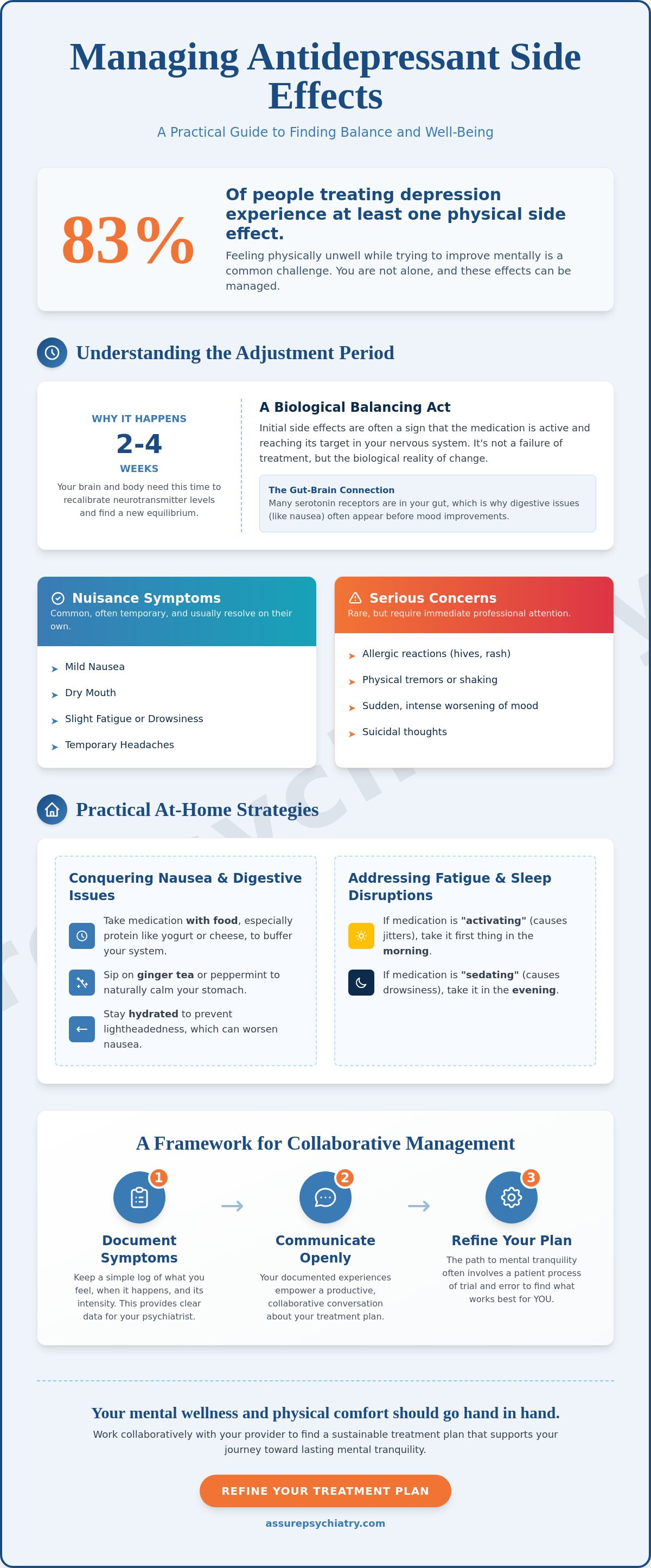
Did you know that nearly 83% of people treating depressive disorders experience at least one physical side effect? It’s incredibly frustrating to feel physically ill while you’re trying so hard to get mentally better. Whether you’re navigating unexpected weight gain, sexual dysfunction, or a persistent fog that makes you worry your personality is changing, these challenges are real and deeply personal. You aren’t alone in this struggle; managing antidepressant side effects shouldn’t feel like a trade-off between your physical health and your mental peace.
We believe that mental wellness and physical comfort should go hand in hand. This guide offers practical, evidence-based strategies to mitigate common discomforts while helping you work collaboratively with your provider to find a sustainable balance. We will explore the typical timelines for when these symptoms subside and provide the tools you need to have confident, open conversations with your Portland psychiatrist. Together, we can refine your treatment plan to ensure it supports your journey toward lasting mental tranquility and restorative health.
Key Takeaways
- Learn why your brain needs a recalibration period and how to recognize that initial symptoms are often signs your medication is effectively reaching your system.
- Discover actionable, non-medical lifestyle adjustments for managing antidepressant side effects to improve your daily comfort and physical well-being.
- Understand the temporary nature of emotional blunting or increased anxiety and why feeling “different” is a common step in the therapeutic process.
- Master a step-by-step framework for documenting your symptoms to ensure your next psychiatric appointment is productive and collaborative.
- Identify the specific criteria for when a side effect becomes intolerable and how the path to mental tranquility often involves a patient process of trial and error.
Understanding the Adjustment Period: Why Side Effects Happen
Starting a journey toward mental wellness is a courageous decision, yet the initial physical response can feel like a setback. This phase is often called the adjustment period. It represents the time your brain and body need to recalibrate neurotransmitter levels to achieve a new balance. While it’s difficult to feel physically unwell when you’re trying to heal, managing antidepressant side effects is a proactive process of understanding these signals. Most early symptoms are simply indicators that the medication is active and beginning its work within your nervous system. You aren’t experiencing a failure of treatment; you’re experiencing the biological reality of change.
A typical timeline for this biological shift is between two and four weeks. During this window, your body is working hard to reach a state of equilibrium. The broader Management of depression involves recognizing that these early hurdles are often the first step toward long-term relief. It’s helpful to categorize what you’re feeling into two groups: nuisance effects and serious concerns. Nuisance effects are common and usually resolve on their own, while serious concerns are rare but require immediate professional attention. Understanding this distinction helps lower the anxiety that often accompanies a new prescription.
- Nuisance Symptoms: These include mild nausea, dry mouth, slight fatigue, or temporary headaches.
- Serious Concerns: These include allergic reactions like hives, physical tremors, or a sudden, intense worsening of your mood.
The Biological Balancing Act
SSRIs and SNRIs function by modulating receptors found in both the central nervous system and the gastrointestinal tract. Because a significant portion of your body’s serotonin receptors are located in your gut, the digestive system often reacts first. This biological reality is why you might experience appetite changes or stomach upset before you feel a lift in your mood. Rest assured, these initial physical reactions are not a forecast of your long-term success with the medication; they’re a sign your body is responding to the treatment.
Temporary vs. Persistent Effects
It’s vital to monitor which symptoms fade and which remain. Symptoms like lightheadedness or nausea usually subside as your system adapts. Conversely, issues like sexual dysfunction or significant weight gain may persist. Through medication management portland, we work together to validate your discomfort while monitoring which effects are truly temporary. We prioritize your comfort, ensuring you don’t have to endure intolerable symptoms in the name of progress. Patience is required, but it should never come at the expense of your basic quality of life or your sense of self.
How to Manage Physical Side Effects at Home
While your body works through its initial adjustment, you don’t have to wait passively for discomfort to disappear. Taking an active role in managing antidepressant side effects can significantly improve your quality of life and help you maintain your daily routine. These home-based strategies are designed to complement your clinical care, offering practical ways to soothe physical symptoms while your neurotransmitters find their new baseline. It’s helpful to view these small lifestyle adjustments as tools for your comfort. They empower you to remain consistent with your treatment while prioritizing your physical well-being.
Conquering Nausea and Digestive Issues
Digestive upset is one of the most common early hurdles. A highly effective strategy is taking your medication with food, but the type of food matters. While simple carbohydrates like crackers are easy on the stomach, pairing your dose with a source of protein, such as yogurt or a small piece of cheese, can provide a more stable buffer for your system. Natural soothing agents like ginger tea or peppermint can also calm the gut effectively. Staying hydrated is essential; dehydration often mimics or worsens the lightheadedness sometimes associated with new prescriptions. For many patients, Coping with antidepressant side effects starts with these simple, consistent dietary habits.
Addressing Fatigue and Sleep Disruptions
The timing of your dose can be the difference between a productive day and a restless night. If your medication feels “activating” and causes jitters, taking it first thing in the morning is usually best. If it feels “sedating,” transitioning your dose to the evening may help you find better rest. Good sleep hygiene, such as keeping a cool room and avoiding screens an hour before bed, becomes even more important during this time. Some patients find that short-term sleep aids, used only under professional guidance, can bridge the gap while the body adjusts. It’s about finding the specific rhythm that works for your unique chemistry.
Managing Weight Changes and Appetite
Changes in appetite or metabolism can be particularly frustrating. Practicing mindful eating, where you focus on physical hunger cues rather than emotional cravings, helps you stay in tune with your body’s needs. Incorporating gentle movement, like a short walk in a local park, can support your metabolism without adding unnecessary physical stress. Because metabolic health is a vital part of your overall wellness, finding a psychiatrist you trust ensures that these changes are monitored with empathy and clinical precision. If you’re feeling overwhelmed by physical symptoms, reaching out for a professional medication management consultation can provide the personalized adjustments you need to regain your tranquility.
Navigating Emotional and Cognitive Shifts
Physical symptoms are often visible and tangible, but the internal shifts in your emotional landscape can feel far more personal and daunting. You might worry that your medication is changing the core of your personality or making you feel “not like yourself.” It’s vital to validate these feelings. This transition isn’t about losing your identity; it’s about your brain finding a new way to process information. A collaborative approach to managing antidepressant side effects involves distinguishing between the peace of recovery and the flatness of over-medication. True mental tranquility is the presence of peace and the ability to engage with life, whereas numbness is the absence of feeling altogether.
Having the right vocabulary helps you communicate these shifts to your provider. Many patients describe their experience using terms like “brain fog,” “apathy,” or “startup anxiety.” When you can name what you’re feeling, you’re no longer just a passive observer of your symptoms. You’re an active participant in your healing. Remember that feeling “different” is a common part of the therapeutic process as your neurotransmitters recalibrate. The goal is always to find a balance where your symptoms are managed without sacrificing your capacity for joy or your cognitive clarity. Understanding the benefits of medication management can help reframe this process as a precise, collaborative partnership rather than a guessing game.
Dealing with ‘Brain Fog’ and Apathy
Emotional blunting occurs when the medication effectively “mutes” the lows of depression but also inadvertently softens the highs of life. It can feel like a heavy fog or a sense of apathy toward things you once loved. To stay connected, try “engagement checks.” Ask yourself: “Am I avoiding this hobby because I’m depressed, or because I just don’t feel the spark?” If you’re consistently feeling numb rather than peaceful, it’s a clear sign that your dose or medication type needs a professional review. Tranquility should feel restorative, not hollow.
Managing Jitteriness and Restlessness
Certain medications, especially SNRIs, can cause a surge of “startup anxiety” during the first few weeks. This is a physiological response to increased norepinephrine or serotonin, and it doesn’t mean your condition is worsening. For immediate relief, use the 5-4-3-2-1 grounding method: acknowledge five things you see, four you can touch, three you hear, two you smell, and one you can taste. This technique pulls your focus back to the present moment. If restlessness becomes a persistent “crawling” sensation in your skin, it’s important to distinguish this medication-induced state from a clinical spike in anxiety. Your provider can help you determine if this is a temporary adjustment or a signal to pivot your treatment plan.
A Step-by-Step Framework for Collaborative Management
Managing antidepressant side effects is not a solitary burden you must carry until your body eventually yields. Instead, think of these physical and emotional responses as essential data points that help your provider fine-tune your treatment. You are the expert on your own lived experience, and your observations are the most valuable tools available for refining your care. By shifting from a passive recipient of medication to an active collaborator, you can reach your goal of mental tranquility much faster. This partnership ensures that your treatment plan evolves with you, rather than feeling like something imposed upon you.
Tracking Your Symptoms Effectively
To make your next appointment as productive as possible, start a daily log. Rate each side effect on a scale of 1 to 10 for both intensity and frequency. More importantly, note the functional impact of these symptoms. Does the midday fatigue prevent you from finishing your work? Does the restlessness make it impossible to sit through a dinner with friends? Identifying these impacts helps your provider understand the urgency of the situation. Bringing a concise symptom log to your Portland or Seattle telepsychiatry visit allows your provider to see patterns that might otherwise be missed during a standard conversation.
Questions to Ask Your Psychiatrist
When you attend your medication management appointment, come prepared with specific questions. This is your time to advocate for your comfort and clarity. Consider asking these specific questions:
- Is there a different time of day I should take this medication to minimize sleep disruption or midday grogginess?
- Could a minor dose adjustment alleviate these symptoms without losing the therapeutic benefit?
- Are there add-on medications that could help counteract these specific physical effects, such as dry mouth or jitters?
- Based on my log, is this a typical adjustment response or a signal that we should consider a different class of medication?
Don’t hesitate to bring up sensitive topics like sexual health or weight changes. These are standard clinical concerns, and your provider is there to offer solutions without judgment. Openness is the key to a restorative partnership.
While the frustration of side effects can be intense, never stop your medication cold turkey. Abruptly ending a prescription can lead to a sharp return of symptoms or physical withdrawal. Safe adjustments must always be tapered under professional supervision to protect your nervous system. If you’re ready to build a treatment plan that prioritizes your comfort, schedule a medication management consultation today to begin your collaborative journey toward wellness.
Knowing When to Switch: The Path to Mental Tranquility
There may come a point where the effort of managing antidepressant side effects begins to overshadow the benefits of the medication itself. While many symptoms resolve within the first month, some physical or emotional shifts persist. We define a side effect as “intolerable” when it consistently interferes with your ability to work, maintain relationships, or feel like a whole person. You don’t have to settle for a treatment that makes you feel diminished. Finding the right medication is often a process of trial and error, and recognizing that a specific pill isn’t the right fit for your unique chemistry is a sign of progress, not a failure of your wellness journey.
The ultimate goal of psychiatric care is mental tranquility. This is a state where the therapeutic benefits of your treatment far outweigh any minor, manageable inconveniences. One of the most significant benefits of medication management is that it replaces guesswork with a precise, ongoing clinical partnership that adapts as your needs evolve. If you find yourself in a perpetual state of discomfort, it’s a signal that your current plan needs an adjustment. Transitioning to a new medication doesn’t mean starting from scratch; it means using the data you’ve gathered about your body’s responses to make a more informed choice for your next step. Your comfort and your mental health are equally important priorities.
The Process of Switching Medications
If you and your provider decide to move in a different direction, it’s essential to follow a structured clinical plan. This often involves a “cross-taper,” where you gradually decrease the dose of your current medication while slowly introducing the new one. This method protects your nervous system and minimizes the risk of discontinuation symptoms. Sometimes, moving from a standard SSRI to an atypical antidepressant can solve specific issues like persistent fatigue or sexual dysfunction. Whether you’re adjusting your current prescription or switching psychiatrists to find a fresh perspective, having a clear roadmap is vital for your safety and peace of mind.
Compassionate Care in Portland and Beyond
At Assure Psychiatry, we’re dedicated to providing culturally competent, trauma-informed medication management that respects your individual identity. We understand the specific needs of our community in the Pacific Northwest, and we’re here to act as your collaborative guide. Our telepsychiatry services extend across Oregon and Washington, ensuring you have access to expert care from the comfort of your own home. You deserve to feel well without sacrificing your quality of life. We’re committed to staying by your side until we find the balance that brings you true, lasting tranquility. Your journey toward healing is a partnership, and your voice will always be the most important one in the room.
Embracing Your Path to Lasting Peace
Navigating the initial hurdles of treatment is a sign of your commitment to healing. These physical and emotional shifts are often temporary markers of your brain finding a new equilibrium. By using a structured framework for managing antidepressant side effects, you transform these challenges into a collaborative dialogue with your provider. You shouldn’t have to choose between feeling mentally stable and physically comfortable; true tranquility encompasses both. Your experiences are valid, and they serve as the roadmap for refining your care.
At Assure Psychiatry, Dr. Olumide Aruwajoye provides compassionate, culturally competent care that prioritizes your unique identity and comfort. We accept most major insurance plans and offer convenient telepsychiatry across Oregon and Washington to ensure your support is always within reach. You deserve a treatment plan that feels sustainable and restorative. If you’re ready to find the right balance for your mental wellness, Schedule a Medication Management Consultation with Assure Psychiatry today. Your journey toward a more peaceful life is a partnership, and we’re honored to walk beside you.
Common Questions About Antidepressant Adjustment
How long do antidepressant side effects usually last?
Most common side effects, such as mild nausea, dry mouth, or temporary headaches, typically subside within two to four weeks. This window represents the time your body needs to reach a biological equilibrium as your neurotransmitter levels recalibrate. If your symptoms persist beyond this initial adjustment period or begin to interfere with your daily functioning, it’s a signal to revisit your treatment plan with your provider.
Can I drink alcohol while managing antidepressant side effects?
It’s generally recommended to avoid or strictly limit alcohol while your body is adjusting to a new medication. Alcohol is a central nervous system depressant that can worsen side effects like dizziness, drowsiness, and impaired coordination. Furthermore, alcohol can interfere with the medication’s ability to stabilize your mood, potentially delaying the mental tranquility you are working so hard to achieve.
What should I do if my antidepressant makes me feel more anxious at first?
Startup anxiety is a common physiological response as your nervous system adapts to increased levels of serotonin or norepinephrine. If you feel more jittery or restless, try using grounding exercises or gentle movement to help process the excess energy. Always keep your psychiatrist informed of these shifts, as they can provide additional support or adjust your titration schedule to make the transition more comfortable.
Is it safe to stop taking my medication if the side effects are too much?
You should never stop your medication abruptly, as this can lead to uncomfortable discontinuation symptoms like “brain zaps” or a rapid return of mood symptoms. If you find yourself struggling with managing antidepressant side effects, contact your provider immediately. They will help you either manage the discomfort or create a safe, structured tapering plan to transition you to a more suitable option.
Can changing the time of day I take my pill help with side effects?
Yes, adjusting the timing of your dose is a simple but highly effective way to mitigate certain side effects. For example, taking a sedating medication at bedtime can help improve your sleep quality while reducing daytime grogginess. Conversely, if your medication feels activating or causes insomnia, moving your dose to the early morning can help you stay alert during the day without disrupting your night.
When should I call my psychiatrist about a side effect?
Contact your psychiatrist immediately if you experience rare but serious symptoms like a skin rash, hives, physical tremors, or a sudden worsening of your mood. You should also reach out if any “nuisance” side effects don’t subside after the first month or if they become intolerable. Your provider is your ally in this process, and they want to ensure your treatment supports your overall quality of life.
Do all antidepressants cause weight gain or sexual side effects?
No, the side effect profile varies significantly between different classes of antidepressants. While some medications are more likely to impact metabolism or sexual function, others are considered “weight-neutral” or have a lower risk of sexual dysfunction. Your psychiatrist will consider your personal health history and concerns when selecting a medication, ensuring the choice respects your physical well-being and identity.
Are there natural supplements I can take to help with side effects?
You must consult your psychiatrist before adding any natural supplements or herbal remedies to your routine. Some supplements, like St. John’s Wort, can cause dangerous interactions such as serotonin syndrome when taken with prescription antidepressants. Your provider can help you identify safe, evidence-based complementary strategies that support your health without compromising the safety or effectiveness of your primary treatment plan.
Recent Comments