

What if progress isn’t feeling completely better overnight, but noticing that an ordinary day takes a little less effort? If you’re searching “signs your psychiatric medication is working Oregon,” you may be hoping for a clear answer. It can be hard to tell whether a change comes from medication, shifting circumstances, or the natural ups and downs of symptoms. When side effects enter the picture, it’s understandable to wonder what to do next.
Medication progress is usually a pattern, not a dramatic turning point. Small changes in mood, focus, sleep, or daily routines may matter, even if challenges remain. This guide explains how to spot realistic signs of improvement, track benefits and side effects, and prepare useful observations for your prescriber. At Assure Psychiatry, medication-management follow-ups give you time to discuss what’s changing and what concerns you. Care is available in person in Portland and through virtual telepsychiatry in Oregon. You don’t have to interpret every change alone, and you shouldn’t change or stop medication without guidance from your prescriber.
Key Takeaways
- Medication may be helping when it supports meaningful progress while remaining tolerable. You and your prescriber assess the response over time.
- How soon you notice a change depends on the medication and your treatment plan. Follow your prescribed instructions and appointment schedule.
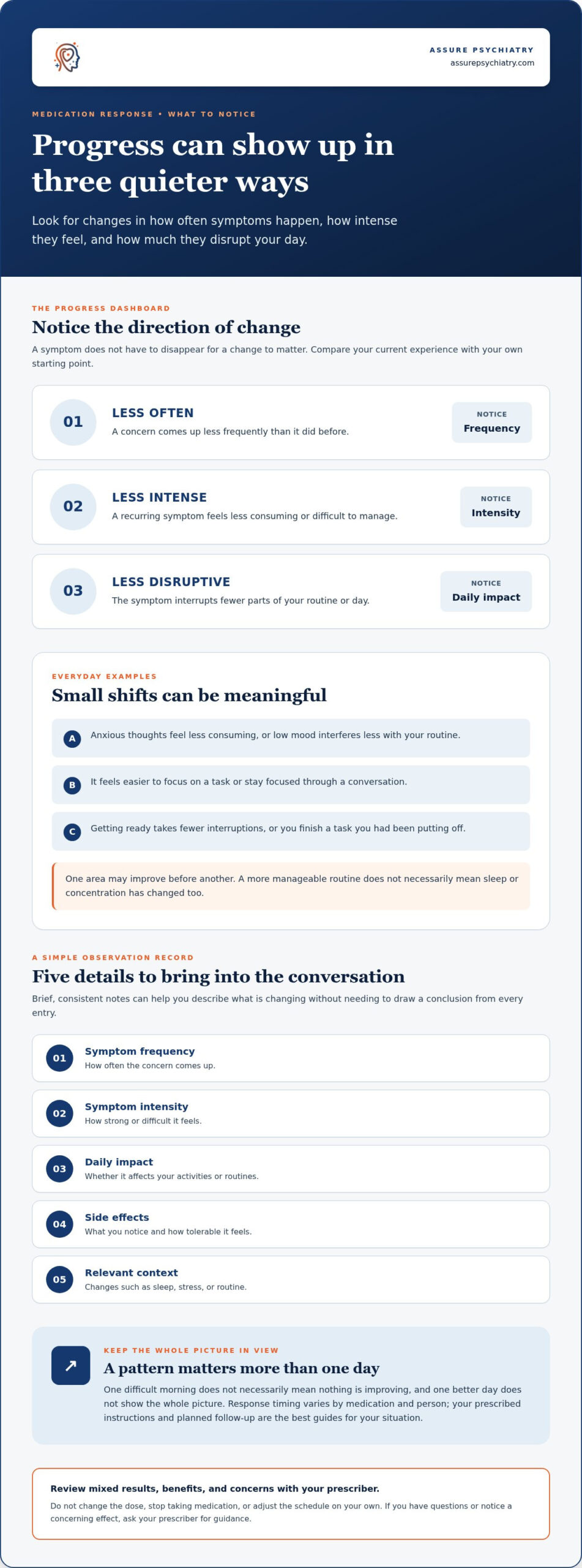
- Keep a simple record of symptom frequency, intensity, daily impact, side effects, and relevant context such as sleep or stress.
- If you’re weighing the signs your psychiatric medication is working Oregon, bring mixed results and concerns into a constructive conversation with your prescriber.
- Medication-management follow-ups with Assure Psychiatry give you and your clinician a chance to review your goals, observations, and next steps together.
What Does It Mean When Psychiatric Medication Is Working?
Waiting for change can feel uncertain, especially when symptoms affect work, school, relationships, sleep, or the routines that help you get through the day. One difficult morning doesn’t necessarily mean nothing is improving, and one better day doesn’t show the whole picture. It can take time and careful observation to understand what a change means.
Psychiatric medication may be helping when it brings meaningful improvement in the symptoms or daily challenges it’s meant to address, with side effects that are acceptable to you, as you and your prescriber assess the response over time. Improvement doesn’t have to mean every symptom disappears. Treatment goals depend on your diagnosis, medication, starting symptoms, and priorities. A general overview of psychiatric medication describes the range of medicines and uses, but your prescriber can interpret your response in the context of your care.
Which changes might count as meaningful progress?
Notice whether a concern comes up less often, feels less intense, or disrupts less of your day. Progress might mean anxious thoughts feel less consuming, low mood interferes less with your routine, or it’s easier to focus on a task. These are examples, not a checklist or a promise that any particular change will happen.
Look for practical shifts, too: getting ready with fewer interruptions, finishing a task you’ve been putting off, or staying focused through a conversation. One area may improve before another. You might find a routine more manageable while sleep or concentration still needs attention. If you’re looking for “signs your psychiatric medication is working Oregon,” focus on the specific daily challenges you and your prescriber hoped treatment would address, rather than comparing your experience with someone else’s.
Why progress does not always feel dramatic
Changes can be gradual and easy to miss in the moment. A single good day or hard day doesn’t necessarily reveal the overall pattern. Instead, consider whether a recurring symptom feels less intense or interrupts fewer parts of your routine. Comparing your current experience with your own starting point is often more useful than expecting a sudden transformation.
Medication response varies, so your observations need to be considered alongside your symptoms, goals, and treatment plan. A modest benefit is worth discussing, particularly if a concern remains difficult. If improvement hasn’t emerged as you hoped, that isn’t a personal failure. A thoughtful review can help clarify what’s changing, what hasn’t changed, and what feels difficult.
How Long Can Psychiatric Medication Take to Help?
It’s natural to want to know when you’ll feel a difference, but there isn’t one timeline for every psychiatric medication or every person. Timing can depend on the medication, the symptoms being treated, your prescriber’s plan, your health history, and how your body responds.
Response timing is specific to both the medication and the person, so it needs to be understood in clinical context rather than judged by a universal deadline. An early shift, or not noticing one yet, doesn’t by itself establish whether treatment is succeeding. Your prescribed instructions and planned follow-up are the best guides for what to expect in your situation. The National Alliance on Mental Illness explains general considerations around Mental Health Medications, including consistency and discussing concerns with a health professional.
Why response timing varies from person to person
Medication classes work in different ways and may be used for different symptoms and treatment goals. Individual health factors can also affect how a person experiences a medication. Another person’s timeline, even if they take medication for a similar concern, can’t reliably predict yours.
It also helps to distinguish an initial change from a sustained benefit with manageable side effects. A shift on one day is useful to note, but it may not show the overall pattern. Your prescriber can consider your observations alongside your symptoms, goals, and treatment plan. If you’re looking for signs your psychiatric medication is working Oregon, the most relevant timeframe is the one you review with your own prescriber.
What to do while waiting for a clearer pattern
While you’re waiting for a follow-up, follow the instructions your prescriber gave you. Don’t change the dose, stop taking medication, or adjust the schedule on your own. If you’re unsure how to take it, notice a concerning effect, or have questions before your next appointment, contact your prescriber for guidance rather than guessing.
Brief notes can make that conversation more specific. Record what you notice, when it happens, and whether it affects your daily activities. Include changes in your routine or circumstances that seem relevant. You don’t need to draw a conclusion from every entry. The goal is to share a clearer picture, not to diagnose yourself. Medication management in Portland includes recurring appointments to review effectiveness, side effects, and questions together.
Assure Psychiatry provides personalized medication management and follow-up in Portland and through virtual telepsychiatry in Oregon. Learn about Assure Psychiatry’s medication management care.
How to Track Medication Benefits and Side Effects
Details can be easy to forget between appointments, especially when symptoms and routines shift from day to day. A brief, consistent record can help you spot patterns and explain what you’re experiencing. You don’t need a complicated journal or perfect daily entries. Choose a format you’ll use, such as a notes app, calendar, or paper log, and bring it to your appointment.
What to write down before a follow-up
Start with the symptoms or goals you and your prescriber agreed to monitor. Describe what happened in plain language rather than trying to explain why. For example, note that it was hard to stay focused during a meeting or that a concern interrupted your usual evening routine.
- Concern: What symptom, treatment goal, or unwanted effect did you notice?
- Frequency and intensity: How often did it occur, and how strong or disruptive did it feel?
- Daily impact: Did it affect work, study, relationships, sleep, self-care, or another part of your routine?
- Timing and context: When did it happen? Note relevant details such as sleep, stress, schedule changes, or other circumstances.
- Side effects: What did you notice, when did it occur, and how did it affect your comfort or activities?
Also jot down questions about missed doses, other medicines or supplements, and changes in your health or routine. These details can help your prescriber understand the full picture. Tracking supports a clinical conversation; it isn’t a substitute for an assessment or a way to diagnose yourself.
How to judge change without relying on one day
Use the same simple observations over time. If you’re noting how often a symptom interrupts a routine, keep using that measure instead of switching methods from day to day. A single unusually difficult or easy day may not reflect your overall experience. Repeated notes can help you see whether a concern is changing in frequency, intensity, or impact.
Look beyond symptom ratings, too. Are everyday responsibilities easier to complete? Is it easier to keep up with study or work, connect with people, or care for yourself? Progress in one area may not match another, so record both what feels different and what remains challenging. For people searching “signs your psychiatric medication is working Oregon,” practical observations can turn a vague impression into useful details to share at follow-up.
If you use a screening questionnaire such as the PHQ-9 or GAD-7, treat its result as one discussion point, not a diagnosis or a verdict on treatment. A score doesn’t capture every part of your life. A clinician should interpret it alongside your experience and care goals. Bring your notes and questions to your appointment so you and your prescriber can decide what deserves further discussion.
What If Your Medication Is Not Helping or Side Effects Are Difficult?
Limited improvement, mixed results, or unwanted effects can be discouraging. You deserve to have those concerns heard without judgment. They don’t mean you’ve done anything wrong, and they don’t always point to one obvious next step. A conversation with your prescriber can help clarify what’s happening and what options may fit your circumstances.
Your clinician may review your symptoms, how you’ve been taking the medication, any side effects, relevant health or life changes, and your treatment goals. Be candid if you’ve missed doses or found the instructions difficult to follow. That information helps your prescriber understand the situation; it isn’t a reason to feel ashamed.
Don’t stop, restart, skip, or change a prescribed medication without guidance from your prescriber. If a concern comes up before your next appointment, contact your care team for direction rather than making a change on your own.
How to raise concerns about side effects
Specific details can make it easier to explain what feels difficult. Describe the effect in everyday language, when it started or tends to happen, how severe it feels, and what it interrupts. For example, explain whether it affects sleep, concentration, meals, work, or another part of your routine. Mention any steps you’ve already taken and whether the effect seems to be changing.
Your prescriber can discuss possible next steps based on your medication, symptoms, and health context. You don’t need to decide in advance what should change or minimize an effect because you’re worried it might seem small. If you’re searching for “signs your psychiatric medication is working Oregon,” tolerability belongs in the conversation too. Both a possible benefit and a difficult side effect deserve attention.
When symptoms worsen or immediate help is needed
A concern that can be safely discussed with your prescriber is different from a severe or rapidly worsening situation. Tell your care team promptly if your symptoms worsen significantly or you’re worried about a serious reaction. For a life-threatening emergency or immediate danger, call 911 or go to an emergency department. Don’t wait for a routine appointment.
If you’re having suicidal thoughts or facing a suicidal crisis in the United States, call or text 988 to reach the Suicide & Crisis Lifeline. If there’s immediate danger, call 911. If you can, let someone you trust know what’s happening and share urgent concerns with your care team as soon as possible.
Medication management is collaborative. If you’d like support reviewing benefits, side effects, or questions about your plan, connect with Assure Psychiatry about medication management.
Medication Follow-Up in Oregon: Build a Plan With Assure Psychiatry
A medication follow-up is a chance to review more than whether symptoms seem better or worse. You and your clinician can revisit your goals, discuss benefits and unwanted effects, and make room for questions or changes in your circumstances. That shared review keeps treatment personal rather than treating a prescription as a one-time decision.
At Assure Psychiatry, recurring medication-management appointments help monitor how treatment is going and support personalized planning. Describe what feels different, what remains challenging, and what matters most in daily life. If you’re trying to understand the signs your psychiatric medication is working Oregon, bring those observations to follow-up so your clinician can consider them alongside your goals and overall clinical picture. No single appointment or observation guarantees a particular outcome, but an open conversation can help guide next steps.
What to bring to a medication-management appointment
A little preparation can make it easier to cover what matters to you. Bring an up-to-date list of your medications, including relevant supplements, and any notes about symptoms or unwanted effects. Write down questions ahead of time, especially if you’re worried you’ll forget them during the visit.
Use your own words. For example, explain that a symptom interrupts a usual routine less often or that a side effect makes part of your day uncomfortable. Include what hasn’t changed, too. Your clinician doesn’t expect you to arrive with a conclusion; your observations help make the discussion more specific. If you’re preparing for a first appointment, this psychiatric evaluation guide may help you understand what information can be useful to share.
In-person and virtual psychiatric care in Oregon
Assure Psychiatry offers in-person appointments in Portland and virtual telepsychiatry services in Oregon. Whether you’re attending in Portland or virtually from elsewhere in Oregon, follow-up is a chance to review your experience, discuss benefits and concerns, and consider the plan together. Readers researching care from Seattle, Washington, can use the same tracking steps to prepare for a conversation with their prescriber. The Oregon telepsychiatry guide explains virtual care in more detail.
You deserve care that takes your questions seriously and makes room for your perspective. If you’re ready to discuss ongoing psychiatric medication support, explore medication management with Assure Psychiatry.
Take the Next Step at Your Own Pace
You don’t need to have your treatment figured out before asking questions. Your experience, including uncertainty or mixed feelings, is useful information. If you searched “signs your psychiatric medication is working Oregon,” remember that progress isn’t a pass-or-fail test. It’s something you and your prescriber can keep exploring together, with room to revisit what matters to you.
Consider what you’d like more support with in daily life and what you want your care to help you work toward. That gives your next conversation a starting point, even if you’re unsure whether your current plan is meeting your needs. Your priorities may evolve, and it’s okay to say so.
Assure Psychiatry provides personalized psychiatric medication management for a range of mental health concerns, with follow-up centered on your questions and goals. If you’re ready to discuss a plan that reflects your needs, explore medication management with Assure Psychiatry.
Frequently Asked Questions
Can I take a missed dose of psychiatric medication later?
Follow the instructions that came with your medication or contact your prescriber or pharmacist for guidance. What to do can vary by medication and by how much time has passed. Don’t take an extra dose or double the next one unless a healthcare professional specifically tells you to. If missed doses happen repeatedly, mention it at follow-up so your care team can help you discuss what’s getting in the way.
Can alcohol affect psychiatric medication?
Yes, alcohol can interact with some psychiatric medications and may worsen effects such as drowsiness, dizziness, or impaired coordination. The interaction depends on the medication and your circumstances, so ask your prescriber or pharmacist whether alcohol is safe for you. Until you have clear guidance, don’t assume drinking is harmless, especially if you’ve just started a medication or your treatment plan has changed.
Can psychiatric medication affect driving?
Yes, some medications can cause sleepiness, dizziness, blurred vision, or slower reactions, which may make driving unsafe. Read the medication instructions and ask your prescriber or pharmacist how it could affect you. Don’t drive, cycle in traffic, or operate machinery if you feel impaired. The phrase “signs your psychiatric medication is working Oregon” is about progress, but safety matters too. Report any effects that interfere with alertness or coordination.
Should I tell my prescriber if I am pregnant or planning a pregnancy?
Yes. Tell your prescriber if you’re pregnant, think you may be pregnant, or are planning a pregnancy, so you can discuss your medication and personal circumstances together. Don’t stop or change a prescribed medication on your own, since an abrupt change may carry risks. If you learn about a pregnancy before your next appointment, contact your care team to ask how to proceed and what information they need.
Is it safe to share my psychiatric medication with someone else?
No. Don’t share your medication, even if someone describes symptoms that sound similar to yours. A prescription is selected for an individual’s health history and needs, and the same medicine can affect another person differently or interact with their other medications. Keep it in its original container and stored safely, away from children and anyone it wasn’t prescribed for. If someone has taken your medication, seek professional guidance promptly.
What should I do if I think I took too much medication?
Call Poison Control in the United States at 1-800-222-1222 for immediate guidance, even if you feel fine. If the person has trouble breathing, collapses, has a seizure, or can’t be awakened, call 911 now. Don’t induce vomiting or wait for symptoms to appear. Keep the medication container nearby and be ready to share the name, amount, and time taken with responders or Poison Control.
Recent Comments