

What if your inability to sleep isn’t a failure of willpower or a lack of “sleep hygiene,” but a signal that your brain chemistry is simply asking for a different kind of support? While Portland was ranked as the best city for sleep in 2024, that statistic feels like a cruel joke when you’re staring at the ceiling at 3:00 AM, dreading another day in the city’s fast-paced tech or creative sectors. You’ve likely tried every over-the-counter tea and melatonin supplement on the shelf, only to find yourself trapped in a vicious cycle of anxiety about the very rest you can’t seem to find. If you’re searching for effective insomnia treatment Portland Oregon, you aren’t just looking for a temporary fix; you’re looking for a compassionate ally to help you reclaim your nights.
We understand that chronic sleeplessness is often a symptom of something deeper, whether it’s related to ADHD, anxiety, or your unique biology. This article explores how a specialized psychiatric approach in 2026 can help you finally fall asleep within 30 minutes and wake up with true mental tranquility. You’ll learn how comprehensive evaluations and modern medication management go beyond surface-level advice to address the root cause of your fatigue. We’ll also look at the latest clinical trends in Oregon, from new FDA-approved treatments to the importance of mental health parity, so you can move forward with confidence and clarity.
Key Takeaways
- Discover why a multi-modal psychiatric approach to insomnia treatment Portland Oregon is often more effective than standard “sleep hygiene” for chronic cases.
- Identify how persistent sleeplessness can be a primary symptom of underlying conditions like ADHD or high-functioning anxiety.
- Learn about the “bridge” strategy, which uses modern, non-habit-forming medications to stabilize your sleep while you work toward lasting mental tranquility.
- Understand what to expect during a comprehensive psychiatric evaluation and how virtual care makes accessing specialized support easier than ever.
- Find out how to break the “vicious cycle” of sleep anxiety and achieve the goal of falling asleep consistently within 30 minutes.
What is Specialized Insomnia Treatment in Portland, Oregon?
Specialized insomnia treatment in Portland, Oregon, isn’t just about a cooler room or a better mattress; it’s a multi-modal psychiatric strategy designed to restore the brain’s natural ability to rest. While many wellness blogs focus on sleep hygiene, clinical intervention goes much deeper. It combines a detailed psychiatric evaluation with targeted medication management to address the neurological roots of wakefulness. In the Pacific Northwest, our environment presents unique challenges. The dramatic seasonal light shifts and the high-pressure demands of Portland’s tech and creative sectors often create a perfect storm for sleep disruption. Our goal is to help you achieve mental tranquility, a state where sleep isn’t something you have to force, but a natural byproduct of a balanced mind. For those needing a comprehensive overview of insomnia, it’s clear that the condition is more than just a bad night; it’s a complex physiological challenge that deserves expert care.
The Difference Between a Sleep Coach and a Psychiatrist
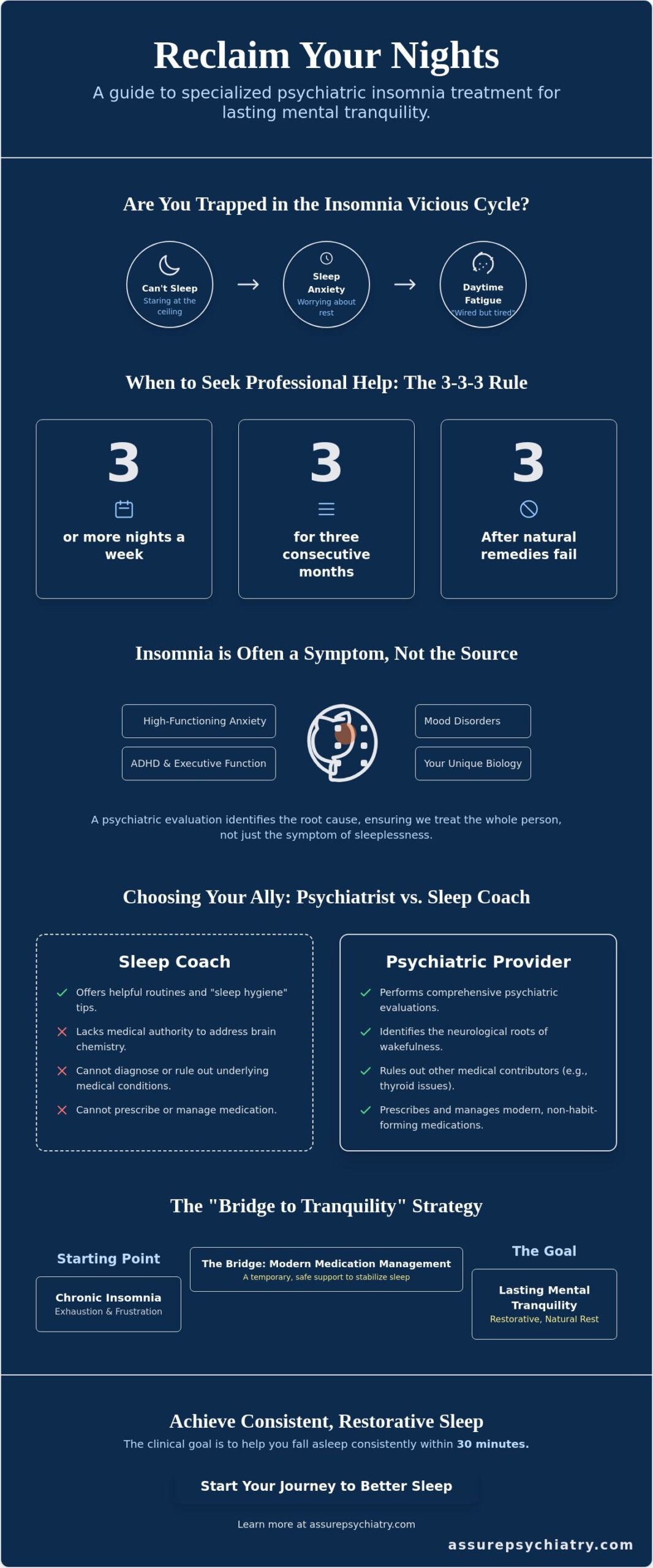
A sleep coach can offer helpful routines, but they lack the medical authority to address the chemical imbalances that often drive chronic insomnia. As psychiatric providers, we have the specialized training to prescribe and monitor sleep-regulating medications that can break the cycle of exhaustion. Before starting any treatment, we must rule out medical contributors like thyroid dysfunction or sleep apnea. This is why a psychiatric evaluation in portland serves as the essential diagnostic foundation. It ensures we aren’t just masking a symptom, but treating the whole person with scientific precision and empathy. We act as your medical ally, helping you navigate the complexities of brain chemistry until we find the right balance for your unique biology.
When to Seek Professional Help for Sleep
How do you know if your restlessness has crossed the line into a clinical concern? We often use the 3-3-3 rule as a guide: if you’re struggling to sleep at least three nights a week, for three months or more, it’s time for a professional perspective. Chronic insomnia does more than cause daytime fatigue; it erodes emotional regulation and can even compromise your safety during daily tasks. If you’ve reached a point where natural remedies like high-dose melatonin or lavender oils feel useless, your frustration is valid. You don’t have to keep trying the same ineffective methods. When your quality of life begins to suffer, seeking specialized support is the most compassionate thing you can do for yourself. We’re here to help you move past the “vicious cycle” of sleep anxiety and into a place of lasting restorative rest.
The Psychiatric Connection: Why Your Insomnia Might Be a Symptom
When you lie awake at night, your brain isn’t just refusing to sleep; it’s often communicating an unmet need in your mental health ecosystem. In a clinical setting, we view chronic sleeplessness as a “canary in the coal mine” for underlying psychiatric conditions. It is rarely an isolated issue. Instead, it frequently signals that the brain’s regulatory systems are overwhelmed. For many high-achieving professionals in the Pacific Northwest, this manifests as a “wired but tired” phenomenon. You feel physically drained after a long day, yet your mind refuses to disengage. This state of hyperarousal suggests that your nervous system is stuck in a cycle of vigilance, making it nearly impossible to access the restorative rest you need to function. Understanding this connection is a vital step toward finding effective insomnia treatment Portland Oregon.
Sleep is the cornerstone of emotional resilience. When you’re deprived of rest, your ability to regulate mood, manage stress, and process information erodes. This creates a fragile internal environment where minor stressors feel insurmountable. By framing sleep as a psychiatric priority, we can move beyond surface-level fixes and address the biological drivers of your wakefulness. Whether the root is a neurodevelopmental trait or a mood disorder, stabilizing your sleep is often the first step in restoring your overall mental tranquility.
Insomnia and Anxiety: The Feedback Loop
Nighttime rumination is a powerful thief of sleep. When the lights go out, the brain often takes the opportunity to replay the day’s events or worry about tomorrow’s challenges. This prevents the transition into “rest and digest” mode, keeping your body flooded with cortisol and adrenaline. These stress hormones act as internal stimulants, causing “broken” sleep patterns where you wake frequently or far too early. While the National Institutes of Health notes that Cognitive Behavioral Therapy for Insomnia (CBT-I) is a standard evidence-based approach, it’s often most successful when paired with medical oversight. In many cases, specialized anxiety treatment in portland can resolve sleep issues by quieting the underlying noise, allowing sleep to return naturally without a heavy reliance on sedatives.
ADHD and the Night Owl Brain
For those with ADHD, the struggle to “shut off” the brain at night is a common, frustrating reality. This is often linked to delayed sleep phase syndrome, where your internal clock is biologically set to a later schedule than the rest of the world. The ADHD brain thrives on stimulation, and the quiet of the night can ironically become a time of intense mental activity. Working with a knowledgeable ADHD psychiatrist in portland who understands these specific sleep-wake regulations is essential. By managing daytime focus and dopamine levels effectively, we can often help the brain recognize when it’s time to downshift, making the transition to sleep smoother and more predictable. If you’re ready to explore how balanced brain chemistry can lead to better rest, consider how specialized psychiatric support might be the missing piece in your journey.
Navigating Medication Management for Sleep: Safety and Strategy
We often utilize a “bridge” strategy in our practice. This involves using carefully selected medications to provide immediate relief from the crushing weight of exhaustion while we simultaneously address the root causes, such as underlying anxiety or ADHD. Think of it as a temporary scaffolding that allows your mind and body to heal. Once your sleep cycle stabilizes and your baseline mental tranquility improves, we can often begin to taper the support. It’s about empowering your biology, not replacing it. This collaborative approach ensures you remain an active participant in your own recovery, moving at a pace that feels safe and sustainable for you.
Beyond Traditional Sedatives
Modern sleep science has introduced orexin receptor antagonists, which represent a significant shift in how we treat wakefulness. These medications work by turning off the brain’s “alert” signals rather than just forcing a state of sedation. We also consider melatonin receptor agonists or off-label options, such as low-dose antidepressants or alpha-blockers, which can be particularly effective for those dealing with PTSD-related nightmares. At Assure Psychiatry, we follow a “start low, go slow” philosophy. This cautious, evidence-based method ensures your safety and allows us to monitor exactly how your unique biology responds to each adjustment, minimizing side effects while maximizing restorative benefits.
Collaborative Care and Monitoring
Effective medication management in portland isn’t a “one and done” appointment; it’s an ongoing partnership. We schedule regular follow-ups to discuss your energy levels, mood, and any changes in your sleep quality. If you use a sleep tracker like a wearable watch or ring, we encourage you to bring that data to your psychiatric appointments. Seeing your deep sleep trends or heart rate variability helps us fine-tune your toolkit with objective evidence. We’re your guides in this process, ensuring that every step forward is informed by both clinical expertise and your personal experience. Together, we’ll find the right balance that allows you to wake up feeling refreshed and ready for the day.
Your Path to Rest: What to Expect During an Evaluation in Portland
The journey toward restorative sleep often begins in a state of quiet desperation. Perhaps you found yourself searching for insomnia treatment Portland Oregon in the middle of the night, driven by the frustration of another hour lost to the ceiling’s shadows. We recognize that by the time you reach out, you aren’t just tired; you’re likely exhausted by a system that hasn’t yet offered a personalized solution. Our process is designed to lower that burden immediately. Through the ease of telepsychiatry in oregon, you can begin this journey from the comfort of your own home, removing the stress of a commute and allowing you to speak with us in the environment where you actually live and sleep. Dr. Aruwajoye provides a non-judgmental, culturally competent atmosphere where your story is the priority. You aren’t just a patient receiving a diagnosis; you’re an active participant in a collaborative treatment plan built on mutual respect and clinical expertise.
The 60-Minute Comprehensive Sleep Assessment
Your first appointment is a dedicated hour to unravel the complexities of your sleeplessness. We go far beyond asking how many hours you sleep. We dive into your full sleep history, identifying medical stressors and psychiatric symptoms that might be fueling your wakefulness. In the Pacific Northwest, we pay special attention to your circadian rhythm and how our unique seasonal light changes impact your biology. We also look at lifestyle factors specific to your daily routine. This phase concludes with collaborative goal-setting. We’ll define exactly what “better sleep” looks like for you, whether that’s falling asleep within 30 minutes or finally waking up without that heavy sense of morning dread. This clarity ensures we’re both working toward the same vision of mental tranquility.
Follow-Up Care: Fine-Tuning Your Tranquility
Once we’ve established your initial plan, the focus shifts to refinement. Follow-up appointments are typically brief 20 to 30-minute check-ins where we review your progress. If you’ve had a negative experience in the past, we can guide you through the process of switching psychiatrists to ensure your care is finally aligned with your needs. During these sessions, we adjust your plan based on real-world data and your actual energy levels throughout the day. We don’t believe in “set it and forget it” medicine. Instead, we remain your compassionate ally, fine-tuning your treatment until your rest becomes consistent and reliable. If you are ready to move from exhaustion to empowerment, you can schedule your comprehensive evaluation with our team today.
Reclaiming Your Nights: Specialized Insomnia Care at Assure Psychiatry
Chronic insomnia is more than a frustrating habit; it’s a complex medical condition that often requires a specialized psychiatric approach to resolve. If you’ve felt lost in the healthcare system or dismissed by standard advice, our practice offers the missing piece by treating sleep as a fundamental pillar of your neurological health. We are deeply committed to providing inclusive, empathetic care for all Oregonians, ensuring that every person who reaches out feels seen, heard, and validated. Whether you prefer in-person visits in Portland or the convenience of statewide telepsychiatry, our goal remains the same: we want you to stop “trying to sleep” and start “recovering sleep” with professional guidance. By addressing the biological and emotional barriers to rest, we act as your compassionate ally in the journey toward a balanced and restorative life.
Accessible Care Throughout Oregon and Washington
We’ve designed our practice to be as accessible as possible because we know that a long, stressful commute is the last thing an exhausted person needs. For patients in Seattle, Vancouver, or the rural stretches of Oregon, our virtual visits provide a seamless way to access high-level insomnia treatment Portland Oregon without leaving your home. Telepsychiatry allows for consistent, reliable care that fits into your actual life, reducing the anxiety often associated with traditional medical appointments. This flexibility ensures that no matter where you are in the Pacific Northwest, the destination of mental tranquility is within your reach. We believe that professional support should provide a stable environment where you can find peace, regardless of your zip code or schedule.
Insurance and Next Steps
Financial stress shouldn’t be another reason you’re staying awake at night. To make our specialized care more accessible, Assure Psychiatry accepts most major insurance plans, allowing you to focus on your recovery rather than the administrative burden. Taking the first step toward better rest can feel daunting when you’re already drained, but you don’t have to navigate this transition alone. We invite you to book your initial evaluation today to begin the process of reclaiming your nights. Remember, rest is not a luxury; it is your foundation. It is the steady ground upon which your mental wellness and daytime focus are built. Let’s work together to restore the quiet strength and reliability that comes from a truly balanced mind and a full night of sleep.
Reclaiming Your Right to Restful Nights
You’ve seen that chronic sleeplessness isn’t a life sentence or a personal failure. It’s often a complex signal from your brain that requires a medical ally to decipher. By addressing the psychiatric roots of your wakefulness and utilizing modern, strategic medication management, you can finally break the cycle of exhaustion. Our goal is to move you from the frustration of failed supplements toward a state of lasting mental tranquility where sleep becomes a natural, effortless byproduct of a balanced mind.
Led by Dr. Olumide Aruwajoye, Assure Psychiatry provides compassionate and culturally competent care tailored to your unique identity. We offer flexible telepsychiatry options for all residents of Oregon and Washington, ensuring that high-quality insomnia treatment Portland Oregon is always within reach. We accept most major insurance plans, including Aetna, BCBS, and Cigna, to reduce financial stress and prioritize your recovery. Schedule your comprehensive insomnia evaluation with Assure Psychiatry today.
Your foundation for a better tomorrow starts with a full night of sleep tonight. You don’t have to navigate the darkness alone; we’re ready to help you find your way back to restorative rest.
Frequently Asked Questions
Is insomnia medication safe for long-term use?
Modern insomnia medications are significantly safer than older sedatives; many are designed to be non-habit forming and suitable for extended use under professional guidance. We often use these as a “bridge” to restore your sleep architecture while we treat the underlying anxiety or biology. Your safety is our priority, so we monitor your progress through regular follow-up appointments to ensure the treatment remains effective without causing daytime grogginess or dependency.
Do I need a referral to see a psychiatrist for insomnia in Portland?
You don’t usually need a formal referral from a primary care doctor to begin insomnia treatment Portland Oregon at our practice. We welcome patients to reach out directly to schedule a comprehensive evaluation. However, it’s always a good idea to check with your specific insurance provider, as some HMO plans might require a referral to ensure your visits are covered at the highest benefit level.
Can I get a sleep medication prescription through telepsychiatry in Oregon?
Yes, you can receive a prescription for sleep medication through a virtual visit as long as your provider is licensed to practice in Oregon. Telepsychiatry is a highly effective and legally recognized method for delivering psychiatric care in our state. During your video consultation, we’ll perform a thorough assessment to determine which medication is safest for your needs and then send the prescription directly to your local pharmacy.
What is the difference between insomnia and just being a ‘night owl’?
Being a “night owl” is a natural circadian preference, whereas insomnia is a clinical condition characterized by significant distress and daytime impairment. If you’re a night owl, you likely feel refreshed after sleeping on your preferred late schedule. If you have insomnia, you struggle to sleep regardless of the time and feel the consequences, such as fatigue or irritability, throughout your workday in Portland’s competitive sectors.
Will insurance cover my psychiatric evaluation for sleep issues?
Most major insurance plans cover psychiatric evaluations for sleep issues because insomnia is recognized as a legitimate medical and mental health condition. Oregon is currently conducting a Mental Health Parity Evaluation in 2026 to ensure that coverage for mental health is equal to medical services. We accept many providers, including Aetna and Cigna, helping to lower the financial barrier so you can focus on achieving mental tranquility.
How long does it take to see results from psychiatric insomnia treatment?
Many patients experience a noticeable improvement in their ability to fall asleep within the first few days of starting a new medication plan. However, achieving lasting, restorative sleep and full mental tranquility usually requires a few weeks of collaborative fine-tuning. We’ll work closely with you during follow-up check-ins to adjust dosages and monitor your energy levels, ensuring your treatment plan is perfectly calibrated to your unique biology.
Can ADHD medication cause insomnia, and how do you manage that?
Stimulant medications for ADHD can sometimes interfere with sleep, but this is a manageable side effect that we address through careful timing and dosage adjustments. We might suggest taking your medication earlier in the day or exploring non-stimulant options that provide focus without the nighttime “wired” feeling. By balancing your daytime focus with your need for rest, we can help you manage both conditions effectively without sacrificing your sleep quality.
What should I do if I’ve already tried CBT-I and it didn’t work?
If CBT-I didn’t provide the relief you expected, a psychiatric approach to insomnia treatment Portland Oregon may be the necessary next step. While therapy is excellent for behavioral changes, it cannot always overcome the biological or chemical imbalances that drive chronic wakefulness. A psychiatrist can evaluate these physiological factors and use medication management to provide the relief that behavioral changes alone might have missed.
Recent Comments