

In 2026, 63.7% of people seeking mental health support are doing so for anxiety, yet many continue to suffer in silence because they aren’t sure if their struggle is “medical” enough. You might find yourself lying awake at night or noticing physical tension that won’t go away, even after months of talk therapy. It’s natural to feel stuck and wonder exactly when to see a psychiatrist for anxiety. Perhaps you worry that a medical consultation means losing your identity to medication, or you feel that your symptoms should be something you can simply think your way through.
We understand these concerns and want to validate that your experience is both real and significant. You deserve to understand the biological roots of your restlessness without the fear of being over-medicated. This article will help you discover when your anxiety requires the specialized lens of a medical expert to help you find lasting mental tranquility. We’ll provide a clear path forward by debunking five common myths that often prevent people from accessing the comprehensive psychiatric care they need to feel like themselves again.
Key Takeaways
- Recognize that seeking help isn’t reserved for moments of crisis; proactive medical care addresses the biological roots of your anxiety before it dominates your life.
- Discover how modern medication management often acts as a temporary bridge to restore your internal balance rather than a lifelong requirement.
- Clarify the distinct roles of therapists and psychiatrists so you can choose the right specialist for your specific symptoms and recovery goals.
- Identify five key physical and emotional signals that help you determine exactly when to see a psychiatrist for anxiety for a comprehensive medical evaluation.
- Learn how personalized psychiatric care and the convenience of telepsychiatry can guide you toward a lasting sense of mental tranquility.
Myth #1: “I Only Need a Psychiatrist if I’m Having a Mental Health Crisis”
Many people view a psychiatrist as a “break glass in case of emergency” resource. This perspective often stems from a misunderstanding of what these medical professionals actually do. A psychiatrist is a medical doctor who specializes in the biological roots of mental health. They look beyond your thoughts to examine brain chemistry, genetics, and physiological feedback loops. Determining when to see a psychiatrist for anxiety shouldn’t depend on how close you are to a breaking point.
Waiting for a crisis can actually complicate your recovery journey. When your system is in a state of total collapse, the primary goal is rapid stabilization, which is a different process than long-term healing. By seeking care earlier, you focus on sustainable stabilization care. This approach aims for mental tranquility rather than just survival. Early intervention is also vital because it helps prevent anxiety from evolving into comorbid depression. This is a common occurrence when the nervous system remains overstimulated for too long without medical support.
The Difference Between Daily Stress and Clinical Anxiety
It’s easy to dismiss persistent worry as just “having a lot on your plate.” However, there’s a clear threshold where stress becomes a medical condition. While stress is usually a temporary reaction to external pressure, a diagnosed Anxiety disorder remains even when the external pressure is gone. It’s persistent. Generalized Anxiety Disorder (GAD) represents a persistent biological state where your body stays in high-alert mode. Clinical anxiety is a physiological mismatch between perceived threat and actual safety.
Proactive Psychiatry: Building a Foundation for Peace
Choosing a proactive path allows you to build a foundation for lasting peace. A comprehensive psychiatric evaluation provides a vital baseline for your mental health, identifying exactly where your biological systems need support. Through precise medication management, we can help lower the intensity of your symptoms, preventing future panic episodes before they start. If you’re looking for guidance on how to start this journey locally, our anxiety treatment portland pillar offers a detailed look at navigating care in our community. Understanding when to see a psychiatrist for anxiety is about recognizing that your peace of mind is worth protecting before it’s lost.
Myth #2: “Seeing a Psychiatrist Means I’ll Have to Take Medication Forever”
One of the most common hesitations people face when deciding when to see a psychiatrist for anxiety is the fear of permanent dependency. You might worry that starting a prescription means you’ll be tied to a pill bottle for the rest of your life. In reality, modern psychiatric care views medication as a strategic tool rather than a lifelong sentence. Think of it as “lowering the volume” on your nervous system. When the static of constant worry is turned down, you finally have the mental space to engage with the world again.
This approach relies on the principle of neuroplasticity. Your brain isn’t a static organ; it’s capable of forming new pathways and healing itself. Often, medication provides the stability your brain needs to begin this restorative process. Once those healthier patterns are established and your environment feels manageable, many patients work with their providers to gradually taper off their prescriptions. Our goal is always the minimum effective dose to achieve the maximum quality of life. We want you to feel like the best version of yourself, not a muted version.
How Medication Supports Talk Therapy
There’s a biological reason why “just thinking positive” doesn’t work when you’re in the middle of a panic cycle. When your brain is in a state of high alert, the emotional center (the amygdala) effectively hijacks the logical center. This makes it nearly impossible to utilize the tools you learn in talk therapy. Medication acts as a bridge, calming the physiological fire so you can actually process and implement behavioral changes. For a deeper look at how these clinical approaches work together, you can explore our comprehensive guide to generalized anxiety disorder treatment. Understanding how these treatments overlap helps clarify when to see a psychiatrist for anxiety as a partner in your total wellness plan.
The Goal of Medication Management
Effective care is a collaborative, ongoing conversation. Through regular medication management appointments, we monitor how you’re feeling, track any side effects, and adjust your plan as your needs evolve. This process directly addresses the myth that psychiatric meds will “change your personality.” A properly managed treatment plan shouldn’t make you feel like a “zombie” or leave you feeling numb. Instead, it should clear the fog of Generalized Anxiety Disorder so your true personality can shine through. If you’ve felt that your progress has plateaued, a professional psychiatric evaluation can help determine if a medical adjustment could be the missing piece of your puzzle.
Psychiatrist vs. Therapist: Which One Do I Actually Need?
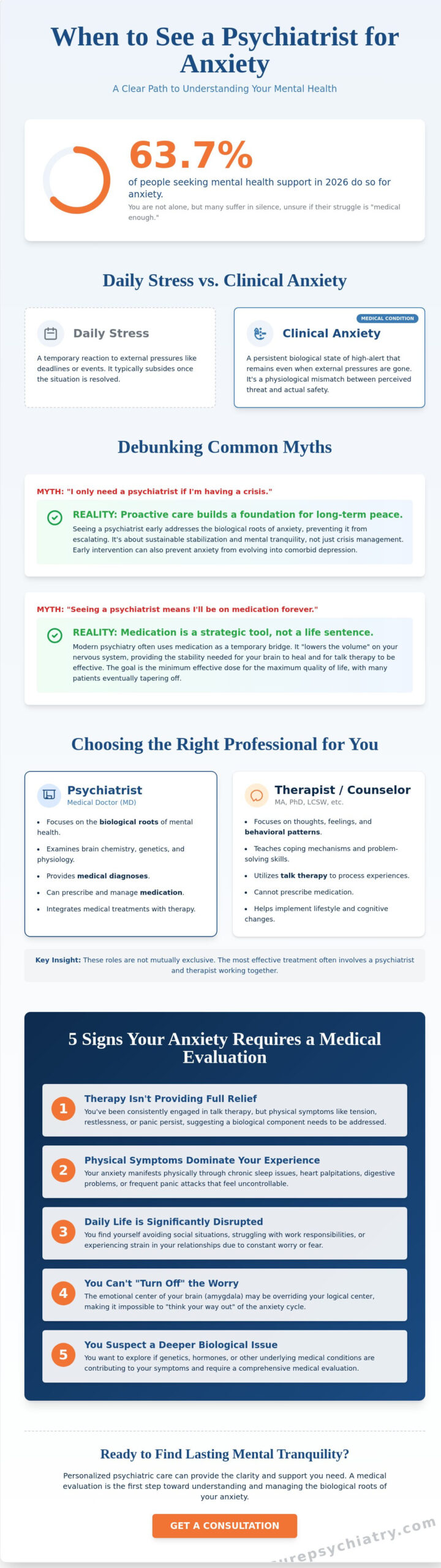
Choosing between a psychiatrist and a therapist often feels like a fork in the road, but it’s helpful to understand that these specialists play different roles in your recovery. A psychiatrist is a medical doctor (MD or DO) who has completed medical school and years of specialized residency. Their expertise lies in the biological and chemical underpinnings of mental health. In contrast, therapists, such as psychologists (PhD/PsyD) or licensed clinical social workers (LCSW), focus on behavioral patterns, coping strategies, and relational dynamics. While a therapist helps you navigate “why” you feel a certain way, a psychiatrist addresses “how” your body is physically responding to those feelings.
Many patients find that a dual-provider approach offers the most comprehensive path to mental tranquility. If you feel that your progress in talk therapy has stalled, it might be time to consider when to see a psychiatrist for anxiety. Prioritizing a medical psychiatric evaluation in portland allows you to look at the physiological side of the equation, ensuring that your brain chemistry is supporting your emotional work rather than working against it.
When Therapy Isn’t Enough: Signs of a Biological Component
Sometimes, anxiety is more than just a reaction to life’s stressors; it’s a deeply rooted biological event. You might notice physical symptoms that feel entirely outside your control. Heart palpitations, night sweats, tremors, and persistent digestive issues are often indicators that your nervous system is stuck in a “fight or flight” loop. Genetics and family history also play a significant role in how your body processes stress. When your nervous system is chronically dysregulated, “talking it out” isn’t always enough to reset the internal alarm. In these cases, when to see a psychiatrist for anxiety becomes a question of addressing the physical roots of your distress.
The Synergy of Integrated Care
The most effective treatment plans often involve a synergy between medical and behavioral care. Psychiatrists and therapists frequently collaborate to ensure every aspect of a patient’s wellness is covered. At Assure Psychiatry, we focus specifically on the medical side of this equation through psychiatric evaluations and medication management. We don’t provide long-term psychotherapy, but we value the work you do with your therapist. By working alongside your existing mental health team, we help create a stable biological environment where your behavioral tools can finally take hold. This collaborative approach ensures you feel seen as a whole person, not just a set of symptoms.
Five Signs Your Anxiety Requires a Medical Evaluation
Identifying the right moment to seek medical intervention can be difficult when you’re already feeling overwhelmed. It’s not just about the intensity of your worry; it’s about how that worry interferes with your ability to live a full and vibrant life. Knowing when to see a psychiatrist for anxiety often comes down to recognizing when your symptoms have moved beyond typical stress and into a state of biological dysregulation. If you find yourself nodding along to these indicators, it’s a sign that your nervous system may need specialized medical support to regain its balance.
- Physical symptoms dominate your day: Insomnia, chest pain, and tremors are more than just uncomfortable; they’re signs that your body’s “fight or flight” response is stuck in the “on” position.
- Your anxiety feels “untethered”: If you feel a sense of dread or panic that isn’t connected to a specific life event or stressor, it suggests a biological misfiring that requires a medical lens.
- A family history of mental health struggles: Having relatives with anxiety, depression, or bipolar disorder can increase your genetic predisposition to similar chemical imbalances.
- You’re self-medicating: Using alcohol, nicotine, or other substances to “quiet” your mind often creates new biological feedback loops that make the underlying anxiety harder to treat.
- Functional impairment in Portland: When anxiety prevents you from succeeding at your job or maintaining healthy relationships with friends and family, it’s time for professional intervention.
Recognizing Panic Disorder and Severe GAD
While everyone experiences occasional worry, panic disorder involves sudden, intense surges of fear that can feel like a medical emergency. These episodes are often physically exhausting and leave you in a constant state of “fear of the fear.” A psychiatrist uses a clinical evaluation to distinguish between general worry and these specific conditions, ensuring you receive the correct diagnosis. If you’ve been experiencing these overwhelming episodes, our guide on panic disorder treatment in portland provides a roadmap for your recovery. Understanding when to see a psychiatrist for anxiety is the first step toward reclaiming your sense of safety.
When Anxiety Affects Your Sleep and Physical Health
Chronic anxiety keeps your body in a state of high alert, leading to consistent cortisol spikes that wear down your physical health over time. This often results in sleep-wake cycle disruptions that leave you feeling “tired but wired.” A psychiatrist can help address these biological imbalances through targeted medication management and psychiatric evaluations. Treating anxiety is often the first step in resolving unexplained physical fatigue. If you’ve tried standard treatments without success, specialized treatment resistant anxiety Portland care may offer the precise biological map your nervous system needs. If these signs resonate with your current experience, you can schedule a psychiatric evaluation today to start your journey toward mental tranquility.
Finding Tranquility: Psychiatric Care in Portland and Beyond
At Assure Psychiatry, we believe that mental health care should be as inclusive as it is expert. Our approach is grounded in the understanding that every individual’s journey toward mental tranquility is unique. We provide a stable environment where you feel seen and heard rather than just diagnosed. Deciding when to see a psychiatrist for anxiety is often the first step in a collaborative partnership where we work together to restore your sense of peace. Whether you’re navigating the complexities of insurance or prefer a private pay model, our team helps you understand your options in the 2026 healthcare landscape.
A comprehensive diagnostic assessment is the cornerstone of our work. This initial meeting allows us to look beyond surface-level symptoms to find the biological and physiological roots of your distress. By establishing this clear baseline, we can develop a personalized plan that respects your identity and your specific goals for recovery. We don’t believe in a one-size-fits-all approach; instead, we prioritize restorative action that fits your life. This process ensures that you aren’t just managing symptoms, but actively building a foundation for long-term health.
Virtual Care for Portland, Seattle, and Rural Oregon
Accessing high-quality care shouldn’t be limited by your zip code or a busy schedule. For many professionals or those managing social anxiety, the traditional office visit can feel like an added hurdle. Our telepsychiatry in oregon and Washington services offer a secure, private way to receive expert care from the comfort of your home. Thanks to the extension of federal telehealth flexibilities through December 31, 2026, we can continue providing comprehensive medication management and evaluations via audio-video platforms. This ensures that safety and consistency remain at the heart of your treatment plan, regardless of whether you’re in the heart of Portland or a rural community. We prioritize your privacy and use encrypted, healthcare-grade technology to maintain a safe virtual space.
Your First Appointment: A Step Toward Mental Peace
Your journey begins with a dedicated 60-minute psychiatric evaluation. During this time, Dr. Aruwajoye provides a non-judgmental and inclusive environment where you can speak openly about your experiences. We’ll discuss your history, your current challenges, and your hopes for the future. This isn’t just a clinical interview; it’s a professional consultation designed to empower you as an active participant in your care. Understanding when to see a psychiatrist for anxiety means recognizing that you don’t have to navigate these feelings alone. If you’re ready to move past the plateau and find a clear path forward, schedule your evaluation with Assure Psychiatry today and take the first step toward the tranquility you deserve.
Reclaiming Your Peace of Mind
Deciding to take the next step in your mental health journey is an act of courage and self-care. We’ve explored how psychiatric care serves as a medical bridge to stability rather than a last resort for emergencies. You’ve learned that medication is often a temporary tool to help reset your nervous system, allowing your true self to emerge from the fog of worry. Understanding when to see a psychiatrist for anxiety is ultimately about recognizing that you deserve more than just “getting by.” You deserve a life defined by mental tranquility and physiological balance.
Assure Psychiatry is here to act as your compassionate ally. We provide board-certified psychiatric expertise and trauma-informed care specifically for individuals in Portland and Seattle. Our practice accepts major insurance plans, including Aetna and Blue Cross Blue Shield, to help lower the barriers to the support you need. Whether you’re seeking a diagnostic baseline or a fresh perspective on your current treatment, we’re committed to your long-term wellness. Begin your journey toward mental tranquility; schedule a Psychiatric Evaluation with Assure Psychiatry. You’re not alone in this, and a calmer future is well within reach.
Frequently Asked Questions
Is a psychiatrist better than a therapist for anxiety?
Neither professional is inherently better; rather, they provide different types of specialized support. A psychiatrist is a medical doctor who focuses on the biological and chemical aspects of your symptoms, while a therapist helps you navigate behavioral patterns and coping strategies. Many people find the most success by combining these approaches to address both the physical and emotional roots of their distress.
What will a psychiatrist do for my anxiety during the first visit?
During your initial 60-minute psychiatric evaluation, we’ll discuss your medical history, current symptoms, and your goals for treatment. This session is a collaborative consultation where we listen to your story without judgment. By the end of the visit, we’ll work together to establish a personalized path forward that may include medication management or restorative lifestyle adjustments.
Can a psychiatrist prescribe anxiety medication online in Oregon?
Yes, you can access psychiatric care and prescriptions through telepsychiatry in Oregon. Current federal regulations from the DEA and HHS have extended telehealth flexibilities for prescribing through December 31, 2026. This allows you to receive expert care and necessary medications from the convenience of your own home, though Medicare patients should check specific 2026 requirements for periodic in-person visits.
How do I know if my anxiety is “severe enough” for a doctor?
Your anxiety is “severe enough” if it consistently interferes with your quality of life, sleep, or physical health. You don’t have to wait for a mental health crisis to decide when to see a psychiatrist for anxiety. If your symptoms feel untethered to specific events or if talk therapy has reached a plateau, a medical evaluation can offer the clarity you need.
What are the most common medications prescribed for anxiety in 2026?
The most common treatments include SSRIs and SNRIs, which help regulate the brain’s chemical messengers. In 2026, the focus has shifted toward highly personalized care that considers your unique biological makeup and history. We aim to find the minimum effective dose that allows you to feel like yourself again while prioritizing your long-term safety and minimizing potential side effects.
Does Assure Psychiatry accept insurance for anxiety treatment?
Yes, Assure Psychiatry accepts several major insurance plans, including Aetna and Blue Cross Blue Shield. We believe that professional medical care should be accessible and sustainable for everyone in our community. If you’re using a different provider or prefer private pay, we can discuss those options during your initial inquiry to ensure you feel comfortable with your care plan.
How long does it take for anxiety medication to start working?
Most anxiety medications take approximately 4 to 6 weeks to reach their full therapeutic effect. While some patients notice subtle improvements in their sleep or physical tension within the first few weeks, the biological shift takes time. We schedule regular follow-up appointments to monitor your progress and make any necessary adjustments to ensure you’re moving toward mental tranquility.
What if I want to try treatment without medication first?
Choosing to explore non-medication options is a valid part of your wellness journey. A psychiatric evaluation can still be incredibly beneficial as it provides a professional medical baseline of your mental health. We can help you understand the physiological factors at play and discuss how lifestyle changes or specific therapeutic interventions might support your personal goal of finding peace.
Recent Comments