
Your panic attacks aren’t a sign of character weakness; they’re a physiological “false alarm” that requires a clinical reset rather than just another coping skill. It’s physically exhausting to live in a constant state of high alert, especially when you’re worried that a simple trip to a local park might spiral into what feels like a medical emergency. We understand how isolating it feels to fear the next episode while trying to maintain your daily routine. Finding effective panic disorder treatment in Portland is the first step toward reclaiming your life from these overwhelming sensations.
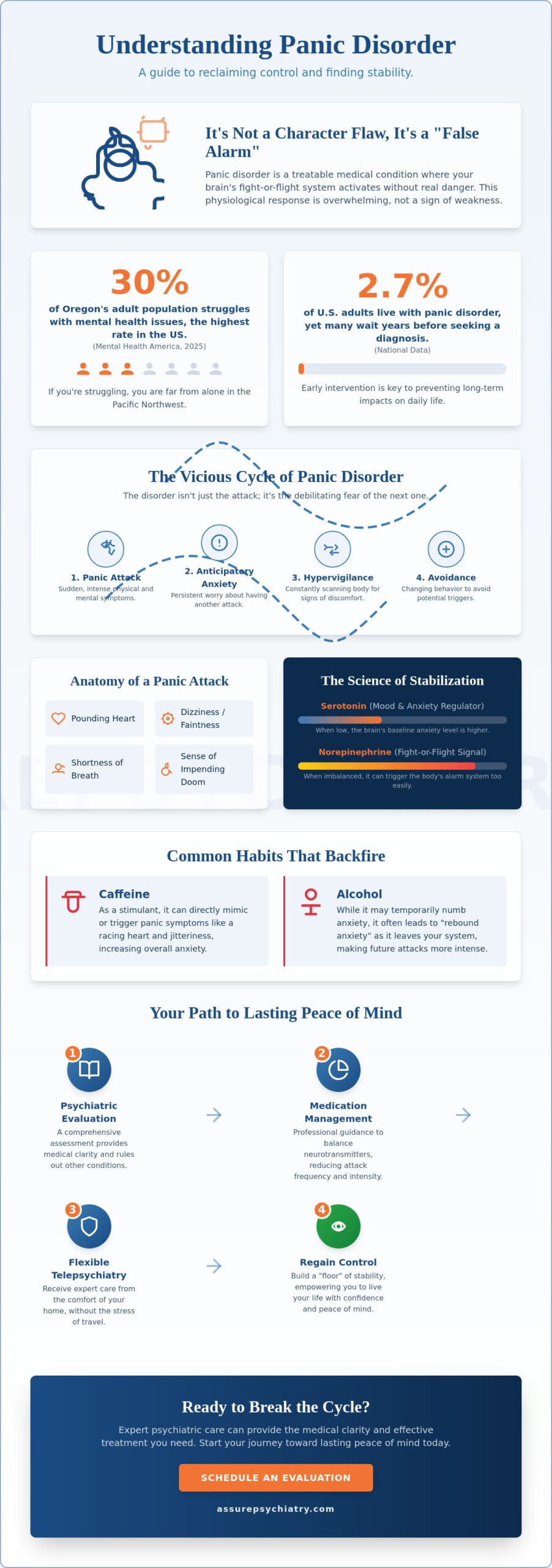
With 30% of Oregon’s adult population struggling with mental health issues according to a 2025 Mental Health America report, you aren’t alone in this journey. This article will show you how specialized psychiatric evaluation and medication management can help you regain control and find lasting peace of mind. We’ll preview how a clear diagnosis from a local expert and a flexible treatment plan involving telehealth can fit into your busy Portland lifestyle, ensuring you have the support you need every step of the way.
Key Takeaways
- Learn why panic attacks are a physiological “false alarm” in your brain’s fight-or-flight system rather than a sign of character weakness.
- Discover how a comprehensive psychiatric evaluation for panic disorder treatment in Portland provides the medical clarity needed to distinguish attacks from physical emergencies.
- Explore how professional medication management balances key neurotransmitters like serotonin to reduce the frequency and intensity of future episodes.
- Understand the benefits of telepsychiatry in Oregon and Washington, which allows you to receive expert care without the stress of travel or public transit.
- Find out how a collaborative approach to psychiatric care focuses on empowering you to achieve lasting peace of mind and positive mental health.
Understanding Panic Disorder: More Than Just a Panic Attack
Panic disorder is often misunderstood as simply having a high frequency of panic attacks. While the attacks themselves are intense, the clinical diagnosis actually centers on the persistent, debilitating fear of when the next episode will occur. This state, known as anticipatory anxiety, creates a cycle where you’re constantly scanning your body for the slightest hint of discomfort. For many individuals seeking panic disorder treatment in Portland, the true burden isn’t just the ten minutes of a physical peak; it’s the twenty-three hours and fifty minutes spent worrying about it. This condition acts like a “false alarm” in your brain’s fight-or-flight system, triggering a massive survival response when no actual danger is present.
Physical symptoms can be so convincing that they mimic life-threatening emergencies. You might experience pounding heart palpitations, a sudden inability to catch your breath, or a profound sense of impending doom. Clinically, an attack becomes a disorder when these episodes are unexpected and followed by at least one month of persistent concern about additional attacks or significant changes in behavior to avoid them. Understanding Panic Disorder as a legitimate medical condition helps strip away the shame often associated with these experiences.
The Anatomy of a Panic Attack
When an attack begins, your adrenal glands flood your system with adrenaline and cortisol. This physiological cascade prepares your muscles to fight or flee, but since there’s no physical threat, the energy has nowhere to go. This leads to the common fear that you’re having a heart attack or “losing your mind.” It’s important to remember that panic disorder is a highly treatable medical condition that responds well to professional intervention. Your nervous system isn’t broken; it’s simply over-responsive to internal stress signals.
Why Panic Disorder is Common in Portland
Living in the Pacific Northwest presents unique environmental factors that can influence your mental health. Portland’s urban density and workplace pressures contribute to a baseline of high stress, while our famous seasonal shifts can impact your nervous system’s resilience. According to 2025 data, 30% of Oregon’s adult population struggles with mental health issues, the highest rate in the country. The grey, rainy months often lead to seasonal affective changes that can make the sensory overload of a busy city feel even more overwhelming. If you feel like the local environment is exacerbating your symptoms, your experience is valid. Finding panic disorder treatment in Portland that accounts for these local stressors is essential for your recovery journey.
The Science of Stabilization: How Psychiatry Treats Panic
Your brain’s messaging system relies on delicate chemical balances. When you’re looking for panic disorder treatment in Portland, it’s vital to understand that panic isn’t just “in your head”; it’s in your biology. Two primary neurotransmitters, serotonin and norepinephrine, play central roles in how your brain processes fear. Serotonin helps regulate your mood and anxiety levels, while norepinephrine is the chemical that signals your body’s fight-or-flight response. When these chemicals are out of sync, your internal alarm system stays stuck in the “on” position.
Many people try to manage these overwhelming feelings on their own. You might reach for extra coffee to combat the exhaustion of being on high alert, or perhaps a glass of wine to quiet racing thoughts. Unfortunately, these habits often backfire. Caffeine is a stimulant that can mimic or trigger physical panic symptoms like a racing heart. Alcohol, while temporarily numbing, can lead to “rebound anxiety” as it leaves your system, making the next attack even more intense.
Think of psychiatric medication as a way to build a “floor” of stability. It doesn’t change who you are; it simply raises the baseline so you aren’t constantly teetering on the edge of a crisis. Exploring Panic Disorder Treatment Options with a professional allows you to address these biological triggers head-on. National data suggests that 2.7% of U.S. adults live with this condition, yet many wait years before seeking a clinical diagnosis. Building this medical foundation is often the first step toward lasting peace of mind.
The Role of Medication Management
Medication management is a cornerstone of recovery for many. Selective Serotonin Reuptake Inhibitors (SSRIs) and Serotonin-Norepinephrine Reuptake Inhibitors (SNRIs) act as long-term stabilizers for the nervous system. They work by gradually helping your brain maintain a calmer state over time. In some cases, we may also discuss the strategic use of “as-needed” medications to provide relief during acute symptoms. This is always a collaborative process. We believe you should be an active participant in your care, making informed decisions about what feels right for your body. If you’re ready to explore these options, a professional evaluation can help clarify the best path forward.
Psychiatric Evaluation vs. General Checkups
A general medical checkup is important, but a specialized psychiatric evaluation goes deeper. Panic symptoms can often overlap with other conditions like ADHD or PTSD. For example, the impulsivity of ADHD or the hypervigilance of PTSD can sometimes be mistaken for a simple panic attack. At Assure Psychiatry, our diagnostic assessment is thorough and empathetic. We prioritize culturally competent care, ensuring your unique identity and background are respected during every step of the process. This specialized focus ensures you receive an accurate diagnosis and a panic disorder treatment in Portland plan tailored specifically to your needs.
Treatment Pathways: Comparing Medical and Therapeutic Options
When exploring panic disorder treatment in Portland, you’ll likely encounter several different philosophies. Some clinics advocate strictly for exposure therapy, while others focus on long-term residential stays. However, recovery isn’t a binary choice between medication and “talking it out.” Instead, the most effective models often utilize a combined approach. For patients in acute distress, whose lives are being disrupted by daily attacks, a medication-first strategy provides the immediate stabilization necessary to even begin the work of therapy. You can’t learn new coping skills while your nervous system is in a state of total collapse.
A common concern many patients share is the fear of being “on medication forever.” This is a valid question that deserves a transparent answer. For many, psychotropic medication acts as a bridge rather than a permanent destination. It provides a season of stability, allowing your brain’s chemistry to reset while you build the resilience needed to manage stressors independently. Once that “floor” of safety is established, we work collaboratively with you to determine the long-term path that best supports your peace of mind. This synergy between psychiatric stabilization and learning new skills is what leads to lasting recovery.
Medication Management: A Targeted Approach
Finding the right balance requires a precise, clinical eye. Medication management involves more than just a prescription; it’s a dynamic process of finding the specific dosage that works for your unique physiology while carefully monitoring for side effects. Consistency is vital here. Skipping doses can lead to a “rebound” effect, where panic symptoms return with increased intensity because the nervous system hasn’t had time to fully stabilize. Ultimately, medication management provides the mental space for recovery by quieting the constant background noise of anxiety.
Why One Size Does Not Fit All
Every person’s journey with panic is distinct. Your medical history, genetic factors, and even your daily environment play roles in how you respond to treatment. In a fast-paced city like Portland, where workplace pressures are high, your treatment plan needs to be as flexible as your lifestyle. According to 2024 national utilization data, 67% of behavioral health visits were conducted via telehealth, highlighting a shift toward care that fits into a busy schedule. We tailor our panic disorder treatment in Portland to meet you where you are, ensuring your plan respects your individual identity and professional commitments while helping you regain control. If you also experience persistent worry beyond panic episodes, our comprehensive guide to generalized anxiety disorder treatment explores how overlapping anxiety conditions are addressed with similarly personalized clinical pathways.
Navigating Care in Portland: Telepsychiatry and Local Resources
Traveling to a doctor’s office in downtown Portland or the Pearl District can feel impossible when you’re in the middle of a panic cycle. The fear of having an attack while stuck in I-5 traffic or on a crowded MAX train often prevents people from seeking the help they need. This is where modern panic disorder treatment in Portland has evolved to meet your specific needs. Telepsychiatry eliminates the “travel anxiety” barrier by bringing expert clinical care directly to your safe space, ensuring that your recovery isn’t delayed by the logistics of transportation.
Managing your prescriptions shouldn’t be a hurdle either. We coordinate directly with your local pharmacy, whether you prefer a major chain like Fred Meyer or a neighborhood apothecary in Northeast Portland. This seamless communication ensures your medication refills are handled efficiently, allowing you to maintain the consistency needed for stabilization without unnecessary stress.
The Convenience of Virtual Psychiatric Visits
Virtual care isn’t a “lesser” version of psychiatry; it’s a specialized tool that increases accessibility for those who need it most. If you’re struggling with agoraphobia tendencies or severe panic, the privacy and comfort of your own home allow you to be more open and relaxed during your evaluation. For residents across Oregon and Washington, these visits function exactly like an in-person consultation, using secure, HIPAA-compliant platforms to ensure your privacy. Data from 2024 shows that 67% of all behavioral health visits nationwide were conducted via telehealth, proving that this model is both effective and highly preferred by those managing anxiety disorders.
Insurance and Accessibility in Oregon
Understanding the financial side of care shouldn’t be another source of stress. Assure Psychiatry is in-network with several major providers as of February 2026, including Aetna, Cigna and Evernorth, Moda, OHP-CareOregon, and UnitedHealthcare. If you’re using a different plan or prefer to pay out-of-pocket, our self-pay rates are $220 for the first session and $120 for ongoing sessions. This pricing is competitive with the broader Oregon market, where initial psychiatric evaluations typically range from $150 to $500. Finding a “psychiatrist near me” who has actual availability can be frustrating, but our virtual model allows us to see patients more quickly than many traditional clinics.
We believe that high-quality psychiatric care should be accessible and transparent. If you’re ready to find a partner who understands the unique challenges of living with panic in the Pacific Northwest, you can schedule a consultation today to begin your journey toward lasting peace of mind.
Finding Peace of Mind with Assure Psychiatry
Dr. Olumide Aruwajoye and the team at Assure Psychiatry believe that a diagnosis does not define who you are. When you seek panic disorder treatment in Portland, you deserve a collaborative guide rather than just a medical provider. Our approach is built on the fundamental belief that peace of mind allows positive mental health. This isn’t just a catchy phrase; it’s the philosophical signature of our practice. We view our patients as active participants in their own wellness journeys, ensuring that every treatment plan is a mutual decision between the patient and the PMHNP-BC.
The path to recovery begins with a thorough psychiatric evaluation. From there, we move into a stabilization phase where we find the right medication management strategy for your unique needs. Once the intensity of your symptoms has decreased, we transition into a maintenance phase. This long-term support ensures you have a reliable partner by your side every step of the way, preventing future relapses and helping you maintain the ground you’ve gained. We are here to lend a helping hand as you navigate the complexities of mental wellness.
A Compassionate Partner in Your Wellness
Healing requires a safe, non-judgmental environment where you feel seen and heard. Many people avoid seeking help because they fear being reduced to a list of symptoms or a generic chart. At Assure Psychiatry, we prioritize validation and safety. We are also deeply committed to providing culturally competent care. Portland is home to diverse communities with unique identities, and we believe your treatment should respect your specific background and lived experience. This inclusive approach sets us apart from more generic clinics, offering a stable environment where everyone can find the “Assure” promise of reliability and quiet strength.
Your Next Steps to Recovery
Taking the first step is often the hardest part of the process. You can book your initial psychiatric evaluation through our website or by calling our office directly. To make the most of your first appointment, it helps to have a list of your current symptoms and any previous medications you’ve tried. Whether you choose a virtual visit or an in-person meeting, our goal is to lower the barrier for seeking help. We want to ensure you feel empowered from the very first interaction.
If you’re ready to reclaim your life from the cycle of fear, we’re here to help. You don’t have to navigate this alone. For more details on what to expect during our first meeting, please see our guide on How to Prepare for Your First Psychiatric Evaluation. Choosing to start panic disorder treatment in Portland is a brave decision, and we are honored to support you in finding the lasting peace of mind you deserve.
Reclaiming Your Life and Peace of Mind
Recovery from panic disorder is about more than just managing symptoms; it’s about resetting your nervous system and rediscovering your sense of safety. You’ve seen how a biological “false alarm” can be quieted through expert medication management and how telepsychiatry removes the physical barriers to seeking help. With 30% of Oregon’s adults facing mental health struggles as of late 2025, finding the right panic disorder treatment in Portland is a vital step toward wellness. Our board-certified PMHNP-BC experts provide the culturally competent care you deserve, ensuring you feel seen and supported during every consultation.
We accept major insurance plans, including Aetna and UnitedHealthcare, to help make your healing journey as accessible as possible. You don’t have to live in a state of constant high alert or fear the next attack. Let us lend a helping hand in building your personalized path to stability. Begin your journey to peace of mind and schedule your evaluation with Assure Psychiatry today. We’re ready to walk this path with you, offering the consistent care and clinical expertise you need to find lasting relief.
Frequently Asked Questions
What is the most effective medication for panic disorder?
Selective Serotonin Reuptake Inhibitors (SSRIs) and Serotonin-Norepinephrine Reuptake Inhibitors (SNRIs) are widely considered the most effective first-line medications for this condition. These medications work by stabilizing the chemical messengers in your brain that regulate your “alarm” response. While every individual responds differently, these options provide a solid foundation for long-term recovery. We work with you to find the specific dosage that fits your unique physiology and lifestyle needs.
Can I get panic disorder treatment via telepsychiatry in Oregon?
Yes, you can receive comprehensive panic disorder treatment in Portland and throughout Oregon via our secure telepsychiatry platform. Virtual visits allow you to access board-certified experts from the comfort and safety of your home. This is especially helpful if travel or public spaces trigger your symptoms. In 2024, approximately 67% of behavioral health visits were conducted through telehealth, proving it’s a reliable and effective way to receive specialized psychiatric care.
How long does it take for panic disorder medication to start working?
Most long-term stabilization medications take approximately 4 to 6 weeks to reach their full therapeutic effect. While some patients notice a subtle reduction in anxiety within the first 2 weeks, your nervous system needs time to adjust to the chemical changes. We monitor your progress closely during this initial phase to ensure the medication is working as intended. Consistency is the most important factor in preventing the “rebound” effects of panic.
What is the difference between a psychiatrist and a therapist for panic attacks?
A psychiatrist or PMHNP-BC focuses on the biological and medical aspects of your condition, including diagnosis and medication management. A therapist primarily provides psychotherapy to help you develop cognitive coping skills. While we don’t offer long-term psychotherapy, we provide the medical stabilization that makes therapy more effective. Think of us as the experts who build the biological “floor” so you have the mental space to engage in therapeutic work.
Does insurance cover psychiatric evaluations for panic disorder in Portland?
Major insurance plans in Oregon cover psychiatric evaluations for panic disorder as a medical necessity. Assure Psychiatry is currently in-network with Aetna, Cigna and Evernorth, Moda, and UnitedHealthcare. If you’re using out-of-network benefits, we can provide the necessary documentation for potential reimbursement. Federal law (§ 1185a) requires that mental health benefits are treated with the same financial requirements as traditional medical care, ensuring better accessibility for patients.
Can panic disorder be cured, or just managed?
Panic disorder is a highly treatable condition that can be successfully managed until it no longer disrupts your daily life. Many people reach a state of “remission” where they no longer meet the diagnostic criteria for the disorder. While your biology may always be sensitive to stress, professional treatment provides the tools to prevent the “false alarm” system from spiraling out of control. Our goal is to help you achieve lasting peace of mind.
What should I do if I have a panic attack during my appointment?
If you experience an attack during your appointment, you are in the safest possible environment. We are medical professionals trained to help you navigate these moments with empathy and clinical expertise. Experiencing a panic attack during a session can actually be a helpful diagnostic tool, as it allows us to see your symptoms in real-time. We will pause the evaluation to support you until you feel calm. Let us lend a helping hand during those difficult moments.
Is panic disorder medication addictive?
The primary medications used for long-term stabilization, such as SSRIs and SNRIs, are not addictive and do not cause cravings. Some “as-needed” medications for acute relief can carry a risk of dependency if they aren’t used exactly as prescribed. This is why we prioritize a collaborative medication management plan. We monitor your usage carefully to ensure your treatment remains safe, effective, and focused on your long-term health and safety.
Recent Comments