

What if your psychiatric evaluation felt less like a clinical interrogation and more like a safe space where your story was truly honored? In Oregon, where 30% of adults navigate mental health challenges, finding a trauma informed psychiatrist portland is about more than just finding a doctor. It’s about finding a partner who understands that your past experiences deeply shape your current symptoms. You might worry that medication will be used to mask your feelings or that your concerns will be dismissed by a provider who doesn’t see the full picture. It’s valid to feel hesitant when you’ve felt unheard in the past.
We agree that your mental health journey should be defined by empowerment, not paternalism. This article explores how a trauma-informed approach transforms medication management into a collaborative journey toward mental tranquility. You’ll discover how prioritizing your nervous system’s safety can lead to more effective care for conditions like PTSD, anxiety, and depression. We’ll preview the steps to building a treatment plan that respects your individual identity and helps you reclaim a sense of lasting peace.
Key Takeaways
- Learn how the “Four Rs” of trauma-informed care shift the focus from “what’s wrong with you” to “what happened to you” during a psychiatric evaluation.
- Discover why emotional safety and transparent communication about medication side effects are the foundations of a restorative clinical partnership.
- Understand how medication management can help calm your biological “alarm system” to reduce hypervigilance and improve sleep quality.
- Identify the specific credentials and intake qualities to look for when choosing a trauma informed psychiatrist portland to ensure your journey feels collaborative.
- Explore how prioritizing your nervous system’s unique needs can help you move past symptom management toward true mental tranquility.
What is a Trauma-Informed Psychiatrist in Portland?
Many people wonder, What is a Trauma-Informed Psychiatrist? At its core, this approach is a shift in perspective that recognizes how lived experiences shape our biology. In a city like Portland, where inclusivity and social awareness are deeply held values, this type of care resonates because it honors your unique history rather than reducing you to a list of symptoms. It’s a clinical partnership that prioritizes your nervous system’s safety over a simple diagnosis.
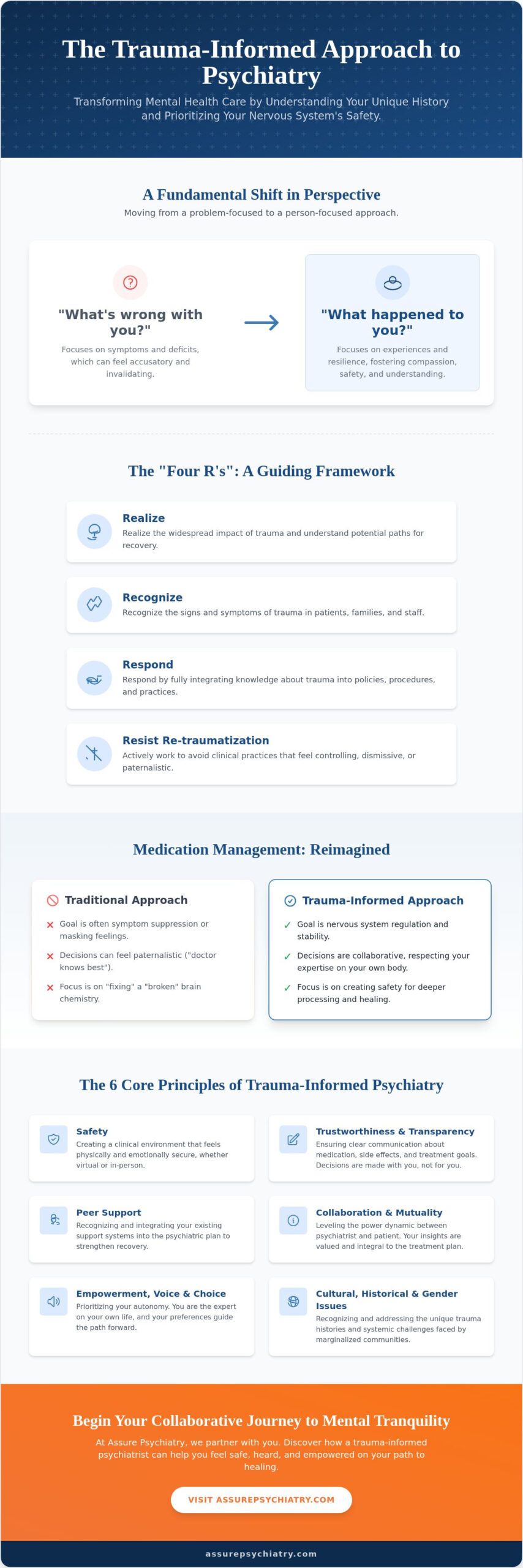
A trauma informed psychiatrist portland uses a framework built on four essential pillars. First, they realize the widespread impact of trauma on the human psyche. Second, they recognize the signs and symptoms in their patients, understanding that behaviors are often survival strategies. Third, they respond by integrating this knowledge into every part of the treatment plan. Finally, they work tirelessly to resist re-traumatization by avoiding clinical practices that feel controlling, dismissive, or paternalistic.
Traditional psychiatry often begins with the unspoken question, “What is wrong with you?” This can feel cold or even accusatory. In contrast, trauma-informed care asks, “What happened to you?” This shift moves the focus from a perceived deficit to a compassionate understanding of your resilience. It recognizes that many of your current struggles are actually adaptations your brain made to keep you safe during difficult times. By validating these experiences, the provider creates a stable environment where real healing can begin.
The Clinical Difference in Medication Management
Medication management in this context isn’t about masking your feelings or “fixing” a broken brain. It’s about providing your nervous system with the stability it needs to process deeper work. We prioritize emotional transparency and physical safety. Do you know exactly why a medication is being suggested? Are you an active participant in the decision? The goal is regulation rather than just symptom suppression, ensuring you feel in control of your journey toward mental tranquility.
Beyond PTSD: Who Benefits from Trauma-Informed Care?
It’s a common misconception that trauma-informed care is only for those with a PTSD diagnosis. In reality, anyone struggling with ADHD, depression, or anxiety can benefit from this lens. Developmental trauma or chronic stress can change how our brains process focus and mood. Portland’s diverse community deserves care that understands these nuances. Cultural competence ensures that your specific background and history are respected during every psychiatric evaluation, fostering a truly inclusive path to wellness.
The 6 Core Principles of Trauma-Informed Psychiatry
Understanding how a psychiatrist approaches your care can demystify the process and lower anxiety. These aren’t just abstract clinical guidelines. They’re a promise of how you’ll be treated every time you walk into an office or log into a telehealth session. By adhering to The 6 Core Principles of Trauma-Informed Psychiatry, a provider ensures that your treatment journey is built on a foundation of mutual respect and safety. A trauma informed psychiatrist portland prioritizes these specific values to help you achieve lasting mental tranquility.
- Safety: This involves creating a clinical environment, whether virtual or in-person, that feels physically and emotionally secure.
- Trustworthiness and Transparency: You deserve to know exactly why a medication is being suggested. Clear communication about side effects and treatment goals is vital.
- Peer Support: Healing doesn’t happen in a vacuum. Integrating your existing support systems into the psychiatric plan strengthens your recovery.
- Collaboration and Mutuality: This principle focuses on leveling the power dynamic between the psychiatrist and the patient.
- Empowerment, Voice, and Choice: Your autonomy is the priority. You are the expert on your own life, and your preferences guide the path we take.
- Cultural, Historical, and Gender Issues: We recognize and address the unique trauma histories of marginalized communities in Oregon.
Collaboration Over Paternalism
At Assure Psychiatry, we’ve moved away from the outdated “doctor knows best” mentality. Instead, we use a collaborative guide model. This means that during your psychiatric evaluation, we work together to identify what feels right for your body. Choosing a trauma informed psychiatrist portland means finding a provider who values your perspective and lived experience. When you’re an active participant in your treatment plan, the anxiety of starting a new medication often decreases. Shared decision-making ensures that you aren’t just following orders, but are choosing a path that makes sense for you.
Cultural, Historical, and Gender Issues
Modern care must account for the unique trauma histories found within diverse communities. Systemic trauma has real biological effects on the nervous system, often manifesting as chronic anxiety or hypervigilance. A skilled psychiatrist recognizes how historical context and identity impact your current mental health. Cultural competence is the cornerstone of modern Portland psychiatry, ensuring that every individual feels seen, heard, and respected regardless of their background.
How Medication Management Supports Trauma Recovery
When trauma occurs, the amygdala often stays in a state of high alert. Think of it like a smoke detector that won’t stop ringing even after the fire is out. A How Medication Management Supports Trauma Recovery approach focuses on quietening this biological alarm. By using medication to regulate these physiological responses, a trauma informed psychiatrist portland helps you reclaim your sense of safety. This isn’t about masking who you are. It’s about giving your brain the breathing room it needs to heal.
Many patients worry that medication will “numb” their emotions or stop them from processing their past. In reality, the opposite is usually true. When you’re constantly overwhelmed by hypervigilance or debilitating insomnia, your brain lacks the resources to engage in therapy or daily life. Stabilizing these physical symptoms creates a foundation for deeper restorative work. It allows you to approach your history from a place of stability rather than a state of constant crisis.
It’s also common for trauma to overlap with other conditions, making a precise diagnosis essential. Distinguishing between bipolar disorder vs adhd is a critical step in this process. Trauma can mimic many symptoms of these disorders, and a careful evaluation ensures that the treatment plan addresses the root cause rather than just the surface behaviors. A thoughtful medication plan supports your nervous system while you navigate these complexities. For those whose intrusive thoughts and repetitive cycles are part of the picture, understanding OCD medication management can be an equally important piece of building a comprehensive and effective treatment strategy.
Lowering the Baseline of Anxiety
Does your body feel like it’s stuck in “fight or flight” mode? This constant state of high cortisol is exhausting. It often leads to what we call secondary trauma, which is the stress of being unable to keep up with work, relationships, or personal goals because your nervous system is overtaxed. By lowering your anxiety baseline through targeted treatment, we aim for mental tranquility. This shift helps you move from survival mode into a state where you can actually function and enjoy your daily life again.
Managing Complex Symptoms Safely
For those managing bipolar 2 disorder alongside PTSD, the approach must be incredibly precise. A trauma informed psychiatrist portland understands that trauma survivors may be more sensitive to physiological changes. This is why we prioritize slow titration. We start with low doses and monitor your response closely. These low-pressure follow-up appointments are a time for you to share how you feel without judgment. We adjust the plan together, ensuring your comfort and safety remain the top priority throughout the entire process.
What to Look for in a Portland Trauma-Informed Provider
Choosing the right medical partner is a significant step toward mental tranquility. It’s not just about finding someone with an open calendar. It’s about finding a trauma informed psychiatrist portland who understands the delicate balance between clinical expertise and emotional safety. When you’re looking for a provider, you should feel empowered to ask questions and set boundaries. Here are five steps to help you evaluate if a clinic aligns with your needs:
- Step 1: Check Credentials. Look for specific experience in treating PTSD and complex trauma. Ask if they’ve had specialized training in trauma-informed frameworks.
- Step 2: Evaluate the Intake. Does the initial contact feel rushed or supportive? A trauma-informed clinic prioritizes your comfort from the very first phone call or email.
- Step 3: Inquire About Philosophy. Ask how they approach medication. A good provider will prioritize your autonomy and won’t force a treatment plan that feels unsafe to you.
- Step 4: Assess the Environment. Whether virtual or in-person, the space should feel calm. If you struggle with social anxiety, look for robust telepsychiatry options.
- Step 5: Confirm Insurance and Costs. Financial stress can be a major trauma trigger. Ensure the clinic is transparent about billing and accepts your insurance to avoid unexpected burdens.
The Importance of the Initial Evaluation
Your first appointment shouldn’t feel like a clinical interrogation. Instead, a psychiatric evaluation in portland should feel like a collaborative conversation. A skilled trauma informed psychiatrist portland handles sensitive medical history with care. They’ll let you lead the pace, ensuring you don’t have to overshare before you feel ready. This initial meeting is the foundation of your partnership, where your voice is the most important one in the room.
Telepsychiatry: A Safe Space from Home
For many trauma survivors, the home is the only place that feels truly secure. Telepsychiatry in Oregon allows you to access specialized care without the stress of commuting or sitting in a busy waiting room. These virtual visits maintain a human-centered approach through the digital screen, allowing you to build a relationship with your psychiatrist from your own safe environment. This flexibility ensures that mental health support is accessible, consistent, and respectful of your personal boundaries. If you’re ready to begin this journey in a way that respects your pace, schedule your consultation today.
Assure Psychiatry: Your Ally in Healing and Tranquility
Dr. Olumide Aruwajoye founded Assure Psychiatry with a clear vision: to create a space where clinical authority meets humble, inclusive care. As a trauma informed psychiatrist portland, he recognizes that many patients arrive feeling exhausted by a medical system that often feels impersonal or even dismissive. His commitment to culturally competent care ensures that your background and identity are honored throughout the entire treatment process. We don’t just see a patient; we see a person navigating a complex journey toward mental tranquility. Our role is to act as your collaborative guide, offering the expertise you need while respecting the wisdom you have about your own life.
Our clinic focuses on lowering the barriers that often prevent people from seeking the support they deserve. Whether you’re struggling with anxiety, depression, or the persistent effects of PTSD, our approach integrates medication management with your overall wellness goals. We believe that medication shouldn’t be a standalone solution. Instead, it should serve as a supportive partner in your healing, providing the biological stability needed to engage fully with your world. This holistic perspective helps transform your care from a series of clinical appointments into a restorative partnership built on consistency and reliability.
A Non-Judgmental Path Forward
A diagnosis is a clinical tool, but it doesn’t define who you are as an individual. We believe that your history and your symptoms are parts of a larger story, not labels that limit your potential. Assure Psychiatry provides a stable, reliable environment where you can explore treatment options without the fear of being judged or pressured. This sense of safety is the foundation of our practice. Taking the first step toward a collaborative treatment plan starts with a simple conversation where your voice is the most important one in the room. We’re here to listen, validate, and help you find the path that feels right for your body and mind.
Getting Started in Portland and Beyond
We’ve made it easy to access the care you deserve. Whether you prefer in-person visits in Portland or the convenience of virtual telepsychiatry across Oregon, our scheduling process is designed to be low-pressure and accessible. If you’ve felt unheard by previous providers, you might be wondering how to switch psychiatrists to find a provider who truly understands trauma-informed principles. Transitioning your care is a valid and empowering choice. We invite you to reach out today for an initial psychiatric diagnostic assessment. Let’s work together to build a reliable path toward the peace and health you’ve been seeking.
Reclaiming Your Peace and Stability
Healing is rarely a straight line, but you don’t have to navigate the path alone. By choosing a trauma informed psychiatrist portland, you’re opting for a clinical partnership that respects your history and prioritizes your nervous system’s safety. We’ve explored how the right medication management doesn’t mask your feelings. Instead, it provides the biological foundation needed to move out of survival mode and toward lasting mental tranquility. You deserve a provider who sees you as an active participant in your own wellness journey.
At Assure Psychiatry, Dr. Olumide Aruwajoye is dedicated to providing compassionate, culturally competent care that meets you exactly where you are. We lower the barriers to support by accepting most major insurance plans and offering flexible appointment options. Your story matters, and your comfort is our highest priority. It’s time to move toward a life defined by peace rather than past experiences.
Begin your journey toward mental tranquility with a trauma-informed evaluation at Assure Psychiatry. We’re ready to stand by you as a reliable ally in your restorative journey.
Frequently Asked Questions
What is the difference between a trauma-informed psychiatrist and a regular one?
A standard psychiatric approach often focuses on checking off symptoms to reach a diagnosis. In contrast, a trauma informed psychiatrist portland views those same symptoms as adaptive survival strategies. They recognize the biological impact of your past experiences and prioritize your emotional safety. This shift from “what is wrong with you” to “what happened to you” creates a more validating and collaborative environment for your healing journey.
Will I have to talk about my trauma in detail during the first psychiatric appointment?
No, you are never required to share specific details of past events before you feel ready. The initial evaluation is designed to be a supportive conversation rather than an interrogation. We focus on your current symptoms and what you need to feel safe right now. You lead the pace of the discussion, ensuring that you remain in control of your story at all times.
Can medication actually help with trauma, or does it just hide the symptoms?
Medication helps by calming your body’s overactive “alarm system” so you can find mental tranquility. It doesn’t mask your personality or hide your history. Instead, it regulates physiological responses like hypervigilance and insomnia. By stabilizing these physical symptoms, medication provides the biological breathing room necessary for you to engage more effectively in other restorative activities and daily life.
How do I know if my current psychiatrist is trauma-informed?
Evaluate whether your provider prioritizes transparency and your personal autonomy. A trauma-informed psychiatrist will explain medication options clearly and involve you in every decision. They should be sensitive to your boundaries and avoid using paternalistic language. If you feel defined by your diagnosis or pressured into a treatment plan that feels unsafe, your current care may not be aligned with trauma-informed principles.
Does trauma-informed psychiatry cost more than standard psychiatric care?
No, trauma-informed care is a clinical philosophy and a standard of partnership rather than a separate, more expensive service. It describes how we interact with you and interpret your symptoms. While rates for a psychiatric evaluation can vary across Oregon, the commitment to safety and empowerment is a core value we integrate into all our services without adding a premium cost.
Is telepsychiatry as effective as in-person visits for trauma survivors?
Telepsychiatry is often highly effective because it allows you to receive care from the safety of your own home. For many survivors, avoiding a clinical waiting room or a stressful commute can lower anxiety significantly. This comfort makes it easier to build a trusting relationship with a trauma informed psychiatrist portland while maintaining the same high level of clinical expertise and personal connection.
What should I do if I feel triggered during a psychiatric evaluation?
You should feel empowered to speak up and ask to pause the session at any moment. We prioritize your immediate safety and will use grounding techniques to help you feel secure. A trauma-informed provider expects these moments and will never judge you for them. We will collaboratively adjust the pace of the evaluation to ensure you don’t feel overwhelmed or re-traumatized.
Do you accept insurance for trauma-informed psychiatric evaluations in Portland?
Yes, we accept most major insurance plans to ensure our care remains accessible to the community. We understand that financial uncertainty can be a significant source of stress. Our team works to provide clear information about your coverage before your appointment. By accepting insurance, we aim to lower the barriers to mental health support and help you focus entirely on your recovery.
Recent Comments