

What if the medication meant to clear your mind didn’t change who you are, but finally allowed the real you to surface? It’s common to feel a deep sense of hesitation when considering ocd medication management. You might worry that prescriptions will dull your personality or that the side effects will be just as disruptive as the condition itself. These fears are valid, especially when you’ve already spent so much of your mental energy managing the heavy weight of intrusive thoughts and repetitive cycles.
We agree that you shouldn’t have to choose between your identity and your peace of mind. This guide will show you how specialized medication management can significantly reduce symptom severity and help you regain the control that OCD has taken away. We’ll walk through what to expect regarding your treatment timeline, how to manage potential side effects, and why a collaborative provider partnership is the most effective way to reach a state of mental tranquility.
Key Takeaways
- Discover how professional ocd medication management works as a clinical partnership to regulate serotonin and quiet the biological noise of intrusive thoughts.
- Identify the primary SSRIs and SRI alternatives that serve as the evidence-based foundation for modern OCD treatment plans.
- Understand why a comprehensive psychiatric evaluation is the essential first step in establishing a clear baseline for your progress toward mental tranquility.
- Explore advanced strategies for treatment-resistant OCD, including how medication augmentation can provide the necessary boost for symptom relief.
- Learn about the specialized benefits of connecting with local providers in Oregon or utilizing telepsychiatry options for accessible, expert care.
What is OCD Medication Management?
Finding a way out of the relentless cycle of intrusive thoughts often feels like a lonely, uphill battle. Many people view medication as a simple transaction where you receive a prescription and hope for the best. However, true ocd medication management is a dynamic, ongoing clinical partnership designed to help you reclaim your life. It isn’t about erasing who you are or dulling your personality. Instead, think of it as a way to lower the “volume” of those loud, distressing obsessions so you can finally hear your own voice again. This collaborative process ensures that you aren’t just surviving your symptoms, but actively moving toward a state of mental tranquility.
We believe in a trauma-informed approach to care. This means acknowledging that your experience with Obsessive-Compulsive Disorder doesn’t exist in a vacuum. Your symptoms are often shaped by your history, your unique nervous system, and past stressors. By treating the whole person rather than just the diagnosis, we create a safe, supportive environment where you feel seen and heard. This level of personalized care is what distinguishes professional management from a standard pharmacy refill.
The Role of Serotonin in OCD
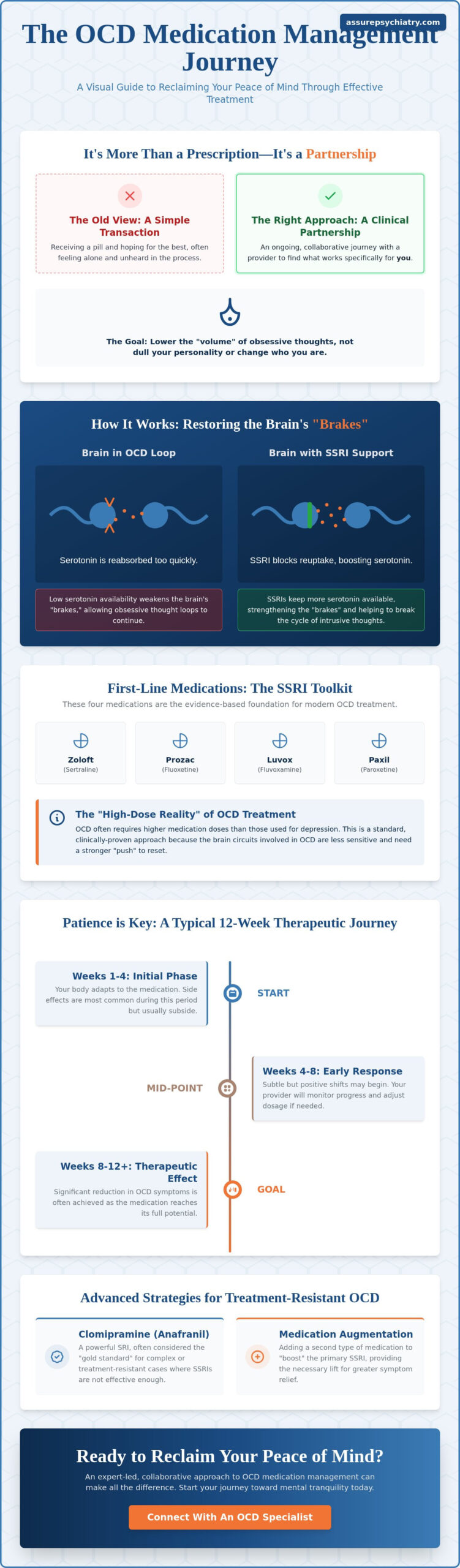
At its biological core, OCD is closely linked to how the brain communicates using a chemical messenger called serotonin. You can think of serotonin as the brain’s “brakes.” In an OCD-affected brain, these brakes might not engage correctly, leading to those familiar, exhausting loops of worry and compulsion. Selective Serotonin Reuptake Inhibitors (SSRIs) help keep more serotonin available between your brain cells, allowing your “brakes” to work more effectively. Over time, this chemical support can foster neuroplasticity. This means your brain actually begins to form new, healthier pathways, making it easier to resist compulsions and find lasting peace.
Why “Management” Matters More Than the Prescription
Why do we emphasize “management” instead of just “treatment”? It’s because your journey is entirely unique. A dose that works for one person might be too high or too low for your specific needs. Professional oversight allows for clinical precision when finding your “therapeutic window.” During regular check-ins, a provider looks for subtle improvements you might miss, like a slightly shorter ritual or a moment of calm you haven’t felt in years. We also prioritize your safety by screening for side effects early and adjusting the plan as you evolve. This ongoing ocd medication management turns a potentially overwhelming medical process into a predictable, supportive path toward wellness.
First-Line Medications for OCD Treatment
The journey toward mental tranquility often begins with identifying the right medical support. While every individual’s brain chemistry is unique, clinical research has established a clear hierarchy of Medications for OCD that serve as the first line of defense. These tools aren’t just about suppressing symptoms. They’re about providing the stability you need to engage fully with your life again. By working with a specialist, you can find a balance that honors your identity while quieting the noise of obsessions.
One of the most important things to understand about ocd medication management is the “high-dose” reality. If you’ve previously been treated for depression, you might be surprised by the dosages used for OCD. While a standard dose might lift a person’s mood, the biological loops of OCD often require a much stronger push to reset. This isn’t because your condition is “worse.” It’s because the receptors involved in obsessive loops are often less sensitive than those regulating general mood. Patience is also a vital part of this process. Unlike some medications that work in days, OCD treatments typically take 8 to 12 weeks to show their full therapeutic response. We view this time as an investment in your long-term health.
Selective Serotonin Reuptake Inhibitors (SSRIs)
SSRIs are the most common starting point due to their safety and general tolerability. You’ve likely heard of Zoloft (Sertraline), Prozac (Fluoxetine), Luvox (Fluvoxamine), or Paxil (Paroxetine). There’s a common myth that Luvox is the only “true” OCD medication, but this isn’t the case. All four have been proven effective in clinical settings. The choice often comes down to your personal history and how your body reacts to specific side effects. If you’re feeling overwhelmed by the options, starting a conversation with a professional about ocd medication management can help clarify the best path forward for your unique needs.
Clomipramine: The Gold Standard for Complex Cases
When SSRIs don’t provide the desired relief, your provider might suggest Clomipramine (Anafranil). This is a tricyclic antidepressant that acts as a powerful, non-selective serotonin reuptake inhibitor. It’s often considered the gold standard for complex or treatment-resistant cases. Because it works so robustly, it can have a different side effect profile than modern SSRIs, such as dry mouth or sleepiness. However, for many, the relief it provides from intrusive thoughts is life-changing. Sometimes, we may even combine a low dose of Clomipramine with an SSRI to achieve a synergistic effect. We carefully monitor your progress to ensure safety and comfort throughout every step of this transition.
The Medication Management Journey: What to Expect
Entering a treatment plan can feel like stepping into the unknown, but it’s helpful to view ocd medication management as a structured journey with clear, predictable milestones. This isn’t a “set it and forget it” approach. It’s a collaborative path where we monitor your progress and adjust based on your real-world experiences. By understanding the phases of care, you can move forward with confidence. We’re here to act as your guide, ensuring that every step you take brings you closer to a state of mental tranquility.
A vital part of ocd medication management involves establishing a baseline of your symptom frequency and severity. We need to understand how OCD currently impacts your day to day life so we can measure the success of our interventions. This data-driven approach allows us to see the subtle shifts that might otherwise go unnoticed. Whether it’s a slight reduction in the time spent on rituals or a decrease in the intensity of an intrusive thought, these small victories indicate that we’re moving in the right direction.
Your Initial Diagnostic Assessment
The first step is always a comprehensive psychiatric evaluation in Portland. During this session, we don’t just look at symptoms; we look at you as a whole person. We’ll review your medical history, any past attempts at treatment, and your personal goals for daily functioning. What does success look like for you? We’ll set realistic expectations for the first 30 days, which are often focused on monitoring how your body adjusts to First-Line Medications for OCD. This initial assessment creates the roadmap for your entire recovery process.
Ongoing Follow-Up Appointments
After the initial setup and titration phase, where we slowly find your “sweet spot” dosage, we transition into regular follow-up appointments. These sessions are the backbone of effective medication management portland. We’ll discuss how you’re feeling and address any life stressors or hormonal changes that might impact your progress. Honesty is crucial during these check-ins. If you’ve missed a dose or noticed a subtle side effect, sharing that information allows us to pivot and refine your plan. Once symptoms are managed, we enter a maintenance phase to sustain your peace of mind over the long term.
Strategies for Treatment-Resistant OCD
What happens if the first prescription doesn’t lead to the mental tranquility you were hoping for? It’s a common fear, but please know that a partial response or even no response to the first medication isn’t a dead end. Clinical data suggests that a significant number of individuals don’t find full relief from the very first SSRI they try. This is where the true value of ocd medication management comes into play. We don’t just stop; we refine, adjust, and explore advanced strategies to help you find the stability you deserve. Your journey is a marathon, and we’re committed to staying by your side through every adjustment.
One of the most effective tools for complex cases is a process called augmentation. This involves adding a second medication to “boost” the effectiveness of your primary SSRI. We often utilize low-dose antipsychotics, such as Aripiprazole or Risperidone, which act as boosters to help stabilize neural pathways and further reduce the intensity of intrusive thoughts. Additionally, we stay at the forefront of clinical research by exploring glutamatergic agents. These medications target glutamate, a different chemical messenger in the brain, offering a promising new avenue for those who haven’t found success with traditional serotonin-based treatments alone.
Switching vs. Augmenting
Deciding whether to pivot to a completely new drug or add to your current one is a delicate clinical decision. We carefully evaluate how well you’ve tolerated your current dose and whether you’ve seen even a small percentage of improvement. If you feel your current treatment path has stalled and your concerns aren’t being fully addressed, you may want to learn how to switch psychiatrists to find a partner who aligns with your specific wellness goals. These transitions require patience, especially during “wash-out” periods where we safely taper one medication before introducing another to ensure your system remains balanced.
The Synergy of Medication and Therapy
While our focus is on clinical excellence in prescriptions, we recognize that medication is often the “on-ramp” for successful therapeutic work. By lowering the overwhelming volume of your anxiety through ocd medication management, you’re much better equipped to engage in specialized techniques like Exposure and Response Prevention (ERP). We believe in a collaborative, holistic approach. This means we’re happy to coordinate with your outside therapists to ensure your medical and behavioral plans are working in perfect harmony toward your recovery.
If you’re ready to explore a more personalized, expert approach to managing your symptoms, our team is here to help you begin your OCD treatment journey today.
Finding OCD Specialists in Portland and Oregon
The search for a specialist who truly understands the nuances of OCD can feel like a daunting task, especially when you’re already managing the daily weight of intrusive thoughts. Finding a local provider isn’t just about convenience; it’s about building a relationship with someone who understands the specific healthcare landscape of the Pacific Northwest. Whether you’re in the heart of the city or living in a more rural area, your path to ocd medication management should be paved with empathy, clinical expertise, and a deep respect for your individual journey. You deserve a partner who sees the person behind the symptoms.
Choosing a trauma informed psychiatrist portland offers a unique layer of safety. Many individuals living with OCD have histories where their symptoms were dismissed or misunderstood, which can create its own form of stress. A trauma-informed approach ensures that your care is non-judgmental and culturally competent. We prioritize creating a stable environment where you can discuss your obsessions without fear of being defined by them. At Assure Psychiatry, our commitment to personalized, insurance-friendly care means that high-level psychiatric support is accessible and sustainable for our community. If you’re also navigating co-occurring mood conditions alongside OCD, connecting with a bipolar disorder specialist portland residents trust can help ensure that every layer of your mental health receives the specialized attention it deserves.
Telepsychiatry: Accessible Care Across the Northwest
We recognize that for many people, the symptoms of OCD can create physical barriers to seeking help. For those struggling with contamination obsessions or severe agoraphobia, the simple act of leaving the house to visit a clinic can be a significant hurdle. Telepsychiatry effectively removes this “barrier to entry” by allowing you to receive expert ocd medication management from the safety and comfort of your own home. These virtual visits maintain the exact same high standard of care as an in-person consultation, ensuring you never have to compromise on quality for the sake of accessibility.
Our telepsychiatry services are available to residents across Oregon and Washington, including those in Seattle and rural regions where specialists may be scarce. We hold active licenses in both states, ensuring that our care meets all local regulatory standards. By leveraging modern technology, we can offer consistent, reliable support to anyone in the Northwest seeking a way out of the OCD cycle. This flexibility allows us to maintain the continuity of care that is so vital for long-term recovery.
Taking the Next Step Toward Tranquility
It’s important to remember that you don’t have to “just live with” the exhaustion of OCD. While the road to recovery requires patience, it is a journey you don’t have to walk alone. Peaceful days aren’t just a distant hope; they are a tangible goal that we can work toward together. If you’re ready to find a supportive clinical partnership that values your identity and your health, we invite you to reach out. Booking an initial psychiatric evaluation is the first step toward regaining the control OCD has taken. Let’s begin the work of restoring your mental tranquility today.
Reclaiming Your Peace of Mind
The path to mental tranquility is rarely a straight line, but you don’t have to navigate it alone. By understanding that ocd medication management is a collaborative, evidence-based partnership, you can move past the fear of side effects or slow progress. We’ve explored how high-dose SSRI protocols and strategic augmentation can quiet intrusive thoughts, even in cases that previously felt resistant to treatment. Remember that your diagnosis is just one part of your story; the right medical support is designed to let your true self emerge, not hide it away.
At Assure Psychiatry, we specialize in providing compassionate, trauma-informed care that respects your unique identity. Whether you’re in Portland or accessing our services via telepsychiatry in Washington, we offer the clinical expertise needed to manage complex OCD symptoms. We accept major insurance plans in Oregon and Washington to ensure your care remains accessible. You deserve a life defined by your goals rather than your obsessions. Schedule Your OCD Medication Evaluation with Assure Psychiatry today and take the first step toward a steadier, more peaceful future. Better days are well within your reach.
Frequently Asked Questions
How long does it take for OCD medication to start working?
You should expect to wait between 8 and 12 weeks to feel the full therapeutic impact of your treatment. While some people notice subtle improvements in their anxiety levels within the first month, the biological reset required to quiet intrusive thoughts takes time. We monitor your progress closely during this initial window to ensure you’re on the right path toward mental tranquility. Patience is a vital part of the healing process.
Will I have to stay on OCD medication for the rest of my life?
The duration of your treatment is a personal decision made in partnership with your provider. Some individuals use medication as a temporary bridge to gain stability, while others find that long term support helps them maintain their quality of life. Once you’ve reached a period of sustained symptom relief, we can discuss whether a maintenance phase or a gradual taper is the right choice for your unique journey.
What are the most common side effects of OCD medications?
Common side effects often include mild nausea, changes in sleep patterns, dry mouth, or shifts in sexual function. Most of these symptoms are temporary and tend to fade as your body adjusts to the new prescription. Effective ocd medication management involves proactive screening for these issues. If a side effect becomes disruptive, we can adjust your dosage or pivot to a different option to ensure your comfort and safety.
Can I manage OCD with medication alone without therapy?
Yes, many people find significant relief using medication as a standalone treatment. While combining medication with specialized therapy like ERP is often considered the gold standard, prescriptions alone can effectively lower the volume of obsessions and reduce the urge to perform compulsions. This allows you to function more effectively in your daily life. We support your choice and tailor our approach to meet your current needs and availability.
Is it safe to take high doses of SSRIs for OCD?
It is safe to take higher doses of SSRIs when you are under the consistent supervision of a psychiatric professional. Because the brain receptors involved in obsessive loops are often less sensitive, ocd medication management frequently requires dosages that exceed those used for general depression. We use regular follow up appointments to monitor your physical health and ensure that your body is processing the medication safely and effectively at these therapeutic levels.
What happens if I miss a dose of my OCD medication?
If you miss a dose, you should take it as soon as you remember unless it’s almost time for your next scheduled dose. Never double your dose to make up for a missed one, as this can increase the risk of side effects. Consistency is key to maintaining a steady level of medication in your system. If you find yourself missing doses frequently, let’s talk about strategies to help you stay on track.
Does insurance cover OCD medication management appointments?
Most major insurance plans in Oregon and Washington provide coverage for these clinical services. Because these appointments are medical evaluations and follow ups, they are typically processed under your plan’s mental health or specialist benefits. We strive to make our care insurance friendly to lower the financial barriers to treatment. It’s always a good idea to verify your specific co pay or deductible with your insurance provider before your visit.
Recent Comments