

What if a steadier bedtime routine helps, but you still spend nights watching the clock? If “improving sleep hygiene for insomnia Oregon” is the question on your mind, you’re not alone. Unpredictable sleep can make concentration and daily routines harder, and struggling to follow generic advice isn’t a personal failure.
Sleep habits can support rest, but they may not be enough when insomnia persists. This guide covers practical changes to your routine and bedroom, ways to notice sleep patterns, and when ongoing difficulty may be worth discussing with a clinician. It also explains how a psychiatric evaluation can explore factors relevant to sleep and how medication decisions can be made collaboratively and conservatively.
Assure Psychiatry is a Portland-based outpatient mental health clinic providing insomnia care through psychiatric evaluation and medication management for Oregon residents ages 10-65. The clinic’s PMHNP-BC takes an empathetic, collaborative approach to understanding your experience and discussing next steps, without blame or promises of a quick fix. This guide is for people in Portland and across Oregon; readers in Seattle, Washington, can use the sleep-hygiene information as general guidance, while Assure Psychiatry’s clinical services are for Oregon residents.
Key Takeaways
- Sleep hygiene means shaping habits and surroundings to support rest, not guaranteeing insomnia will resolve. Ongoing sleep difficulties aren’t a personal failure.
- Notice sleep timing and daytime patterns to prepare useful questions for a clinical conversation. Tracking should not become another source of pressure.
- Sleep habits, structured insomnia care, and psychiatric evaluation serve different purposes. Habits alone may not address persistent sleep difficulties.
- Start improving sleep hygiene for insomnia Oregon with one realistic change, then build gradually instead of trying to overhaul every routine at once.
- Assure Psychiatry offers psychiatric evaluation and medication management to Oregon residents ages 10-65, with in-person appointments in Portland and telepsychiatry for patients who meet specific criteria.
What does improving sleep hygiene for insomnia in Oregon actually mean?
Improving sleep hygiene for insomnia Oregon means shaping habits and surroundings to make rest easier to support, not following a guaranteed cure. An occasional restless night is different from a recurring pattern that leaves you tired, frustrated, or struggling through the day. Neither means you caused the problem. Sleep is influenced by more than routine, and what helps one person may not suit another.
Which sleep habits are usually included in sleep hygiene?
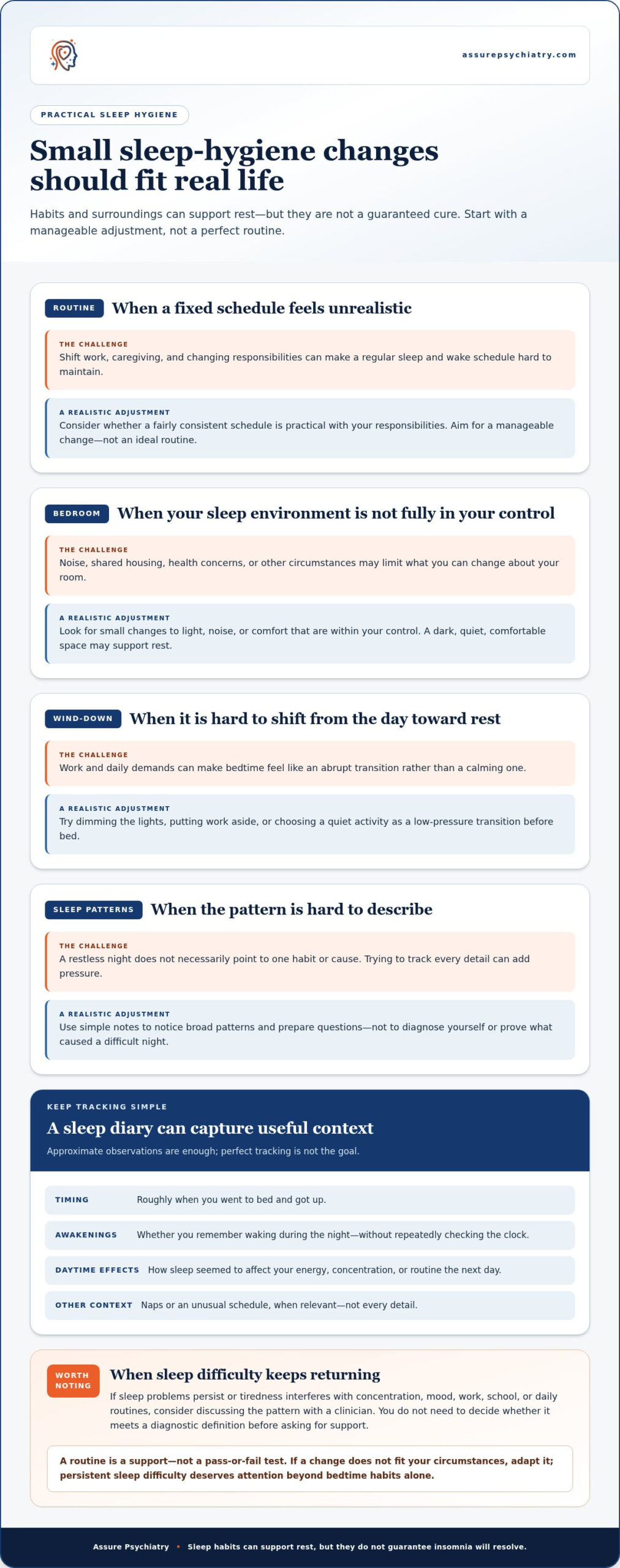
Sleep hygiene commonly includes keeping sleep and wake times reasonably consistent, making the bedroom comfortable for rest, and developing a calming routine before bed. For example, you might dim the lights, put work aside, or choose a quiet activity as a transition from the day. A dark, quiet, comfortable space may also support rest, though not everyone can control their sleeping environment.
- Timing: Consider whether a fairly regular sleep and wake schedule is realistic with your responsibilities.
- Surroundings: Identify small changes to light, noise, or comfort that are within your control.
- Wind-down: Choose a low-pressure activity that helps you shift toward rest.
These are starting points, not rules to pass or fail. Shift work, caregiving, shared housing, health concerns, and changing responsibilities all affect what’s practical. The useful question is whether a manageable adjustment fits your circumstances, not whether your routine looks ideal. For a broader overview of common recommendations and their role, see Understanding Sleep Hygiene.
When does ongoing insomnia call for more than general tips?
An occasional difficult night may pass without a major change. But if sleep problems keep returning, or tiredness interferes with concentration, mood, work, school, or daily routines, it may be worth discussing the pattern with a clinician. You don’t need to decide whether it meets a diagnostic definition before asking for support. A conversation can put your experience in context, including routines, health, and other relevant concerns.
Sleep habits can support rest; persistent sleep difficulty deserves care that considers the person, not just the bedtime routine.
For Oregon residents, a clinical conversation can help explore next steps when general tips haven’t been enough or sleep problems are affecting everyday life. A psychiatric evaluation offers an opportunity to discuss persistent sleep concerns and relevant mental-health experiences. Seeking support isn’t an admission that you’ve failed at sleep hygiene. It’s a way to explore possible contributing factors and consider care suited to your situation.
How can sleep patterns and daily habits affect insomnia?
Sleep rarely follows a simple cause-and-effect pattern. Daily routines, surroundings, health, stress, and individual circumstances can interact, so one restless night doesn’t necessarily point to one habit that needs fixing. A change that feels easy for one person may be impractical for someone working shifts, sharing a bedroom, or caring for family. Adjusting a routine may be worth trying, but no single behavior change can be promised to resolve persistent insomnia.
Looking at patterns can be more useful than trying every tip at once. Sleep and mental health can affect each other: sleep concerns may affect well-being, and mental-health experiences may be relevant to sleep. Harvard Health Publishing discusses this connection in The Link Between Sleep, Habits, and Mental Health. Your observations can help you describe what’s happening, but they don’t establish a cause or diagnosis.
What can a sleep diary help you notice?
A simple sleep diary can help you notice broad patterns and prepare questions for a clinical conversation. It’s an observation tool, not a diagnostic test, and it doesn’t need to be exact. If recording details makes you more anxious or focused on the clock, simplify the notes or pause. The aim is useful context, not perfect tracking.
- Timing: Note roughly when you went to bed and got up.
- Awakenings: Record whether you remember waking during the night, without checking the clock repeatedly.
- Daytime effects: Jot down how sleep seemed to affect your energy, concentration, or routine the next day.
- Other context: Note naps or an unusual schedule when relevant, rather than tracking every detail.
You might notice that difficult nights tend to follow a particular schedule, or that daytime fatigue varies. Treat this as a question to explore, not proof that one event caused your sleep difficulty. Patterns can be imperfect and still help you explain your experience.
Why can one-size-fits-all sleep advice feel difficult?
Advice to keep a fixed schedule, for example, may not fit rotating shifts or caregiving demands. Noise, shared living space, health concerns, and other responsibilities can also limit which changes are practical. If a tip doesn’t fit your life, that isn’t evidence of weak motivation. It may need adapting, or it may not address the factors involved in your sleep.
Sleep guidance works best when it fits your circumstances, because routines are only one part of an individual sleep pattern.
If sleep problems continue or affect daily life, brief diary notes can help you describe what’s been happening during a psychiatric evaluation. For Oregon residents ages 10-65, Assure Psychiatry’s insomnia care includes psychiatric evaluation and collaborative medication management. Improving sleep hygiene for insomnia Oregon can begin with observing your routine; a clinical conversation can also consider the broader context and appropriate next steps.
Sleep hygiene versus insomnia care: what can each approach do?
Sleep habits, structured insomnia care, and psychiatric evaluation serve different purposes. Habits offer practical support in everyday life. Structured care addresses sleep difficulties more directly, while an evaluation explores your experience and helps guide a discussion of options. These approaches aren’t interchangeable, and changing a routine doesn’t have to be the only response when sleep problems continue.
| Approach | What it may involve | What it can’t promise |
|---|---|---|
| Sleep habits | Adjusting routines or sleep surroundings in ways that fit daily life. | That insomnia will resolve or that the same changes will help everyone. |
| Structured insomnia care | A defined approach, such as Cognitive Behavioral Therapy for Insomnia (CBT-I), focused specifically on insomnia. | A particular result for every person or suitability without considering individual needs. |
| Psychiatric evaluation | A conversation about sleep concerns, health context, and relevant mental-health experiences, with options considered individually. | A diagnosis or treatment decision based on a brief list of symptoms alone. |
What sleep hygiene may support, and what it cannot promise
Habits such as a regular sleep schedule or a calming wind-down routine may support rest, but they aren’t a guaranteed treatment or cure. Persistent sleep difficulty may have more than one contributing factor, and routines may be only part of the picture. If a recommended habit doesn’t fit your life or seems unhelpful, that isn’t a failure. The goal is to find realistic supports, not to follow rigid rules.
How is structured insomnia care different from general sleep tips?
CBT-I is a structured treatment approach for insomnia, distinct from general advice about bedtime routines or bedroom conditions. It addresses patterns of thoughts and behaviors related to sleep. Whether it’s appropriate is a clinical question, and it shouldn’t be confused with sleep hygiene alone. Assure Psychiatry can provide referrals for therapy or psychologist services as part of discussing care options.
For persistent sleep problems, a clinician can consider your circumstances and discuss options rather than assuming one approach fits everyone. At Assure Psychiatry, psychiatric evaluation and evidence-based, conservative medication management are collaborative and individualized. Medication decisions are made with the patient, and an evaluation can explore mental-health concerns relevant to the broader sleep picture.
A guide to improving sleep hygiene for insomnia Oregon readers can use should make space for practical habits and individualized care. If sleep difficulties continue or affect daily life, you don’t have to keep repeating general tips without discussing what else may be relevant. A thoughtful conversation about your experience and possible approaches can be a next step, without blame or promises of a quick fix.
How to build a realistic sleep-hygiene plan for insomnia
When you’re tired, a long checklist can feel like another task you’re failing to complete. Keep the plan small: choose one change that fits your life, observe how it goes, then decide whether to keep or adjust it. A sleep-hygiene plan is a practical experiment, not a test of willpower or a promise that insomnia will disappear.
Start with a consistent, sustainable sleep schedule
Choose a sleep and wake routine that works with your actual responsibilities. A parent’s schedule, shift work, or a changing workday may make a perfectly fixed bedtime unrealistic. Aim for a pattern you can return to when possible, rather than criticizing yourself after a disrupted night. Look at how things go over time; a single difficult night doesn’t tell the whole story.
Shape the bedroom and wind-down routine around rest
Consider one practical adjustment to your surroundings, such as reducing avoidable light or noise where you can. Then choose a calming pre-sleep activity that feels comfortable, perhaps reading or listening to something quiet. There’s no single routine or bedroom setup everyone needs. The goal is to make rest more inviting in ways that suit your preferences and living situation.
Build and review your plan one step at a time
Try this gradual sequence. Pause or adapt any step that adds pressure. Keep notes brief, and don’t watch the clock to make your record more exact.
- Pick one change: Choose a realistic adjustment, such as setting a wind-down reminder or reducing light in the bedroom.
- Keep a simple record: Note approximate sleep and wake times, remembered awakenings, and how you felt during the day. Leave out details that make you more anxious.
- Review the pattern: After trying the change, consider whether it felt manageable and whether you noticed any difference in sleep or daytime functioning.
- Adjust thoughtfully: Keep what feels sustainable, change what doesn’t, or try one other small adjustment rather than overhauling everything at once.
If sleep problems continue despite reasonable adjustments, or substantially affect everyday life, consider a clinical conversation. Bring brief notes as context, not as proof that you’ve found the cause. This psychiatric evaluation guide explains what to expect from an evaluation and how it can support a discussion of persistent concerns.
Improving sleep hygiene for insomnia Oregon residents can start with one manageable step, while ongoing difficulties may call for individualized support. Assure Psychiatry offers psychiatric evaluation and collaborative medication management for insomnia. Learn more about insomnia care with Assure Psychiatry.
Insomnia support in Oregon: how Assure Psychiatry can help you take a next step
If sleep problems keep affecting daily life, you don’t have to figure out the cause or next step on your own. Assure Psychiatry is a Portland-based outpatient mental health clinic serving Oregon residents ages 10-65. Its care includes psychiatric evaluation and medication management, with attention to your experience rather than a one-size-fits-all plan.
What happens when you discuss insomnia with a psychiatric clinician?
A conversation about insomnia can cover what your sleep has been like, how it affects your daytime routine, and relevant health or mental-health concerns. Sharing a few observations about your sleep patterns may provide context, but you don’t need a perfect record or a firm explanation before speaking with a clinician. The purpose is to understand your concerns together, not to judge your habits.
A psychiatric evaluation can explore what may be relevant and support a discussion of possible next steps. If medication management is considered, Assure Psychiatry’s approach is evidence-based and conservative, with decisions made collaboratively. A prescription, diagnosis, or particular outcome shouldn’t be assumed in advance; care planning depends on your situation and the clinical conversation.
What Oregon care options does Assure Psychiatry offer?
Assure Psychiatry provides outpatient psychiatric care from its Portland clinic to Oregon residents in its stated age range. Telepsychiatry appointments are also available to patients who meet specific criteria. Visits use HIPAA-compliant video, and specific criteria must be fulfilled to access remote appointments. The Oregon telepsychiatry guide explains this care format in more detail.
For some people, a psychiatric evaluation may be the first step in discussing persistent sleep concerns; for others, medication management may be part of an individualized plan. Learn more about medication management in Portland and how collaborative decisions can fit into ongoing care. Assure Psychiatry accepts most major insurance plans, and patients are encouraged to verify their coverage. Discounted cash rates are available for uninsured patients.
Improving sleep hygiene for insomnia Oregon can involve practical habits, but continued difficulty is a valid reason to consider a clinical discussion. Bring questions, describe what you’ve tried, and work with a clinician to consider options without blame or pressure to have all the answers. The conversation is a chance to be heard and explore what support may make sense for you.
Choose a Supportive Next Step Toward Rest
Rest doesn’t have to become another challenge you manage alone. Begin with one small habit that feels possible, and remain open to other support if sleep difficulties continue. Improving sleep hygiene for insomnia Oregon isn’t about building a perfect routine. It’s about finding a way forward that respects your circumstances and leaves room for help tailored to your needs.
If you’re unsure what to do next, consider what you’d want a clinician to understand: how sleep has been affecting you, what you’ve tried, and what feels hardest right now. You don’t need a complete record or a ready-made explanation to start that conversation. Asking for support can be a practical step toward understanding your options, not a judgment about your effort.
Contact Assure Psychiatry to discuss an individualized next step for insomnia care. You can call 971-244-8844. A steadier path can begin with being heard, and you deserve support as you work toward greater rest and peace of mind.
Frequently Asked Questions
How much sleep do adults generally need?
Most adults need at least seven hours of sleep regularly, though individual needs can vary with age, health, and personal circumstances. Treat that figure as general guidance, not a personal prescription or a score to chase each night. If you’re spending enough time in bed but still feel persistently tired, consider noting how you feel during the day and discussing the pattern with a clinician.
Can daytime naps make insomnia harder to manage?
They can affect nighttime sleep for some people, but the impact depends on the person and the pattern. You might notice a difference after a long or late nap, while another person’s experience may differ. If you nap, briefly note when it happens and how the following night goes. If sleep remains difficult, share those observations with a clinician rather than relying on a universal nap rule.
Is alcohol a reliable way to improve sleep?
No. Alcohol may make someone feel drowsy, but that doesn’t make it a dependable way to improve sleep. Its effects can vary, and feeling sleepy at first doesn’t necessarily mean rest will be better overall. If alcohol use and sleep concerns seem connected for you, consider discussing the pattern with a clinician. This general information isn’t individualized guidance about whether to drink or how much.
Can medication affect sleep?
Yes, some medicines can affect sleep, but the effect depends on the specific medicine, how it’s used, and the individual. A change in sleep may have other explanations, so it’s helpful not to assume a medication is the cause. If you’ve noticed a possible connection, write down when the sleep change began and discuss it with the prescribing clinician.
What should I do if I think a medication is keeping me awake?
Talk with the prescribing clinician before changing or stopping a prescribed medication. Stopping suddenly or adjusting it on your own may not be appropriate. To make the conversation clearer, note when you take it, when sleep difficulty occurs, and any other changes you’ve noticed. You don’t need to track every minute; a few helpful observations can give the clinician useful context for discussing next steps.
Does insomnia always mean someone has a mental health condition?
No. Difficulty sleeping doesn’t automatically mean someone has a mental health condition. Sleep concerns can have different contributors, and a short list of symptoms can’t determine what’s happening for a particular person. If sleep trouble is ongoing or affecting daily life, a clinician can discuss your experience, relevant health context, and possible next steps. Seeking that conversation doesn’t require you to arrive with a diagnosis.
Can a sleep diary diagnose insomnia?
No. A sleep diary can record patterns, but it can’t diagnose insomnia on its own. You might note approximate bed and wake times, remembered awakenings, and how you felt the next day, then use those notes to describe your experience in a clinical conversation. For readers exploring improving sleep hygiene for insomnia Oregon, the diary is a context-setting tool, not a test or a requirement for seeking support.
Recent Comments