
Did you know that 71.5% of adults taking prescription stimulants have reported difficulty filling their prescriptions due to inventory shortages? If you’ve spent your morning calling pharmacies across King County only to be met with “out of stock” notices, the frustration is real. Beyond the supply issues, you might be weary of the afternoon crash or the jittery feeling that makes it hard to unwind at night. Searching for alternatives to stimulant ADHD medication Seattle professionals can trust is a vital step toward finding a more sustainable path to focus. You deserve a treatment plan that supports your brain without the constant anxiety of a missing dose or a racing heart.
We believe your care should feel like a partnership, not just a diagnosis. It’s exhausting to manage executive dysfunction while also battling medication side effects that disrupt your peace. In this article, you’ll discover evidence-based non-stimulant options and integrative strategies designed to provide steady, 24-hour support. We’ll preview how these medications offer emotional regulation and consistent clarity without the peaks and valleys of traditional stimulants. By exploring these medical pathways, you can move toward a life of mental tranquility and reliable productivity.
Key Takeaways
- Understand why many patients are choosing alternatives to stimulant ADHD medication Seattle providers recommend to avoid the anxiety of pharmacy shortages and the “crash” of traditional stimulants.
- Learn how non-stimulant options provide steady, 24-hour cognitive support by strengthening the brain’s prefrontal cortex networks.
- Compare the risk profiles and onset times of various treatments to decide which path aligns best with your goals for mental tranquility.
- Discover how lifestyle medicine, including sleep architecture and nutrition, serves as a vital partner to your medication management plan.
- See how telepsychiatry makes it easier to connect with inclusive, expert care across Washington and Oregon without the stress of a commute.
Why Seattle Residents Are Exploring Alternatives to Stimulant ADHD Medication
Living in the Pacific Northwest often means balancing high-performance careers with a desire for holistic wellness. For many professionals in Seattle, the standard approach to focus has historically relied on stimulants. However, a significant shift is occurring. Residents are increasingly seeking alternatives to stimulant ADHD medication Seattle providers can offer, moving away from the “peak and trough” cycle of traditional drugs. This transition isn’t just about preference; it’s a response to the need for sustainable, long-term mental health strategies that prioritize stability over temporary bursts of energy.
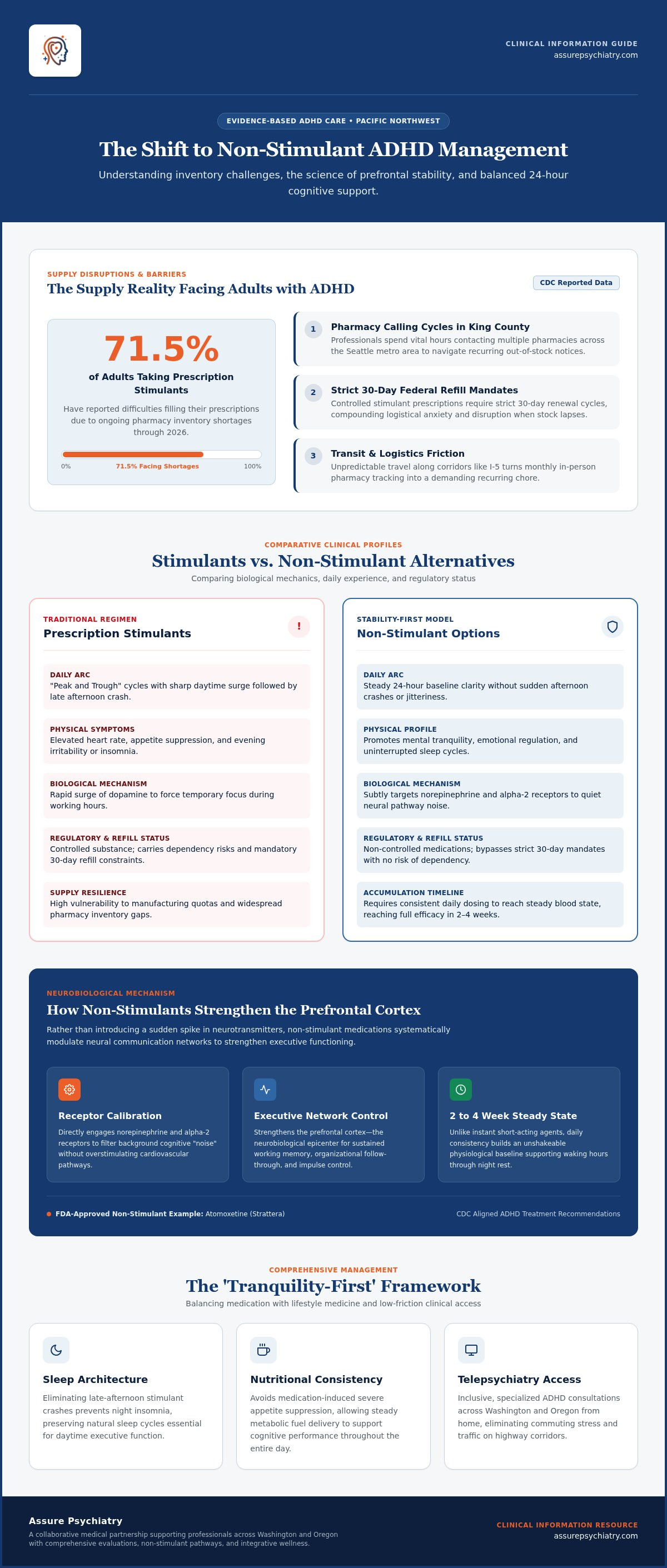
The urgency of this shift is underscored by the persistent medication supply disruptions seen through 2026. Data from the CDC indicates that approximately 71.5% of adults have faced challenges securing their prescriptions due to pharmacy inventory shortages. In a city where time is a precious commodity, the stress of calling dozens of pharmacies every month adds an unnecessary layer of anxiety to an already demanding lifestyle. Modern psychiatry is responding with “Tranquility-First” models, focusing on how a patient feels throughout the entire day rather than just during work hours.
Managing Side Effects and the ‘Stimulant Crash’
While stimulants are effective for many, they often come with a hidden cost. You might experience a sharp increase in heart rate or a sense of irritability as the dose wears off in the late afternoon. This “crash” can disrupt family life and lead to chronic insomnia, creating a cycle of exhaustion that impairs executive function. Exploring broader ADHD management options allows you to address these symptoms without the physical toll of appetite suppression or anxiety spikes. Working with a collaborative adhd psychiatrist portland residents trust can provide the bridge needed to transition toward smoother, non-stimulant alternatives that support your overall wellness.
Practical Barriers in the Seattle Metro Area
Navigating the Seattle metro area presents unique challenges for those managing ADHD. Between the unpredictable traffic on I-5 and the recurring pharmacy stock issues, maintaining a consistent medication schedule is difficult. Telepsychiatry offers a vital solution for busy professionals in King County, allowing for expert consultations from the comfort of home. By choosing alternatives to stimulant ADHD medication Seattle patients can bypass the strict federal 30-day refill mandates associated with controlled substances. A thorough psychiatric evaluation serves as your first step, ensuring your treatment plan is tailored to your specific neurobiology and lifestyle needs.
The Science of Stability: How Non-Stimulant Medications Work
Understanding the biological mechanics of focus can help demystify why some patients feel better on non-controlled options. Unlike stimulants that force a rapid surge of dopamine, non-stimulants are FDA-approved medications that improve ADHD symptoms by subtly modulating the brain’s internal communication networks. These alternatives to stimulant ADHD medication Seattle professionals often recommend focus on long-term cognitive support rather than a temporary “kick.” Because they aren’t controlled substances, they don’t carry the same risk of dependency or the intense afternoon “crash” mentioned earlier. Instead, they provide a 24-hour baseline of stability that supports your executive function from the moment you wake up until you fall asleep.
These medications require daily, consistent dosing to reach a steady state in your bloodstream, typically showing full efficacy after 2 to 4 weeks of use. This gradual accumulation is exactly what allows for such consistent results. By following the CDC treatment recommendations for ADHD, providers can use these tools to strengthen the prefrontal cortex. This area of the brain is responsible for impulse control and working memory. By targeting norepinephrine and alpha-2 receptors, these treatments close the “noise” in your neural pathways, allowing for a quieter, more focused mind.
Common FDA-Approved Non-Stimulant Options
Atomoxetine, known by the brand name Strattera, was the first non-stimulant specifically approved for adult ADHD. It works as a selective norepinephrine reuptake inhibitor, helping to keep focus-related chemicals available in the brain for longer periods. For those who struggle with high levels of irritability or emotional sensitivity, alpha-2 agonists like Guanfacine and Clonidine are excellent choices. These medications were originally used for blood pressure but are now recognized for their ability to strengthen the neural networks involved in emotional regulation. Viloxazine, or Qelbree, represents a newer addition to this category, offering a unique pharmacological profile that many patients find effective in 2026.
Off-Label Alternatives for Complex ADHD
Sometimes, the standard path isn’t the right fit for your unique neurobiology. Your provider might consider off-label options like Bupropion, commonly known as Wellbutrin. While it’s primarily an antidepressant, its effect on dopamine and norepinephrine makes it a helpful ally for managing focus and mood simultaneously. Others may find clarity through wakefulness-promoting agents like Modafinil, which can sharpen cognitive function without the jitteriness of traditional stimulants. Choosing the right path starts with a comprehensive psychiatric evaluation to see which mechanism best supports your goals for mental tranquility.
Comparing Your Options: Stimulants vs. Non-Stimulants
Choosing between these two pathways often comes down to how you want to experience focus throughout your day. Stimulants act quickly, usually within 30 to 60 minutes, providing a sharp window of concentration. While this “on-demand” clarity is helpful for specific tasks, many patients find the subsequent “rebound” symptoms difficult to manage. In contrast, alternatives to stimulant ADHD medication Seattle residents are choosing offer a steady baseline. These medications don’t require the same strict timing because they provide continuous coverage, even through the evening and night.
Risk profiles also differ significantly. Stimulants are Schedule II controlled substances, which means they carry a higher potential for dependency and are subject to rigid federal refill mandates. Non-stimulants are non-controlled “legend drugs.” They are exempt from DEA production quotas and the stress of 30-day non-refill rules. For those managing co-occurring conditions like anxiety or PTSD, non-stimulants are often preferred. Stimulants can sometimes worsen palpitations or hypervigilance, whereas non-stimulant options often help quiet the nervous system. In 2026, Washington’s payment parity laws ensure that most insurance plans, including Apple Health, cover these evaluations at the same rate as in-person visits, making comprehensive care more accessible.
Choosing the Right Treatment for Your Lifestyle
Your daily routine should dictate your treatment, not the other way around. Professionals in Seattle’s demanding tech or aerospace sectors often find that the “peak and trough” cycle of stimulants interferes with evening focus and sleep quality. If you need executive function for a 10-hour workday followed by family responsibilities, the 24-hour stability of a non-stimulant might be the better fit. Our collaborative approach to medication management portland and Seattle patients rely on ensures your plan is adjusted to your specific life demands. It’s about finding a rhythm that supports your career without sacrificing your personal peace.
The Hybrid Approach: Can You Use Both?
You don’t always have to choose one over the other. Many providers now utilize adjunctive therapy, which combines a low-dose stimulant with a non-stimulant. This combination can smooth out the “crash” as the stimulant wears off while providing the immediate boost some tasks require. It’s a way to maximize focus while minimizing side effects like appetite suppression or jitteriness. Regular follow-ups are essential in this model to monitor how the two medications interact and ensure your path toward mental tranquility remains steady and safe. This tailored strategy allows for a more nuanced approach to neurodiversity.
Beyond Medication: Integrative Strategies for ADHD Management
Medication is often a powerful tool for clarity, but it is rarely the only piece of the puzzle. While you’re exploring alternatives to stimulant ADHD medication Seattle, it’s vital to look at the foundations of your daily life. Nutrition and sleep hygiene aren’t just generic wellness advice; they’re the bedrock of mental health. A diagnosis doesn’t define who you are. Instead, it serves as a roadmap for your self-care strategy, allowing you to tailor your environment to your brain’s needs. Cognitive behavioral strategies complement medication management by providing practical frameworks to navigate daily challenges and improve executive function.
We often see that the most successful outcomes happen when medical treatment is paired with lifestyle medicine. For instance, maintaining stable blood sugar through protein-rich meals can prevent the “brain fog” that many people mistake for a medication failure. Similarly, optimizing your sleep architecture ensures that your brain has the restorative rest it needs to process information and regulate emotions. By viewing your health through this holistic lens, you move away from a “quick fix” mentality toward a sustainable state of mental tranquility.
Executive Function Coaching and Behavioral Support
Managing a complex schedule in a fast-paced city requires more than just willpower. Executive function coaching provides tools for time management that lead to organizational tranquility, helping you break down overwhelming projects into manageable steps. You might find that mindfulness and meditation help quiet the internal noise that medication alone cannot always reach. Seattle offers various local support groups where you can share experiences and strategies with others who understand the specific pressures of living and working in the Pacific Northwest. These behavioral supports act as the scaffolding that holds your progress together.
Addressing the Root Causes of Mental Fatigue
Mental fatigue often stems from more than just your neurobiology. Environmental triggers, such as a cluttered workspace or the constant ping of digital notifications, can worsen ADHD symptoms significantly. Regular physical activity is another powerful tool, as it naturally regulates dopamine and norepinephrine levels in the brain, providing a natural boost to your mood and focus. At Assure Psychiatry, our inclusive care standards ensure that your whole identity is respected throughout your treatment journey. We believe that true health comes from a partnership between expert medical guidance and your own proactive wellness choices. Ready to build a comprehensive plan for your focus? Schedule your psychiatric evaluation today to begin your journey toward lasting mental tranquility.
Accessing Expert ADHD Care: Telepsychiatry for Seattle and Beyond
Finding a provider who truly listens to your concerns about side effects shouldn’t be limited by your zip code. For many residents in the Puget Sound area, the search for alternatives to stimulant ADHD medication Seattle pharmacies can actually stock leads to a need for specialized expertise. Assure Psychiatry bridges this gap by offering high-quality, remote care that connects Washington residents with experienced clinicians. By utilizing secure, HIPAA-compliant video technology, you can access a level of personalized medication management that might not be available in your immediate neighborhood. This approach ensures that your journey toward mental tranquility is guided by a compassionate ally who understands the nuances of neurodiversity.
The Pacific Northwest has become a leader in accessible mental health care. Through telepsychiatry oregon and Washington platforms, we provide a stable environment for patients to discuss their goals. Whether you’re looking to transition away from stimulants or want to explore a hybrid approach, the focus remains on your individual identity. We don’t just see a diagnosis; we see a person seeking a more balanced life. This collaborative partnership is the foundation of everything we do.
Seamless Virtual Appointments
We know that navigating Seattle traffic to reach a clinic in South Lake Union or Capitol Hill can add hours of stress to your day. Remote medication management removes this barrier entirely. You can meet with your provider from your home or office, ensuring your care fits into your life rather than disrupting it. Washington state’s 2026 telehealth regulations and payment parity laws mean that most commercial plans and Apple Health cover these virtual visits just like in-person appointments. We use encrypted technology to ensure your clinical safety and privacy are never compromised. This allows you to focus entirely on your wellness during our time together.
Starting Your Journey with Assure Psychiatry
Your path to a clearer mind begins with a comprehensive psychiatric evaluation portland and Seattle patients can schedule easily online. During this initial diagnostic assessment, we take the time to understand your history, your challenges, and your hopes for the future. It’s a non-judgmental space where your voice is the most important one in the room. Dr. Olumide Aruwajoye and the team emphasize culturally competent, inclusive care, ensuring every patient feels seen and heard. When you’re ready to explore alternatives to stimulant ADHD medication Seattle, your next step is simply to reach out. Together, we can build a life of focus, consistency, and lasting tranquility.
Embracing a Sustainable Path to Focus
You’ve seen how non-stimulant treatments offer a steady baseline of focus without the harsh daily “wear-off” period often associated with stimulants. By prioritizing 24-hour stability and addressing the root causes of mental fatigue, you can move toward a life defined by mental tranquility rather than the stress of medication shortages. Exploring alternatives to stimulant ADHD medication Seattle professionals recommend is a powerful step toward reclaiming your executive function and emotional regulation.
Assure Psychiatry is here to act as your compassionate ally in this journey. We provide expert, MD-led telepsychiatry across Washington and Oregon, ensuring you receive high-level care without the commute. We accept most major insurance plans and focus on creating a non-judgmental environment where your individual identity is respected. If you’re ready to discover a treatment plan that aligns with your lifestyle, schedule your virtual ADHD evaluation with Assure Psychiatry today. You don’t have to navigate these challenges alone; a more peaceful and productive future is within your reach.
Frequently Asked Questions
Are non-stimulant ADHD medications as effective as stimulants?
Non-stimulants are highly effective but work through different neural pathways than stimulants. While stimulants provide a rapid surge in focus, non-stimulants offer a steady, 24-hour baseline of cognitive support. They are often the best choice for the 20% to 30% of adults who don’t tolerate stimulant side effects. By targeting norepinephrine and alpha-2 receptors, these medications help achieve mental tranquility without the intense “highs” and “lows” of traditional controlled substances.
How long does it take for non-stimulant ADHD medication to start working?
You should expect to see initial results within 2 to 4 weeks of consistent daily dosing. Unlike stimulants that work in under an hour, non-stimulants must build up in your system to reach a steady state. Full clinical benefits often peak around the 6 to 8 week mark. This gradual onset allows your brain to adapt smoothly, providing a reliable foundation for executive function that doesn’t disappear when the sun goes down.
Can I switch from Adderall to a non-stimulant immediately?
Switching medications is a collaborative process that requires professional guidance. Some patients can transition directly, while others benefit from a “bridge” where a low-dose stimulant is used alongside the new non-stimulant to prevent a sudden drop in focus. Your provider will design a specific taper plan based on your history. This careful approach ensures your transition is safe, comfortable, and focused on maintaining your long-term mental wellness throughout the change.
Do non-stimulants have fewer side effects than stimulants?
Non-stimulants generally have a different side effect profile that many find easier to manage. You won’t experience the jitteriness, appetite suppression, or insomnia often caused by stimulants. While some patients report initial fatigue or dry mouth, these symptoms usually fade as the body adjusts. These medications offer a restorative path for those who are weary of the afternoon “crash” and want a more consistent, gentle way to support their neurodiverse brain.
Is a psychiatric evaluation required before starting non-stimulant medication?
Yes, a comprehensive psychiatric evaluation is the essential first step for any new treatment plan. This assessment allows your provider to look beyond the diagnosis and understand your unique neurobiology and medical history. During this time, we discuss your goals for mental tranquility and identify any co-occurring conditions like anxiety. This thorough process ensures that the medication management plan we create together is both safe and effective for your specific needs.
Does insurance in Washington cover non-stimulant ADHD treatments?
Most insurance plans in Washington, including state-regulated commercial plans and Apple Health, cover non-stimulant treatments. Washington state law requires insurance companies to reimburse for clinically appropriate telepsychiatry at the same rate as in-person visits. This payment parity makes it much easier for residents to access specialized care. Our practice accepts most major insurance plans, helping to lower the barrier for those seeking sustainable alternatives to stimulant ADHD medication Seattle residents can rely on.
Can I get ADHD medication management through telehealth in Seattle?
You can absolutely receive expert ADHD medication management through secure telepsychiatry in Seattle. Assure Psychiatry provides virtual care to patients across Washington and Oregon, allowing you to skip the stress of I-5 traffic. Our remote platform is HIPAA-compliant and designed to ensure clinical safety while maintaining a warm, human-centered connection. This convenience makes it simpler to stay consistent with your follow-up appointments, which is a key factor in achieving long-term mental stability.
Are non-stimulants safer for people with a history of anxiety or heart issues?
Non-stimulants are often a safer and more comfortable option for individuals with co-occurring anxiety or cardiovascular concerns. Because they don’t rely on the rapid release of dopamine and norepinephrine in the heart’s receptors, they typically don’t cause the racing heart or increased blood pressure associated with stimulants. For those managing anxiety, non-stimulants can actually help quiet the nervous system, providing a sense of calm focus that supports your overall wellness journey.
Recent Comments