

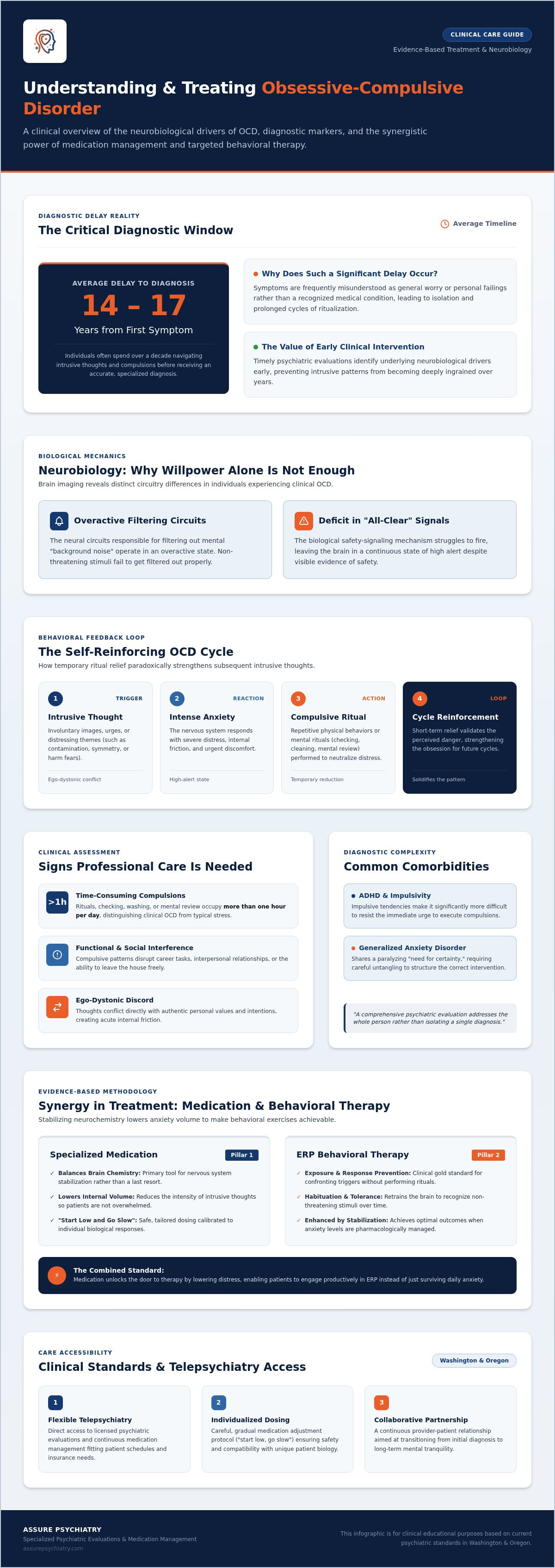
Did you know that the average person waits between 14 and 17 years from their first symptom before receiving an accurate diagnosis for OCD? This staggering delay often leaves individuals feeling isolated and exhausted by a cycle of intrusive thoughts that just won’t quit. If you’ve spent years searching for effective obsessive thoughts and compulsions treatment Washington, you already know how draining it is to feel misunderstood by the healthcare system. It’s frustrating when past attempts at relief haven’t provided the mental tranquility you deserve.
There’s a better way forward through evidence-based psychiatric care tailored to your specific needs. We promise to help you regain control using expert medication management and clear, manageable treatment plans. This guide previews the latest clinical standards in the Pacific Northwest, explains the difference between therapy and psychiatric evaluations, and details how you can access specialized care through licensed telepsychiatry. You don’t have to navigate this journey alone; a collaborative partnership for your mental wellness is waiting. Let’s explore how you can finally find the peace of mind you’ve been seeking.
Key Takeaways
- Learn why the neurobiology of OCD makes it difficult to manage through willpower alone and how professional intervention creates a path to recovery.
- Discover how specialized medication management serves as a vital tool to lower anxiety, making behavioral therapies more effective and manageable.
- Access comprehensive obsessive thoughts and compulsions treatment Washington through flexible telepsychiatry options that fit your lifestyle and insurance needs.
- Understand the “start low and go slow” approach to psychiatric care, ensuring your treatment plan is both safe and tailored to your unique biology.
- Find out how a collaborative partnership with a psychiatric provider can help you transition from a diagnosis to a state of lasting mental tranquility.
Understanding Obsessive Thoughts and Compulsions in 2026
Living with OCD often feels like having a broken alarm system in your mind that won’t stop ringing. These intrusive thoughts aren’t simple worries; they’re persistent, involuntary images or urges that trigger intense distress. To cope, you might find yourself performing repetitive behaviors or mental rituals to make the anxiety fade. The OCD Cycle is a self-reinforcing loop of anxiety and ritualization where the temporary relief felt after a compulsion actually strengthens the next obsession.
Common themes often revolve around fears of contamination, a need for perfect symmetry, or disturbing thoughts about harm. It’s vital to understand that willpower alone is rarely enough for recovery because of the underlying neurobiology. Brain imaging shows that in people with OCD, the circuits responsible for filtering out “background noise” and signaling safety are overactive. This biological glitch means your brain struggles to send the “all-clear” signal, keeping you stuck in a state of high alert. Gaining a clinical overview of obsessive-compulsive disorder helps reframe these symptoms as medical challenges rather than personal failings. When you’re seeking obsessive thoughts and compulsions treatment Washington, understanding this biological component is the first step toward self-compassion.
Signs You Need a Professional Diagnostic Evaluation
Distinguishing between everyday stress and clinical OCD is essential for finding mental tranquility. You should consider a professional evaluation if your compulsions, such as checking, cleaning, or mental reviewing, consume more than one hour of your day. When these patterns begin to interfere with your career, your relationships, or your ability to leave the house, it’s time to reach out for help. Clinical symptoms are typically “ego-dystonic,” meaning they conflict with your actual values and cause significant internal friction that standard worry does not. Identifying these signs early allows you to start an effective plan for obsessive thoughts and compulsions treatment Washington before the cycle becomes more deeply ingrained.
Comorbidity: When OCD Overlaps with Anxiety and ADHD
OCD rarely exists in a vacuum. Many individuals also struggle with ADHD, which can complicate recovery because impulsivity makes it harder to resist the urge to perform a compulsion. Similarly, generalized anxiety often overlaps with OCD through a shared, paralyzing “need for certainty.” If you’re managing multiple conditions, a standard approach might not be enough to find relief. This is why a comprehensive psychiatric evaluation in Portland is so valuable. It allows a provider to untangle these overlapping symptoms and create a clear, integrated path forward that addresses the whole person rather than just a single diagnosis.
Evidence-Based Treatment Options for OCD
Recovering from OCD isn’t about willpower; it’s about utilizing the right clinical tools. The most effective path for obsessive thoughts and compulsions treatment Washington involves a combination of Exposure and Response Prevention (ERP) and specialized medication. While many people view medication as a last resort, clinical evidence suggests it’s actually a primary tool for stabilizing the nervous system. By balancing brain chemistry, medication provides the emotional baseline needed to face fears without being overwhelmed. This stabilization is often what makes the difference between a patient who feels stuck and one who begins to see real progress.
According to the National Institute of Mental Health guidelines on OCD, early intervention with evidence-based treatments significantly improves long-term outcomes. These protocols emphasize that treating the biological drivers of anxiety is just as important as addressing the behavioral rituals themselves.
The Synergy of Medication and Therapy
Think of medication as the key that unlocks the door to therapy. When intrusive thoughts are screaming at high volume, engaging in behavioral exercises like ERP feels impossible. Medication helps lower that internal volume. This reduction in “noise” allows you to focus on the work of therapy rather than just surviving the day. We typically identify the right time for pharmacological support during your initial psychiatric evaluation, ensuring your treatment plan is collaborative and paced for your comfort. A multi-modal approach ensures that we aren’t just treating symptoms, but are actively retraining the brain’s response to anxiety.
Modern Breakthroughs in OCD Pharmacology
The landscape of OCD treatment has evolved rapidly. While high-dose SSRIs remain a first-line defense, we now utilize sophisticated augmentation strategies for cases that don’t respond to standard protocols. Research in 2026 highlights the success of combining traditional serotonergic agents with glutamate-modulating medications to achieve deeper stability. This level of precision is at the heart of medication management in Portland, where we focus on finding the exact balance for your unique biology. We don’t just prescribe; we partner with you to monitor efficacy and minimize side effects as your symptoms shift.
Accessing expert obsessive thoughts and compulsions treatment Washington means having a provider who understands how these medications interact with your daily life. If you’re ready to explore how these tools can work for you, scheduling a consultation is a powerful step toward reclaiming your peace of mind.
The Role of Specialized Medication Management
While a therapist focuses on the behavioral work of Exposure and Response Prevention (ERP), a psychiatric provider acts as your biological partner. This distinction is vital for anyone seeking effective obsessive thoughts and compulsions treatment Washington. A psychiatrist or psychiatric nurse practitioner manages the “engine” of the brain, adjusting neurochemistry so you have the mental space to engage with life again. During a specialized consultation, we don’t just look at a list of symptoms; we look at the person behind the diagnosis. We use clinical scales, such as the Yale-Brown Obsessive Compulsive Scale (Y-BOCS), to objectively track the reduction of compulsions over time. Medication management is a collaborative, ongoing process of adjustment and validation.
The goal of these sessions is to ensure your treatment plan remains as dynamic as your recovery. By choosing a provider who understands the evidence-based OCD treatment options available today, you ensure your care is grounded in the latest medical standards. We prioritize a “start low and go slow” philosophy. This careful approach helps us find the most effective dose while keeping your comfort and safety at the forefront of every decision.
Navigating Dosage and Side Effects
One of the most common points of confusion is why OCD often requires higher dosages of SSRIs than standard depression. Clinical research shows that the serotonergic system in OCD is less sensitive, meaning it takes a more robust intervention to see a meaningful reduction in intrusive thoughts. It’s also important to manage expectations regarding the timeline. While you might feel some relief early on, the full therapeutic benefit usually takes 8 to 12 weeks to manifest. During this window, we work closely with you to manage common side effects like mild nausea or sleep changes, ensuring the path to mental tranquility remains manageable.
Finding Long-Term Stability
True recovery isn’t just about stopping a crisis; it’s about maintaining a state of peace. Once we find a regimen that works, the focus shifts to maintenance and relapse prevention. We’ll have open, honest conversations about how long to stay on medication and what a safe tapering process looks like if that becomes a goal. For those with complex presentations, such as co-occurring mood disorders, staying consistent with a bipolar disorder specialist in Portland or an OCD expert ensures that all aspects of your mental health are balanced. This ongoing partnership provides a stable environment where you can finally stop reacting to your thoughts and start living your life.
Accessing OCD Treatment in Washington and Oregon
Finding the right care in the Pacific Northwest shouldn’t add to your anxiety. The first step toward reclaiming your life is checking your insurance coverage for both in-network and out-of-network psychiatric services. In 2026, Washington’s payment parity laws have made it easier for residents to access specialized care without financial surprises. Once you understand your benefits, you can choose the format that best fits your daily life. You might prefer the personal connection of in-person visits at our Portland office, or you may find that virtual telepsychiatry offers the flexibility you need while living in Washington.
After you’ve selected a format, the next priority is scheduling a 60-minute diagnostic evaluation. This thorough session allows us to confirm the nature of your symptoms and ensure we’re targeting the correct biological drivers. From there, we’ll establish a recurring medication management schedule. Consistency is the foundation of mental tranquility, and these regular check-ins allow us to fine-tune your treatment as you progress. This structured approach ensures you never feel lost in the healthcare system.
Telepsychiatry: Specialized Care from Seattle to Vancouver
Virtual care has transformed how residents across the region access obsessive thoughts and compulsions treatment Washington. Whether you’re in the heart of Seattle or the outskirts of Vancouver, telepsychiatry in Oregon and Washington provides a direct bridge to expert care. These virtual appointments maintain the exact same clinical standards as an office visit, allowing for deep, meaningful consultations from the comfort of your home. We utilize secure, HIPAA-compliant platforms to protect your privacy, ensuring your journey toward wellness remains safe and confidential.
Navigating Insurance and Costs in the PNW
Understanding the financial side of care helps lower the barrier to starting treatment. Major insurance plans like Regence BlueCross BlueShield and Aetna are widely accepted, but it’s always wise to verify your specific plan’s deductibles and co-pays. For those who prioritize specialized, culturally competent care, private pay options are also available. Finding a provider who understands the unique healthcare landscape of the Pacific Northwest is essential for feeling validated. We’re committed to making this process as transparent as possible so you can focus on your recovery rather than paperwork.
If you’re ready to move past the exhaustion of intrusive thoughts, you can request a psychiatric evaluation today to begin your collaborative path to peace.
Finding Mental Tranquility with Assure Psychiatry
At Assure Psychiatry, we believe that a diagnosis should never define the individual. You’re more than your intrusive thoughts; you’re a person worthy of peace, stability, and respect. Our philosophy centers on the idea that mental tranquility is a fundamental right, not a luxury. We prioritize your comfort by creating a non-judgmental space where you feel seen and heard rather than just diagnosed. When you seek obsessive thoughts and compulsions treatment Washington through our practice, you’re entering a collaborative partnership designed to help you reclaim your identity from the burden of OCD.
Dr. Olumide Aruwajoye, PMHNP-BC, leads our practice with a unique blend of clinical expertise and humble, inclusive care. He acts as a knowledgeable authority who guides you through the complexities of neurochemistry while respecting your lived experience. Our process is steady and logically organized, beginning with a comprehensive 60-minute psychiatric evaluation. This initial step allows us to understand your history and set the stage for a reliable, ongoing treatment plan that prioritizes your long-term wellness and safety.
A Collaborative Path to Recovery
We recognize that the most successful outcomes often involve an interprofessional care model. We don’t work in a vacuum; instead, we actively coordinate with your existing Exposure and Response Prevention (ERP) therapist. This ensures that your medication management and behavioral therapy are working in harmony. By empowering you to be an active participant in every decision, we help you transition from a state of reactive anxiety to one of restorative action. Our focus remains on reducing the frequency of your obsessions so you can engage more fully with the people and activities you love. We’re committed to providing diverse care standards that respect your individual identity and background.
Start Your Journey Toward Peace Today
Taking the first step toward professional help can feel overwhelming, but we’ve designed our process to be as low-pressure as possible. Residents looking for obsessive thoughts and compulsions treatment Washington can easily schedule an initial consultation through our online portal. To prepare for your first session, it’s helpful to gather any records of past treatments and a list of your current symptoms. This preparation helps us make the most of our time together during the diagnostic phase. Whether you need specialized OCD care or anxiety treatment in Portland and Washington, our team is ready to support your transition toward a more stable and tranquil life. You don’t have to carry this weight alone any longer.
Reclaim Your Peace of Mind
Finding the right path through the cycle of OCD is a courageous step toward lasting health. We’ve explored how understanding the biological roots of your symptoms can shift the focus from frustration to restorative action. By utilizing specialized obsessive thoughts and compulsions treatment Washington, you can finally lower the volume of intrusive thoughts and engage more fully in the life you value. Remember that a diagnosis doesn’t define you; it simply provides a map for your recovery.
At Assure Psychiatry, Dr. Olumide Aruwajoye offers compassionate, expert care designed to act as a collaborative guide in your wellness journey. With telepsychiatry available across Washington and Oregon and most major insurance plans accepted, professional support is more accessible than ever. You don’t have to carry the weight of compulsions alone. Begin your journey toward mental tranquility; schedule your evaluation with Assure Psychiatry today. We’re here to provide the consistent, reliable support you need to find your way back to peace. Your future of mental tranquility starts with a single, supportive partnership.
Frequently Asked Questions
Is medication necessary for treating obsessive thoughts and compulsions?
Medication isn’t always mandatory, but it’s a foundational tool for stabilizing the biological drivers of anxiety. For many seeking obsessive thoughts and compulsions treatment Washington, pharmacological support reduces the intensity of intrusive urges. This mental space allows you to focus on behavioral changes without being constantly overwhelmed. We work together to determine if medication is the right addition to your recovery plan based on the severity and impact of your symptoms.
How long does it take for OCD medication to start working?
You can generally expect to see meaningful improvement within 8 to 12 weeks of starting a consistent regimen. While some people notice subtle shifts in anxiety earlier, OCD treatment often requires higher dosages and longer trial periods than standard depression care. This timeline allows your brain chemistry to reach a stable state. We monitor your progress closely through regular medication management follow-ups to ensure the dosage is optimized for your comfort.
Can I receive OCD treatment via telepsychiatry in Washington?
Yes, you can access specialized psychiatric care through virtual telepsychiatry from anywhere in Washington or Oregon. Assure Psychiatry utilizes secure, HIPAA-compliant platforms to provide the same high clinical standards as an in-person office visit. This flexibility is ideal for residents in Seattle, Vancouver, or remote areas who need expert medication management without the stress of a long commute. It ensures that distance isn’t a barrier to finding mental tranquility.
What is the difference between a psychiatrist and a psychologist for OCD?
The primary difference lies in the method of treatment: psychiatric providers focus on the biological and medical management of symptoms, while psychologists focus on behavioral therapy. At Assure Psychiatry, we specialize in psychiatric evaluations and medication management. We often collaborate with external psychologists who provide Exposure and Response Prevention (ERP). This partnership ensures that both the neurochemical and behavioral aspects of your condition are addressed simultaneously for the best possible outcome.
Will insurance cover my psychiatric evaluation for OCD?
Most major insurance plans, including Regence BlueCross BlueShield and Aetna, typically cover psychiatric evaluations for OCD. However, your specific out-of-pocket costs will depend on your plan’s deductibles, co-pays, and network status. We recommend verifying your benefits before your first appointment. Our team prioritizes insurance accessibility to ensure that obsessive thoughts and compulsions treatment Washington remains a manageable part of your healthcare journey and financial planning.
What happens if the first medication I try for OCD doesn’t work?
If the first medication isn’t effective, we move to evidence-based augmentation strategies or alternative medication classes. Finding the right balance is a collaborative process that may involve switching to a different SSRI or adding a secondary agent to boost efficacy. We use clinical scales to track your response and validate your experience. Your feedback is essential as we fine-tune your treatment plan to find the specific combination that brings you relief.
Can obsessive thoughts be cured completely?
While clinical experts often talk about management rather than a cure, most patients achieve a significant reduction in symptoms that feels like a recovery. The goal of treatment is to lower the frequency and intensity of obsessions until they no longer control your daily life. Through consistent medication management and professional support, you can reach a state of mental tranquility where intrusive thoughts become background noise rather than a constant crisis.
How do I know if my thoughts are actually OCD or just normal stress?
Clinical OCD is typically distinguished from normal stress by its persistence, the distress it causes, and the amount of time it consumes. If your thoughts are ego-dystonic, meaning they conflict with your values, and you spend more than one hour per day performing rituals to neutralize them, it’s likely more than just stress. A professional psychiatric evaluation is the most reliable way to confirm a diagnosis and start a clear path toward recovery.
Recent Comments