

You finally made the brave decision to seek support for your mental health, yet your morning commute through downtown feels more daunting than ever because of a lingering headache or a sudden wave of fatigue. It’s a common and deeply frustrating experience to feel that the treatment meant to bring you peace is actually creating new physical hurdles. If you find yourself struggling with managing anxiety medication side effects Seattle, know that these initial obstacles don’t have to define your entire wellness journey.
We understand how exhausting it is to balance a demanding career and personal life while your body adjusts to a new prescription. You might even feel a rising sense of worry that the medication itself is becoming a new source of stress. This guide is designed to offer clarity and hope by showing you how to identify which symptoms are merely passing and which require a professional adjustment. We’ll outline practical steps to mitigate discomfort and explain how a collaborative, transparent relationship with your prescriber is the most effective path toward achieving lasting mental tranquility.
What if the physical symptoms causing you stress are actually a sign that your body is beginning its journey toward balance? It’s deeply frustrating to seek relief from anxiety only to be met with headaches, nausea, or fatigue that disrupt your daily routine. If you’re currently managing anxiety medication side effects Seattle, it’s vital to recognize that these hurdles are often a common, temporary part of the brain’s adjustment to therapeutic change.
This article provides the tools you need to identify, mitigate, and professionally manage these side effects while staying focused on your wellness. We’ll explore the profiles of common medications, offer practical at-home strategies like the “Food and Water” rule, and clarify when it’s time to reach out to your psychiatrist for a professional adjustment. By understanding how to navigate these early challenges through personalized medication management, you can build a collaborative relationship with your provider and move closer to achieving the mental tranquility you deserve.
Understanding Anxiety Medication Side Effects: Why They Happen
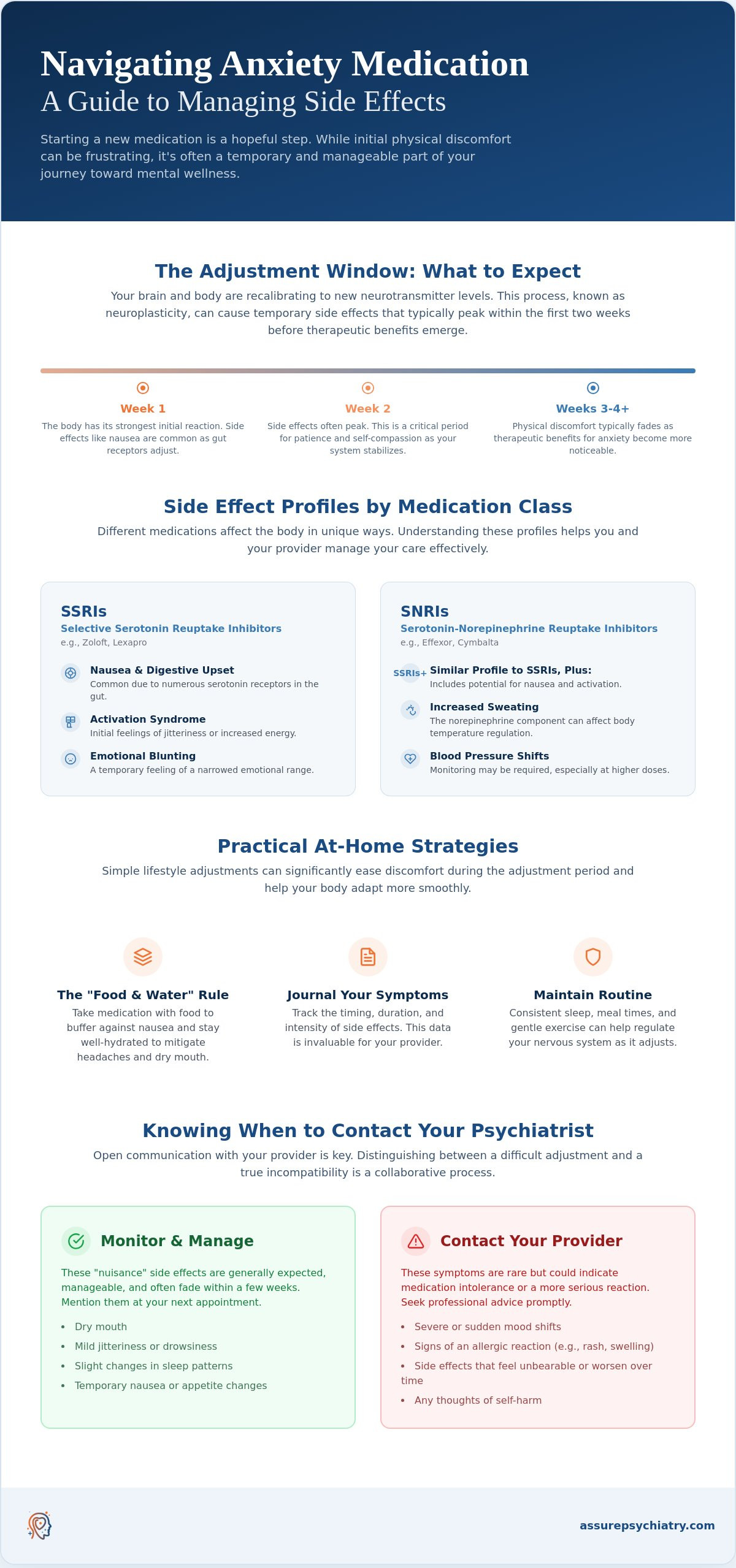
Starting a new treatment is a significant step toward reclaiming your peace, but it often comes with a paradoxical period of physical discomfort. You might feel more “off” than usual during the first few days, which can feel discouraging when you’re already dealing with the weight of anxiety. This experience is remarkably common. For many patients, these early symptoms are actually a sign that the medication is beginning to interact with your nervous system in a meaningful way. Most people find that the peak of these sensations occurs within the first one to two weeks, a phase often referred to as the adjustment window.
When you are managing anxiety medication side effects Seattle, it helps to understand that your body is undergoing a complex recalibration. Your brain is essentially learning a new way to balance its chemical messengers. While this process is ultimately designed to reduce your anxiety, the initial shift can be jarring. It’s a period that requires patience and a high level of self-compassion as you wait for the therapeutic benefits to outweigh the initial physical noise. Validation of this struggle is the first step toward a more tranquil recovery.
The Biology of the Adjustment Period
Why does your stomach often feel upset when the medication is intended for your mind? The answer lies in the fact that your gut contains a vast number of serotonin receptors. When you introduce a medication that changes neurotransmitter levels, these receptors react immediately, often before the brain has fully integrated the change. This is why physical symptoms like nausea or fatigue often appear long before you feel a shift in your mood. Neuroplasticity is the brain’s natural process of building and strengthening new neural pathways to support a more balanced emotional state. As your receptors become accustomed to this new chemical environment, the physical turbulence typically settles and gives way to psychological relief.
Common vs. Rare Side Effects
Most patients encounter what we call “nuisance” side effects during the first month. These might include dry mouth, mild jitteriness, or slight changes in sleep patterns. While these symptoms are annoying, they’re generally expected and manageable with simple lifestyle shifts. It’s also helpful to understand how different classes, such such as SSRIs or Benzodiazepine medications, interact with your system differently. Tracking your symptoms in a simple journal during the first month is an excellent way to provide your provider with the data needed for a precise evaluation.
There is a distinct line between a difficult adjustment and true medication intolerance. While most symptoms fade, rare but significant red flags like severe mood shifts or allergic reactions require immediate professional attention. Distinguishing between these two states is a collaborative process. By keeping a record of your daily experience, you empower your provider to make informed decisions about your dosage or medication type, ensuring your safety remains the top priority while managing anxiety medication side effects Seattle.
Side Effect Profiles by Anxiety Medication Class
Every individual’s nervous system responds to medication in a unique way. While one person might feel a sense of immediate calm, another might experience a week of restless energy. Understanding the specific profiles of different medication classes is a vital part of managing anxiety medication side effects Seattle. This knowledge doesn’t just prepare you for what might happen; it empowers you to have a more informed conversation about managing anxiety medication side effects Seattle with your provider about your care plan.
SSRIs and SNRIs: The Most Common Prescriptions
Selective Serotonin Reuptake Inhibitors (SSRIs) like Zoloft or Lexapro are often the first line of treatment. Because serotonin receptors are abundant in your digestive tract, nausea is frequently the primary early complaint. Some patients also report emotional blunting, a feeling where their emotional range feels narrowed or flattened. Serotonin-Norepinephrine Reuptake Inhibitors (SNRIs) such as Effexor or Cymbalta carry similar profiles but may also lead to increased sweating or slight shifts in blood pressure due to the norepinephrine component.
Many patients describe an activation syndrome during the first few days. This can feel like a sudden surge in jitteriness or a temporary increase in the very anxiety you’re trying to treat. It’s a common hurdle that usually resolves as your brain stabilizes. For a deeper look at how these chemicals interact with your body, you can refer to the National Institute of Mental Health guide on mental health medications. Long-term considerations, such as changes in sexual health or weight, are also important topics to discuss during your follow-up appointments to ensure your treatment remains sustainable.
Atypical Options and Adjunct Treatments
Not every treatment path involves a daily systemic medication. Beta-blockers like Propranolol are often used to manage the physical fight or flight symptoms, such as a racing heart or trembling hands, without the cognitive side effects associated with other classes. These are often considered lighter options because they don’t cross into the brain in the same way. Similarly, Buspirone is a unique anti-anxiety medication that typically lacks the sedative or weight-related side effects found in SSRIs.
Benzodiazepines are sometimes used for short-term relief, but they come with risks of sedation and cognitive fog that require careful monitoring. If your primary medication causes insomnia, your provider might suggest a temporary sleep aid to help your body rest while it adjusts. If you’re looking for a provider who listens to these concerns and adjusts your plan accordingly, we offer compassionate anxiety treatment in Portland and Seattle-based telepsychiatry to support your journey toward tranquility.
Practical Strategies for Managing Side Effects at Home
While your provider is your expert guide, much of the work of managing anxiety medication side effects Seattle happens in the quiet moments of your daily life. You don’t have to wait for your next appointment to find relief from minor discomforts. By implementing small, intentional changes to your routine, you can significantly lower the barrier to wellness and make the adjustment period feel much more manageable. These strategies aren’t meant to replace professional advice, but rather to complement it by giving you agency over your physical comfort.
One of the most effective tools is the “Food and Water” rule. Many anxiety medications are better tolerated when taken with a meal, as food can slow down absorption and buffer the stomach lining against irritation. Staying hydrated is equally vital, as even mild dehydration can mimic or worsen symptoms like headaches and lightheadedness. Additionally, optimizing your dosage timing can be a game changer. If your medication makes you drowsy, taking it before bed might help you sleep; if it feels activating, a morning dose is often better. For more detailed guidance, the Mayo Clinic offers excellent tips for managing antidepressant side effects that apply to many anxiety treatments as well.
Mitigating Gastrointestinal and Sleep Issues
Stomach upset is a frequent early hurdle. Taking your medication with a high-protein snack, such as Greek yogurt or a handful of almonds, can often settle the queasiness that sometimes follows a dose. If you’re experiencing vivid dreams or insomnia, focus on refining your sleep hygiene. This might mean keeping your bedroom cool and dark or avoiding screens an hour before rest. While over-the-counter aids can sometimes help, it’s always best to check with your psychiatrist first to ensure there are no interactions with your current plan.
Cognitive and Physical Energy Management
If you’re feeling brain fog or a lack of focus, try breaking your daily tasks into smaller, more digestible steps. This reduces the cognitive load while your brain is recalibrating. For those dealing with the jitters, temporarily reducing caffeine intake can prevent overstimulation. Most importantly, start a daily symptom log. Recording when symptoms occur and their intensity provides invaluable data for your provider. This level of detail makes managing anxiety medication side effects Seattle a truly collaborative effort, allowing for precise adjustments that prioritize your tranquility. Remember, these supports are temporary bridges to help you reach a more stable, peaceful state of health.
Knowing When to Contact Your Seattle Psychiatrist
One of the most common anxieties when starting a new prescription is the fear of not knowing whether a symptom is a normal part of the adjustment or a sign of something more serious. While managing anxiety medication side effects Seattle often involves a degree of patience, your safety is always the highest priority. It’s essential to distinguish between the “uncomfortable” sensations that typically fade within two weeks and the “unsafe” red flags that require an immediate professional conversation. You are never a burden for reaching out with a concern; in fact, early communication is the foundation of a successful treatment plan.
For residents in the Pacific Northwest, accessibility is a key advantage in your care. The integration of telepsychiatry in Oregon and Washington means that a professional consultation is often just a video call away. This virtual support allows for rapid side-effect check-ins, ensuring you don’t have to navigate confusing symptoms alone while waiting for a traditional in-office opening. If you ever feel that your current provider isn’t prioritizing these concerns, it may be time to learn how to switch psychiatrists to find a partner who values your comfort as much as your clinical outcomes.
The Safety Checklist: Urgent vs. Non-Urgent
While mild nausea or dry mouth can be managed at home, certain “red flag” symptoms warrant a same-day message to your provider or a visit to an urgent care facility. These include:
- Signs of an allergic reaction, such as hives, skin rashes, or swelling of the face and lips.
- Severe mood shifts, including sudden increases in agitation or thoughts of self-harm.
- Signs of serotonin syndrome, which may involve high fever, muscle rigidity, and confusion.
- Chest pain or a heart rate that feels dangerously fast or irregular.
For non-emergency questions, such as mild fatigue or slight headaches, using your patient portal is an excellent way to keep your provider informed without needing an urgent appointment. Stopping anxiety medication abruptly can lead to a significant recurrence of symptoms or uncomfortable withdrawal effects that disrupt your path to tranquility.
The Collaborative Adjustment Process
When you are managing anxiety medication side effects Seattle, remember that your feedback is a vital clinical tool. Your psychiatrist uses your specific experiences to fine-tune your dosage or, if necessary, switch you to a different medication class entirely. Many patients feel like they have “failed” a medication if the side effects are too intense, but we view this differently. Every medication that doesn’t work for you is actually a successful data point that leads us closer to the treatment that will eventually bring you peace. This collaborative approach ensures that your journey toward mental wellness is as smooth and safe as possible.
If you need a clinical partner who prioritizes your safety and comfort during every step of your treatment, explore our virtual medication management options today.
Personalized Medication Management with Assure Psychiatry
At Assure Psychiatry, we believe that your treatment should never feel like a test of endurance. We approach mental health with the understanding that you are a whole person, not just a set of symptoms to be managed. Our practice is built on an empathetic, culturally competent model where your identity and individual sensitivities are respected. When managing anxiety medication side effects Seattle, it’s vital to have a provider who views the adjustment period as a collaborative dialogue rather than a rigid protocol. We don’t just prescribe; we partner with you to ensure your path to wellness is as smooth as possible.
The foundation of a smooth treatment journey often begins before the first pill is even taken. Through our comprehensive psychiatric evaluations, we take the time to deeply understand your medical history and any past experiences with medication. This proactive approach helps us anticipate potential hurdles and select the class of medication most likely to align with your body’s unique chemistry. Whether you’re seeking medication management in Portland or are connecting with us from the Seattle area, our goal remains the same: to act as a compassionate ally in your pursuit of mental tranquility.
Virtual Care for Seattle Residents
We know that life in the Pacific Northwest is fast-paced, and finding time for frequent in-office check-ins can add unnecessary stress to your recovery. Our telepsychiatry services provide a convenient, stable environment where we can monitor your progress and make real-time adjustments to your dosage. This virtual model is particularly beneficial during the first few weeks of a new prescription when managing anxiety medication side effects Seattle requires the most attention. We accept major insurance plans to ensure that high-quality, inclusive care remains accessible. By removing the barriers of traffic and scheduling, we allow you to focus entirely on your restorative journey.
Your Next Steps Toward Peace of Mind
If you’re ready to move beyond the physical discomfort of your current treatment, booking an initial evaluation is a simple, low-pressure next step. When you join us for your first appointment, we encourage you to bring the symptom log discussed earlier in this guide. Having this data allows us to be precise in our adjustments and ensures your voice is the central component of the treatment plan. Are you worried that you’ll have to navigate these hurdles alone? You don’t have to. We are committed to a partnership that values your comfort and long-term health, providing the ongoing support you need to finally find the peace you’ve been seeking.
Taking the Next Step Toward Restoration
The journey toward emotional balance shouldn’t be a solo climb through physical discomfort. By understanding the biological shifts occurring in your body and using practical at-home tools, you can transform a difficult adjustment period into a manageable transition. Remember that initial symptoms are often temporary markers of your brain’s resilience and adaptability. When you are managing anxiety medication side effects Seattle, having a provider who listens to your concerns and respects your individual identity makes all the difference in your recovery.
Assure Psychiatry offers compassionate, culturally competent care that prioritizes your comfort. Whether through our comprehensive evaluations or the convenience of telepsychiatry for Seattle residents, we ensure that your treatment plan remains as unique as you are. We accept most major insurance plans to keep your care accessible and sustainable. You deserve a healthcare partner who views your wellness as a shared mission rather than just a prescription.
Schedule a Consultation for Expert Medication Management today to begin your collaborative journey toward lasting peace. You don’t have to navigate these hurdles alone; tranquility is within your reach.
Frequently Asked Questions
Is it normal for anxiety medication to make me feel more anxious at first?
Yes, experiencing a temporary surge in jitters or restlessness is a common phenomenon often called activation syndrome. This happens as your nervous system begins to recalibrate to the new chemical balance introduced by the treatment. While it feels counterintuitive, this initial spike usually settles within the first week as your body moves toward a state of mental tranquility.
How long do side effects usually last when starting a new anxiety med?
Most people find that the peak of their physical discomfort lasts between one to two weeks. This adjustment window is the time your receptors need to become accustomed to changes in neurotransmitters like serotonin or norepinephrine. If you find yourself still struggling with managing anxiety medication side effects Seattle after the third week, it is time to have a collaborative check-in with your provider.
Can I drink coffee while adjusting to anxiety medication?
It is generally recommended to limit or avoid caffeine during the first few weeks of a new treatment. Caffeine is a powerful stimulant that can amplify side effects like heart palpitations, tremors, or insomnia, making the adjustment period feel more intense. Once your body has stabilized, you can often slowly reintroduce coffee while monitoring how it affects your overall sense of calm.
What should I do if I miss a dose of my anxiety medication?
You should take the missed dose as soon as you remember, unless it is almost time for your next scheduled dose. In that case, simply skip the missed one and continue with your regular routine at the normal time. Never double your dose to catch up, as this can significantly increase the risk of acute side effects and physical discomfort.
Will these side effects go away if I change the time of day I take my pill?
Shifting your dosage timing can be a highly effective way of managing anxiety medication side effects Seattle. If your medication causes daytime fatigue, taking it before bed can help you sleep through the worst of the grogginess. Conversely, if the medicine makes you feel too energized or restless at night, moving to a morning dose is often the better path forward for your comfort.
Are side effects a sign that the medication is not working for me?
Side effects are actually a sign that the medication is interacting with your biological system, not that it is failing. Physical symptoms like nausea or dry mouth often appear within the first few days, while the psychological benefits can take four to six weeks to fully manifest. Viewing these early hurdles as a sign of physiological change can help reduce the worry surrounding the treatment itself.
When is a side effect considered an emergency?
A side effect becomes an emergency if you experience difficulty breathing, swelling of the face, a high fever, or sudden, intense thoughts of self-harm. These can be signs of a rare allergic reaction or a serious condition like serotonin syndrome. If you encounter any of these red flags, you should seek immediate medical attention or contact your psychiatrist’s urgent care line right away.
Can side effects return if my dosage is increased?
Yes, it is common to experience a brief, mild return of adjustment symptoms whenever your dosage is adjusted upward. Your body essentially enters a mini-adjustment window as it learns to process the higher level of medication in your system. These symptoms are typically much shorter and less intense than the ones you experienced when you first started the prescription.
Recent Comments