

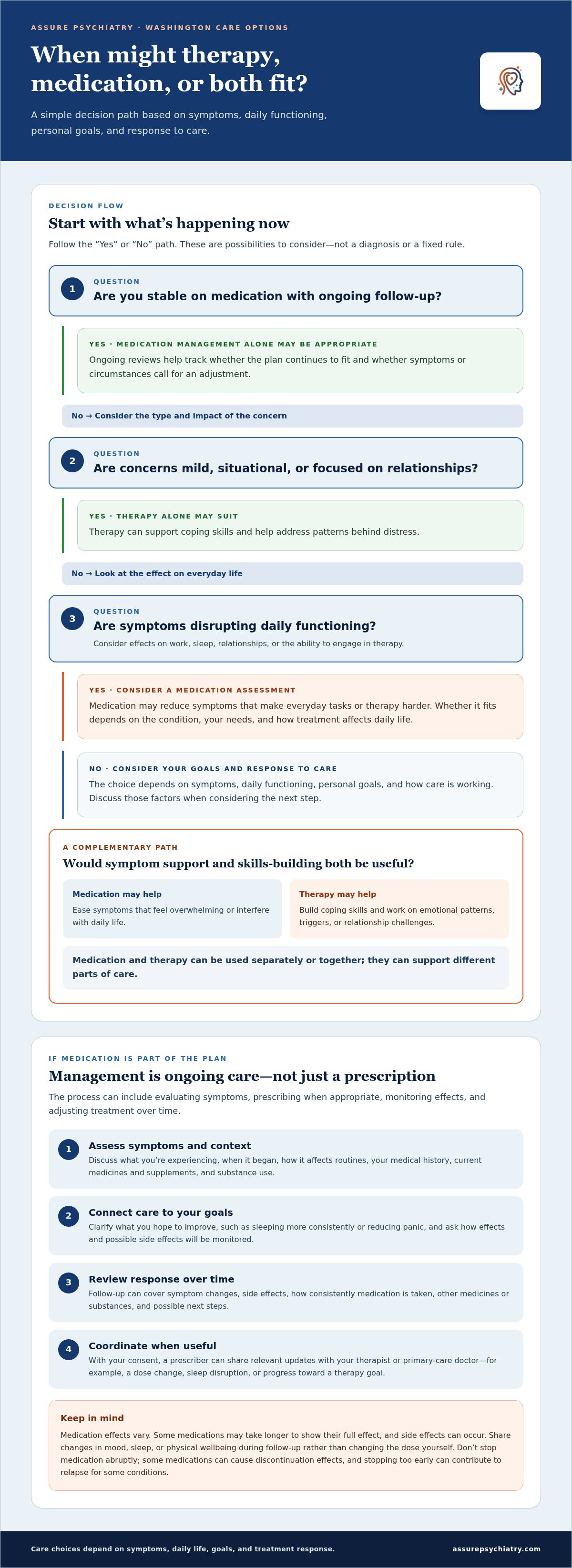
Medication management alone may be appropriate when someone is stable on medication and has ongoing follow-up. Therapy alone may suit mild symptoms, situational stress, or relationship concerns. The medication management vs therapy alone Washington decision depends on symptoms, daily functioning, personal goals, and response to care. Medication management includes evaluating symptoms, prescribing when appropriate, monitoring effects, and adjusting treatment over time.
It’s understandable to wonder whether medication means giving up on therapy, or whether therapy alone can offer enough support. These approaches can be used separately or together: medication may ease symptoms, while therapy can help build coping skills and address patterns behind distress. This guide explores medication management vs therapy alone Washington care options, including what medication management involves, how care may be coordinated with a therapist or primary-care doctor, and when medication-focused care may be sufficient. You’ll also find practical signs to help you consider which approach may fit your needs.
Key Takeaways
- Medication management includes evaluating symptoms, monitoring medication effects and side effects, and adjusting the plan over time.
- Therapy may be a starting point for mild or situational concerns, while medication can be considered when symptoms disrupt everyday life.
- Medication and therapy can complement each other, pairing symptom support with skills for coping, communication, and emotional awareness.
- With your consent, medication care can be coordinated with your therapist or primary-care doctor to support a connected plan.
- Medication alone may be sufficient for some people who are stable on treatment; ongoing follow-up helps track whether the plan continues to fit.
Potential benefits and limitations of psychiatric medication
Psychiatric medication may reduce symptoms that make work, sleep, relationships, or therapy harder. Its role depends on the condition, the person’s needs, and how treatment affects daily life.
Assessment Before Medication Begins
Before starting medication, discuss the symptoms you’re experiencing, when they began, and how they affect daily routines. Share your medical history, current medicines, supplements, and substance use, since these details can shape treatment choices. Clarify your goals, such as sleeping more consistently or reducing panic, and ask how effects and possible side effects will be monitored. This assessment helps connect treatment choices to your specific needs.
Conditions Treated With Medication
Psychiatric medications may help with depression, anxiety, bipolar disorder, ADHD, PTSD, and other mood disorders. Antipsychotic or mood-stabilizing medication is often part of care for schizophrenia or bipolar disorder; adding psychotherapy may support daily functioning. For severe substance use problems, certain medications can reduce cravings or intoxication effects. Eating disorders may also call for medical management to support physical safety, alongside treatments such as cognitive behavioral therapy or antidepressants.
How quickly medication takes effect varies. Stimulants used for ADHD act within hours, while antidepressants typically need several weeks at an adequate dose to show their full effect. Antipsychotics and mood stabilizers may work over days to weeks. These differences matter when reviewing whether treatment is helping: an early lack of benefit may mean something different for an antidepressant than for an ADHD stimulant.
Medication can ease overwhelming symptoms, but may not address emotional triggers, unresolved trauma, behavioral patterns, or relationship challenges. For example, reduced anxiety may make daily tasks more manageable, while therapy can help someone practice skills for responding to feared situations. Side effects can also occur; antidepressant side effects may appear before the full benefit, and some may settle. Share changes in mood, sleep, or physical wellbeing during follow-up rather than changing the dose yourself.
Medication management is ongoing psychiatric care, not just a prescription. Follow-up reviews can cover symptom changes, side effects, how consistently medication is taken, other medicines or substances, and possible next steps. Some people need adjustments as symptoms or circumstances change; others remain stable on their current plan. Don’t stop medication abruptly, because some medications can cause discontinuation effects, and stopping too early can contribute to relapse for some conditions.
With your consent, a prescriber can coordinate medication care with your therapist or primary-care doctor. Sharing relevant updates can help connect symptom monitoring with therapy goals and other health needs. If you’re in crisis in the United States, call 988 or go to the nearest emergency department for immediate help, according to the Substance Abuse and Mental Health Services Administration.
Coordination with therapists and primary-care doctors
Telehealth can support behavioral and mental health services in Washington. Prescribing still involves assessing symptoms, medical history, current medicines, and treatment response, with follow-up to review whether the plan remains appropriate.
With your consent, a prescriber can coordinate medication care with your therapist or primary-care doctor. Make that communication useful by identifying what each person should know, such as a recent dose change, sleep disruption, or progress toward a therapy goal. A shared update can connect symptom changes with what you’re practicing in sessions, while keeping each clinician’s role clear.
Telehealth can make psychiatric appointments easier to attend when travel, mobility, or distance creates a barrier. It may support evaluation and follow-up, while in-person care may suit someone who prefers face-to-face visits. Before an online appointment, prepare a current medication list, relevant health history, and a quiet place to talk. These steps help make appointment time more focused.
For children and adolescents, medication decisions involve the family and should account for therapy and school realities. A caregiver can share observations about sleep, focus, mood, and changes at home, while school-related concerns may help clarify how symptoms affect learning. The young person’s perspective matters, too. Coordinating these details gives the care team a fuller picture than relying on one setting alone.
Trauma-focused care benefits from clear communication about what feels manageable and what may increase distress. A therapist can work on emotional processing and coping skills, while a prescriber monitors medication effects and side effects. With permission, clinicians can align their approaches around practical goals, such as improving sleep or making daily activities feel more manageable. Trusted family members or other support people can contribute when the patient wants them involved.
To find a psychiatrist, psychiatric nurse practitioner, or therapist in Washington, start with your health plan’s directory or ask your primary-care doctor for a referral. Search by clinician role and concerns, then compare coverage, appointment format, and whether the clinician’s approach fits your needs. To understand affordability, review your plan’s behavioral-health benefits, deductible, copayment, and in-network options before booking. If paying directly, ask about fees and payment expectations when scheduling.
Finding care can feel like a task in itself, so begin with the question that matters most: do you need help evaluating medication, coordinating existing care, or both? A psychiatric evaluation can help organize symptoms, treatment history, and goals into a clearer discussion about next steps.
Prescribing involves assessing symptoms, medical history, current medicines, and treatment response, then following up to review whether the plan remains appropriate. Telehealth can support evaluation and follow-up, while some patients prefer in-person care.
Should you choose therapy, medication, or both?
Therapy alone focuses on understanding thoughts, emotions, and behaviors, then practicing ways to respond. Medication management evaluates symptoms and monitors prescribed medication; combined care uses both approaches. For mental health conditions, the choice depends on symptom severity, daily functioning, medical history, goals, and what you’re willing to continue. The medication management vs therapy alone Washington comparison comes down to these personal factors, not a single path for everyone.
Therapy may be a starting point for mild anxiety, situational stress, or relationship concerns. A therapist can help identify worry patterns, build coping skills, and practice gradual responses to difficult situations. For example, someone avoiding work meetings because of anxiety might use therapy to examine feared outcomes and rehearse manageable steps. Consistency matters: therapy takes time and active participation.
Anxiety treatment isn’t one-size-fits-all. Cognitive behavioral therapy, antidepressants, and anti-anxiety medications are among the options that may help with anxiety disorders. Treatment responses vary, and adding medication may not improve psychotherapy outcomes for everyone with anxiety. That doesn’t mean medication has no role: symptoms, preferences, and response to care can shape the plan. Discuss these factors and the expected benefits of each option with a mental health professional.
Cognitive behavioral therapy, interpersonal psychotherapy, and antidepressants are among the treatments used for depression. Combining psychotherapy and medication may be more effective than either alone. A person whose low mood and low energy make it hard to engage in therapy may first need symptom support; therapy can then address coping, relationships, and patterns that contribute to distress. If one approach isn’t helping, adding or adjusting the other is an option to discuss.
With ADHD, a treatment plan can consider medication alongside practical skills for managing attention, organization, and daily responsibilities. For example, medication may help with symptoms while therapy supports routines and strategies for handling work or school demands. The useful question is whether each part addresses a different need, rather than assuming everyone benefits from the same combination.
To compare options, identify the main problem you want to improve, such as anxiety disrupting sleep or depression affecting work. Consider symptom intensity, medical history, past treatment response, support systems, and personal goals. The National Institute of Mental Health describes psychotherapy, medication, or both as common paths for anxiety disorders. In the medication management vs therapy alone Washington decision, track changes in daily functioning and discuss them during care reviews so the treatment plan can respond to what is and isn’t helping.
WHAT IS MEDICATION MANAGEMENT?
Medication management is an ongoing process for evaluating symptoms, prescribing when appropriate, and reviewing how treatment affects daily function. An initial appointment usually lasts 45 to 60 minutes, giving time to discuss your concerns and medical history.
Before your first appointment, list your symptoms, current medicines, supplements, and questions. Include examples of how concerns affect sleep, work, school, or relationships. The prescriber may ask about past treatment, health conditions, and substance use. These details help connect possible medication choices with your needs and identify appropriate monitoring. Bring a trusted support person if that helps you describe changes or remember the conversation.
The initial conversation also sets goals for evaluating progress. You might want fewer panic episodes, steadier sleep, or improved concentration at work. Discuss which changes would matter in your daily life and how you’ll record them between visits. A simple symptom note can capture timing, intensity, and effects on routine. Clear goals make follow-up discussions more specific than a general sense that treatment feels different.
Follow-up appointments typically last 15 to 30 minutes. They review symptom changes, side effects, medication adherence, other medicines or substances, required monitoring, and next steps. For example, mention whether nausea began after starting a medication, whether sleep changed, or whether a missed dose affected symptoms. The prescriber can use those details to assess benefit and tolerability, then consider whether the plan needs adjustment.
Appointment frequency depends partly on whether medication is new or changing. Follow-ups are scheduled more often during those periods, then spaced out after treatment becomes stable. Once someone stabilizes, appointments might occur every 1 to 2 months. Some mood stabilizers require periodic blood monitoring, so discuss how that fits into your care schedule. Keep appointments and report new or troubling side effects rather than changing the dose independently.
Before each visit, note the medication and dose, when you take it, and any missed doses. Add examples of changes in mood, energy, sleep, or daily function since your last conversation. Ask what effects to watch for and what monitoring comes next. If side effects appear before the intended benefit, describe their timing and impact. This practical record can help make each short follow-up focused and useful.
Situations where medication management alone may be sufficient
Medication management alone may be sufficient when someone is stable on medication and ongoing follow-up supports the plan. The key is not whether medication replaces every kind of support. It’s whether symptoms remain manageable, daily function is steady, and the person’s current goals are being met.
Consider someone whose depression symptoms have eased and who can return to regular routines. If medication remains effective and side effects are manageable, medication-focused appointments can track changes and identify when adjustments may be useful. A person with bipolar disorder who is stable on medication may also continue psychiatric monitoring while paying attention to sleep, mood shifts, and changes in functioning.
Before deciding that medication alone fits, use an evaluation to review the whole situation. Discuss which symptoms remain, how they affect work, relationships, sleep, and self-care, and whether behavioral patterns or emotional concerns need another kind of support. The treatment goal matters: maintaining stability may call for a different plan than processing trauma or changing a recurring relationship pattern.
Medication alone may be less suited to concerns that call for practice, reflection, or emotional processing. For example, medication may lessen anxiety symptoms, but it doesn’t teach someone how to respond to a difficult conversation or build a new coping routine. Therapy can address those skills. If someone wants help with those goals, medication management can remain part of care rather than being treated as an either-or choice.
Use follow-up visits to assess whether the current approach still fits. Track mood, sleep, concentration, side effects, and daily activities between appointments. Bring concrete examples, such as returning to work consistently or continued difficulty completing ordinary tasks. If symptoms worsen, side effects interfere with routine, or functioning changes, discuss those observations and possible adjustments rather than stopping medication abruptly.
Medication alone also doesn’t mean care has ended. Ongoing psychiatric monitoring can review symptom patterns, medication effects, and whether the plan continues to support the person’s needs. Some people use medication temporarily; others benefit from longer-term treatment. Duration varies, so decisions about reducing or stopping medication should follow a gradual plan guided by a provider.
A useful takeaway: medication management alone can suit a person who is stable, meeting their goals, and comfortable with continued medication follow-up. It may not address every behavioral or emotional need, and adding therapy remains an option if goals change. Discuss whether medication management fits your needs and the symptoms you want to address.
Assure Psychiatry: Medication Management
Assure Psychiatry offers psychiatric evaluations and medication management for people considering medication or needing ongoing support with treatment. An evaluation can help clarify symptoms, treatment history, and goals; medication management includes monitoring effects and considering adjustments over time. Assure Psychiatry also provides ADHD Treatment and Anxiety Treatment, which may be relevant when these concerns affect daily functioning. This can be a next step if you want a psychiatric assessment or support reviewing a medication plan. You can discuss what you’re experiencing and what you hope to change, then consider care that fits those needs. For a calm, collaborative next step, visit assurepsychiatry.com.
Take the Next Step Toward Care That Fits
Choosing between medication management and therapy alone in Washington doesn’t have to define your entire path. Think of it as a decision you can revisit as your needs, priorities, and daily life change. A useful next step is to name what you want help with first, such as feeling more steady, understanding a recurring pattern, or getting through a demanding transition. Bringing that goal into a care conversation can help you explore options without feeling pressured to have every answer already.
If you’re ready to discuss medication support, an evaluation, or ADHD-related concerns, Assure Psychiatry can help you consider a path forward. Share what has felt difficult and what you hope will change. You deserve care that treats you as a whole person, respects your preferences, and supports your effort to find greater mental tranquility. Contact Assure Psychiatry to begin the conversation, at your own pace.
Frequently Asked Questions
Do I Have to Stay on Medication Forever?
No, taking psychiatric medication doesn’t automatically mean you’ll need it forever. Some people use medication temporarily, while others benefit from longer-term treatment. During follow-up, discuss whether symptoms have remained manageable, how daily functioning is going, and whether side effects affect your quality of life. If stopping becomes a goal, don’t stop abruptly. Some medications need a gradual, provider-guided plan to reduce discontinuation effects and lower the chance of symptoms returning.
Do you coordinate with my therapist or primary-care doctor?
Medication care can be coordinated with your therapist or primary-care doctor with your consent. Make that coordination practical by identifying what information would help, such as a medication change, a new sleep concern, or progress on a therapy goal. Share your current medication list and relevant health updates at appointments. This helps each professional understand their part in your care without assuming they provide the same kind of support.
Isn’t Therapy Enough for Anxiety or Depression?
Therapy alone may be enough for mild anxiety, situational stress, or some relationship concerns, but it isn’t the only reasonable option. Cognitive behavioral therapy can help with anxiety by building skills for noticing unhelpful thoughts and practicing new responses. For depression, therapy and antidepressant medication can each help, and combining them may be more effective than either alone. How symptoms affect sleep, work, relationships, and everyday tasks can help guide the discussion.
Which mental health conditions in Washington may benefit from medication management, therapy, or both?
Depending on symptoms and personal needs, treatment may involve medication, therapy, or both for anxiety, depression, bipolar disorder, ADHD, PTSD, and other mood conditions. For schizophrenia or bipolar disorder, medication is often an important part of care, while psychotherapy may support functioning. Eating disorders can require medical attention alongside psychological treatment. In Washington, the choice rests on the specific concerns being treated, their impact on daily life, and the person’s goals.
How effective is medication management compared with therapy alone for depression, anxiety, and other common conditions?
There isn’t one approach that works best for every condition or person. For depression, evidence supports cognitive behavioral therapy, interpersonal psychotherapy, and antidepressants; combining therapy and medication may help more than either alone. For anxiety disorders, psychotherapy is generally more effective than medication, and adding medication doesn’t significantly improve psychotherapy outcomes overall. For bipolar disorder, medication may be paired with psychotherapy to support functioning. Treatment response and willingness to continue also matter.
What are the risks and side effects of psychiatric medications compared with therapy alone?
Medication can cause side effects, and some anti-anxiety medications carry a risk of dependence with longer use. Antidepressant side effects may appear before the full benefit, so note their timing and impact for follow-up discussions. Stopping some medications abruptly can cause discontinuation effects. Therapy doesn’t involve medication side effects, but it requires consistency and emotional openness, and progress may take time. Compare these considerations with your goals and ability to stay engaged.
When should someone in Washington seek medication management in addition to therapy?
Consider discussing medication support if symptoms continue to interfere with sleep, work, relationships, or daily responsibilities despite ongoing therapy. If there’s no improvement after 8-12 weeks of therapy, discussing a treatment adjustment is reasonable. A professional can weigh symptom severity, medical history, past treatment response, and preferences. If you’re in crisis in the United States, call 988 or go to the nearest emergency department for immediate help, according to the Substance Abuse and Mental Health Services Administration.
Recent Comments