

What if the reason your anxiety hasn’t faded isn’t because you’re a “difficult” patient, but because your brain requires a more precise biological map? It’s exhausting to live with persistent physical tension and racing thoughts while feeling like you’ve already tried every standard option. With 2026 reports indicating that 30% of Oregon’s adult population struggles with mental health issues, it’s clear you aren’t alone in this search for answers. You likely feel frustrated that your current regimen isn’t providing the relief you were promised, and the fear of side effects often makes switching medications feel like a risky gamble.
We believe that treatment resistance is a biological puzzle rather than a personal failure. This article explains why standard protocols often fall short and how specialized medication management for treatment resistant anxiety Portland can finally bridge the gap to mental tranquility. You’ll gain a clear understanding of why your symptoms persist, how a collaborative psychiatrist who truly listens can change your trajectory, and the specific roadmap we use to help you find lasting relief.
Key Takeaways
- Understand that “treatment resistance” isn’t a dead end, but a signal that your brain requires a more specialized, precision-based medication strategy.
- Explore the biological reasons why standard SSRIs often fail, including how your specific genetic makeup and liver enzymes affect how you metabolize medications.
- Learn about advanced clinical options for treatment resistant anxiety Portland, such as medication augmentation and the use of non-traditional anxiolytics.
- Identify the key qualities to look for in a local psychiatric provider to ensure you have a collaborative partner who values your individual identity and experience.
- Discover how a comprehensive psychiatric evaluation can transform a complex diagnosis into a clear, supportive roadmap toward lasting mental tranquility.
What Is Treatment-Resistant Anxiety (TRA)?
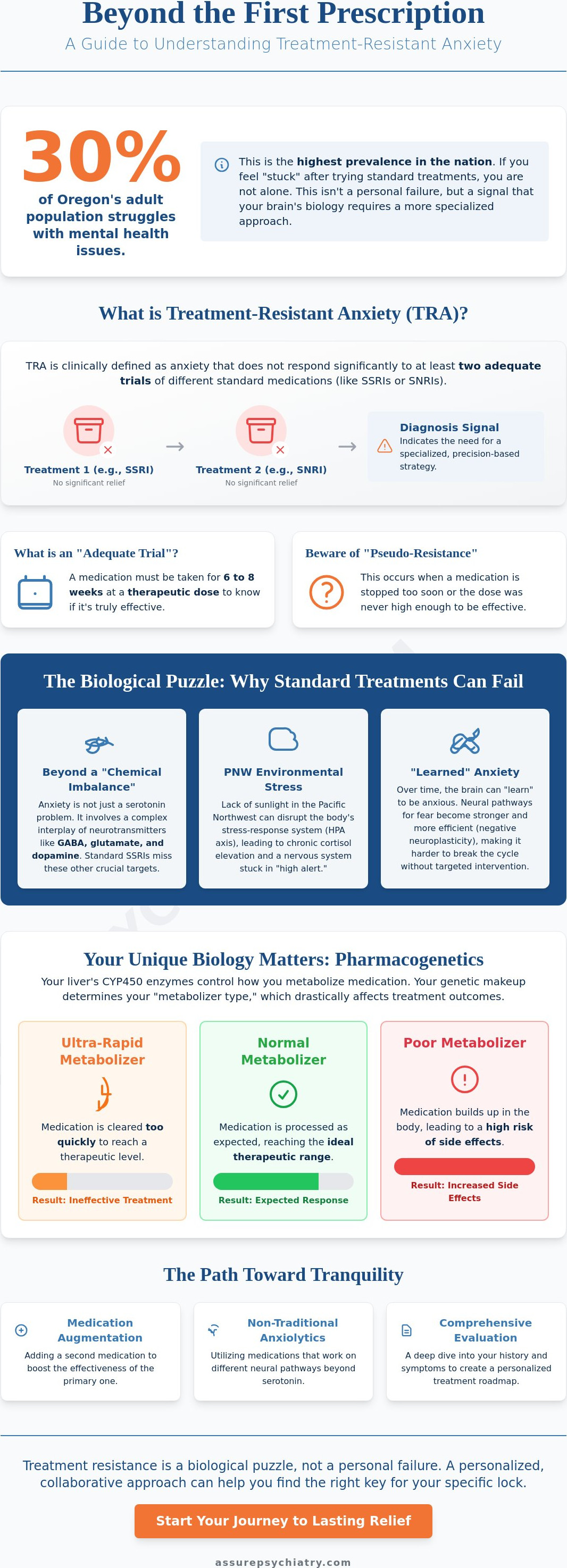
Many people walk into a clinical setting feeling defeated because their symptoms haven’t budged despite following every instruction. They’ve tried the standard prescriptions and the traditional talk therapy, yet the hum of worry remains a constant companion. In professional terms, we call this treatment resistant anxiety Portland. It’s specifically defined as a situation where at least two different standard treatments, usually SSRIs or SNRIs, haven’t provided significant relief despite being used correctly. Reaching this point can feel like a failure, but it’s actually a common clinical milestone. It signals that your brain biology requires a more nuanced, specialized approach rather than just another standard prescription.
If you feel “stuck,” you aren’t alone. According to October 2025 data from Mental Health America, 30% of Oregon’s adult population struggles with mental health issues, the highest prevalence in the nation. In a city as fast-paced and socially conscious as Portland, the pressure to “get better” can add its own layer of stress. Validating your experience is the first step toward healing. Recognizing that your anxiety hasn’t responded to first-line treatments doesn’t mean you’re untreatable; it simply means we haven’t found the right key for your specific lock yet. We focus on distinguishing between a partial response, where symptoms are slightly muffled, and total resistance, where the medication seems to have no effect at all.
The Clinical Criteria for Resistance
To determine if you’re facing true resistance, we look for what’s called an “adequate trial.” This means you’ve taken a medication at a therapeutic dose for at least 6 to 8 weeks. Many patients are told they have resistance when they’ve actually experienced “pseudo-resistance.” This happens when a medication wasn’t given enough time to work or the dosage was never high enough to be effective. We use standardized symptom scales to get objective data on your progress, ensuring we don’t move on from a treatment that just needs a little more time or a slight adjustment.
Beyond the Generalized Label
An Anxiety disorder manifests differently for everyone. Resistance might look like recurring panic attacks for one person, while for another, it’s a constant, low-level dread that never leaves. There’s also a significant overlap with other conditions. If you’ve spent months looking for a treatment resistant depression psychiatrist, you’re likely aware that anxiety and depression often feed into one another. A comprehensive psychiatric evaluation helps us look past the general labels to see the whole person. This deep dive into your history and symptoms is the essential first step to building a roadmap that finally leads to mental tranquility.
Why Standard Anxiety Treatments Fail: The Biological Perspective
If you’ve spent months or years trying different Selective Serotonin Reuptake Inhibitors (SSRIs) without success, you’ve likely heard the phrase “chemical imbalance.” However, the idea that anxiety is solely a serotonin deficiency is increasingly viewed as the “Serotonin Myth.” Modern research into neurotrophic perspectives on treatment-resistant anxiety suggests that the brain’s circuitry is far more complex. It involves a delicate dance between glutamate, GABA, and dopamine. When these systems are out of sync, standard treatments often fail to provide the relief you deserve.
In the Pacific Northwest, our environment plays a unique role in this biological puzzle. The chronic lack of sunlight and persistent gray skies can disrupt your HPA axis, the system that controls your body’s response to stress. This disruption leads to chronic cortisol elevation, which keeps your nervous system in a state of high alert. Over time, your brain can actually “learn” to stay anxious through a process of negative neuroplasticity. The neural pathways associated with fear become stronger and more efficient, making it harder to find peace. This is why treatment resistant anxiety Portland requires a strategy that looks beyond the surface of your symptoms.
Pharmacogenetics and Metabolism
Your liver is the primary gatekeeper for how you process psychiatric medications. Specifically, the CYP450 enzyme system determines your metabolic rate. If you’re an “ultra-fast metabolizer,” your body clears medication so quickly that it never reaches a therapeutic level in your bloodstream. Conversely, “poor metabolizers” may experience intense side effects even at low doses because the drug lingers too long. Looking at your family history often provides a roadmap for your care; if a relative struggled with certain medications, there’s a biological reason you might too.
Co-occurring Conditions and Misdiagnosis
Sometimes, what looks like persistent anxiety is actually a symptom of an underlying condition. There’s a profound link between the need for adult ADHD treatment and chronic worry. If your brain is constantly struggling to focus or regulate impulses, the resulting chaos often presents as generalized anxiety. Similarly, untreated sleep disorders or PTSD can mimic the symptoms of treatment resistant anxiety Portland. We utilize a trauma-informed approach to ensure we aren’t just treating a label, but addressing the root cause of your distress. If you’re ready to explore these biological factors more deeply, partnering with a specialist at Assure Psychiatry can help you uncover the specific reasons your previous treatments haven’t worked.
Advanced Medication Management Strategies for Persistent Anxiety
When standard SSRIs fail, many patients feel their only remaining options are invasive procedures. However, there is a sophisticated pharmacological middle ground that often goes unexplored. Finding relief for treatment resistant anxiety Portland usually involves shifting the focus from simple serotonin replacement to a more complex modulation of the brain’s neurochemistry. This might mean moving away from a drug that isn’t working entirely, or it might involve “augmentation.” This is the strategic addition of a secondary medication to boost the effectiveness of the first, creating a combination that works better than its individual parts.
Beyond the common antidepressants, we often look to non-traditional anxiolytics. These include Alpha-2 delta ligands, which help calm overactive nerve signals, or Buspirone, which targets specific dopamine and serotonin receptors without the typical side effects of SSRIs. For those who experience the physical “jitters” of anxiety, beta-blockers can be an effective tool to manage the racing heart and trembling hands that make daily life difficult. By targeting the Glutamate and GABA systems, we can address the biological challenges in treating resistant anxiety that standard protocols miss. Precision dosing is essential here. We believe that micro-adjustments matter, especially for sensitive patients who have struggled with side effects in the past.
The Art of Medication Augmentation
Augmentation isn’t about simply adding more pills; it’s about creating a synergistic effect. We might use low-dose atypical antipsychotics to stabilize a hyper-reactive nervous system or introduce mood stabilizers to help with “anxious distress.” Because these combinations are highly personalized, successful medication management in Portland requires frequent, careful follow-ups. We monitor how your body responds to every adjustment, ensuring the plan remains as unique as you are. This careful oversight helps us identify the exact point where a medication begins to offer the mental tranquility you’ve been seeking.
Managing Side Effects During Transitions
Switching medications can be a source of significant worry. We prioritize your comfort by using safe cross-tapering strategies to minimize withdrawal or “startup anxiety” that can occur when beginning a new regimen. This collaborative process means you’re never left to navigate a new prescription alone. We’ll decide together if a side effect is a temporary hurdle or a deal-breaker. Our goal is to ensure that your journey toward lasting relief is as smooth and predictable as possible, honoring your past experiences while building a better future.
Finding the Right Treatment-Resistant Anxiety Psychiatrist in Oregon
Finding a provider who understands the biological complexities of persistent worry is a significant hurdle. A simple “Psychiatrist near me” search often yields generalists who may rely on the same first-line treatments that have already failed you. For treatment resistant anxiety Portland residents deserve a practitioner who views them as a collaborative partner rather than just a diagnosis. You need a guide who is willing to look past the surface and explore the advanced strategies we’ve discussed earlier. This partnership is the foundation of any successful recovery plan.
In the Oregon mental health landscape, you’ll likely encounter both Psychiatric Mental Health Nurse Practitioners (PMHNPs) and MDs. Both are qualified to provide expert care, but the most important factor is their specific experience with complex, resistant cases. Beyond credentials, consider their commitment to inclusive care. A provider who understands the unique social and cultural stressors of the Pacific Northwest can offer a safer, more validating environment. This is especially vital for residents in Seattle, Washington, or rural Oregon who may feel isolated in their search for specialized support. Telehealth has bridged this gap, allowing you to access high-level care regardless of your zip code.
Questions to Ask a Potential Provider
When interviewing a new practitioner, be direct. Ask, “How do you approach a patient who has already failed three medications?” This question reveals their clinical philosophy and their willingness to think outside the box. You should also ask if they offer virtual visits for follow-up medication management appointments. Finally, ensure they can explain how they incorporate your personal goals into the treatment plan. Your voice should be the most important one in the room during every consultation.
Insurance and Accessibility in Portland
Navigating coverage can be overwhelming, but many specialized practices work with major Oregon insurers like Aetna and Blue Cross. Accessibility isn’t just about cost; it’s about the flexibility of having both in-person Portland visits and telepsychiatry options. We believe that “mental tranquility” should be a measurable goal in your care plan, not just an abstract idea. This means tracking your progress with objective data while honoring your subjective experience of peace. If you’re ready to find a provider who listens and leads with empathy, schedule a consultation with Assure Psychiatry to begin your roadmap to relief.
A Path Toward Tranquility: Personalized Care at Assure Psychiatry
Finding a path forward shouldn’t feel like a solo journey through a thick fog. At Assure Psychiatry, we believe that the most effective clinical outcomes happen when the patient is treated as an equal partner in their own wellness. Our core philosophy is simple: you are not your diagnosis. While your symptoms might be complex, they don’t define your identity or your potential for peace. We provide a stable, supportive environment where your history is honored and your goals are the primary focus of every session.
When addressing treatment resistant anxiety Portland, we combine rigorous clinical expertise with a deeply human touch. We know that by the time you reach our doors, you’ve likely felt dismissed or labeled as “difficult” by other providers. We don’t see difficulty; we see a biological puzzle that requires patience and specialized knowledge to solve. Our approach balances the latest evidence-based medication management with the compassionate validation you need to feel safe during the treatment process. We’re here to offer quiet strength and reliability as you navigate the transition toward mental tranquility.
Compassionate, Culturally Competent Care
We’re committed to providing care that respects diverse identities and social awareness. In a city as vibrant and varied as Portland, your psychiatric care should reflect an understanding of the unique stressors you face. Validation is just as important as the prescription itself. We strive to create a non-judgmental space where you feel seen and heard rather than just diagnosed. This stable environment is essential for recovery, especially when you’re dealing with the frustration of previous treatment failures. We prioritize inclusivity and restorative action, ensuring that every patient feels they have a compassionate ally in their corner.
Next Steps: Booking Your Evaluation
Taking the first step toward a new treatment plan can feel daunting, but we’ve designed our process to be as low-pressure as possible. Your journey begins with a comprehensive 60-minute psychiatric evaluation in Portland. This isn’t a rushed intake; it’s a deep dive into your history, your biology, and your personal experience with treatment resistant anxiety Portland. During this hour, we’ll listen to your story and begin building a personalized roadmap tailored to your specific needs.
We’ll look at your previous medication trials, your family history, and your lifestyle to determine why standard treatments haven’t worked. From there, we’ll collaborate on a plan that might include the advanced strategies we’ve discussed, such as medication augmentation or precision dosing. You’ll leave your first session with a clear understanding of the path ahead and a professional partner dedicated to your success. If you’re ready to move past the cycle of worry and find lasting relief, Schedule your psychiatric evaluation with Assure Psychiatry today.
Moving Beyond Resistance Toward Lasting Peace
Living with persistent worry is exhausting, but your past experiences with medication don’t have to dictate your future. You’ve learned that your brain’s unique biology and metabolic patterns play a significant role in how you respond to treatment. By moving beyond the standard serotonin model and embracing advanced medication management, you can finally begin to address the root causes of your distress. Specialized care for treatment resistant anxiety Portland is about finding the right biological key for your specific lock.
We’re here to act as your collaborative guide. Our practice specializes in complex medication management and offers compassionate, culturally competent care that validates your individual identity. We accept major insurance plans like Aetna and Blue Cross to ensure high-level psychiatric support remains accessible. You deserve a roadmap that leads toward mental tranquility rather than just another temporary fix.
Begin your journey to mental tranquility; schedule an evaluation today. You don’t have to carry this burden alone; we’re ready to help you find the lasting relief you’ve been searching for.
Frequently Asked Questions
What makes anxiety ‘treatment-resistant’?
Anxiety is considered treatment-resistant when you haven’t found significant relief after trying at least two different standard medications, such as SSRIs or SNRIs. This usually involves taking the medication at a therapeutic dose for an adequate period, typically six to eight weeks. If symptoms persist despite these efforts, it often indicates that your brain biology requires a more specialized, nuanced pharmacological approach beyond first-line options.
Can a psychiatrist help if therapy hasn’t worked for my anxiety?
Yes, a psychiatrist can provide essential support when talk therapy alone isn’t enough. While therapy helps manage behavioral patterns, treatment resistance often has a biological root that requires medical intervention. By specializing in medication management, we can adjust the chemical environment of your brain. This often makes the tools you learn in therapy more effective, creating a collaborative path toward lasting mental tranquility.
Is it safe to switch anxiety medications if I’ve had bad reactions before?
It’s safe when the transition is managed by a specialist who prioritizes your comfort and safety. We use careful cross-tapering methods to minimize withdrawal and “startup anxiety.” By looking at your history of side effects and metabolic profile, we can choose medications that are less likely to cause the same issues you’ve experienced in the past, ensuring a much smoother journey.
How long does it take to see results with advanced medication management?
Most patients begin to notice significant shifts within four to eight weeks, although some augmentation strategies may show results sooner. Because we use precision dosing and micro-adjustments, the process is steady and controlled. We schedule frequent follow-ups during the early stages of your new plan to monitor your progress and ensure your body is responding well to every adjustment we make.
Does Assure Psychiatry offer telehealth for patients outside of Portland?
We provide comprehensive telepsychiatry services for residents throughout Oregon and Washington. This allows individuals in rural areas or those living in cities like Seattle to access our specialized expertise without the need for a long commute. Our virtual platform is secure and designed to maintain the same warm, supportive environment you would experience during an in-person visit for treatment resistant anxiety Portland.
What should I bring to my first appointment for treatment-resistant anxiety?
Please bring a detailed list of any previous medications you’ve tried, including the dosages and the length of time you took them. It’s also helpful to have notes on specific side effects you experienced and any family history regarding mental health treatment. This information acts as a vital roadmap, helping us understand your biological history so we can avoid past pitfalls and find a better solution.
Can ADHD be the cause of my ‘untreatable’ anxiety?
It’s very common for untreated ADHD to mimic or cause persistent anxiety. If your brain is constantly struggling with focus, organization, or impulse control, the resulting internal chaos often presents as chronic worry. In these cases, standard anti-anxiety medications may fail because they aren’t addressing the root cause. Treating the underlying ADHD can often resolve the “untreatable” anxiety that has been holding you back.
Do you accept insurance for specialized anxiety treatment?
We accept several major insurance plans to help make specialized care more accessible for our community. Our current list includes Aetna, Cigna, UnitedHealthcare, and Blue Cross (Regence), among others. We believe that finding relief for treatment resistant anxiety Portland shouldn’t be a financial burden. Our team can help you navigate your coverage so you can focus entirely on your recovery and your journey toward mental tranquility.
Recent Comments