

About 12.1% of U.S. adults experience social anxiety disorder during their lifetime, according to the National Institute of Mental Health. For people seeking medication for social phobia in Washington, the main options are usually SSRIs or SNRIs, but improvement may take several weeks to several months. That wait can feel difficult when social situations already bring intense fear or avoidance.
Social anxiety disorder involves persistent fear of being judged or embarrassed in social situations. The American Psychiatric Association says symptoms typically last at least six months for a diagnosis. Wanting relief is understandable, and knowing what treatment can involve may make the process feel more manageable. This article explains how SSRIs and SNRIs are used, why a prescriber may adjust a dose gradually, and why benzodiazepines are generally not suited to long-term treatment because of risks such as sedation and habit-forming use. It also covers what to expect while medication takes effect and how professional medication management can support an individualized plan.
Key Takeaways
- Learn how social anxiety can affect daily life and what clinicians consider when assessing symptoms.
- See why treatment may begin with a low antidepressant dose and adjust gradually to balance benefit and side effects.
- Understand how medication choices differ, including options that may help with specific performance-related physical symptoms.
- Find out what medication management can contribute when symptoms persist or a treatment plan needs adjustment.
Benzodiazepines and long-term anxiety treatment
Benzodiazepines can ease anxiety quickly, but they’re generally a short-term option. Their role differs from antidepressants, which may take weeks to help with social anxiety.
Benzodiazepines for Anxiety
Benzodiazepines can reduce anxiety, including distress around social situations. For adults with an anxiety disorder, they may offer temporary relief, but they aren’t usually the foundation of long-term treatment. Shyness alone doesn’t establish social anxiety disorder or determine whether medication is appropriate. What matters is whether symptoms cause ongoing distress and interfere with daily life.
Short-Term Use and Safety
Benzodiazepines can cause sedation and may be habit-forming, so they’re typically prescribed for short-term use. They may be used as needed for an anxiety-triggering situation or while waiting for an antidepressant to take effect. Short-term use of 2-4 weeks while starting an antidepressant is one described approach. Discuss how long to use the medication, its intended purpose, and a plan for stopping with the prescriber.
How much do common social anxiety medications cost without insurance in Washington? Cash costs vary by medication, dose, and pharmacy, so there isn’t one price for every prescription. Ask for the price of the specific medication and dose before filling it.
Are beta blockers or benzodiazepines used, and when? Benzodiazepines may be used briefly or as needed for a triggering situation. Beta blockers may help infrequently with physical symptoms during a specific event, such as giving a speech, but aren’t recommended for general social anxiety treatment.
Does Washington Apple Health or insurance cover medication and psychiatric visits? Coverage depends on the plan’s medication formulary and benefits for psychiatric visits. Review the terms for the specific medication and appointment before estimating costs.
What should I ask before starting medication? Ask which symptoms the medication targets, how long to try it, and what effects to watch for. For benzodiazepines, ask about sedation, habit-forming risks, intended duration, and how stopping will be handled.
Antidepressant onset and treatment expectations
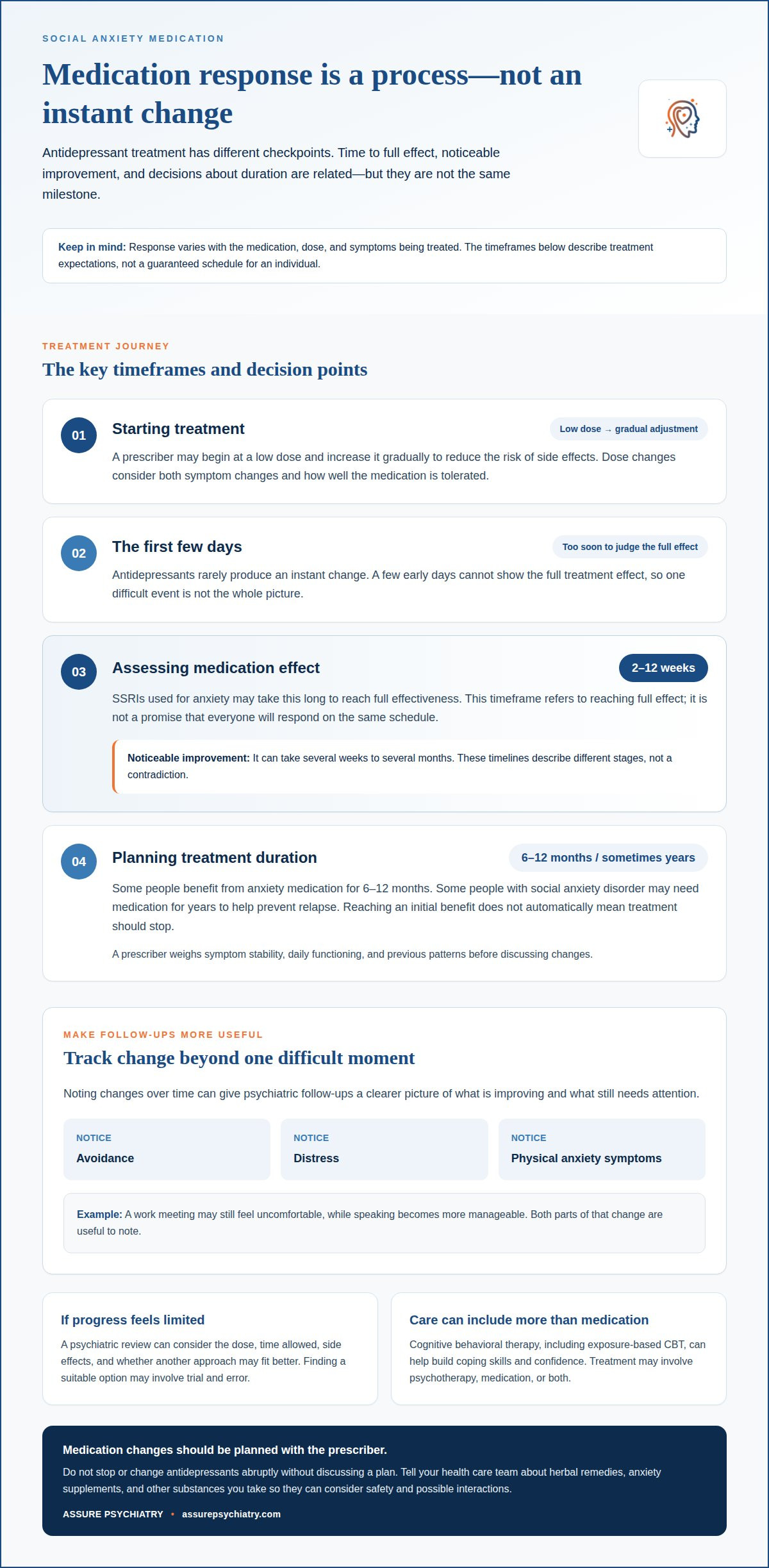
Antidepressants for social anxiety disorder rarely produce an instant change. SSRIs used for anxiety may take 2-12 weeks to reach full effectiveness. Noticeable symptom improvement can take several weeks to several months. Those timelines describe different stages, not a contradiction. A few early days cannot show the full treatment effect.
Progress depends on the medication, dose, and symptoms being treated. To reduce the risk of side effects, a prescriber may start social anxiety medication at a low dose, then increase it gradually. During this process, note changes in avoidance, distress, and physical anxiety symptoms. For example, a work meeting may still feel uncomfortable, but speaking may become more manageable. Tracking such changes gives psychiatric follow-ups a clearer picture than judging treatment by one difficult event.
Duration is another part of treatment planning. Some people benefit from anxiety medication for 6-12 months. Some people with social anxiety disorder may need medication for years to help prevent relapse. These different timelines show why reaching an initial benefit doesn’t automatically mean treatment should stop. A prescriber weighs symptom stability, daily functioning, and previous patterns before discussing changes. Don’t stop or change antidepressants abruptly without discussing a plan with the prescriber.
Medication isn’t the only approach. Cognitive behavioral therapy, including exposure-based CBT, can help build coping skills and confidence in anxiety-inducing situations. Treatment may involve psychotherapy, medication, or both, depending on how much the disorder affects daily functioning. If antidepressants don’t seem helpful, a psychiatric review can consider the dose, time allowed, side effects, and whether another approach may fit better. Tell your health care team about herbal remedies or anxiety supplements so they can consider safety and possible medication interactions. Include substances and supplements when describing what you take. The goal is to assess the whole treatment picture, not just one symptom.
SSRIs and SNRIs
SSRIs and SNRIs are antidepressant classes used for social anxiety disorder. Mayo Clinic identifies SSRIs as an initial medication choice for persistent symptoms. These medicines may be considered when ongoing fear affects work, relationships, or everyday activities. A prescription is one part of care, not a judgment about someone’s character or mental strength.
SSRIs include sertraline and paroxetine. Sertraline is FDA approved for social phobia in adults, and paroxetine is also FDA approved for social anxiety. A prescriber may consider a person’s symptoms, other medical conditions, previous medication experiences, and unwanted effects when choosing between options. These factors help shape a plan around the individual rather than treating every case alike.
SNRIs are another antidepressant option. Venlafaxine, sold as Effexor XR, may be used for social anxiety disorder. It inhibits neuronal serotonin and norepinephrine reuptake and causes beta-receptor down-regulation. This describes how the medication acts, but doesn’t predict an individual’s response. A person’s experience with venlafaxine may differ from their experience with an SSRI.
Dose changes are usually gradual. A health care provider may begin social anxiety medication at a low dose, then increase it to a full dose to reduce the risk of side effects. This allows the prescriber to consider symptom changes and tolerability together. If a medicine isn’t helping enough, finding a suitable option may involve trial and error. Don’t change or stop a prescription without discussing it with the prescriber.
Medication may also be considered alongside therapy. Cognitive behavioral therapy focuses on patterns of thoughts and responses, while medication may address symptoms as part of a broader treatment plan. Mayo Clinic says treatment may involve psychotherapy, medication, or both, depending on effects on daily functioning. Discussing both options can clarify what support fits your needs and goals. Bring questions about expected benefits, possible effects, and how progress will be reviewed.
What medications are commonly prescribed for social anxiety disorder?
SSRIs and SNRIs are the main medication classes used for social anxiety disorder. For persistent symptoms, SSRIs are often tried first. Examples include sertraline (Zoloft) and paroxetine (Paxil). Venlafaxine (Effexor XR), an SNRI, may also be an option. People considering medication for social phobia in Washington can discuss how their symptoms and health history shape the choice.
These antidepressants are different options, not interchangeable prescriptions. A prescriber considers other medical conditions, current medicines, and possible side effects. They may start with a low dose and adjust it gradually. Finding a suitable medication can involve trial and error, so follow-up helps assess symptom changes and tolerability. Share changes to your daily routines, such as avoiding meetings or struggling to speak in groups.
Beta blockers have a narrower role. They may be useful infrequently for a specific performance situation, such as giving a speech. By reducing physical signs like a fast heartbeat or shaking, they may address performance-related symptoms. They aren’t recommended as general treatment for social anxiety disorder. A medicine aimed at one event may not address fear across work, school, or social settings.
Buspirone is another anxiety medication, but its effectiveness for social phobia isn’t well established. It shouldn’t be assumed to work like an SSRI or SNRI for this condition. A prescriber can consider the evidence, symptoms, and medication history before choosing an approach. Bring a complete list of medicines and supplements to discuss safety and possible interactions.
Medication is one part of care. Treatment may also include psychotherapy, or combine therapy and medication, based on how symptoms affect daily functioning. If anxiety centers on a particular event, describe that pattern; if it affects many settings, explain those effects too. For medication for social phobia in Washington, discussing these details can help clarify treatment goals. Discuss anxiety treatment options when you’re ready to consider a plan with professional support.
Assure Psychiatry: Medication Management
Assure Psychiatry offers medication management and psychiatric evaluations for people seeking support with social anxiety symptoms. An evaluation can help clarify how symptoms affect daily life and inform discussion of treatment options. Medication management can support follow-up on response, side effects, and whether a plan needs adjustment. If fear of social situations is affecting work, relationships, or everyday activities, professional anxiety treatment may be a useful next step.
Care should reflect your concerns and health history, not reduce you to a diagnosis. Discuss medication questions, treatment goals, and changes you’ve noticed with a psychiatric professional. Contact Assure Psychiatry to discuss your care.
Take a thoughtful next step toward care
Choosing medication for social phobia in Washington can be an opportunity to clarify what you want daily life to feel like, not just which symptoms you want to reduce. Consider the situations that matter most to you, such as speaking up at work, attending appointments, or feeling more at ease with people you trust. Naming a personal goal can make a conversation about care more focused and relevant to your life.
You can also bring questions about how treatment decisions are made and how progress will be discussed. A psychiatric conversation should leave room for your priorities, concerns, and health history. You don’t need to have every answer before taking that step. If you’re ready to explore care, contact Assure Psychiatry. A clearer path can begin with one open conversation, at a pace that feels manageable.
Frequently Asked Questions
What Is Social Anxiety Disorder?
Social anxiety disorder involves intense fear of judgment or embarrassment in social situations, which can lead to avoidance or substantial distress. According to the American Psychiatric Association, symptoms typically need to last at least six months for a diagnosis. For example, someone may repeatedly avoid class presentations or work meetings because they fear being scrutinized, rather than simply feeling shy occasionally.
How is it treated?
Treatment may include medication, psychotherapy, or both. According to Mayo Clinic, the approach depends partly on how symptoms affect daily functioning. Someone who avoids team meetings, for example, may discuss medication and therapy options in relation to that difficulty. A psychiatric evaluation can also help distinguish social anxiety from other concerns that may shape treatment choices and follow-up.
Are SSRIs or SNRIs first-line medications for social phobia?
SSRIs are often the first medication type tried for persistent social anxiety symptoms, according to Mayo Clinic. SNRIs, including venlafaxine, may also be considered. The choice isn’t simply about which class comes first: a prescriber considers the person’s health history, current medications, and treatment goals. Sharing past medication experiences can make the discussion more specific.
How long do social anxiety medications take to work, and how effective are they?
SSRIs used for anxiety may take 2-12 weeks to reach full effectiveness, while noticeable improvement may take several weeks to several months. Progress is assessed through changes in daily functioning, not just a single anxious moment. For instance, a person might find it easier to attend a recurring meeting. Follow-up helps assess whether the treatment plan is meeting its goals.
What are the side effects and risks of medications for social anxiety disorder?
Possible effects depend on the medication, so discuss the specific prescription and your health history with the prescriber. Benzodiazepines can be sedating and habit-forming, which is why they’re typically used short term. Before starting any medication, mention other prescriptions, over-the-counter products, and supplements. Ask what effects to monitor and what to do if they interfere with everyday activities.
Can medication be combined with cognitive behavioral therapy for social anxiety?
Yes. Treatment for social anxiety may combine medication and psychotherapy, according to Mayo Clinic. Cognitive behavioral therapy can address how a person responds to feared situations; exposure-based CBT can help build coping skills and confidence. For example, someone working toward speaking in a group may discuss medication alongside therapy focused on that goal. The treatment approach depends on how symptoms affect daily functioning.
Recent Comments