

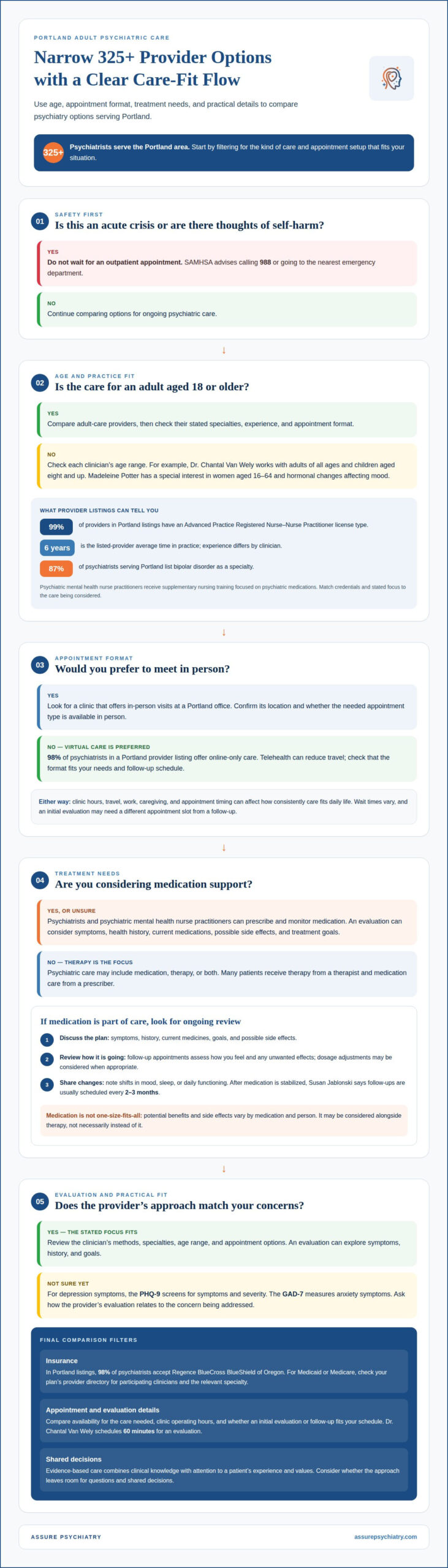
The right psychiatrist isn’t simply the closest name in a directory. More than 325 psychiatrists serve the Portland area, so finding evidence-based psychiatry in Portland starts with narrowing the options by adult care, treatment approach, and whether you prefer in-person or virtual visits.
Choosing mental health care can feel like a lot to sort through, especially when you’re weighing medication, therapy, and practical details such as travel and appointment times. Evidence-based psychiatry in Portland should take your symptoms, history, and preferences into account, while making room for questions and shared decisions.
This guide explains what to look for in adult psychiatric care, how medication management can work alongside therapy, and what to consider when reviewing a clinic’s Portland location and hours. You’ll have a clearer sense of the care options and the next step that feels right for you.
Key Takeaways
- With more than 325 psychiatrists serving Portland, narrow your options by adult care, treatment approach, and preference for in-person or virtual visits.
- Medication management can be part of care alongside therapy; thoughts of self-harm or an acute crisis call for contacting 988 or going to the nearest emergency department, according to the Substance Abuse and Mental Health Services Administration (SAMHSA).
- Consider how a clinic’s Portland location, in-person or virtual appointments, and hours fit your routine when planning ongoing care.
- Adult psychiatric care is intended for people aged 18 and older, and an evaluation can help shape a treatment plan around symptoms, history, and individual needs.
Psychiatric providers serving Portland
More than 325 psychiatrists serve the Portland area, so adults have options to compare. Evidence-based psychiatry in Portland can mean care that combines clinical knowledge with attention to a patient’s experience and values. For example, Gil Gutierrez describes using evidence-based medicine while considering both. Use a provider’s stated approach, specialties, and appointment format to narrow your choices.
Provider Experience and Credentials
Credentials and experience help clarify a provider’s training and role. In Portland listings, 99% of providers have an Advanced Practice Registered Nurse-Nurse Practitioner license type. Psychiatric mental health nurse practitioners receive supplementary nursing training focused on psychiatric medications. Listed Portland providers average six years in practice, though experience differs by clinician. As you compare options, consider whether the provider’s background fits your needs, such as an evaluation or medication support.
Specialties and Age Ranges
Specialties and age ranges can help you identify a clinician whose practice matches your concern. Bipolar disorder is a specialty offered by 87% of psychiatrists serving Portland. Dr. Chantal Van Wely works with adults of all ages and children aged eight and up. Madeleine Potter has a special interest in women aged 16-64 and hormonal changes affecting mood. Match the listed focus and age range to your situation.
Evidence-Based Care for Specific Conditions
To find evidence-based psychiatry in Portland for a specific condition, start with the concern you want addressed and review clinicians’ stated methods. A psychiatric evaluation can explore symptoms, history, and goals. The PHQ-9 screens for depression symptoms and their severity; the GAD-7 measures anxiety symptoms. Dr. Chantal Van Wely schedules 60 minutes for an evaluation. Psychiatrists are physicians specializing in mental health diagnosis and treatment.
Insurance participation is another practical filter. In Portland listings, 98% of psychiatrists accept Regence BlueCross BlueShield of Oregon. For Medicaid or Medicare, use your plan’s provider directory to look for participating clinicians and the relevant specialty. Evidence-based psychiatry in Portland should also feel workable for your circumstances, so consider how the provider’s approach and appointment options fit your needs.
Medication alongside therapy for depression and anxiety
Psychiatric care in Portland may include medication, therapy, or both, depending on your needs and the provider. Psychiatrists and psychiatric mental health nurse practitioners can prescribe and monitor medication. Many patients receive therapy from a therapist and medication care from a prescriber.
Medication Prescribing and Monitoring
Medication management involves more than choosing a prescription. A prescriber considers symptoms, health history, current medications, possible side effects, and your treatment goals. Follow-up appointments allow them to assess how you’re feeling, discuss unwanted effects, and adjust dosage when appropriate. After medication is stabilized, Susan Jablonski says follow-ups are usually scheduled every 2-3 months. Share changes in mood, sleep, or daily functioning at each visit.
When Medication May Be Worth Considering
Consider discussing medication when depression or anxiety symptoms persist, disrupt daily routines, or make it harder to engage in other care. An evaluation can clarify how symptoms affect sleep, work, relationships, and overall mental health. Medication may be considered alongside therapy, not necessarily instead of it. Melissa Danilov incorporates approaches such as CBT, DBT, and mindfulness-informed strategies into medication management when appropriate.
Medication may help some people manage symptoms, but potential benefits and side effects vary by medication and person. Ask the prescriber how treatment will be monitored, what changes to watch for, and how medication fits your plan. Medication management includes reviewing the medication’s effectiveness and side effects, and considering adjustments based on your progress. Keep a brief record of mood or sleep changes to discuss at appointments.
Don’t wait for an outpatient appointment during an acute crisis: according to the Substance Abuse and Mental Health Services Administration (SAMHSA), people experiencing thoughts of self-harm or an acute crisis should call 988 or go to the nearest emergency department. For ongoing concerns, a medication management evaluation can help you discuss options for depression, anxiety, or bipolar disorder with a psychiatric provider.
Clinic location and hours
Location, appointment format, and clinic hours affect how consistently care fits into daily life. Portland psychiatry includes providers serving the area online, while some clinics also offer in-person visits at a Portland office.
In a Portland provider listing, 98% of psychiatrists offer online-only care. Telehealth can reduce travel, while an office visit may suit patients who prefer meeting in person. If a clinic offers both formats, consider which works for your symptoms, schedule, and ability to attend follow-up appointments. The right treatment plan should remain practical between visits.
Wait times depend on scheduling and the type of appointment. An initial evaluation may need a different appointment slot from a follow-up, so timing varies. Compare whether in-person or telepsychiatry appointments are available for the care you need, and consider whether the clinic’s operating hours fit your schedule. Specific criteria must be fulfilled to access Assure Psychiatry’s remote appointments.
Hours matter beyond the first visit. Compare the clinic’s schedule with work, caregiving, transportation, and the timing of ongoing care. If traveling to an office, plan your route and allow time around the appointment. For a virtual visit, arrange a private place and reliable internet access so you can discuss symptoms without interruptions.
Insurance can also affect which location and appointment format are practical. Before scheduling, identify which provider and appointment type your plan covers, and consider whether the office location works for repeat visits. A clinician whose focus and appointment format suit your needs may make it easier to stay engaged with care.
Use a simple comparison: note each clinic’s Portland location or telehealth option, published hours, appointment format, and insurance information. Then choose an option that supports consistent attendance and a treatment plan you can follow.
Adult psychiatry in Portland
Adult psychiatrists specialize in care for people aged 18 and older. In Oregon, psychiatric care can address concerns such as anxiety, depression, or bipolar disorder through assessment and an individualized treatment plan. A diagnosis describes symptoms and care needs; it doesn’t define the person. Adults can use an initial appointment to explain what has changed and what they hope will improve.
An initial evaluation typically explores current symptoms, personal history, and overall health. For example, an adult experiencing persistent anxiety might discuss when it began, how it affects sleep or work, and previous treatment. These details help shape a personalized plan rather than relying on a single symptom or label. Bring a list of current medications and questions so important context has space in the conversation.
Medication is one possible part of psychiatric care, and therapy may also support a person’s goals. The right balance depends on symptoms, treatment history, preferences, and the effect on daily life. Some Portland providers work with a patient’s therapist and other clinicians to align goals. With the patient’s agreement, shared communication can help coordinate care.
Before choosing a next step, write down your main concern, its effect on daily routines, and any previous treatment. Then identify what matters most: a careful assessment, medication guidance, or coordination with an existing therapist. If you have more than one concern, such as low mood alongside sleep changes, mention each one. This gives the clinician a clearer picture for discussing priorities.
Portland adults seeking an assessment can schedule a psychiatric evaluation to discuss symptoms, history, and possible next steps. A collaborative conversation can clarify treatment priorities and help establish a practical path forward.
Assure Psychiatry
Assure Psychiatry offers adults in Portland a practical next step when they’re seeking psychiatric assessment and support. In-person visits at its Portland office and virtual telepsychiatry provide two ways to access care. A Psychiatric Evaluation can help clarify concerns and possible next steps, while Medication Management supports discussions about medication as part of a treatment plan.
For adults seeking help with ADHD or anxiety, care can focus on their symptoms, history, and goals. You can bring questions about treatment options, appointment format, or how care may fit alongside therapy. The conversation is a place to discuss what matters to you and consider a path forward without reducing your experience to a diagnosis.
If you’d like to explore psychiatric care, you’re welcome to contact Assure Psychiatry.
Take a thoughtful next step
If you’re looking for evidence-based psychiatry in Portland, a useful next step is to talk about what has been difficult and what support might help. You don’t need to have every concern neatly explained before beginning. A clear discussion of your priorities can help make care feel more personal and manageable.
Assure Psychiatry offers Psychiatric Evaluation, Medication Management, and ADHD Treatment in Oregon. These services give patients a chance to discuss symptoms, explore treatment options, and consider a plan shaped around their needs. Bring questions about your goals, concerns, or what to expect from care.
Reaching out is one way to begin exploring your options. Contact Assure Psychiatry to take that step when you’re ready. Your path forward can start with a conversation.
Frequently Asked Questions
How do I find a psychiatrist?
Start by identifying the kind of support you want, such as an evaluation, medication guidance, or care for a specific concern. Then compare Portland providers by adult age range, clinical focus, appointment format, and insurance participation. For example, if leaving work for an office visit is difficult, telehealth may be a useful filter. Review each provider’s stated approach before deciding whom to contact.
How do I know if a psychiatrist is the right fit for me?
A good fit should allow you to discuss concerns openly and understand the reasoning behind a proposed plan. After an appointment, consider whether the clinician listened, addressed your questions, and explained options clearly. Reflect on whether your preferences and personal circumstances were considered. If anything felt unclear, note the question for your next conversation.
Looking for effective, compassionate psychiatric care?
Look for care that combines clinical assessment with respectful, collaborative discussion. You should be able to describe your concerns in your own words and participate in decisions about next steps. Compassionate care does not mean a clinician promises a particular result; it means your experience is taken seriously and your questions receive clear answers. Consider what would help you feel comfortable speaking honestly.
When Therapy Isn’t Enough: Should you add medication for depression or anxiety?
Medication may be worth discussing if depression or anxiety continues to interfere with daily activities despite therapy, or if symptoms have changed. The decision can account for symptom severity, treatment history, health factors, preferences, and concerns about side effects. Ask how medication might fit with your current therapy and what signs would guide future adjustments. You can discuss options without committing during that conversation.
What questions should I ask a psychiatrist about treatment evidence, benefits, and risks?
Ask what clinical information supports a recommendation and how it relates to your symptoms. Useful follow-up questions include: “What changes should I watch for?” “What side effects might occur?” and “What alternatives could fit my goals?” You can also ask how progress will be reviewed and what might prompt a change in the plan. These questions make shared decisions more specific and useful.
How can I verify a Portland psychiatrist’s license, credentials, and patient reviews?
Use Oregon’s official license lookup to review a clinician’s license information, and compare credentials with the provider’s stated specialty. Read patient reviews as individual experiences, not proof that a treatment approach will suit you. Look for recurring themes about communication and respect, while remembering that reviews cannot show the details of someone else’s care. Keep your priorities central as you assess a provider.
Recent Comments