

A medication plan should change as a person’s health and needs change. Understanding what the goal of medication management is starts with a clear answer: to make medication use safer, more coordinated, and better suited to the person’s health goals. That means reviewing medicines, considering possible side effects and interactions, and supporting a routine that can be followed over time.
Managing a chronic condition or taking medicines prescribed by different clinicians can make it hard to keep the full picture organized. Medication management brings the pieces together so treatment decisions account for medicines, supplements, and health concerns. Patients and caregivers also have a role in sharing concerns and understanding the plan.
This article explains how medication management can help prevent errors, coordinate care, address potential interactions, and support treatment for ongoing conditions. It also covers why regular reviews matter when health or treatment needs change.
Key Takeaways
- Keep an up-to-date list of prescriptions, over-the-counter medicines, and supplements to support clearer conversations across care teams.
- Learn how medication reviews can help spot safety concerns, missed doses, and other patterns that may lead to errors.
- Understand why checking for interactions includes more than medicines alone, and how a complete medication picture helps.
- See how ongoing reviews can keep a chronic-condition treatment plan aligned with changing health needs and treatment goals.
Roles of clinicians, patients, and caregivers
Medication management includes initial and ongoing reviews of safety, adherence, side effects, and understanding of the treatment plan. In the United States, clinical pharmacists and other healthcare professionals may provide medication management services.
Patient and caregiver participation
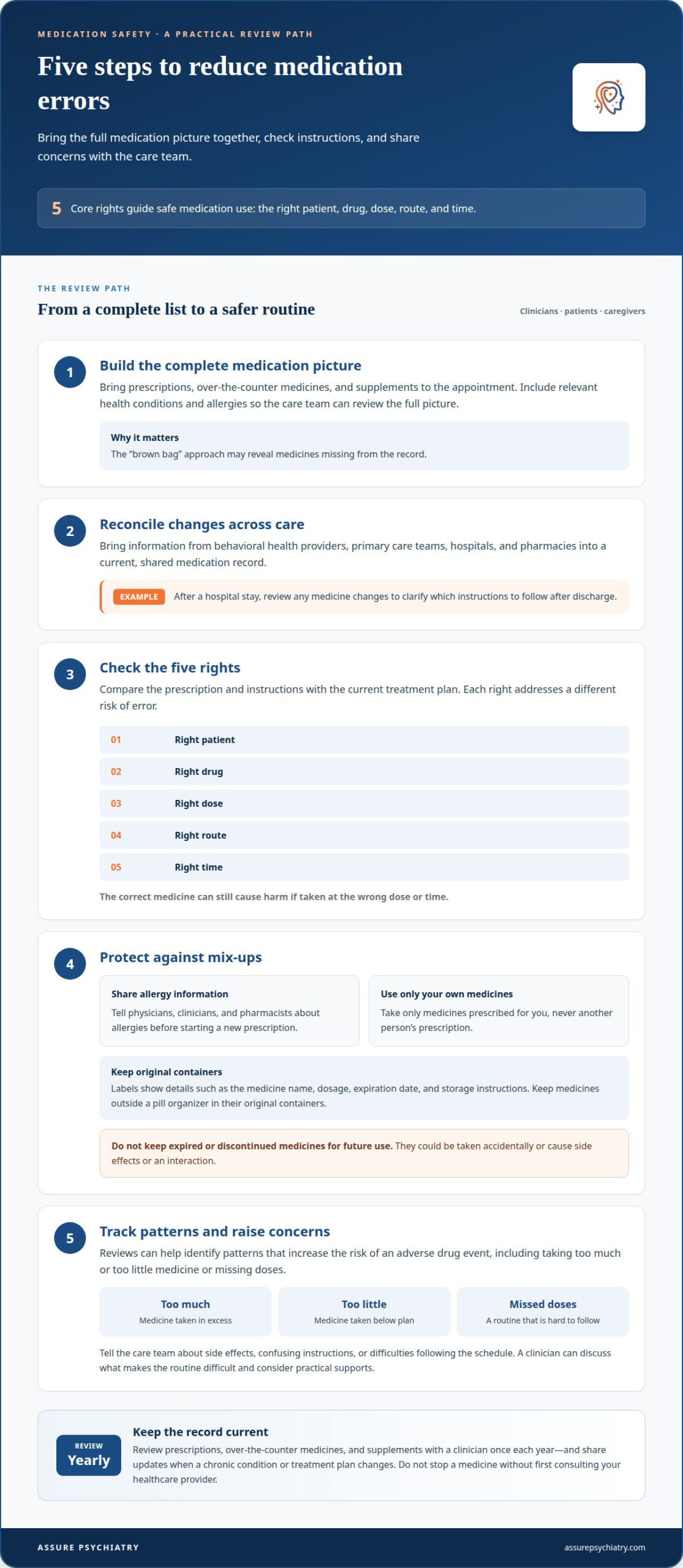
Patients and caregivers can share information that helps clinicians understand how treatment works in daily life. Bringing prescriptions, over-the-counter medicines, and supplements to an appointment can help create a complete medication list. This “brown bag” approach may reveal medicines missing from the record. Describe unexpected side effects or difficulties following a medication schedule so the care team can discuss next steps.
Patient and caregiver education
Education helps patients and caregivers understand what each medicine is for and how to follow its instructions. Clinicians can clarify confusing directions, discuss challenges with taking medicines as prescribed, and explain which concerns to report. If a dose, timing, or instruction is unclear, ask the healthcare provider to explain it. Understanding the plan makes it easier to take an active role in treatment.
Caregivers can provide practical support while respecting the patient’s role in decisions. They might offer reminders for scheduled doses and note significant changes in health. An up-to-date medication list, schedule, and record of the patient’s health conditions can help caregivers follow the plan and share useful observations with clinicians.
Medication management is an ongoing process, not a one-time review. Review prescriptions, over-the-counter medicines, and supplements with a clinician once each year. Do not stop a medicine without first consulting your healthcare provider. If a chronic condition or treatment plan changes, share the update so the care team can keep its medication record current and discuss any concerns.
Clinicians can use a job aid to discuss challenges patients and family members face when filling prescriptions and taking medicines as prescribed. Medication reminder cards can prompt patients to bring all their medicines to appointments.
Preventing medication errors
An accurate medication record helps clinicians identify discrepancies that could affect treatment. Medication reconciliation brings information from behavioral health providers, primary care teams, hospitals, and pharmacies into a current, shared view. For example, if a medicine changed during a hospital stay, reviewing the record can clarify which instructions to follow after discharge.
Safe medication use depends on five core rights: the right patient, drug, dose, route, and time. Each addresses a different risk of error. Even the correct medicine can cause harm if taken at the wrong dose or time. Clinicians can compare the prescription and instructions with the current treatment plan, then explain any changes clearly.
Allergies and medication labels matter, too. Tell physicians, clinicians, and pharmacists about allergies before starting a new prescription. Take only medicines prescribed for you, never another person’s prescription. Keep medicines outside a pill organizer in their original containers, where labels provide details such as the medicine name, dosage, expiration date, and storage instructions.
Medication management tools can help identify patterns that increase the risk of an adverse drug event, such as taking too much or too little medicine or missing doses. A clinician can discuss what makes the routine difficult and consider practical supports. If side effects or confusing instructions arise, share those concerns with the care team so they can be addressed.
These reviews can also support timely care when a medication concern emerges, rather than leaving the patient to manage worsening symptoms alone. Clear coordination between behavioral health and primary care teams helps each clinician understand the treatment plan. For help reviewing psychiatric medicines and care goals, explore medication management support.
Medication management aims to prevent medication errors, support adherence, and promote long-term health. Practice staff can prepare a medication list with the patient to support medication reconciliation.
Occupational therapy practitioners can help patients understand medication labels and instructions and check that they have the correct medicines and dosages to reduce medication errors. Keep medicines outside a pill organizer in their original containers. The labels display information such as the medicine name, dosage, clinician’s name, expiration date, storage instructions, and some major side effects. Do not keep expired or discontinued medicines for future use, as they could be taken accidentally or cause side effects or an interaction.
Complex medication regimens and drug interactions
A regimen can be difficult to follow when medicines have different doses, schedules, or instructions. Medication management reviews the full regimen to identify medication-related concerns and support adherence.
Complex medication regimens
A complex regimen combines medicines that may require different doses, schedules, or conditions for taking them. Some patients are prescribed more than five or even ten medications, making missed doses or timing confusion more likely. A medication schedule can organize each medicine by dose and time. Pill organizers can also help individuals track doses, while keeping medicines in their original containers preserves their labels and instructions.
Drug interaction and contraindication checks
Interaction and contraindication checks review whether medicines may be unsafe together or unsuitable for an individual. A comprehensive medication list helps a clinician or pharmacist check prescriptions, over-the-counter remedies, supplements, allergies, and relevant health conditions. The review also considers side effects and interactions involving food or alcohol. For example, some medication instructions require separating a medicine from calcium supplements by two hours.
Using one pharmacy when possible gives the pharmacist a broader view of the medicines filled for you. A pharmacist can screen for potential interactions, explain how to take prescribed medicines, and discuss ways to support adherence. If different clinicians prescribe your medicines, keep an accurate shared medication list to help the pharmacist coordinate concerns with your doctor.
Clear instructions are as important as checking for interactions. If you take multiple medicines, confirm each one’s exact dose and timing with a pharmacist. Follow warnings about combining medicines with alcohol or other drugs, and ask whether alcohol is safe with a specific prescription or over-the-counter remedy.
If side effects or a possible interaction affect daily life, tell the prescribing clinician. Don’t change or stop a prescribed medicine on your own. A review can clarify whether the regimen needs adjustment and help make treatment manageable.
Medication management plans for chronic conditions
For a chronic condition, medication management connects each medicine with treatment goals, daily functioning, and changes in health. A useful plan explains the purpose of each medicine, its intended benefit, and how treatment will be monitored.
How is medication management different from medication therapy management? Medication management is the broader, ongoing review of medicines and their fit with a person’s health needs. Medication therapy management is intended to improve medication use and therapeutic outcomes for targeted beneficiaries, as described by the Centers for Medicare & Medicaid Services.
Does Medicare or insurance cover medication management? Medicare Part D medication therapy management may be available to targeted beneficiaries. Coverage for other services depends on the person’s plan and the service involved. Review your plan documents to understand covered services and eligibility.
A medication management review connects a clinical concern with practical treatment decisions. It commonly includes these four steps:
- Identify a medication-related issue, such as a side effect or unclear purpose.
- Set a goal, such as improving symptom control or reducing an adverse effect.
- Define objectives that show how progress will be assessed.
- Choose and implement interventions, then monitor the patient’s response.
For chronic conditions, a complete and accurate medication list is the foundation. Include prescriptions, over-the-counter medicines, vitamins, supplements, and medicines taken as needed. A review can assess whether each medicine is still needed and whether its dosage should change. The plan should also explain how to take medicines properly, including relevant instructions about food or missed doses.
How often should medication management be reviewed? Review medicines with a clinician once each year, and sooner if a health condition, medication, or treatment goal changes. A new diagnosis or hospital visit can also make an earlier review useful.
For mental health treatment, a plan can connect medication goals with symptoms and daily functioning. Explore medication management support to discuss a plan aligned with your needs.
Assure Psychiatry: Medication Management
Assure Psychiatry provides medication management for people seeking support with mental health treatment and medication concerns. If symptoms, side effects, or changing needs make your current plan difficult to manage, a psychiatric evaluation can help clarify your treatment needs. Medication management may also support people receiving ADHD or anxiety treatment who want ongoing review of their medication plan.
Assure Psychiatry offers in-person care at its Portland office and telepsychiatry for patients who meet specific criteria for remote appointments. You can discuss your concerns and work collaboratively on care that reflects your needs. Medication management is not a substitute for emergency care when immediate safety is at risk.
To discuss your treatment needs with Assure Psychiatry, contact the clinic.
Take the Next Step Toward a Clearer Plan
Knowing the goal of medication management can help you decide what support would be useful: a plan that fits your health needs and can be reviewed as they change. You don’t need to organize every concern before starting a conversation. Questions about how treatment feels, what you hope will improve, or what makes a routine difficult are all useful places to begin.
Assure Psychiatry offers medication management, psychiatric evaluations, and ADHD treatment. If you’re considering support with medication or want to discuss your mental health treatment needs, a conversation can help you explore a suitable next step.
Contact Assure Psychiatry to discuss your care. Taking that step can help you move toward a treatment plan that feels clearer and more manageable.
Frequently Asked Questions
What is the primary goal of medication management?
Put simply, the goal of medication management is to keep medication treatment aligned with a person’s health needs and goals. That means considering whether medicines support their intended benefits and fit into daily life. A plan may need review when symptoms change or health priorities shift. The aim is thoughtful treatment, not simply a longer or shorter medication list.
How does medication management improve safety and treatment outcomes?
For someone managing a chronic condition, the goal of medication management is to help keep treatment appropriate as health needs evolve. Patients and clinicians can discuss changes in symptoms, daily functioning, or how well medicines are tolerated. If a medicine’s effects interfere with daily activities, sharing that concern gives the care team important context for considering the person’s goals and experience.
What risks can medication management help prevent?
Medication management focuses on reducing risks such as taking the wrong medicine or dose, missing doses, and harmful interactions. It can also identify when a medication plan needs attention after a health change or new prescription. Sharing concerns about unexpected effects gives the prescribing clinician information to assess the plan and discuss appropriate next steps.
Recent Comments