

Treatment should fit the person, not just the symptoms. Adult ADD diagnosis and treatment in Oregon typically begin with a comprehensive assessment of symptoms, personal history, daily functioning, and co-occurring concerns. Care may include medication, skills-based support, and practical adjustments, shaped around the person’s needs.
If focus, organization, time management, or emotional regulation feel harder than they should, it may help to know there are clear ways to explore what’s going on. An ADHD evaluation considers current challenges and may also examine whether symptoms began in childhood. A diagnosis can clarify possible next steps, but it doesn’t define you.
This guide explains what an adult ADHD assessment may involve, how treatment options differ, and what ongoing medication management can look like. You’ll also learn how a psychiatric evaluation can help connect the dots and support a treatment plan that works toward greater steadiness and mental tranquility.
Key Takeaways
- Medication options include stimulants and non-stimulants; treatment planning considers your symptoms, health profile, and response over time.
- School records and other supporting information can help build a fuller picture of how attention-related challenges affect daily life.
- An adult assessment looks at current difficulties and whether symptoms were present in childhood, not just how you’re managing now.
- Behavioral and cognitive-behavioral approaches can help you develop practical strategies for organization, focus, and everyday responsibilities.
How is ADHD treated?
Adult ADHD care can combine medication with practical strategies for attention-deficit/hyperactivity disorder. The right approach takes symptoms, health needs, daily demands, and treatment response into account. For adults exploring adult ADD diagnosis and treatment in Oregon, an evaluation can help clarify which options to discuss.
Stimulant and Non-Stimulant Medication
Stimulants are a primary medication approach for ADHD, and non-stimulant medications are also available. A medication consultation considers how attention, impulsivity, or hyperactivity affects work, home responsibilities, and relationships. Your health profile and symptom patterns guide an individualized discussion.
Medication management includes monitoring benefits and possible effects such as appetite changes, sleep problems, or irritability. Tracking when symptoms ease or return can make follow-up conversations more specific. Share changes in sleep, appetite, mood, and focus so your treatment plan can reflect your experience.
Treatment Planning and Medication Consultation
A treatment plan connects evaluation findings with priorities, such as finishing work tasks or keeping appointments. Medication selection is collaborative, and the starting dose may be low and adjusted gradually. Follow-up considers symptom changes, daily functioning, side effects, and whether the approach still fits.
Medication is one tool. Practical strategies may include breaking large tasks into smaller steps, limiting multitasking, and keeping deadlines visible. These approaches can support you between medication-management visits.
Does Oregon health insurance or the Oregon Health Plan cover adult ADHD diagnosis and treatment? Coverage varies by plan, including for evaluation and treatment, and any pre-authorization requirements depend on the specific plan. Review your benefits with your insurer before arranging care. This can help you plan for adult ADD diagnosis and treatment in Oregon with a clearer understanding of your coverage.
An evaluation can feel stressful, especially when you’re unsure what to expect. Write down examples of ADHD symptoms, such as missed deadlines or difficulty switching tasks, and bring them to your appointment. If you take ADHD medication, ask the prescribing clinician for guidance about taking it on evaluation day.
Daily routines can make treatment strategies easier to use. Try setting visible deadline reminders, taking regular breaks, and dividing demanding tasks into manageable steps. Paying consistent attention to sleep, exercise, and nutrition can also support ADHD management.
Collateral reports and supporting documentation
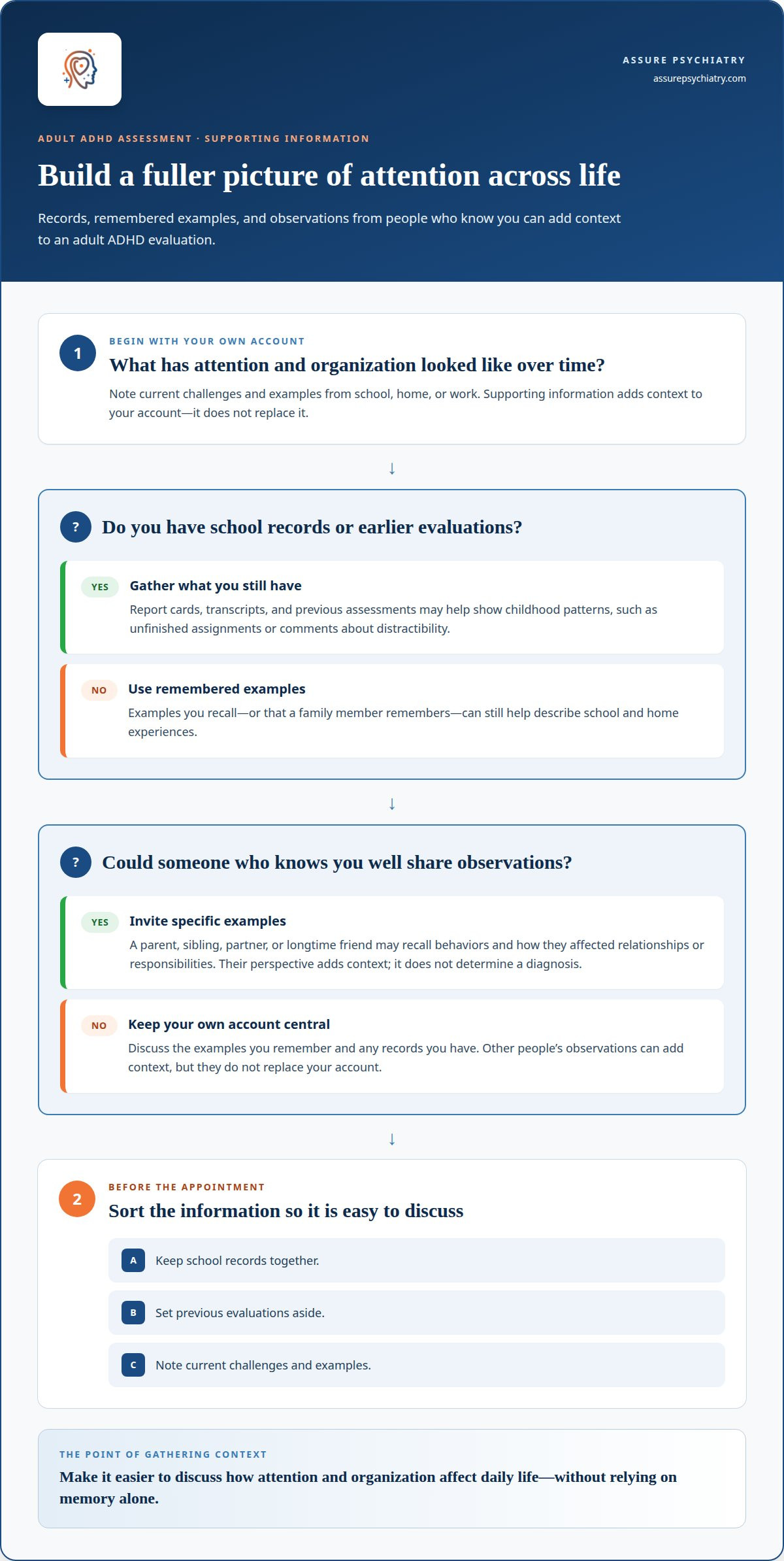
Records and observations can add context to an adult’s account during an ADHD evaluation. Academic records, previous assessments, and examples from home or work can help show how attention and organization affect daily life.
Gather any report cards, transcripts, or earlier evaluations you still have. These records may describe childhood patterns, such as unfinished assignments or comments about distractibility. If records aren’t available, examples you remember or that a family member recalls can still help describe school and home experiences.
A person who knows you well may also provide useful observations. A parent, sibling, partner, or longtime friend may recall specific behaviors and their effects on relationships or responsibilities. Their perspective can add context, but it doesn’t replace your account or determine a diagnosis.
To prepare, organize documents by source and life period. Keep school records together, set prior evaluations aside, and note current challenges. This can make it easier to discuss relevant details during an appointment without relying on memory alone.
How can you explore affordable adult ADHD treatment or support in Oregon? Review your health plan’s coverage for evaluation and treatment, including any pre-authorization requirements, since coverage varies by plan. Community-based ADHD accountability and support meetups in Portland can provide peer connection alongside clinical care.
Long-term support can include behavioral health care and a trusted support system. Someone close to you might notice recurring missed commitments or emotional strain and encourage you to discuss these patterns during follow-up care. Peer conversations can also reduce isolation and offer practical ideas for managing everyday demands.
Support needs can shift as work, relationships, and responsibilities change. Keeping documents and examples organized can make future discussions more useful, while peer meetups in Portland offer another point of connection.
Assessment of childhood symptoms in adults
An adult ADHD assessment considers current symptoms and whether similar patterns began during childhood. ADHD symptoms often start before age 12 and may continue into adulthood, so clinicians look beyond present-day concentration difficulties.
An assessment may include a comprehensive interview, questionnaires, rating scales, and cognitive assessments. The clinician may explore attention, organization, time management, and how challenges affect work or relationships. They may also consider other concerns, including depression, because overlapping symptoms can shape the evaluation and treatment plan.
School records can add useful context. Report cards, transcripts, and previous evaluations may show patterns such as unfinished work or recurring comments about attention. If those records aren’t available, childhood examples recalled by you or someone who knew you then can still contribute to the discussion.
Which Oregon providers diagnose adult ADHD, and how can you find one? Psychologists and therapists can diagnose ADHD; psychiatrists and psychiatric mental health nurse practitioners can evaluate ADHD and prescribe medication when appropriate. Look for an Oregon clinician who evaluates adults and asks about both current functioning and childhood symptoms.
Adults in Portland may prefer an in-person assessment, while others may consider telehealth. Before your appointment, clarify the format and whether the evaluation includes an interview, symptom measures, and a review of relevant history. Assessment may involve multiple appointments and several hours to gather information and discuss findings.
QbTest may come up when discussing assessment options. Ask how it fits into the overall evaluation and how its results are considered alongside an interview, questionnaires, and developmental history. A single measure cannot explain the full context of someone’s symptoms, relationships, or daily functioning.
Diagnosis is based on the broader pattern, not one difficult week or a single test result. A careful assessment connects childhood history with adult symptoms and considers how those patterns affect daily life. That context helps shape next steps around your needs.
Behavioral and cognitive-behavioral therapy
Behavioral and cognitive-behavioral approaches can help adults manage ADHD challenges that medication may not address alone. They focus on practical patterns, such as getting started, staying organized, and responding to frustration. The aim is to develop strategies suited to real responsibilities at work, home, and in relationships.
Cognitive-behavioral therapy can help people notice how thoughts and actions interact. For example, thinking “I’ll never finish this” repeatedly may make a task harder to start. Breaking it into smaller steps, choosing a starting point, and recognizing progress can make the next action clearer. Behavioral approaches may also reinforce routines and reduce environmental distractions.
Skills-based therapy and coaching can address organization, productivity, and communication. Someone who often misses appointments might use one calendar, visible reminders, and a brief daily planning routine. A person who loses focus during paperwork could work in a quieter space, dividing the task into short work periods with planned breaks.
These approaches can be tailored to the challenges you want to address. Start by identifying one recurring obstacle, such as late bills or unfinished projects, then choose a strategy to practice consistently. Reviewing what helped and what got in the way can guide adjustments over time.
Therapy is distinct from psychiatric ADHD treatment, though behavioral strategies can complement a broader care plan. Adults can discuss how focus, impulsivity, or emotional regulation affects daily life and consider which supports match their needs. The approach should account for co-occurring concerns, including anxiety or depression, when they affect functioning.
Coaching often emphasizes practical goal-setting and follow-through, while therapy may also explore emotional or behavioral patterns connected to ADHD. Neither approach has to look the same for everyone. One person, for example, may focus on planning work tasks, while another practices managing interruptions during conversations.
If attention-related symptoms are affecting daily functioning, explore ADHD treatment options as part of considering your next steps.
Assure Psychiatry
Assure Psychiatry provides psychiatric evaluations and ADHD treatment for adults seeking clarity about attention-related symptoms and next steps. An evaluation can connect your concerns with an individualized care plan, while medication management supports ongoing review of treatment and response. If anxiety also affects your focus or daily life, anxiety treatment may be part of the conversation.
Care is available through in-person visits at the Portland office and virtual telepsychiatry. You might consider reaching out when you’re ready to discuss an evaluation, explore treatment options, or review medication as part of ADHD care. Your experiences and goals can guide that conversation.
For a supportive next step, contact Assure Psychiatry to discuss your care.
Take a Thoughtful Next Step
Understanding your attention patterns can help you decide what support feels appropriate, without making a diagnosis your identity. If persistent challenges affect work, relationships, or daily routines, a conversation with a psychiatric professional can help you consider what to do next at your own pace.
For adults seeking an adult ADD diagnosis and treatment in Oregon, Assure Psychiatry offers psychiatric evaluations, ADHD treatment, and medication management. These services can support a clearer understanding of your concerns and help you discuss care options suited to your needs. Bring questions about symptoms, past experiences, or treatment goals to your appointment.
Seeking support doesn’t require having everything figured out first. A small step can create space for clearer choices and greater mental tranquility. Contact Assure Psychiatry to begin a conversation about your care.
Frequently Asked Questions
Is ADHD Just a Childhood Disorder, or Can Adults Have It Too?
Adults can have ADHD because it’s a neurodevelopmental condition that may continue beyond childhood. Some people recognize it later, when demands such as household tasks, work deadlines, or family schedules make longstanding challenges more noticeable. A late diagnosis doesn’t mean symptoms began in adulthood; clinicians consider how patterns developed over time and affect current life.
Can I lead a normal life with ADHD?
Yes, adults with ADHD can build meaningful lives, relationships, and careers. Support can help you identify approaches that suit your responsibilities, whether that means adjusting how you plan work or discussing treatment options. ADHD can create real difficulties, but it doesn’t define your abilities or worth. Progress can mean finding systems that make everyday demands more manageable.
Do you prescribe stimulant medications such as Adderall and Ritalin?
Assure Psychiatry offers medication management and ADHD treatment, but whether a particular medication, including Adderall or Ritalin, is appropriate depends on your evaluation and individual health needs. A psychiatric discussion can consider your symptoms, treatment goals, medical history, and potential benefits and side effects. You can also ask about non-stimulant options and how medication decisions are reviewed over time.
Have more questions about ADHD?
Questions about ADHD are welcome, especially when they relate to a specific concern in your daily life. You might ask how attention difficulties relate to anxiety, what medication goals make sense, or how to discuss treatment preferences. Writing down questions beforehand can help you use appointment time well and leave with a clearer understanding of what you want to address.
How should I prepare for the ADHD assessment?
Before an ADHD assessment, aim for a good night’s sleep and eat a nourishing breakfast so you can focus during the appointment. If you take ADHD medication, contact the prescribing clinician for guidance about taking it that morning. It can also help to note what you hope the evaluation will clarify, such as recurring difficulties with time management or keeping up with responsibilities.
How is adult ADHD diagnosed in Oregon?
Adult ADHD diagnosis in Oregon involves a clinical assessment of current symptoms, developmental history, and effects on daily functioning. Psychologists and therapists can diagnose ADHD; psychiatrists and psychiatric mental health nurse practitioners can evaluate it and prescribe medication when appropriate. For your appointment, describe how symptoms affect a specific area, such as completing work or managing household responsibilities, and discuss other relevant concerns.
Recent Comments