

A psychiatric evaluation often takes longer than the clinical conversation alone. If you’re wondering how long a psychiatric evaluation takes, an initial adult visit commonly lasts 45 to 90 minutes, while check-in, paperwork, and an initial treatment discussion can bring the total appointment time to about 2 to 2.5 hours. A thorough assessment takes time because your clinician needs to understand more than one symptom or concern.
It’s understandable to want a clear sense of what to expect, especially if you feel uneasy about sharing personal details or wonder what an evaluation might lead to. The visit is an opportunity to discuss your concerns and goals, not a commitment to a particular treatment.
This article explains what happens during an initial evaluation, what can affect how long it takes, and how psychological testing differs from a psychiatric evaluation. You’ll also learn why an evaluation doesn’t automatically mean medication, so you can feel more prepared for what comes next.
Key Takeaways
- Learn how testing sessions differ from a psychiatric intake and why some assessments may be spread across appointments.
- Know which notes, medication details, and relevant records can help make the conversation more complete.
- Understand what clinicians explore during an intake, from symptoms and daily functioning to personal goals and safety.
- See how an evaluation can inform next steps without automatically meaning medication will be prescribed.
Does an Evaluation Mean I Will Be Prescribed Medication?
No. A psychiatric evaluation doesn’t automatically lead to a prescription. The clinician considers your symptoms, history, concerns, and treatment goals before discussing options. If medication is appropriate, a prescription may be sent on the day of the evaluation. You can ask questions and discuss your preferences before deciding on next steps.
Does insurance cover psychiatric evaluations in the United States? Coverage depends on your plan and the type of evaluation. Before your appointment, review your behavioral health benefits and any authorization or referral requirements. These details can affect coverage, so bring your insurance card to help with intake.
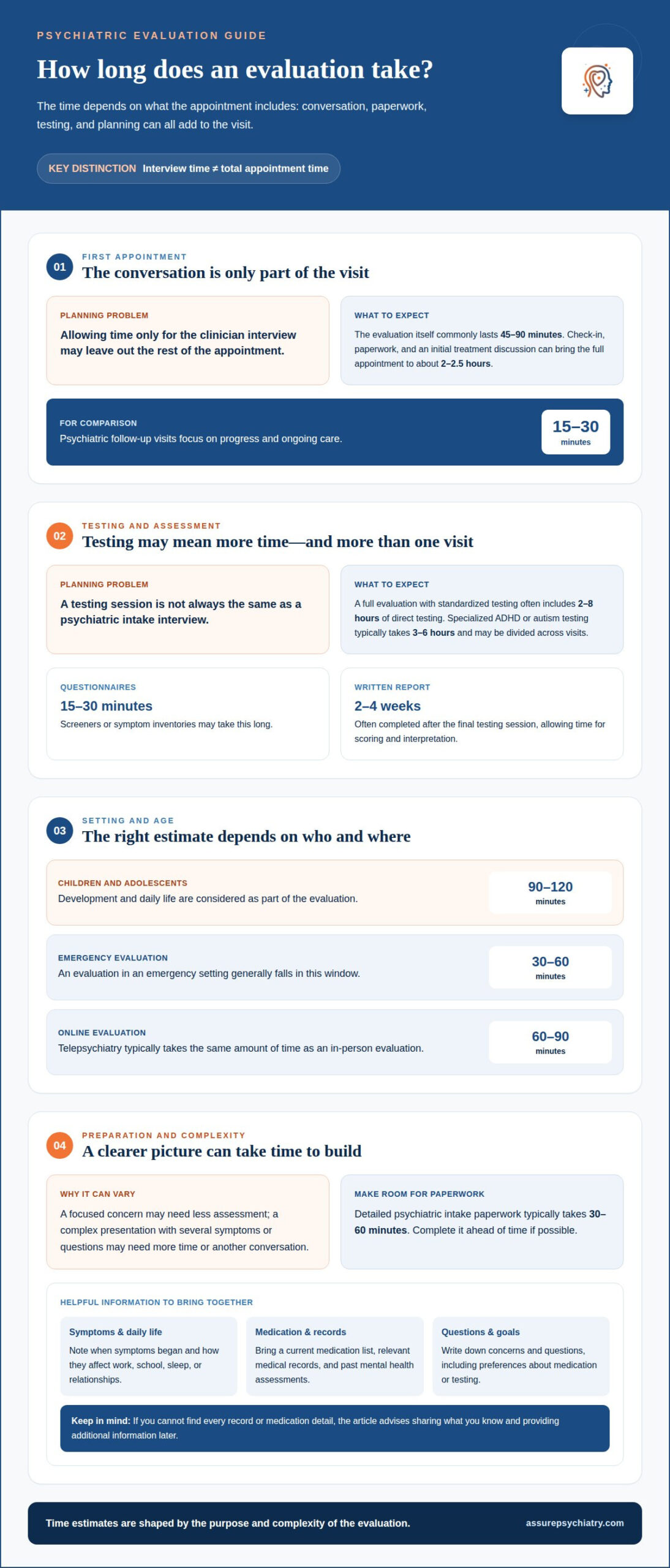
Preparation can make it easier to give a clear picture of your mental health. Detailed psychiatric intake paperwork typically takes 30 to 60 minutes. Set aside time to complete it, and note symptoms, when they began, and how they affect work, school, sleep, or relationships. Include questions you want to discuss, such as concerns about medication or psychological testing.
- Bring identification, your insurance card, and a current medication list, including doses when available.
- Gather relevant past medical records and mental health assessments. For a child or student, include school-based IEP assessments and plans.
- Write down examples of changes in mood, attention, energy, appetite, or daily functioning.
How can you prepare for a psychiatric evaluation? Complete the intake paperwork, bring relevant records and notes, and be ready to describe your concerns in your own words. If you can’t find every record or medication detail, don’t postpone care. Share what you know and provide additional information later.
Some evaluations also involve psychological testing, which may require scoring and interpretation after the sessions. The report is often completed two to four weeks after the final testing session. Keeping your records organized can help the clinician assemble relevant information.
How Long Does a Psychological Evaluation Typically Take?
An initial psychiatric evaluation often takes 45 to 90 minutes, while a complete appointment may take longer. The length depends on whether the visit includes an interview, testing, or time for treatment planning.
Duration by Evaluation Type and Complexity
Evaluation length varies with its purpose and the amount of testing needed. A comprehensive initial mental health evaluation typically lasts 60 to 90 minutes. Psychological testing can add substantially more time: a full evaluation with standardized testing often involves 2 to 8 hours of direct testing.
Specialized ADHD or autism testing typically takes 3 to 6 hours and may be divided across visits. A focused concern may need less assessment than a complex presentation involving several symptoms or questions. Knowing whether your appointment is an interview, a psychiatric evaluation, or testing helps you plan for the right time commitment.
Initial and Follow-Up Appointment Lengths
A first psychiatric appointment includes more than the clinician’s interview. The evaluation itself typically takes 45 to 90 minutes, and the full appointment, including paperwork, check-in, and an initial treatment discussion, takes about 2 to 2.5 hours.
By comparison, a psychiatric follow-up visit takes 15 to 30 minutes. Follow-ups focus on progress and ongoing care, while an initial visit builds an understanding of symptoms and history. Allowing for the longer first appointment can help you avoid scheduling another commitment too close afterward.
Clinical Interview Duration and Purpose
The clinical interview is the conversation used to understand symptoms, history, and daily functioning. In many settings, it lasts 45 to 90 minutes, though the time depends on what the clinician needs to explore.
Topics may include mood, anxiety, sleep, attention, relationships, and work or school. The clinician may also ask about your medical history and safety. These details help put your concerns in context. A working diagnosis may emerge during the first evaluation, while complex questions may require another conversation.
Evaluation Length Across Age Groups and Settings
Children and adolescents may need more time because their evaluation considers development and daily life. A child or adolescent psychiatric evaluation typically takes 90 to 120 minutes. An emergency evaluation in an emergency setting generally lasts 30 to 60 minutes.
Telepsychiatry appointments typically take the same amount of time as in-person evaluations. An online mental health evaluation generally lasts 60 to 90 minutes. These ranges can help you plan, while the evaluation’s purpose and complexity shape which format and length apply.
Assessment tools and testing sessions
A psychiatric evaluation combines conversation and assessment tools to understand symptoms, history, and daily functioning. What happens during a psychiatric evaluation? The clinician discusses your concerns, reviews relevant history, and may use screening tools or structured questions to clarify the purpose of the assessment and guide diagnosis.
The process may include an interview, symptom screening, review of results, and discussion of next steps. Each stage helps answer different questions: how symptoms affect daily life, whether more testing may be useful, and what care could fit. An assessment focuses on understanding and planning rather than functioning as a therapy session.
- Discuss symptoms: Explain what you’ve noticed, when it occurs, and how it affects daily functioning.
- Complete screeners: Questionnaires or symptom inventories may take 15 to 30 minutes.
- Review findings: The clinician considers your answers alongside personal and medical history.
- Plan next steps: Discuss whether the assessment answers the diagnostic question or more testing is needed.
Screeners are brief tools, not diagnoses by themselves. Symptom assessment and screening typically take 15 to 25 minutes during a psychiatric evaluation. A clinician may use them to organize concerns such as mood, anxiety, or attention, then explore responses through conversation. The goal is to place each result in context, not reduce your experience to a score.
A comprehensive diagnostic assessment typically takes 2 to 4 hours. A full structured diagnostic interview may take 1 to 2 hours, while individual assessment tools can take 10 to 30 minutes. The total depends on the question being assessed and which tools are needed. Psychological testing may add separate sessions; scoring and interpretation can take several days to a few weeks after testing.
These measures help distinguish what an initial clinical conversation can clarify from questions that require fuller testing. For example, if attention concerns need more exploration than a symptom screener provides, the clinician may recommend additional assessment. Findings can inform a diagnosis and treatment discussion, while a diagnosis describes clinical patterns, not a person’s identity.
Initial psychiatric intake evaluations
An initial evaluation builds a clinical picture before the clinician discusses possible next steps. It connects your symptoms with their timeline, personal history, and effects on everyday life. This context matters because anxiety, low mood, sleep changes, and attention concerns can overlap across conditions.
The conversation may cover what changed, when symptoms began, and what makes them better or worse. For example, trouble concentrating at work may relate to sleep, mood, anxiety, or another concern. Sharing a recent, specific example gives the clinician a clearer starting point than a general description alone.
Intake also includes questions about medical and family history, current functioning, and safety. Reviewing medical and family history typically takes 15 to 20 minutes. A safety check about self-harm, feeling unsafe, or another person’s safety is a normal part of thoughtful psychiatric care. These questions help the clinician understand what support may be appropriate.
Administrative intake, diagnostic formulation, and treatment planning all take time, and their duration can vary. The clinician brings these pieces together, explains a possible working diagnosis, and discusses options. A diagnosis may be offered at the first evaluation, but complex symptoms or missing records can call for another conversation.
There’s no single timeline that applies to everyone. The complexity of your symptoms, how long they’ve been present, and how clear your history is all shape the discussion. A referral can help frame a specific concern, while your account adds details about its effect on daily life. A family member’s observations may also help, particularly when evaluating a child or teenager.
The useful takeaway is that intake isn’t just a screening form or a search for a disorder label. It gives you and the clinician time to connect concerns with history, clarify what remains uncertain, and agree on a thoughtful next step. If ongoing anxiety or other symptoms are affecting daily life, schedule a psychiatric evaluation to discuss them.
Assure Psychiatry: Psychiatric Evaluation
Assure Psychiatry offers psychiatric evaluations to help clarify mental health concerns and discuss appropriate next steps. If anxiety or attention difficulties are affecting daily life, an evaluation offers time to review what you’re experiencing and consider whether further care may help.
Assure Psychiatry also offers Medication Management, ADHD Treatment, and Anxiety Treatment. An evaluation doesn’t automatically mean medication; it helps guide a conversation about options based on your needs and goals. Visits are available in person in Portland or through virtual telepsychiatry.
If you’re ready to discuss your concerns, contact Assure Psychiatry to get started.
Take the Next Step at Your Pace
Knowing how long a psychiatric evaluation takes can help you prepare. It may also help to consider what you want from the conversation. Think about which concern feels most important and what you hope to understand better. You don’t need a complete explanation or a specific treatment decision. Starting with one question can make the first discussion feel more manageable.
If you’re still wondering how long a psychiatric evaluation takes, use that question as a starting point when you reach out. Assure Psychiatry offers psychiatric evaluations, ADHD treatment, and medication management in Portland, Oregon, with care guided by your concerns and goals. An evaluation can open a conversation about possible next steps without requiring you to decide everything beforehand.
Contact Assure Psychiatry when you feel ready to discuss an evaluation. Taking the first step toward greater understanding can help you move forward with more clarity.
Frequently Asked Questions
What Can Make an Evaluation Longer?
An evaluation may take longer if the clinician needs to explore several concerns, understand a complex history, or use additional assessment tools. For example, anxiety alongside sleep and attention difficulties may call for a discussion of how each affects daily life. If a question needs more than conversation can provide, psychological testing or another appointment may extend the process beyond the initial visit.
What Happens After the Evaluation?
After an evaluation, the clinician discusses findings and possible next steps with you. If psychological testing was part of the assessment, a feedback session often lasts 30 to 60 minutes and gives time to review results and ask questions. You can use that conversation to clarify what the findings mean for your situation and what support may be appropriate.
What if I need to leave by a certain time?
Tell the office about your time limit when scheduling, then remind the clinician at the start of your visit. This gives the team a chance to plan the conversation around your main concern. If there isn’t enough time to cover everything, the clinician can explain what remains and whether another conversation would help.
How long does a typical psychiatric evaluation take?
An initial adult psychiatric evaluation typically takes 45 to 90 minutes. The time can vary with the concerns you want to discuss and whether the clinician needs additional information. If your appointment includes testing or a broader assessment, it may involve more time or separate sessions. Ask about the planned appointment format when arranging your visit.
What factors can make a psychiatric evaluation take longer?
The main factors are the number and complexity of your concerns, how much detail is needed to understand your history, and whether assessment tools or psychological testing are appropriate. More than one conversation may be needed if the information gathered doesn’t yet answer the diagnostic question. For example, overlapping symptoms can require careful consideration before discussing a working diagnosis.
Recent Comments