

A second opinion can bring clarity without requiring you to reject your current diagnosis or treatment. If you’re wondering how to get a second opinion on a mental health diagnosis in Oregon, schedule an evaluation with another qualified psychiatrist or mental health professional. They can review your history, records, symptoms, and diagnosis, then offer an independent assessment and recommendations.
It’s understandable to want more context when symptoms overlap or a diagnosis doesn’t seem to fit your experience. Anxiety, depression, bipolar disorder, trauma-related conditions, and OCD can share symptoms. Understanding how a clinician reached an assessment may help you feel more informed about your options.
This article explains when another opinion may be useful, how a private psychiatrist can contribute, and what to gather before an appointment. You’ll also learn how a second opinion can support a clearer conversation about diagnosis and treatment while leaving decisions in your hands.
Key Takeaways
- Consider a second opinion if your symptoms don’t seem to fit your diagnosis, treatment isn’t helping as expected, or you want a clearer view of your options.
- A private psychiatrist can independently review your diagnosis and treatment plan; a second opinion doesn’t require you to make changes.
- Gather your records, medication details, prior evaluations, and a symptom timeline so the appointment can focus on your experience and questions.
- Overlapping symptoms can make diagnosis complex, so ask how your history and day-to-day concerns inform the assessment.
When Is It Time to Get a Second Opinion for a Mental Health Diagnosis?
A second opinion may help when a diagnosis feels unclear, symptoms persist, or treatment hasn’t helped as expected. Reviewing your records and medication history can show what has already been assessed and which treatment options remain.
Reviewing Medical Records and History
A second-opinion review brings together your medical and mental health history, current symptoms, diagnosis, and treatment plan. Share prior evaluations, medication trials, and relevant test results so the clinician can see what has already been considered. Imaging may be reviewed when it relates to your medical history; it isn’t a substitute for a psychiatric assessment. For example, note when a medication started, what changed, and any side effects.
Sending Records to Another Doctor
Arrange for your records to reach the second-opinion provider before the appointment. Contact the records department at your current clinic and ask how to send evaluations, medication history, and relevant medical results. Confirm that the receiving office has the documents. This gives the clinician time to review your history rather than relying only on what you recall during the visit. Bring a personal copy of key dates and questions, too.
Referral and prior-authorization requirements depend on your Oregon health plan. Review your plan documents or contact your insurer to ask whether a referral or authorization is needed and whether the second opinion is covered.
Handling Disagreements About Diagnosis or Treatment
If providers disagree, ask each to explain the evidence behind their diagnosis and how it informs the treatment plan. Compare their reasoning about symptoms, medication trials, and next steps, then discuss remaining questions with your primary care doctor or chosen specialist. Take time to understand the trade-offs before deciding. A diagnosis, including bipolar disorder, should be considered alongside your history and current concerns.
To verify a mental health provider’s Oregon license and credentials, request their license type and number, then check those details using the relevant state licensing board’s public lookup. Confirm that the listed name and credential match the provider you plan to see.
If you need urgent emotional or mental health crisis support in the United States, call or text 988, according to the 988 Suicide & Crisis Lifeline.
Can I get a second opinion from a private psychiatrist?
Yes. You can schedule an appointment with another qualified psychiatrist for an independent assessment. A private appointment can offer a separate perspective without requiring you to leave your current provider. If you’re asking how to get a second opinion on a mental health diagnosis in Oregon, start by identifying what you want the new clinician to clarify.
Reasons to Seek Another Perspective
A psychiatric second opinion is an independent review of your diagnosis or treatment by another qualified professional. It may help if symptoms don’t seem to fit the diagnosis, treatment hasn’t worked as expected, or clinicians have offered different explanations. For example, a psychiatrist can consider whether mood changes, attention concerns, or sleep problems warrant further evaluation. You may also want more clarity about the reasoning behind a treatment recommendation.
Choosing When to Seek a Second Opinion
Consider another perspective when you’re uncertain about a diagnosis, weighing a substantial treatment change, or still have unanswered questions. You don’t need to wait for providers to disagree. If you’re deciding how to get a second opinion on a mental health diagnosis in Oregon, consider what you want the appointment to address. Writing down a question can help focus the conversation on your concerns and treatment goals.
Finding a Licensed Mental Health Provider
Look for a psychiatrist or qualified mental health professional whose credentials suit the assessment you need. Use the relevant Oregon licensing board’s public lookup to review a provider’s license, then match the listed name and credential to the person you plan to see. You can also ask your primary care provider for a referral and explain that you’re seeking an independent perspective.
Using Oregon Health Plan or Community Programs
If you have Oregon Health Plan coverage, contact your plan to ask about second-opinion coverage and any referral steps. A community mental health program can explain its intake process and whether it can help arrange an assessment. Have your current provider’s details and the question you want answered ready when you call. This can help you understand your options before scheduling.
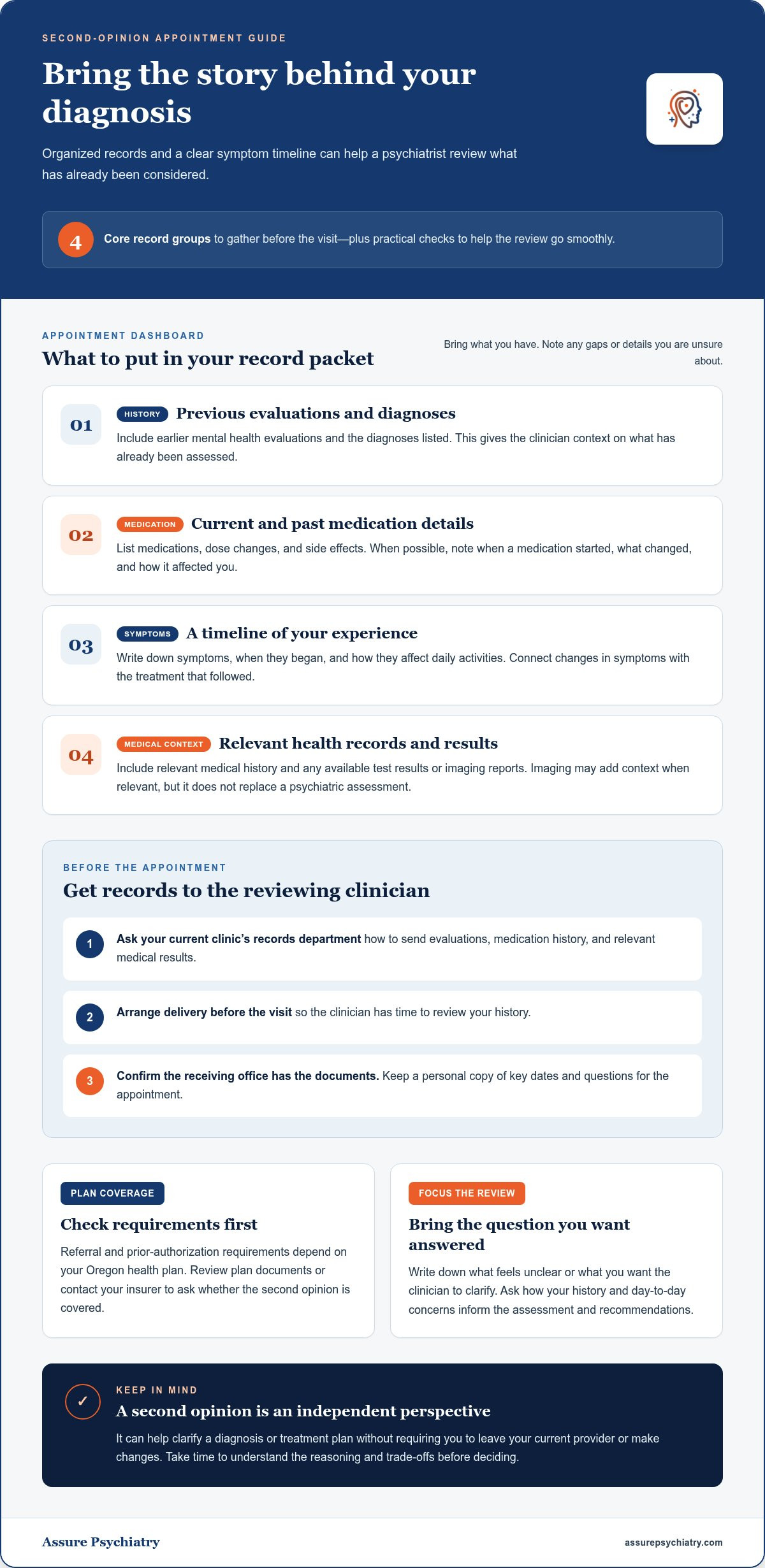
Preparing records and questions for an appointment
A clear timeline and organized records help the psychiatrist understand your experience. Gather what you have, then note any gaps or details you’re unsure about.
Gathering Previous Mental Health Records
Bring earlier evaluations, diagnoses, medication details, and treatment history together for review. These materials can help the psychiatrist understand how your symptoms and care have changed over time. Include relevant medical records and any available test or imaging results. A simple timeline can connect events, such as when anxiety began, when depression symptoms changed, and what treatment followed.
Before the visit, make a short inventory of the information you’re bringing:
- Previous mental health evaluations and listed diagnoses.
- Current and past medications, including dose changes and side effects.
- Symptoms, when they started, and how they affect daily activities.
- Relevant medical history, test results, or imaging reports.
For records held by another clinic, ask its records department how to send them to the new provider. If a caregiver will attend or help manage records, ask the provider how consent works and decide what information you want to share. Keep a copy of your notes so you can refer to dates and details during the appointment.
Preparing Questions for the Appointment
Prepare questions by identifying what you need explained before discussing next steps. A written list can keep the visit focused if you feel nervous or forget details. Ask how your symptoms and history support the diagnosis, what other explanations were considered, and how the proposed treatment plan addresses your concerns. You can also ask what changes to watch for and when to follow up.
Make your questions specific to your situation. For example, ask whether a medication trial was long enough to assess its effect, or how anxiety symptoms relate to your diagnosis. If a recommendation feels unclear, say so and ask the psychiatrist to explain it in everyday language. Leave space to write down answers, options, and any next steps discussed.
Overlapping mental health symptoms and diagnostic complexity
Anxiety, depression, bipolar disorder, trauma-related conditions, and obsessive-compulsive disorder can share symptoms. Sleep disruption, difficulty concentrating, low mood, or agitation may appear in more than one condition. A symptom alone may not explain the full picture. A useful assessment considers how symptoms cluster, change over time, and affect daily life. That context can make your current diagnosis easier to understand, even if it remains unchanged.
Mental health conditions cannot be confirmed or ruled out with one definitive test. A psychiatrist considers patterns across your history, reported symptoms, daily functioning, and previous care. Describe whether mood shifts follow a pattern, since a label alone may miss that context. Note when symptoms began, what changed, and which parts disrupt work, sleep, or relationships. These details help the reviewer compare your experience with the current diagnosis.
A second opinion can examine whether one diagnosis explains all your concerns or another explanation deserves consideration. For instance, persistent worry and low mood can both affect concentration. Trauma history, sleep changes, or medication response may add context. Share specific observations without trying to match yourself to a particular disorder. Two clinicians may weigh the same history differently because symptoms and treatment responses vary from person to person.
Ask which findings support the current diagnosis and which questions remain unresolved. Request recommendations that address concerns such as insomnia or mood changes. If assessments differ, compare the reasoning behind each recommendation rather than counting labels. You can discuss the findings with your current clinician before deciding whether changes make sense. To explore an independent assessment of overlapping symptoms, request a psychiatric evaluation.
Assure Psychiatry: Medication Management
Assure Psychiatry offers Psychiatric Evaluation and Medication Management for people seeking support with diagnosis and treatment decisions. If a second opinion raises questions about your current medication plan, an evaluation can provide space to review your concerns, symptoms, and treatment goals. The aim is to help you understand your options and take an informed role in your care.
Assure Psychiatry also provides ADHD Treatment and Anxiety Treatment. These services may be relevant when those concerns are part of the diagnostic picture or affect daily life. Bring your questions and relevant records to guide a conversation about next steps. A diagnosis is one part of your story, and care can be shaped around your individual needs.
To discuss your mental health care, contact Assure Psychiatry.
Take the Next Step at Your Own Pace
A second opinion can be a starting point for a more informed conversation, not a demand to make an immediate change. Consider what would help you feel confident moving forward: a clearer explanation, a treatment approach that better fits your needs, or time to weigh recommendations. Your priorities belong in that discussion. Bring them forward one question at a time.
If you’re considering how to get a second opinion on a mental health diagnosis in Oregon, focus on what you want the next appointment to clarify. That goal can help you decide what to share, what to ask, and how to consider the information afterward. Even when professionals offer different perspectives, take time to understand each one and choose a path that feels right for you.
Reach out to Assure Psychiatry to discuss your care when you’re ready. You deserve a thoughtful conversation and room to move forward with greater clarity.
Frequently Asked Questions
What Conditions Can Benefit from a Second Opinion?
A second opinion can help clarify questions about ADHD, anxiety, depression, bipolar disorder, OCD, PTSD, or sleep concerns. It may be useful if a diagnosis doesn’t account for an important symptom or if different conditions seem to explain parts of your experience. For example, bring a focused question about attention problems, mood changes, or sleep disruption to help guide the assessment.
Can a loved one or my carer ask for a second opinion for me?
A loved one can help you explore options, organize appointment details, or join a discussion if you want their support. You remain central to decisions about your care. Before the visit, tell the provider whether you’d like someone present and what you’re comfortable discussing with them. If you need help communicating your preferences, mention that when arranging the appointment.
Have I got a legal right to a second opinion?
You can seek another qualified clinician’s perspective, but access and payment are separate questions. Your health plan may have referral, authorization, or network rules that affect coverage. Review your plan’s member information or contact member services for the applicable process. If you’re paying directly, ask the practice about its evaluation process and costs before arranging an appointment.
How does the process work?
After you arrange an appointment, the new clinician considers your concerns and available clinical information, then discusses their assessment and recommendations with you. Ask how the opinion relates to your current care and what questions remain. If you receive a written report, share it with your current clinician so both perspectives can inform a coordinated conversation about next steps.
How much does it cost?
The cost depends on your coverage and the type of evaluation involved. Before scheduling, ask whether your plan covers the appointment, whether a referral or prior authorization applies, and what portion you may owe. For private-pay care, request the practice’s fee and ask what the evaluation includes. These details help you compare the financial commitment with the questions you want addressed.
Is a Second Opinion Worth It?
A second opinion can be worthwhile if it helps answer a specific question that affects your care, such as whether a proposed treatment fits your goals. Consider what you hope to clarify and whether the recommendations would help you make a decision. If your current plan feels clear and addresses your concerns, you may prefer to discuss any remaining questions with your existing clinician first.
Recent Comments