

Managing performance anxiety at work in Seattle can begin with practical steps: notice what triggers your fear, settle your body before high-pressure moments, and break intimidating tasks into manageable stages. You can keep working while building ways to handle presentations, feedback, and other situations where you feel evaluated. Anxiety doesn’t mean you’re incapable, even when it makes work feel harder.
If you over-prepare, avoid visible tasks, or replay mistakes long after a meeting, that strain is real. You don’t have to wait until work feels unmanageable to respond. This article explains how fear of negative evaluation and the body’s stress response can affect you, then offers strategies to try while you’re working. You’ll also learn when persistent anxiety may call for professional support and how to consider a next step that fits your needs.
Key Takeaways
- Notice how anxiety shows up in your body and at work, then track the situations that tend to trigger it.
- Pinpoint the specific judgment or outcome you fear; naming it can make the worry easier to examine.
- Build confidence with gradual practice, realistic self-talk, and brief grounding techniques instead of relying on perfectionism or avoidance.
- If anxiety keeps interfering with work or daily life, a psychiatric evaluation can help clarify support options, including anxiety treatment or medication management.
1. What is workplace performance anxiety?
Workplace performance anxiety is intense stress around tasks where your skills or results may be judged. Managing performance anxiety at work in Seattle often starts with identifying situations that make evaluation feel especially visible. Presentations, promotion interviews, performance reviews, and leadership responsibilities can all trigger anxiety. The body’s fight-or-flight response may bring a racing heart, shallow breathing, sweating, shaky hands, muscle tension, dry mouth, or stomach discomfort. Some people feel mentally blank when they need to speak.
Look for recurring patterns, not just one difficult day. Waking at 3 AM to worry about a deadline, avoiding a meeting, or repeatedly checking a finished report can signal that anxiety is disrupting daily functioning. Perfectionism can intensify the cycle: a small error feels like proof of failure, so preparation expands and recovery shrinks. Anxiety that repeatedly affects sleep, concentration, or work deserves attention as a mental health concern.
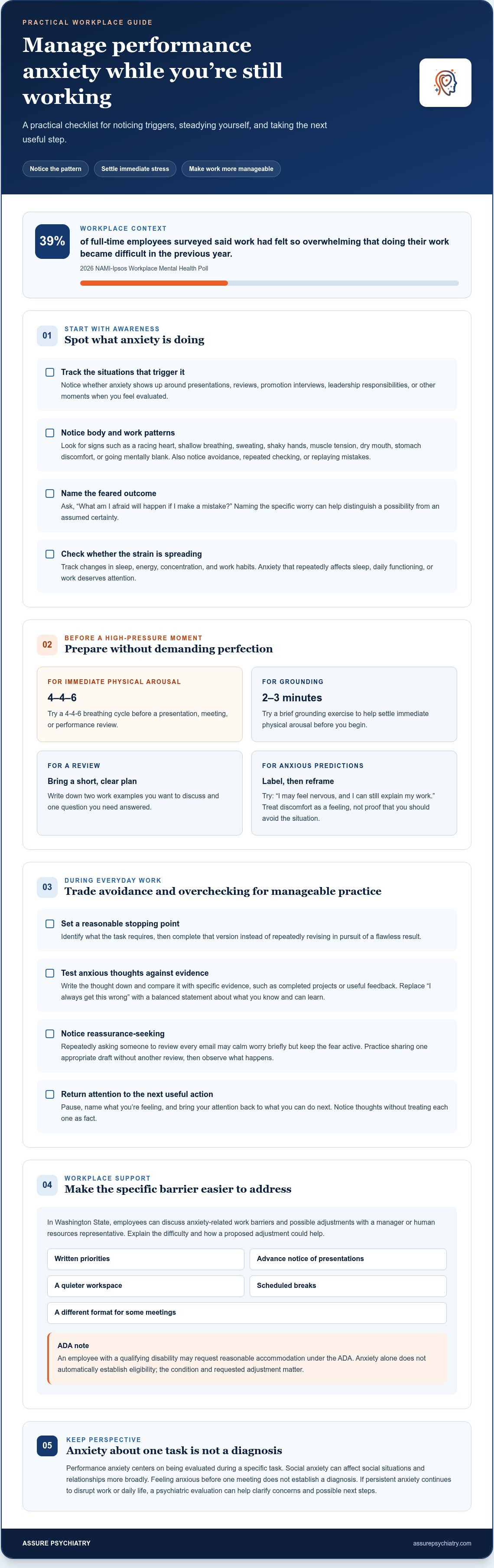
Workplace conditions can add pressure. Competitive teams, unclear expectations, heavy workloads, little support, and norms that punish mistakes can make evaluation feel threatening. Managers can reduce situational strain with clear project expectations, constructive feedback, and opportunities to practice. Recognizing specific achievements can help employees see progress without demanding perfection. The 2026 NAMI-Ipsos Workplace Mental Health Poll found that 39% of full-time employees surveyed had felt so overwhelmed by work that doing their work became difficult in the previous year.
In Washington State, employees can discuss anxiety-related work barriers and possible adjustments with a manager or human resources representative. Options might include written priorities, advance notice of presentations, a quieter workspace, scheduled breaks, or a different format for some meetings. Explain the specific difficulty and how a proposed adjustment could help. For Seattle employees, a clear, practical conversation about expectations and support may make workplace demands easier to manage.
Fear of negative evaluation
Fear of negative evaluation can make ordinary feedback feel like a verdict on your worth. Before a team meeting, you might imagine stumbling over a point, being challenged, or seeming less knowledgeable. The feared outcome can feel more important than the task itself. Ask yourself, “What am I afraid will happen if I make a mistake?” Naming the specific worry can help you separate a possibility from an assumed certainty.
Fear of disappointing others can also drive constant overwork. You might repeatedly rewrite a short update because your manager could notice one imperfect phrase. Or you may agree to a deadline you can’t meet, then feel ashamed about needing help. These habits may briefly ease worry, but they don’t build confidence in your skills. Set a reasonable stopping point: take a moment to identify what the task requires, then complete that version instead of chasing a flawless result.
Imposter syndrome describes persistent doubt about your competence, even when your work shows capability. A new project or promotion can prompt thoughts like, “They’ll realize I’m not qualified.” Fear of failure may lead to procrastination, while fear of success may bring worry about higher expectations. Write down the thought and test it against specific evidence, such as completed projects or useful feedback. Replace “I always get this wrong” with a balanced statement about what you know and what you can learn.
Notice when reassurance-seeking becomes another way to manage uncertainty. Asking a colleague to review every email may calm you briefly, but repeated checking can keep the fear active. Practice sharing one appropriate draft without another review, then observe what actually happens. If these patterns continue to disrupt work, a psychiatric evaluation can help clarify your mental health concerns and possible next steps. You can also explore professional mental health support as you consider what would help.
3. How can I manage anxiety if I’m still employed?
Performance anxiety centers on being evaluated during a specific task, such as a presentation. Social anxiety can extend beyond work performance, affecting social situations and relationships more broadly. Performance anxiety is a core feature of social anxiety, but feeling anxious before one meeting doesn’t establish a diagnosis. Notice whether fear appears mainly during visible tasks or across interactions, including routine conversations and collaboration.
“High-functioning anxiety” describes a pattern, not an official DSM-5 diagnosis. Someone may meet deadlines while privately managing constant worry, overwork, or difficulty resting. Continuing to perform doesn’t mean the strain is harmless. When persistent anxiety goes unaddressed, it can contribute to burnout and make concentration or recovery harder. Track changes in sleep, energy, and work habits to see whether your usual coping strategies are becoming unsustainable.
Under the ADA, an employee with a qualifying disability may request reasonable accommodation. Anxiety alone doesn’t automatically establish eligibility; the condition and the requested adjustment matter. For anxiety before a presentation, meeting, or performance review, try a 4-4-6 breathing cycle or a 2-3 minute grounding exercise. These brief practices can help settle immediate physical arousal before you begin.
Prepare with self-compassion instead of demanding perfect performance. Before a review, write down two work examples you want to discuss and one question you need answered. If anxious thoughts predict failure, label the thought and reframe it: “I may feel nervous, and I can still explain my work.” Treat discomfort as a feeling to notice, not proof that you should avoid the situation.
Mindfulness and acceptance practices can help you notice thoughts without treating each one as fact. Pause quietly, name what you’re feeling, and bring your attention back to the next useful action. Self-compassion can also support healthier preparation: focus on what matters most, rehearse that part, and allow for normal mistakes. If anxiety repeatedly interferes with work or daily life, professional support can help you consider strategies suited to your needs.
4. Performance anxiety in professionals and athletes
A Seattle software professional may feel nervous before a product demo, code review, or promotion interview. Athletes face similar pressure when spectators can judge their performance. In both settings, expectations can narrow attention and make familiar skills harder to access. Mental skills practice can help: build a pre-performance routine, visualize key steps, set a clear goal, and practice regulating your energy. For a demo, rehearse the opening and prepare a calm response to questions.
Setting boundaries can help protect your capacity when demands become difficult to manage. Keep your wording specific and focused on the work. Try, “I can finish the current release or take on the new request today. Which should come first?” For an after-hours message, say, “I’ll review this during my next work period.” These scripts clarify priorities without dismissing a colleague or avoiding responsibility.
For Seattle tech professionals, repeated anxiety around deadlines, feedback, or public demos may deserve attention, especially when it affects sleep, relationships, or daily work. Consider professional support if anxiety persists for six months or interferes with work functioning and quality of life. A qualified mental health professional can help assess contributing factors and discuss approaches, including whether a medication consultation may be appropriate. Seeking help doesn’t mean you lack ability; it means the challenge deserves care.
Support can also help distinguish a demanding project from a pattern of chronic stress or burnout. Bring concrete examples, such as avoiding code reviews, losing focus during planning, or working late to prevent criticism. Those details can help make conversations about care more useful. If workplace anxiety is affecting your ability to function, explore support for anxiety as a next step.
Assure Psychiatry: Medication Management
Assure Psychiatry provides psychiatric evaluations, anxiety treatment, and medication management for people whose work-related anxiety continues to affect daily life. An evaluation can clarify symptoms and relevant factors, while medication management gives you an opportunity to discuss whether medication may fit your needs. You can explain how anxiety affects work tasks, sleep, or concentration and discuss care options with a psychiatric provider. Seeking support doesn’t mean you must stop working or have every answer before starting a conversation. It can be a practical step toward understanding what may help you feel steadier at work.
If you’d like to explore support for anxiety, visit assurepsychiatry.com or contact Assure Psychiatry.
Take the Next Step Toward Steadier Workdays
Progress doesn’t require waiting until anxiety disappears. Choose one upcoming work challenge and decide what “good enough” preparation looks like before you begin. That boundary can help you act with care and make room for learning, rather than letting fear set every expectation. Managing performance anxiety at work in Seattle can also mean seeking professional support when worry repeatedly disrupts your work or well-being.
Assure Psychiatry offers Psychiatric Evaluation and Medication Management for people seeking support with anxiety. ADHD Treatment is also available when attention-related concerns are part of the picture. A conversation can help you decide what concerns to raise and what kind of support may fit.
Contact Assure Psychiatry to explore a next step. You can move toward greater steadiness one thoughtful decision at a time.
Frequently Asked Questions
How can I manage anxiety if I’m still employed?
Make work more manageable by choosing a clear priority and agreeing on what can wait. For example, ask your manager which deliverable takes precedence when two deadlines conflict. Add a short transition between demanding tasks, and end your day by writing down the next action for unfinished work. These steps create structure without requiring you to disclose personal details before you feel ready.
What is workplace performance anxiety?
Workplace performance anxiety is distress linked to tasks where your ability may be judged, such as leading a client call. It can affect preparation, communication, and follow-through, even when you know the material. Notice whether worry starts before a task, peaks during it, or lingers afterward. That pattern can help you identify which work situations to focus on first.
Is work anxiety normal during layoffs?
Yes, anxiety can be an understandable response to uncertainty about employment. In the American Psychological Association’s 2025 Work in America survey, 54 percent of workers said job insecurity significantly affected their stress levels at work. Separate confirmed information from rumors, write down questions about your role, and consider a practical backup plan. Supportive conversations can also reduce the strain of facing uncertainty alone.
What Is High-Functioning Anxiety?
“High-functioning anxiety” describes someone who appears to meet responsibilities while privately experiencing persistent worry or tension. It isn’t an official diagnosis in the DSM-5. For instance, an employee may deliver projects on time but struggle to rest, delegate, or stop reviewing completed work. Pay attention to the effort and distress behind outward performance, not only whether tasks get done.
What causes performance anxiety at work, and what are common symptoms?
High expectations, past criticism, unclear responsibilities, and fear of mistakes can contribute to workplace performance anxiety. Symptoms may include racing thoughts, muscle tension, sweating, or difficulty concentrating. Look for a recurring link between a work event and your reaction: a calendar invite might trigger worry, while the meeting itself brings physical tension. Noticing that sequence can help you identify personal triggers.
What evidence-based techniques help manage workplace performance anxiety?
Cognitive behavioral therapy can help people examine anxious predictions and change avoidance patterns. Graded exposure means approaching a feared task in manageable steps, such as contributing one prepared point before leading a full discussion. Mindfulness and acceptance practices can help you notice anxiety without letting it dictate your next action. A brief record of triggers, thoughts, and responses can reveal which strategies help during your workday.
Recent Comments