

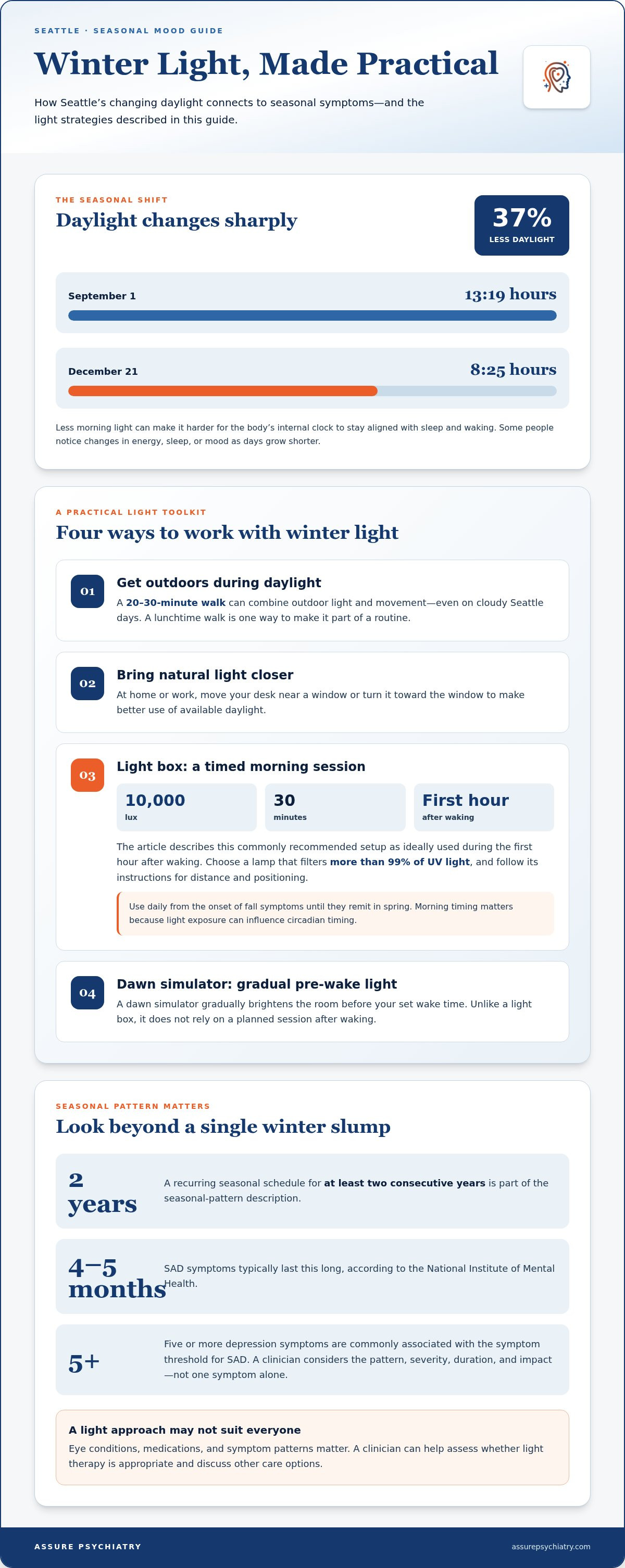
A winter slump isn’t automatically seasonal affective disorder. SAD is a recurring seasonal pattern of depression: symptoms follow a seasonal schedule for at least two consecutive years and typically last 4-5 months, according to the National Institute of Mental Health. In Seattle, daylight decreases from 13:19 hours on September 1 to 8:25 hours on December 21. Dealing with seasonal affective disorder in Seattle starts with recognizing when symptoms may be more than a passing response to darker days.
If changing daylight leaves you feeling low, tired, or out of step with your usual routine, that experience deserves attention, not judgment. This guide explains seasonal affective disorder (SAD), how Seattle’s seasonal shifts can affect mood, and how to tell a seasonal pattern from a temporary dip. You’ll also find practical coping strategies, including exercise and ways to make the most of daylight, plus guidance on when a mental health evaluation may help you find a steadier path forward.
Key Takeaways
- Notice whether changes in mood, energy, sleep, or interest follow a recurring seasonal pattern rather than assuming every winter slump is SAD.
- Use daylight intentionally: spend time outdoors when possible and make your indoor workspace brighter with natural light.
- Protect your sleep-wake rhythm with a steady routine, and limit screen use before bed.
- Build movement into winter days with a walk or another form of moderate exercise that feels manageable.
- If symptoms disrupt daily life or keep returning with the seasons, a psychiatric evaluation can help clarify what’s happening and whether medication management may be appropriate.
1. How and why is SAD worse in Seattle?
Seattle’s winter light changes sharply, which can affect the body’s daily timing. The city has 13:19 hours of daylight on September 1, but 8:25 hours on December 21. That is a 37% decrease between those dates. Less morning light can make it harder for the circadian rhythm, the body’s internal clock, to stay aligned with sleep and waking. Some people notice changes in energy, sleep, or mood as days grow shorter.
Daylight exposure is one practical step. When possible, go outside during daylight, even on cloudy Seattle days. A 20-to-30-minute walk can provide outdoor light and movement. At home or work, move a desk near a window or turn it toward the window to make better use of natural light. These steps can fit into a routine, such as taking a walk at lunchtime or working beside a bright window.
Light therapy is another approach for seasonal symptoms. A commonly recommended setup uses a 10,000-lux light box for 30 minutes, ideally during the first hour after waking. Choose a SAD lamp that filters more than 99% of UV light, and follow its instructions for distance and positioning. Use it daily from the onset of fall symptoms until they remit in spring. Morning timing matters because light exposure can influence circadian timing.
Dawn simulation offers another way to add light to a winter morning. A dawn simulator gradually brightens a room before your set wake time, unlike a light box used during a planned session. Light therapy may not suit everyone, so factors such as eye conditions, medications, and symptom patterns matter. A clinician can help assess whether this approach suits your needs and discuss other care options.
Where can you find SAD treatment and mental health care in Seattle? Seattle-area psychiatric clinics and mental health professionals can assess recurring seasonal symptoms. Look for care that includes an evaluation and treatment planning. Does Seattle health insurance typically cover SAD therapy, light boxes, or counseling? Coverage depends on your plan’s benefits and whether care is considered a covered clinical service. Light-box purchases may be treated differently from appointments, so review your plan’s mental health benefits and device rules.
For support in the Seattle area, community mental health programs and peer support groups can offer connection and practical guidance. If symptoms bring thoughts of self-harm, make it hard to stay safe, or create immediate danger, seek urgent help through emergency services or an emergency department. Crisis services can also provide immediate support when safety cannot wait for a routine appointment.
2. What is Seasonal Affective Disorder (SAD)?
Seasonal affective disorder is a form of depression that follows a recurring seasonal pattern. The winter pattern is more common, though SAD can also occur in summer. Seasonal-pattern major depression generally means symptoms begin and end in a particular season for at least two consecutive years. Seasonal affective disorder symptoms typically last 4-5 months, according to the National Institute of Mental Health.
A winter pattern involves more than disliking dark afternoons or feeling less energetic in cold weather. Symptoms can affect mood, sleep, appetite, concentration, relationships, and everyday responsibilities. Common signs include persistent sadness, loss of interest in usual activities, low energy, difficulty concentrating, and changes in sleep. Some people also notice appetite changes or withdraw from friends and family. Symptoms may ease as the season changes, then return in a similar pattern.
- Low mood or reduced interest in activities
- Low energy or difficulty concentrating
- Changes in sleep or appetite
- Withdrawal from social contact
Five or more depression symptoms are commonly associated with the symptom threshold for SAD. A clinician considers the pattern, severity, duration, and impact on daily life rather than relying on one symptom alone. They may also explore whether another mental or physical health concern could explain the changes. A recurring seasonal pattern is an important clue, not a reason to dismiss distress as ordinary winter fatigue.
Risk can be higher for women, younger people, people living at higher latitudes, and people with existing mental health concerns such as depression. These factors don’t determine whether someone will develop SAD. They may help explain why a clinician asks about personal and family history, earlier mood episodes, and the timing of symptoms across seasons.
How can you find a therapist or psychiatrist in Seattle who treats seasonal affective disorder? Look for a mental health professional who can assess recurring seasonal symptoms and discuss treatment options. At an appointment, describe when symptoms start, when they ease, and how they affect sleep, work, school, or relationships. Keeping a symptom and mood log can make the seasonal pattern easier to explain.
If low mood returns with the seasons or interferes with daily life, a psychiatric evaluation can help clarify what’s happening. You can explore mental health care as a next step toward understanding your symptoms and possible treatment approaches.
3. How can Seattle and Western Washingtonians minimize the impact of SAD?
Seattle’s winter darkness can make it harder to keep sleep and waking times aligned. For people dealing with seasonal affective disorder in Seattle, a steady wake time can provide an anchor, even when sunrise comes late. Keep it consistent through the week, open the curtains after getting up, and plan demanding tasks for the time of day when your energy is strongest. A regular rhythm can make winter days feel more predictable.
Build an evening routine that gives your body a clear signal to wind down. Put devices away during the two hours before bed, dim indoor lights, and choose a quiet activity, such as reading or preparing clothes for the morning. If late-night scrolling pushes bedtime later, charge your phone outside the bedroom. Small changes are easier to repeat than a complete routine overhaul.
Look for daylight opportunities already built into your schedule. Step outside during a daytime break, walk to a nearby errand, or sit near a window while working. Cloud cover doesn’t mean outdoor light is unavailable. If your schedule keeps you indoors, move your desk near a window and take a short outdoor break between tasks when possible.
Purposeful activities can make the season feel less like a stretch of waiting. Choose one regular commitment, such as a weekly meal with a friend, a class, or time for a creative project. A brief daily practice can add another point of structure: write down two or three things you’re grateful for, or spend 10 minutes meditating or breathing slowly. These habits support a routine but don’t replace care when symptoms are affecting daily life.
Treatment options for seasonal affective disorder may include light therapy, dawn simulation, medication, or cognitive behavioral therapy, depending on symptom severity. A light box is used during a planned session, while a dawn simulator gradually brightens the room before waking. Medication discussions can include possible side effects and how symptoms affect daily functioning. A mental health professional can help you consider these approaches in context.
SAD can follow a winter or summer pattern, with the winter pattern more common. Notice whether changes in mood, sleep, appetite, or energy return in the same season and ease when it passes. A simple calendar can help you record symptoms alongside sleep and daily activities. That record gives you concrete details to discuss if seasonal depression returns. A practical plan for dealing with seasonal affective disorder in Seattle can combine steady routines, daylight, and professional care when needed.
4. Parks and exercise as coping strategies
During Pacific Northwest winters, moderate aerobic exercise can support mood while adding structure to the week. Walking, jogging, swimming, and spin classes are practical options; choose one that fits your energy and schedule. A 20-to-30-minute walk during daylight combines movement with outdoor light. You don’t need to turn every outing into a workout. A steady, manageable routine is often easier to maintain than an ambitious plan that quickly feels burdensome.
Seattle’s parks offer familiar places to build that habit. Discovery Park has trails and open spaces for a walk, while Green Lake offers a popular route for walking or jogging. Pick a nearby entrance, choose a comfortable pace, and decide in advance where you’ll turn back. If a full loop feels like too much, walk a short section and return the same way. The goal is regular movement, not a particular distance or speed.
Daylight can make an outdoor workout more useful during winter. Try walking to a nearby errand, taking a lunch break outside, or meeting a friend at Green Lake while it’s light. Cloud cover doesn’t mean you need to stay indoors; getting outside during daylight is still a practical way to add natural light. Keep a rain jacket and comfortable shoes near the door to make heading out in Seattle’s damp weather easier.
On days when outdoor exercise doesn’t feel manageable, choose an indoor alternative. A swim or spin class provides aerobic activity without relying on clear skies or daylight. You can also walk indoors or follow a simple movement routine at home. Start with an activity that feels achievable, then make it part of a regular weekly plan. If motivation is low, arranging to meet a friend can make it easier to get started.
Notice how different activities affect your energy and mood. For example, jot down whether a lunchtime walk, an evening swim, or a weekend visit to Discovery Park felt manageable. Use those observations to plan around work, weather, and energy levels. Exercise can be one part of coping with seasonal symptoms, alongside other routines and professional care when needed. If activity feels difficult, scale it down rather than treating a missed workout as a failure.
5. Distinguishing seasonal changes from seasonal affective disorder
Seattle’s dark, rainy months can affect routines without necessarily indicating a mood disorder. A useful distinction is how much the change affects daily life. Feeling less eager to go out on a wet evening, for example, differs from losing interest in most activities, struggling to work, or withdrawing from people you care about. The experience deserves attention either way, but the level of disruption matters.
Look for a recurring seasonal pattern rather than judging by one difficult week. Note when changes begin, whether they return around the same season, and when they ease. A calendar can help you record mood, sleep, appetite, energy, and activities alongside seasonal changes. If symptoms persist or repeatedly interfere with work, relationships, or self-care, share the pattern with a mental health professional.
Winter darkness may be part of the picture, but it doesn’t explain every mood change. Job stress, grief, illness, relationship strain, and disrupted sleep can overlap with Seattle’s seasonal shifts. Write down what changed alongside the weather. For instance, if low mood began after a major work change and continues through brighter months, mention that timing during an evaluation.
A clinician can assess whether symptoms fit depression with a seasonal pattern or another concern. They may ask about symptom timing, severity, previous episodes, medications, sleep, and medical history. A primary care provider can also screen for seasonal depression and consider other explanations, including vitamin D deficiency. Share specific examples, such as missed responsibilities, difficulty getting out of bed, or a noticeable drop in social contact.
Use a simple three-part check-in: what changed, how long it has affected you, and which daily activities have become harder. Compare your notes across seasons rather than relying on memory alone. A mood log won’t diagnose SAD, but it can help clarify whether symptoms follow a seasonal pattern or connect more closely with a particular event or ongoing stressor.
Seek professional guidance if mood changes persist, return with the seasons, or disrupt daily functioning. If symptoms ease but you’re worried about the next winter, that concern is also worth discussing. A clear account of timing and impact helps a clinician explore appropriate next steps without reducing your experience to Seattle’s weather alone.
For recurring mood symptoms that are difficult to interpret, take the next step toward psychiatric support and discuss what you’ve noticed with a qualified professional.
Assure Psychiatry: Medication Management
Assure Psychiatry offers psychiatric evaluations and depression treatment for people experiencing recurring seasonal mood symptoms. An evaluation can help clarify how symptoms affect sleep, energy, and daily routines, and whether medication management may be part of your care plan. If anxiety or attention concerns also affect your well-being, you can discuss those as part of the broader picture.
Medication decisions are personal. A clinician considers your symptoms, health history, current medications, and treatment preferences when discussing options. If seasonal depression disrupts daily life or returns with the seasons, a psychiatric evaluation can be a practical next step toward informed support.
Visit Assure Psychiatry’s website to learn more or get in touch.
Choose a next step that feels manageable
For anyone dealing with seasonal affective disorder in Seattle, recognizing a recurring change is a meaningful starting point. You don’t need to have every answer before seeking support. A short note about what you’ve noticed, when it tends to happen, and how it affects daily life can help make the conversation more focused.
Assure Psychiatry offers psychiatric evaluations and medication management for people experiencing depression symptoms. Its ADHD treatment may also be relevant if attention concerns add to the difficulties you’re facing. A conversation with a psychiatric professional can help clarify your concerns and explore care options that fit your needs.
Seeking help isn’t a commitment to a particular diagnosis or treatment. It’s an opportunity to understand what may be contributing to the change and consider a thoughtful way forward. Contact Assure Psychiatry for support when you’re ready to take that step. You deserve care that treats your experience with respect and helps you move toward greater steadiness.
Frequently Asked Questions
What is Seasonal Affective Disorder (SAD)?
SAD is depression that follows a recurring seasonal pattern, most often during winter. Symptoms typically last 4-5 months, according to the National Institute of Mental Health. A seasonal pattern involves symptoms that begin and end in a particular season for at least two consecutive years. A clinician will consider how symptoms affect everyday functioning, such as keeping up with work, school, relationships, and regular responsibilities.
How and why is SAD worse in Seattle?
Seattle’s seasonal changes bring shorter days and less sunshine, which can affect routines and mood for some people. Dealing with seasonal affective disorder in Seattle may involve noticing how changes in light line up with changes in sleep, energy, or interest in usual activities. Keep notes on those changes across seasons. A recurring pattern that disrupts daily life is worth discussing with a mental health professional.
How can Seattle and Western Washingtonians minimize the impact of SAD?
Make supportive routines easier to repeat by attaching them to parts of your day that are already established. For example, pair a daylight walk with lunch or an errand, and keep bedtime and wake time consistent. If outdoor plans fall through, move near a bright window or choose an indoor activity. Record which habits feel manageable and how your mood responds, then use those observations to shape a realistic winter routine.
WHO SUFFERS FROM SAD?
SAD can affect anyone, though risk is higher for women, younger people, people living at higher latitudes, and people with existing mental health concerns such as depression. These factors don’t determine an individual’s diagnosis. If you notice a repeated seasonal shift, note when it starts and how it affects daily tasks. Sharing those details during an evaluation can help a clinician understand your experience more clearly.
Why Does the Pacific Northwest Have Higher Rates of SAD?
Reduced sunshine and shorter winter days are seasonal circumstances associated with SAD. Approximately 10% of the Pacific Northwest population experiences clinical SAD, but a regional estimate can’t tell an individual what is causing their symptoms. In Seattle, consider both seasonal timing and the effect on daily functioning. Ongoing low mood or withdrawal may have several contributing factors, so an assessment can help clarify the pattern.
What are common symptoms and causes of seasonal affective disorder (SAD)?
Common symptoms include low mood, reduced interest, low energy, difficulty concentrating, and changes in sleep or appetite. Seasonal changes, including shorter days and less sunshine, are associated with SAD, but they aren’t the only possible explanation for these experiences. Note when symptoms occur and whether they affect relationships, responsibilities, or self-care. That context can help a clinician consider seasonal depression alongside other possible causes.
How should I use a SAD light box safely, and what specifications should I look for?
A commonly recommended approach uses a 10,000-lux light box for 30 minutes, ideally within the first hour after waking. Choose a SAD lamp that filters more than 99% of UV light, and follow the manufacturer’s instructions for placement and use. Light therapy is commonly used daily from fall symptom onset until symptoms remit in spring. Discuss personal questions about light therapy with a clinician before starting.
How can I manage SAD in Seattle with outdoor light, exercise, sleep, and routine changes?
Combine small habits that fit your actual schedule: take a 20-to-30-minute daylight walk when possible, keep a regular sleep routine, and reduce screen use during the two hours before bed. Moderate aerobic movement can include walking, jogging, swimming, or a spin class. For dealing with seasonal affective disorder in Seattle, connect these habits to a familiar cue, such as a lunch break or the end of work.
Recent Comments