

What if your first psychiatric consultation feels less like a test and more like a conversation about what support might help? It’s understandable to wonder what you’ll be asked, whether you’ll be judged, or whether medication will be recommended right away. If you’ve searched “initial psychiatric consultation what to expect Oregon,” you’re looking for a clearer picture before taking that first step.
An initial evaluation is a chance to discuss your concerns, health and treatment history, symptoms, and goals. Your provider uses that information to understand the broader picture, not to reduce you to a diagnosis. Medication may be one option, but the discussion should take your preferences and needs into account.
This guide explains what information to bring, what the conversation may cover, and how assessment findings can shape an individualized plan and follow-up. Assure Psychiatry provides psychiatric evaluations in Portland, in person and through virtual telepsychiatry. Knowing what to expect can make starting feel more manageable.
Key Takeaways
- This guide to an initial psychiatric consultation in Oregon explains how an evaluation differs from psychotherapy and medication-management follow-ups.
- Bring notes on symptoms, timing, medications, relevant records, and questions. Everyday examples can make it easier to describe what’s been happening.
- A provider may ask how concerns affect daily life, as well as about relevant medical, mental-health, family, and treatment history.
- Assessment findings help inform recommendations, and your preferences are part of the conversation about possible next steps.
- Learn what follow-up may involve after an evaluation with Assure Psychiatry in Portland or through virtual telepsychiatry.
What to Expect from an Initial Psychiatric Consultation in Oregon
An initial psychiatric consultation is a clinical conversation that helps a psychiatric provider understand your concerns, relevant history, and goals before discussing possible recommendations. If you’re wondering about an initial psychiatric consultation and what to expect in Oregon, think of it as a chance to explain what’s been happening and explore support, not a test you have to pass.
You don’t need to describe everything perfectly or arrive with a diagnosis in mind. The provider may ask follow-up questions about when your concerns began, how they affect everyday life, and what you’ve already tried. You can ask questions, clarify details, and share what feels important. Your experiences inform the clinical picture, but they don’t define your identity.
What is an initial psychiatric consultation?
An initial consultation is a comprehensive evaluation, rather than a brief appointment focused on checking in about an existing plan. The provider gathers information about your symptoms and relevant personal context to better understand your needs. A psychiatric assessment can consider emotional, behavioral, and health-related factors together instead of viewing one concern in isolation.
The conversation may cover what prompted you to seek care, how your concerns have changed over time, and what you hope might improve. The provider may also ask about past treatment, medications, health history, or experiences that affect your well-being. Not every subject applies to every person. You can say when you’re unsure or ask for a question to be explained.
An evaluation can help inform a diagnosis or recommendations, but a diagnosis or prescription isn’t automatic at the first visit. The clinician gathers context, then discusses what the findings may mean and which options could fit. Sharing your treatment preferences or concerns can help make the conversation collaborative.
Who may consider a psychiatric evaluation?
You might consider an evaluation if anxiety feels persistent, your mood has changed in a way that concerns you, attention difficulties are affecting work or school, or sleep problems are making daily routines harder. These are examples, not a checklist you must meet. You don’t need to know the cause or arrive with a diagnosis. An evaluation is a way to better understand what you’re experiencing and explore whether support could help.
An evaluation may also be useful when symptoms overlap or feel difficult to explain. For example, trouble concentrating might occur alongside low mood, stress, or disrupted sleep. A provider can ask how these experiences relate without expecting you to sort them out beforehand. Describe what you notice in your own words, including anything that feels confusing or difficult to discuss.
Assure Psychiatry provides psychiatric evaluations in Portland, with in-person visits and virtual telepsychiatry. The goal is to understand your needs and consider an individualized path forward, not to reduce you to a label. Taking the first step doesn’t commit you to a particular treatment. It opens a conversation where your concerns, questions, and preferences have a place.
What a Psychiatric Provider May Ask and Assess
A provider’s questions help build a fuller picture of what you’re experiencing instead of relying on a single symptom or snapshot. They may ask what brought you in, when you first noticed the concern, how often it occurs, and whether it has changed over time. If you’re researching what to expect from an initial psychiatric consultation in Oregon, remember that there’s no perfect way to answer. Your observations are useful, even if they feel incomplete.
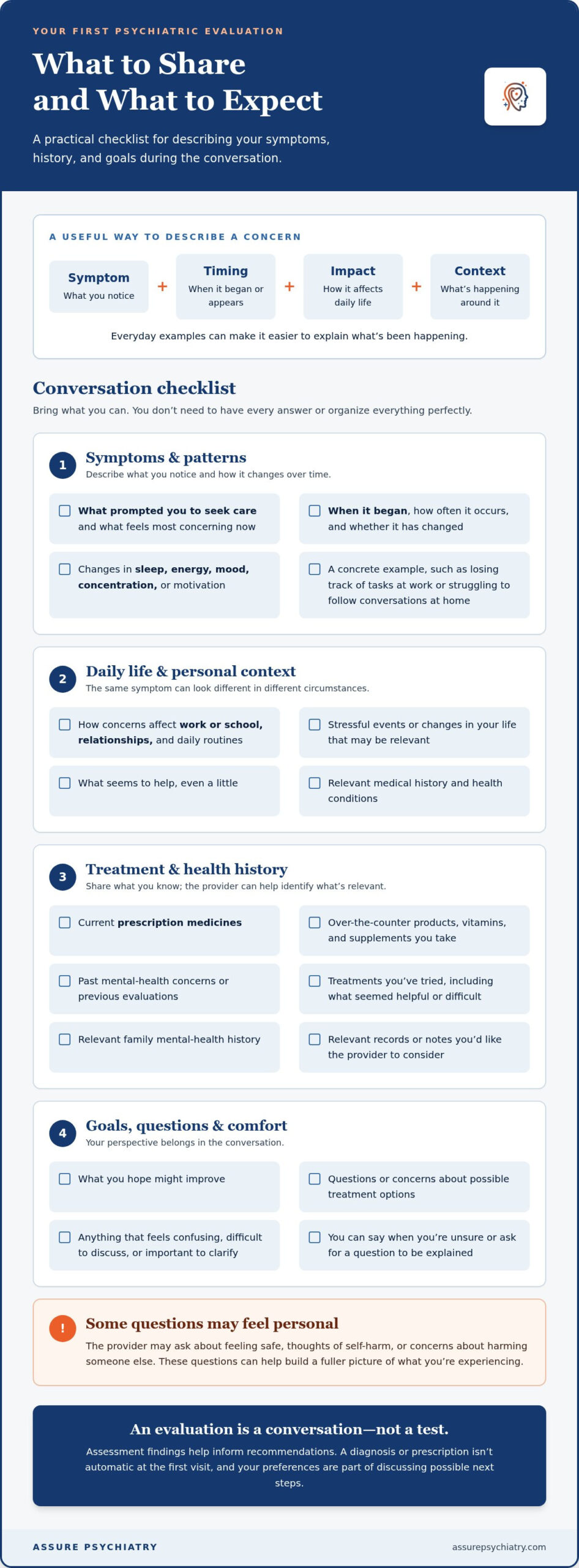
A symptom makes more sense when considered alongside its timing, impact, and the circumstances surrounding it.
Symptoms, daily life, and personal history
You may be asked about sleep, energy, mood, concentration, or changes in motivation. A concrete example can help: rather than only saying “I can’t focus,” you might describe losing track of tasks at work or struggling to follow conversations at home. If a concern comes and goes, explain when it tends to appear.
Work or school demands, relationships, daily routines, and stressful events may also shape how symptoms show up. A provider might ask what has changed in your life and what helps, even a little. These questions aren’t meant to assign a single cause. Mental health is influenced by a range of personal and health factors, and people with similar symptoms can have different experiences.
Your history can help make the assessment more specific. Depending on what’s relevant, the clinician may ask about past mental-health concerns, previous evaluations, family mental-health history, or treatments you’ve tried. Guidance on psychiatric evaluation describes the value of considering symptoms alongside personal, family, and medical history in the APA Practice Guidelines for Psychiatric Evaluation. Share what you know and say when you’re uncertain.
Medication, health history, and safety questions
Bring up prescription medicines, over-the-counter products, vitamins, and supplements you currently take. Information about past treatments, including what seemed helpful or difficult, may also be useful. A provider may ask about relevant health conditions because physical health and mental well-being can interact. You don’t need to decide which details matter in advance; the clinician can help identify what’s relevant.
Some questions may feel personal, including questions about feeling safe, thoughts of self-harm, or concerns about harming someone else. These questions help the clinician understand what kind of support may be appropriate and whether safety planning needs attention. They’re not a judgment of your character. If you’re unsure why something is being asked, you can ask the provider to explain or request a moment before answering.
It’s okay to bring notes or pause to gather your thoughts. An Assure Psychiatry psychiatric evaluation gives you an opportunity to discuss your concerns and relevant context with a clinician as part of a thoughtful assessment.
How an Evaluation Differs from Therapy and Medication Follow-Ups
An evaluation, psychotherapy, and a medication-management follow-up serve different purposes. Knowing the distinction can make the first appointment easier to understand: an evaluation focuses on building a clinical picture and discussing recommendations, while therapy and follow-ups involve different kinds of ongoing care. An initial evaluation doesn’t automatically mean you’ll begin medication.
| Appointment type | Main focus | What it may involve |
|---|---|---|
| Psychiatric evaluation | Understanding concerns and care needs | Reviewing symptoms and relevant history, then discussing possible recommendations |
| Psychotherapy | Ongoing therapeutic work | Exploring thoughts, feelings, behavior, and coping over a series of sessions |
| Medication-management follow-up | Reviewing medication treatment, when relevant | Discussing response, side effects, and progress to inform next steps |
Evaluation versus ongoing psychotherapy
A psychiatric evaluation is an assessment, not a substitute for psychotherapy. It helps a provider understand what you’re experiencing and consider recommendations based on your needs and goals. Psychotherapy is ongoing therapeutic work that may offer a different kind of support. These services can complement one another, depending on the person and situation. Assure Psychiatry focuses on psychiatric evaluations and medication management. Psychotherapy is a distinct form of care. Oregon’s behavioral health services information provides state-specific context about behavioral health care.
Evaluation versus medication-management follow-up
A first evaluation generally gathers broader context to help inform recommendations. A medication follow-up checks how a prescribed treatment is working and whether concerns such as side effects or limited benefit need attention. These conversations can help guide adjustments or other next steps when medication is part of a person’s care. Not everyone who has an evaluation will start medication.
Your care options depend on the clinical assessment, your goals, and your individual circumstances. You can share preferences, ask why a recommendation is being made, and discuss what feels manageable. The evaluation is a starting point for understanding options, not a commitment to a particular plan. If medication becomes part of your care, medication management in Portland involves follow-up conversations about treatment response and progress.
How to Prepare for Your First Consultation in Oregon
You don’t need a perfect script or a complete record of everything you’ve experienced. A few notes can help you remember what you want to discuss, especially if stress makes it hard to find the words in the moment. Preparing for an initial psychiatric consultation in Oregon is about making the conversation easier, not getting every detail right.
What to bring and write down beforehand
Use this checklist as a starting point. Bring what you have, and let the clinician help fill in any gaps.
- List current medications and supplements. Include prescriptions, over-the-counter products, vitamins, and doses when you know them. Note past treatments and how they affected you.
- Jot down key concerns. Record examples of what you’ve noticed, when it began, how often it happens, and how it affects work, school, relationships, or routines.
- Gather relevant records. If you have previous evaluation or treatment information that seems useful, bring it or make a note of where it’s available.
- Write down questions and goals. You might ask what the assessment involves, what recommendations mean, or which options could fit your priorities.
Short notes are enough. For example, “sleep has been difficult since my schedule changed” may be more helpful than trying to choose a clinical label. If dates or details escape you, that’s okay. The conversation can help organize what you remember.
Choosing in-person or virtual care in Oregon
Assure Psychiatry offers in-person visits in Portland and virtual telepsychiatry. Consider which format feels more comfortable and practical for your circumstances. Privacy, travel, access to a quiet space, and the ability to speak openly may all influence your choice. Learn more about a psychiatric evaluation in Portland or telepsychiatry in Oregon as you consider what may suit you.
For a virtual appointment, choose a private place where you can talk without interruptions, and use a reliable device and internet connection. Assure Psychiatry accepts most major insurance plans, though coverage and out-of-pocket costs vary by plan. Reviewing your behavioral-health benefits can help you understand your coverage before the visit.
Whether you meet in person or virtually, preparation doesn’t have to be elaborate. Find details about a psychiatric evaluation with Assure Psychiatry.
What Happens After an Initial Consultation with Assure Psychiatry?
After an initial evaluation, the next step is a conversation about what the assessment suggests and what kinds of support may fit. Recommendations depend on the concerns you shared, the clinical information gathered, your goals, and your preferences. There isn’t one standard plan for everyone, and you can ask questions before deciding how you’d like to proceed.
How assessment findings can shape a care plan
Your clinician may summarize themes from the discussion, explain findings, and invite you to share what feels accurate or needs clarification. The conversation may include possible treatment options, additional questions to consider, or a follow-up appointment. If a recommendation is made, ask how it relates to your concerns, what you might expect from that option, and what alternatives may be appropriate.
A diagnosis may help describe a pattern of symptoms and guide clinical decisions, but it’s only one part of understanding you. It doesn’t capture your full identity, values, relationships, or lived experience. The aim is to use assessment findings as a basis for a thoughtful plan while making room for your perspective and circumstances. A specific diagnosis, treatment, or outcome can’t be assumed in advance.
It’s also okay if you need time to reflect after the conversation. You might write down what you understood, what remains unclear, and which goals matter most to you. Bringing those thoughts to a follow-up can help keep care collaborative and focused on what you want support with.
Taking the next step with Assure Psychiatry
Assure Psychiatry provides psychiatric evaluations and medication management. Depending on the assessment and your preferences, possible next steps may include discussing treatment options, deciding whether medication management is appropriate, or arranging a follow-up to continue the conversation. You remain an active participant in decisions about your care.
Care is intended to be compassionate, culturally competent, and respectful of each person’s choices and background. Your perspective matters as recommendations are discussed, including what feels acceptable, practical, or consistent with your goals. If you have questions about a proposed next step, raising them is part of the process.
For patients in Oregon, Assure Psychiatry offers in-person visits in Portland and virtual telepsychiatry. These formats provide options for outpatient psychiatric care based on what works for your situation. An evaluation can give you a clearer understanding of possible directions without requiring you to commit to a particular treatment before discussing it.
Read more about the process and psychiatric care with Assure Psychiatry. An evaluation can begin a steady, informed conversation about support that respects who you are and what matters to you.
Take a Steady First Step Toward Support
You don’t need to have every answer before you seek support. If you searched “initial psychiatric consultation what to expect Oregon,” it may be because starting feels uncertain. Begin with what you know today: what’s been difficult, what you hope might change, or what questions you still have. A first conversation can help you consider those concerns with a clinician, at your own pace.
As you think about what comes next, consider what would help you feel heard and respected. Your preferences belong in conversations about care, and it’s okay to ask for clarification or take time to consider recommendations. Assure Psychiatry offers compassionate, culturally competent psychiatric care, with evaluations and medication management shaped around individual needs.
If you’re ready to take the next step, explore psychiatric care with Assure Psychiatry.
Frequently Asked Questions
Can I receive a diagnosis during my first psychiatric consultation?
Sometimes, but a diagnosis isn’t guaranteed at the first appointment. The clinician may have enough information to offer an initial clinical impression, or may need more conversation or relevant records to understand the full picture. You can ask what a proposed diagnosis means and how it may guide care. A diagnosis is a clinical tool, not a definition of your identity or everything you’ve experienced.
Do I have to take medication after an initial psychiatric consultation?
No. An evaluation doesn’t require you to start medication. If medication comes up, ask what it is intended to address, what benefits and risks are being considered, and whether other options may be appropriate. You can also explain concerns such as previous side effects or personal preferences. Understanding the reasoning behind a recommendation can help you decide what feels right for you.
What if I cannot remember every detail about my symptoms?
You can still attend without a complete timeline. Write down a few examples, such as when sleep difficulties began or what situations make concentration harder. If you can’t recall a date, describe whether something started recently or has been happening for a long time. Tell the clinician when a detail is fuzzy; follow-up questions can help clarify patterns without requiring perfect recall.
Should I stop taking my medication before a psychiatric consultation?
No. Don’t stop or change a prescribed medication just because you have an appointment. Bring a medication list, including supplements, and note how you take each item and any effects or concerns you’ve noticed. If you’re already thinking about changing a dose or stopping treatment, raise that with the clinician or the prescriber overseeing your current care so the decision can be discussed safely.
Can I bring someone with me to a psychiatric consultation?
You can consider whether a support person would help you feel more at ease or remember questions. Before the visit, think about what you’d want them to contribute, such as sharing observations or simply being present. Your comfort and privacy matter. You can also ask to speak with the clinician one-on-one for some or all of the conversation, especially if there are topics you’d rather discuss privately.
How much does an initial psychiatric consultation cost in Oregon?
Your out-of-pocket amount depends on your insurance benefits and plan requirements. Assure Psychiatry accepts most major insurance plans and has fees for initial psychiatric evaluations and medication-management follow-ups. Coverage can differ even among plans from the same insurer, so review your behavioral-health benefits, deductible, and copay information. Whether you’re reviewing coverage in Portland, elsewhere in Oregon, Washington, or Seattle, your plan documents can help you understand your expected costs.
Is a psychiatric consultation the same as a therapy appointment?
No. A psychiatric consultation centers on assessment and clinical recommendations, while psychotherapy is ongoing therapeutic work. If you’re unsure which kind of support you’re seeking, consider what you want help with right now: understanding symptoms and possible care options, or having regular sessions focused on emotional and behavioral work. These services may address different needs, and the right fit depends on your situation and goals.
What should I do if I feel nervous during my first appointment?
Start by telling the clinician you feel nervous. That gives them a chance to understand what might help you feel more comfortable, such as explaining a question or letting you pause to gather your thoughts. If you searched “initial psychiatric consultation what to expect Oregon” because the unknown feels daunting, bring a short note with your main concern. You don’t have to find perfect words to begin.
Recent Comments