

For first responders in Seattle, finding psychiatric care that fits your needs and the realities of shift work can raise practical questions. Will your privacy be respected? Can appointments work around rotating shifts? Is an evaluation or medication management a useful starting point? Psychiatric care for first responders Seattle readers consider should make room for those questions without pressure or judgment.
Psychiatric care may begin with a clinical evaluation of symptoms and health history, followed by a discussion of possible next steps. If medication is part of a treatment plan, follow-up appointments can review its effects and side effects. The right approach depends on your individual situation, not simply your job or a diagnosis.
This guide explains what psychiatric evaluations and medication management involve, how to compare care options, and what to consider about scheduling and privacy. It also offers practical ways to prepare for an appointment. Assure Psychiatry is based in Portland, Oregon, and provides in-person visits there as well as virtual telepsychiatry. For Seattle and other Washington readers, the clinician’s authorization to provide virtual care depends on the patient’s location.
Key Takeaways
- An evaluation can be a starting point for discussing symptoms, health history, and possible next steps.
- Evaluations support assessment and treatment planning, while medication management involves follow-up to review medication effects and side effects.
- Ask how confidentiality works, including its legal and clinical limits, before sharing sensitive details.
- Prepare by noting your concerns, symptom timeline, medications, health history, and how shifts or sleep affect daily life.
- Compare clinical fit, appointment format, scheduling, communication, and insurance processes to find care that feels manageable.
Psychiatric care for Seattle first responders: what it can address
When shifts, urgent calls, and exposure to distressing events are part of your work, it can be hard to prioritize your own well-being. Seeking psychiatric support is a health decision, not a judgment about your professional capability. Talking with a psychiatric clinician can help you describe what you’re experiencing and consider possible next steps.
Psychiatric care is a clinical assessment and treatment-planning process focused on understanding mental health concerns and identifying appropriate care options. It can include reviewing your health history and symptoms, discussing a possible diagnosis, and considering whether medication management may be helpful. An assessment is a conversation about your health, not a verdict about who you are or how well you can do your job.
Work-related stress, trauma, and changes in well-being
First responders may notice disrupted sleep, persistent anxiety, low mood, irritability, or trauma-related symptoms after difficult experiences. A reaction to a stressful event does not automatically mean you have a disorder. A clinician considers what you’re experiencing, how long it has been happening, the circumstances around it, and how it affects daily life, relationships, rest, or work. Specific examples can help make the assessment more useful, such as describing changes in sleep after a shift or difficulty winding down after a distressing call.
Psychiatrist, therapist, or both: understanding the roles
A psychiatric evaluation can help clarify symptoms and discuss treatment options. If medication is part of the plan, medication management includes follow-up to review its effects and side effects. It is ongoing care, rather than treating a prescription as a one-time decision. Psychotherapy is a separate service in which a therapist works with you through conversation-based treatment. Some people pursue therapy, psychiatric care, or both. The appropriate plan depends on individual needs and clinical assessment.
If you’re exploring psychiatric care for first responders Seattle, start by identifying what you want help understanding: sleep, mood, anxiety, trauma-related symptoms, or another change that concerns you. Assure Psychiatry provides psychiatric evaluations and medication management with a compassionate, culturally competent approach. Evaluations include a review of medical history, symptom analysis, and treatment planning, with discussion of next steps based on your needs.
How Seattle first responders can compare psychiatric care options
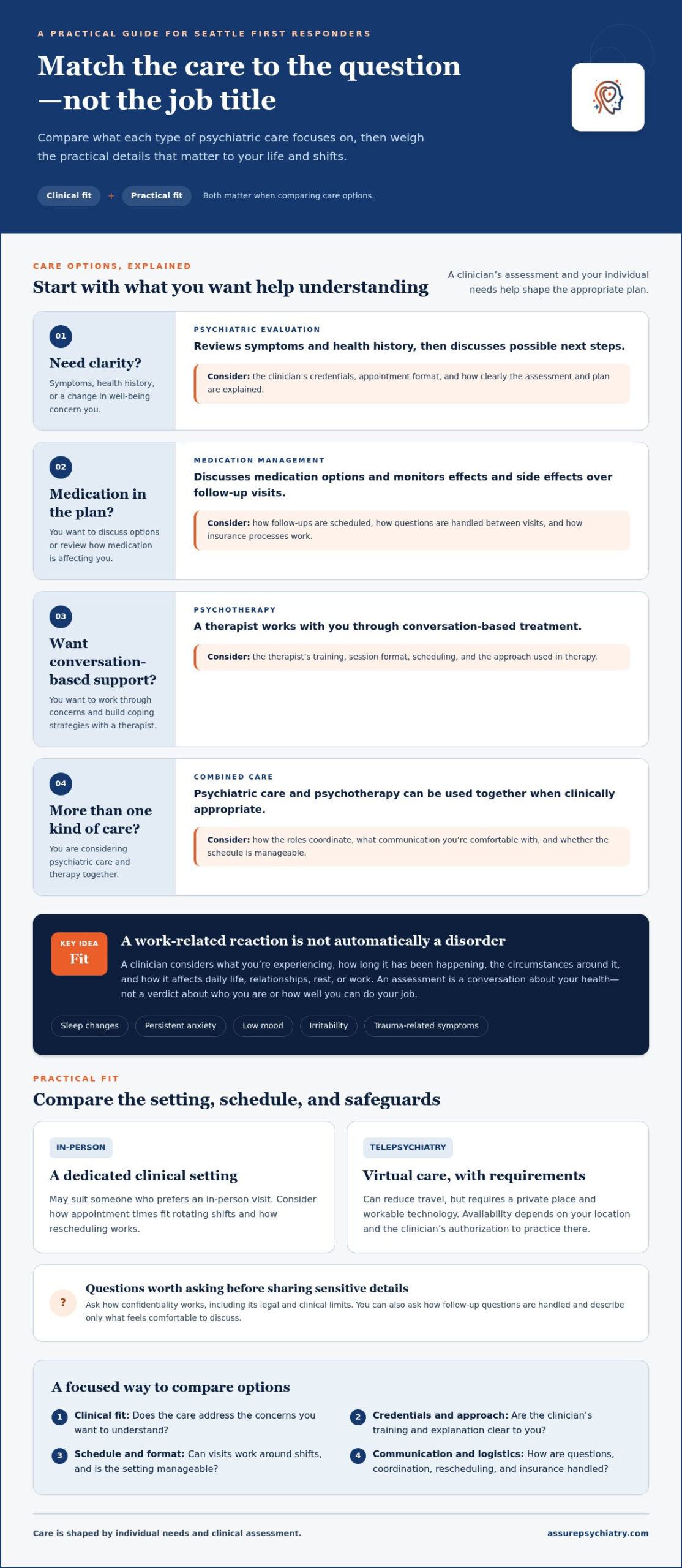
The right type of care depends on what you’re experiencing and what a clinician learns during assessment, not on your job title alone. Use the comparison below to see what each option generally focuses on. Roles and credentials can vary, so consider the clinician’s training and whether the approach addresses your concerns.
| Care type | Primary focus | Practical considerations |
|---|---|---|
| Psychiatric evaluation | Reviewing symptoms and health history, then discussing possible next steps | Consider the clinician’s credentials, appointment format, and how clearly they explain the assessment and plan. |
| Medication management | Discussing medication options and monitoring effects and side effects over follow-up visits | Consider how follow-ups are scheduled, how questions are handled between visits, and how insurance processes work. |
| Psychotherapy | Conversation-based treatment with a therapist to work through concerns and build coping strategies | Consider the therapist’s training, session format, scheduling, and the approach used in therapy. |
| Combined care | Psychiatric care and psychotherapy used together when clinically appropriate | Consider how the roles coordinate, what communication you’re comfortable with, and whether the schedule is manageable. |
Questions about occupational understanding and trust
You can describe the parts of the job that feel relevant to your well-being, such as critical incidents, cumulative stress, or sleep disruption around shifts. You don’t need to share everything at once. It’s reasonable to say what feels difficult to discuss and ask how confidentiality works, including its legal and clinical limits. A respectful conversation should make space for your questions without assuming every work-related reaction is a disorder.
In-person visits, telepsychiatry, and scheduling
An in-person visit may suit someone who prefers a dedicated clinical setting. Telepsychiatry can reduce travel, but requires a private place and workable technology. Neither format is automatically better. Consider whether appointment times fit your rotating shifts, how rescheduling works, and how you’ll communicate follow-up questions. Virtual care depends on the patient’s location and the clinician’s authorization to practice there. Assure Psychiatry offers in-person care at its Portland office and virtual telepsychiatry. For Seattle readers, Washington location requirements apply to virtual appointments. For more on virtual care in Oregon, see Telepsychiatry in Oregon: A Complete Guide to Virtual Mental Health Care.
When comparing psychiatric care for first responders Seattle options, weigh clinical fit alongside practical details. Assure Psychiatry’s evaluations include health-history review, symptom analysis, and treatment planning, and the practice provides medication management. Learn more about psychiatric evaluations and medication management.
Addressing privacy, stigma, and treatment concerns before starting
Questions about privacy or how seeking care might be perceived can feel especially personal in a close-knit, high-pressure profession. You can raise those concerns before sharing sensitive details. Seeking an evaluation is a health decision, not a statement about your competence, commitment, or ability to do your work. A clinician’s role is to understand your concerns and discuss care with you.
An evaluation does not automatically mean you’ll receive a particular diagnosis or start medication. It gives you a chance to discuss symptoms, health history, and what you hope will change. The clinician can explain possible options, and you can ask questions as you consider what feels appropriate. Treatment decisions should be individualized and discussed with a qualified clinician; no specific result can be promised.
What confidentiality questions can I raise?
It’s reasonable to ask how clinical records are maintained, how appointment communications are handled, and what information may be shared. Confidentiality has legal and clinical limits, so ask the clinician to explain those limits clearly. You might say, “Before I get into details, can you walk me through who can access my information and when confidentiality has exceptions?” A direct conversation can help you understand the boundaries without assuming either complete secrecy or automatic disclosure.
You can also explain what feels difficult to discuss and ask how to proceed at a manageable pace. Clear answers and room for questions can help establish trust. Avoid relying on broad promises about privacy, employment, or professional outcomes. Those depend on circumstances and cannot be guaranteed by a general article.
What if I am unsure about medication?
You don’t need to decide about medication before an evaluation. Explain what you’ve noticed, when it began, relevant health history, and any concerns about potential benefits, side effects, or taking medication while working shifts. A psychiatric clinician can discuss possible approaches and answer your questions. Any medication decision should reflect your individual situation and a clinical conversation.
Medication management is not simply a one-time prescription. Follow-up visits can review how medication is affecting you, including possible side effects, and inform ongoing decisions. For a fuller overview, see Medication Management in Portland: A Comprehensive Guide to Mental Wellness in 2026. If you’re considering psychiatric care for first responders Seattle, raising privacy and treatment questions early can help you understand what care may involve.
Preparing for a first psychiatric evaluation as a Seattle first responder
A little preparation can help you use an evaluation well, especially if your schedule leaves limited time to gather your thoughts. You don’t need a perfect timeline or the right clinical terms. Bring what you remember; the clinician can guide the conversation, clarify details, and ask follow-up questions.
What information can help the evaluation?
Consider jotting down a few notes beforehand. They can help you describe what has changed without needing to recall every detail on the spot.
- Your main concerns: What prompted you to consider care, and what would you most like help understanding?
- Symptoms and timeline: Note what you’ve noticed, when it began, how it varies, and whether anything seems to affect it.
- Work and daily life: Include how shift patterns, sleep, or work experiences affect your energy, focus, relationships, or functioning at home.
- Health and treatment history: List current medications and relevant health conditions, along with past mental health care if you remember it.
- Questions: Write down anything you want to ask about assessment, possible treatment choices, follow-up, or privacy.
Your notes don’t need to be comprehensive. A few specific examples, such as difficulty winding down after a shift or a change in sleep, can give the clinician useful context. A psychiatric evaluation typically includes reviewing medical history, discussing symptoms, and developing a treatment plan with you.
Planning around shifts and appointment logistics
Think about when you’re most likely to be rested enough to talk. An appointment immediately after a demanding shift may feel different from one scheduled after recovery time. Consider whether you’ll have a private setting, how much travel an in-person visit would involve, and whether a virtual format would be practical. Assure Psychiatry offers in-person appointments in Portland, Oregon, and virtual telepsychiatry. Virtual care for Seattle and other Washington residents depends on the clinician’s authorization to practice in the patient’s location.
If you want more detail about what an evaluation may involve, Psychiatric Evaluation in Portland: A Comprehensive Guide to Your First Step Toward Peace of Mind offers additional preparation context. If you’re exploring psychiatric care for first responders Seattle, gather your notes and decide which questions matter most to you. Explore psychiatric evaluation options as you consider what support may fit your needs.
A thoughtful next step toward psychiatric support
You don’t need every answer before choosing a next step. Weigh a few practical and clinical factors: whether the clinician’s approach feels like a fit, what type of care you’re considering, how privacy questions are handled, which appointment format works for you, and whether scheduling is realistic around your shifts. Together, these details can help you decide what feels manageable without pressure to commit to a particular treatment in advance.
When psychiatric evaluation may be a useful starting point
If you’re unsure what your symptoms mean or what kind of support might help, a psychiatric evaluation offers time to discuss your concerns, health history, and possible treatment directions. It is not a promise of a specific diagnosis or prescription. You can begin with one question: What change in my sleep, mood, anxiety, or daily functioning do I most want help understanding? A psychiatric clinician can then work with you to consider appropriate next steps.
Assure Psychiatry provides psychiatric evaluations that include reviewing medical history, discussing symptoms, and developing a treatment plan. The evaluation is collaborative and focused on understanding your individual needs rather than assuming one approach fits every first responder.
How ongoing medication management can support follow-up
If medication becomes part of your care plan, follow-up visits offer an opportunity to discuss how it’s affecting you, including benefits, side effects, and changes in your concerns over time. Those conversations can inform shared decisions about whether the plan should continue or be adjusted. Medication management is ongoing clinical care, not simply a one-time prescription.
As you consider psychiatric care for first responders Seattle, let your questions guide the pace: What do I want clarified? What would make an appointment feel practical and respectful? Assure Psychiatry provides psychiatric evaluations and medication management through a compassionate, culturally competent approach. The practice is based in Portland, Oregon, and offers in-person and virtual care. Telepsychiatry depends on the patient’s location and the clinician’s authorization to practice there. To learn more about Assure Psychiatry’s services, explore psychiatric care with Assure Psychiatry.
Take a considered step toward support
Finding psychiatric care that feels right is personal. As you explore psychiatric care for first responders Seattle, consider the clinical fit, type of support you’re seeking, privacy questions, and whether the format and scheduling are practical for your life. An evaluation can help clarify concerns and possible directions without obligating you to a specific diagnosis or treatment.
Assure Psychiatry offers psychiatric evaluations that include a review of health history, symptom analysis, and treatment planning. If medication is part of an individualized care plan, follow-up visits can monitor its effects and side effects. The practice provides compassionate, culturally competent care shaped around each person’s needs.
To learn more about psychiatric evaluations and medication management, explore psychiatric care with Assure Psychiatry. Seeking support is a meaningful way to make room for your well-being.
Frequently Asked Questions
Can a first responder see a psychiatrist for work-related stress?
Yes. A first responder can discuss work-related stress with a psychiatric clinician. An evaluation may explore concerns such as anxiety, sleep changes, low mood, or reactions to difficult calls, while considering how long they’ve lasted and how they affect daily life. A stress response doesn’t automatically mean you have a mental health disorder. You can describe what’s troubling you and discuss possible next steps with the clinician.
Is psychiatric care confidential for first responders?
Clinical information is handled within confidentiality standards, but confidentiality has legal and clinical limits. Before sharing details, ask how records and communications are handled, who may access information, and under what circumstances it could be shared. The clinician can explain the applicable boundaries for your care. It’s reasonable to raise privacy concerns directly, but no general explanation can guarantee a particular level of discretion or employment outcome.
What is the difference between a psychiatrist and a therapist?
A psychiatrist is a medical clinician who can assess mental health concerns and discuss treatment options, including medication when appropriate. A therapist provides psychotherapy, a distinct service that uses conversation-based treatment to address concerns and develop coping strategies. Some people choose one type of care, while others receive both. The right fit depends on personal needs and clinical assessment. Assure Psychiatry focuses on psychiatric evaluations and medication management, not long-term psychotherapy.
Can telepsychiatry work around a first responder’s shift schedule?
Telepsychiatry can reduce travel and provide another way to attend appointments, but it doesn’t guarantee appointment times that fit every rotating shift. Consider when you’re rested enough to participate, whether you can speak privately, and whether appointment times fit your schedule. Virtual care also depends on the patient’s location and the clinician’s authorization to practice there. Assure Psychiatry offers virtual telepsychiatry, and Washington location requirements apply to Seattle-area patients.
What should I bring to my first psychiatric evaluation?
Bring a list of your main concerns, current medications, relevant health history, and any past mental health treatment you can recall. Notes about when symptoms began, patterns you’ve noticed, and effects on sleep, work, or home life can give the clinician useful context. You may also write down questions about assessment, treatment options, follow-up, and privacy. You don’t need a complete or perfectly organized account; the clinician can guide the discussion.
Does a psychiatric evaluation mean I will have to take medication?
No. Having an evaluation doesn’t mean you must take medication. It’s an opportunity to discuss symptoms, health history, concerns, and possible care options with a psychiatric clinician. If medication is considered, you can ask about its purpose, potential effects, and possible side effects as you discuss decisions together. An evaluation doesn’t guarantee a particular diagnosis or prescription. Next steps should be based on your circumstances and clinical discussion.
How can Seattle first responders compare psychiatric care options?
Compare the type of care, clinician credentials, appointment format, scheduling, communication, privacy practices, and insurance process. A psychiatric evaluation can clarify concerns and possible treatment directions; medication management includes follow-up to review effects and side effects. If considering telepsychiatry, account for your location because the clinician must be authorized to practice there. For those exploring psychiatric care for first responders Seattle, a good fit aligns with assessed needs and practical circumstances, not job title alone.
Recent Comments