

What if finding psychiatric care didn’t mean choosing between your well-being and your creative life? If you’re searching for a “psychiatrist for artists and creatives Portland,” you may wonder whether a clinician will understand freelance pressures, irregular schedules, or your concerns about medication and creative work. Those questions deserve thoughtful, individual answers, not assumptions about what it means to be an artist.
It’s reasonable to want a provider who listens without reducing symptoms to a creative personality. Psychiatric care should be a collaborative clinical process. An evaluation can help clarify what you’re experiencing, while medication decisions should include a conversation about your goals, preferences, and possible side effects. No treatment can promise a particular effect on creativity, but you can ask questions and take part in decisions about your care.
This guide explains what to consider when choosing psychiatric care in Portland, what an evaluation and medication management may involve, and what to ask about in-person or virtual appointments in Oregon. You’ll also learn how to assess whether a provider’s approach respects your routines and priorities, so you can decide on a next step that feels right.
Key Takeaways
- Look for a psychiatrist for artists and creatives Portland who asks about your routines and concerns without treating creativity as a diagnosis.
- Assess fit by clarifying your needs, checking the clinician’s scope, and asking how you’ll collaborate on care decisions.
- Understand how psychiatric evaluation and medication management differ from psychotherapy when comparing care options.
- Prepare for a first appointment with relevant history, current medications, questions, or examples of concerns. You don’t need polished records or explanations.
- Explore Assure Psychiatry’s psychiatric evaluations and medication management in Portland, and confirm whether in-person or virtual care and your insurance plan are a fit.
Finding a Psychiatrist for Artists and Creatives Portland: What Good Fit Means
Your creative work is part of your life, not a diagnosis. Seeking psychiatric care doesn’t mean your identity, artistic process, or personality is being treated as an illness. It means you can talk with a qualified clinician about distress or changes in daily functioning and consider whether an evaluation may help clarify what’s going on.
Creative work can involve unpredictable schedules, variable income, deadlines, collaboration, or stretches of solitary work, but no one pattern describes every artist. A clinician doesn’t need to share your profession to take its demands seriously. They should ask how your work and routines intersect with your well-being, without assuming every challenge comes from being creative. For background, read this overview of studies on creativity and mental health. Research about groups, however, can’t determine what’s happening for one individual.
What does an artist-friendly psychiatrist actually mean?
“Artist-friendly” is best understood as a respectful approach, not a promise of specialist expertise or a particular treatment result. A clinician should make room for your perspective, explain their reasoning clearly, and invite you to take part in decisions. Ask how they consider work routines, sleep, stress, and personal goals during an evaluation. You can also ask how treatment options and possible side effects will be discussed. No provider should guarantee that treatment will preserve, improve, or leave unchanged your creative ability.
Individualized psychiatric care considers a person’s symptoms, history, daily functioning, goals, and treatment preferences when assessing concerns and discussing appropriate options. The conversation should focus on your circumstances, not stereotypes about creative people.
When might a psychiatric evaluation be worth considering?
If distress persists or begins to interfere with daily functioning, you may choose to seek a professional assessment. Anxiety, depression, difficulty with attention that may relate to ADHD, or sleep problems can be worth discussing with a clinician. This isn’t a way to diagnose yourself. An evaluation helps a qualified provider consider what may be contributing and what options could fit.
Looking for a psychiatrist for artists and creatives Portland residents can consult? Describe in your own words what prompted your search. You might explain what has changed, when you notice it, how it affects work or life outside work, and what you hope to understand. Your explanation doesn’t need to be polished or complete. A good fit listens, asks respectful follow-up questions, and makes room for shared decision-making.
Evaluating a Portland Psychiatrist’s Creative Approach
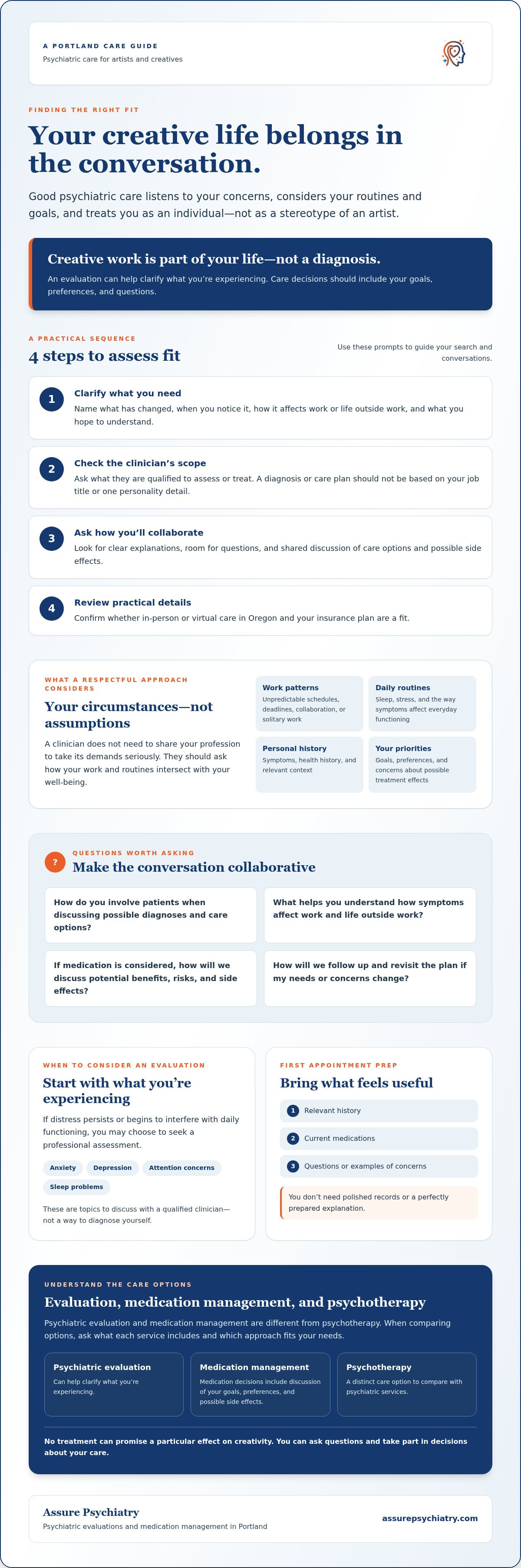
A good provider fit involves more than feeling understood in one conversation. You should also know what the clinician is qualified to assess or treat, how decisions are made, and whether the care arrangement works for you. As you consider a psychiatrist for artists and creatives Portland, use this sequence: clarify what you need, check the clinician’s scope, ask about collaboration, then review practical details such as visit format and insurance participation.
Before choosing, consider how the provider will approach your concerns. The Mental Health America guide to choosing a mental health provider offers additional questions to help you assess fit. Ask how the clinician considers symptoms, personal and health history, daily functioning, goals, and treatment preferences. These factors inform an assessment. A diagnosis or care plan shouldn’t be based on a job title or a single detail about your personality.
Questions to ask about listening, diagnosis, and treatment choices
Notice whether the clinician makes space for your questions and explains their thinking in language you can follow. You might ask:
- How do you involve patients when discussing possible diagnoses and care options?
- What information helps you understand how symptoms affect work and life outside work?
- If medication is considered, how will we discuss potential benefits, risks, and side effects?
- How will we follow up and revisit the plan if my needs or concerns change?
If you’re concerned about a treatment’s possible effect on your creative work, say so directly. Ask how that concern will be included in the conversation, while remembering that no clinician can guarantee a specific effect on creativity.
How to discuss ADHD, anxiety, or mood concerns without assumptions
Concrete observations can make an evaluation more useful. Rather than relying on a label, describe what you’ve noticed, when it happens, how long it has been a concern, and how it affects everyday functioning. For example, explain whether difficulty concentrating appears across different settings or mainly during a particular kind of task. Share relevant changes in sleep, mood, or anxiety, too, if they feel important to you.
Creative habits, such as working late or shifting between projects, don’t establish a mental-health diagnosis. The clinician needs to assess your individual symptoms and history. If you’re weighing psychiatric evaluation or medication management in Portland, review Assure Psychiatry’s care information and prepare questions about your goals and preferences.
Psychiatrist, Therapist, or Both? Compare Care Options in Portland
These roles can address different needs, and some people choose to work with more than one provider. A psychiatrist assesses mental-health concerns and may manage medication within their clinical scope. A therapist provides psychotherapy, which focuses on exploring concerns and working toward goals through a therapeutic relationship. Knowing what each service involves can help you decide what kind of support to seek.
| Care option | What it may involve | A question to consider |
|---|---|---|
| Psychiatric evaluation | Reviewing symptoms, relevant history, and daily functioning to understand mental-health needs and possible next steps. | Do I want a clinical assessment of concerns such as mood, attention, anxiety, or sleep? |
| Medication management | Discussing medication when appropriate and following up to monitor response, side effects, and changing treatment needs. | Would I like to discuss whether medication could be an option for me? |
| Psychotherapy | Meeting with a qualified therapist to work through concerns, patterns, and personal goals using psychotherapy. | Am I looking for ongoing talk-based support? |
What psychiatric evaluation and medication management can involve
An evaluation is a clinical conversation and assessment, not a promise of a particular diagnosis, prescription, or outcome. A provider may ask about symptoms, personal history, and how concerns affect everyday life, then discuss appropriate next steps. If medication is considered, follow-up can help the provider and patient review how it’s working, any side effects, and whether needs or preferences have changed.
A psychiatrist for artists and creatives Portland patients consider should be willing to explain the process and make room for questions about how care could fit their needs.
When psychotherapy may be a separate or complementary service
Psychotherapy is a distinct service. You may seek it from a qualified therapist, either instead of or alongside psychiatric care, depending on your goals. If you work with more than one provider, ask whether coordination is appropriate and how information-sharing would be handled. You can also ask each provider about their role so expectations are clear.
Assure Psychiatry offers psychiatric evaluations and medication management, but does not offer long-term psychotherapy. Confirm the actual service scope with any provider you’re considering, and choose care that aligns with the support you want.
First Appointment Questions for Portland Creatives
You don’t need to arrive with a complete timeline or perfectly organized records. A few notes can help you use the appointment to discuss what’s concerning you and what you hope to get from care. Bring what’s available, and let the clinician help identify what’s relevant.
What to bring and how to describe your concerns
Before the visit, jot down when concerns began, how they’ve changed, and how they affect work or daily life. You might also list current medications, previous treatment, questions, and the priorities you want the clinician to understand. Examples can be simple: trouble sleeping before a deadline, persistent worry, or difficulty focusing across different settings. If you’re uncertain how to explain something, that’s okay. The clinician can ask questions and help organize the information.
- Relevant health or mental-health history, if you have it handy
- Current medications and supplements
- Questions about evaluation, treatment options, or possible side effects
- Concerns and goals you’d like to make time for
Choosing in-person or virtual psychiatric care in Oregon
An office visit may feel more comfortable if you prefer meeting a provider in person. Virtual care can be convenient if travel or your work routine makes getting to an appointment difficult. Assure Psychiatry offers in-person visits in Portland and virtual telepsychiatry. Confirm current availability and whether virtual care is appropriate for your situation and location in Oregon. If you’re comparing care in Portland, Oregon with options in Washington, including Seattle, check directly with each practice about where it can provide appointments and whether you’re eligible.
Before scheduling, ask which appointment formats are available, whether the provider participates in your insurance plan, what your plan covers, how follow-up is arranged, and what communication to expect between visits. Confirm coverage directly with both the practice and your insurer. These details can help you assess whether a psychiatrist for artists and creatives Portland is considering fits your needs, beyond the clinical conversation itself.
If you’re considering a psychiatric evaluation or medication management, review Assure Psychiatry’s care options and ask about current appointment formats, insurance participation, and follow-up expectations.
Explore Psychiatric Care at Assure Psychiatry in Portland
Assure Psychiatry is a Portland outpatient clinic offering psychiatric evaluations and medication management. Care includes support for ADHD, anxiety, depression, and other conditions treated by the practice. The clinic doesn’t describe a dedicated artist-focused program, so if your creative work shapes your concerns or routines, ask how those details can be included in a personalized treatment plan.
The clinic offers in-person visits in Portland and virtual telepsychiatry. Current availability and eligibility can change, so confirm directly which formats are available to you. You may also want to ask what the evaluation involves, how treatment goals are discussed, and what follow-up could look like if medication management is part of your care.
How Assure Psychiatry’s services may fit your needs
A personalized plan can start with a conversation about what you’re experiencing, what you hope to address, and which treatment preferences matter to you. You can bring up concerns about work demands, sleep, or the possible effects of treatment on your creative practice. Those concerns don’t guarantee a particular outcome, but they can guide a thoughtful discussion of care options.
Assure Psychiatry provides psychiatric evaluations and medication management, not long-term psychotherapy. If you’re seeking ongoing psychotherapy, consider finding a qualified therapist separately and asking whether coordination between providers is appropriate. The practice accepts most major insurance plans, but participation and coverage vary by individual plan. Confirm your benefits, including any copay or deductible, with your insurer and the clinic.
A low-pressure next step toward a first appointment
You don’t need to have every question answered before reaching out. Ask about the clinic’s services, current in-person or virtual appointment options, insurance participation, and what to expect during an initial evaluation. These details can help you decide whether the care offered matches what you’re looking for, without committing to a particular treatment or outcome.
If you’re exploring a psychiatrist for artists and creatives Portland, reviewing the practice’s services is one way to assess fit. Explore care options with Assure Psychiatry and contact the clinic with questions about next steps, coverage, and appointment format.
Choose a Next Step That Feels Right for You
The right psychiatric care should take your concerns seriously without treating your creative identity as a diagnosis. As you look for a psychiatrist for artists and creatives Portland, focus on clear explanations, shared decisions, and a provider whose scope matches the support you’re seeking. Prepare questions about evaluation, medication, follow-up, and how your routines and goals will be considered.
Assure Psychiatry is a Portland outpatient practice offering psychiatric evaluations and medication management. In-person Portland visits and virtual telepsychiatry are offered, though you’ll want to confirm current availability and eligibility. The practice accepts most major insurance plans, but verify individual coverage and participation with the clinic and your insurer.
If these services may fit what you’re looking for, take a low-pressure next step: explore care options with Assure Psychiatry and ask about appointment format, insurance, and what an evaluation involves. You deserve care that makes room for your questions and supports informed choices.
Frequently Asked Questions
Is there a psychiatrist for artists and creatives in Portland?
You can look for a Portland psychiatrist whose approach feels respectful and collaborative, even if they don’t advertise an artist-specific program. Ask how they learn about a patient’s creative work, priorities, and routines without making assumptions. Assure Psychiatry is a Portland outpatient practice offering psychiatric evaluations and medication management. Contact the practice to ask whether its services, clinicians, and current appointment options fit your needs.
Can medication affect creativity?
Medication’s effects can differ between individuals, medications, and circumstances, so no general promise about creativity is appropriate. If medication is discussed, tell the prescribing clinician what matters to you creatively and ask about possible benefits, risks, side effects, and how your response would be monitored. Treatment decisions should be individualized and collaborative. Raise concerns before starting a medication and revisit them with your clinician during follow-up.
What should I look for in a psychiatrist as an artist?
Look for clear communication, respectful listening, relevant clinical scope, and shared decision-making. Ask how the clinician considers your work patterns and personal treatment goals without stereotyping creative people. You can also check practical details, including appointment format, insurance participation, and follow-up expectations. Searching for a psychiatrist for artists and creatives Portland residents can consult is a starting point, but a provider label alone can’t tell you whether the fit feels right.
What happens during a psychiatric evaluation?
A psychiatric evaluation commonly includes a discussion of symptoms, health and treatment history, and current concerns to help the clinician understand your mental-health needs. The clinician may discuss possible next steps based on your individual assessment, but an evaluation doesn’t guarantee a particular diagnosis or prescription. Bring relevant information and questions if you have them. You don’t need a perfect timeline or polished explanation. It’s okay to be unsure where to begin.
Can I see a psychiatrist online in Oregon?
Assure Psychiatry offers virtual telepsychiatry, but contact the practice to confirm current availability and eligibility. Whether online care is suitable depends on your needs and the clinician’s assessment. Before scheduling, ask about appointment format, your insurance coverage, and any practical requirements for a virtual visit.
Does Assure Psychiatry offer therapy for artists?
Assure Psychiatry offers psychiatric evaluations and medication management, not long-term psychotherapy or an artist-specific therapy service. If you’re looking for ongoing talk therapy, you may need to contact a qualified therapist separately. If you’re considering both psychiatric care and psychotherapy, ask each provider whether coordination is appropriate and how communication would work. Clarifying each provider’s role can help you understand what support is available and where to direct your questions.
Does Assure Psychiatry accept insurance for psychiatric care?
Assure Psychiatry accepts most major insurance plans, but participation and benefits can vary by plan and service. Before an appointment, confirm directly with both the practice and your insurer whether your specific plan is accepted and what the visit may involve for coverage. Ask about potential out-of-pocket responsibilities, such as copays or deductibles. Checking ahead can help you understand your options, but coverage for an individual visit can’t be guaranteed.
Recent Comments