

What if the “survival mode” your brain adopted to protect you is now the very thing preventing you from truly living? You might find yourself constantly scanning the room in a busy Seattle café or struggling with flashbacks that make sleep feel impossible. It’s incredibly draining to live in a state of constant hypervigilance, especially when you aren’t sure why your body won’t just relax. Finding a psychiatrist specializing in trauma Seattle is a vital step toward quieting these physiological alarms. With a professional psychiatric evaluation, you can move past the confusion of your symptoms and begin a journey toward genuine mental tranquility.
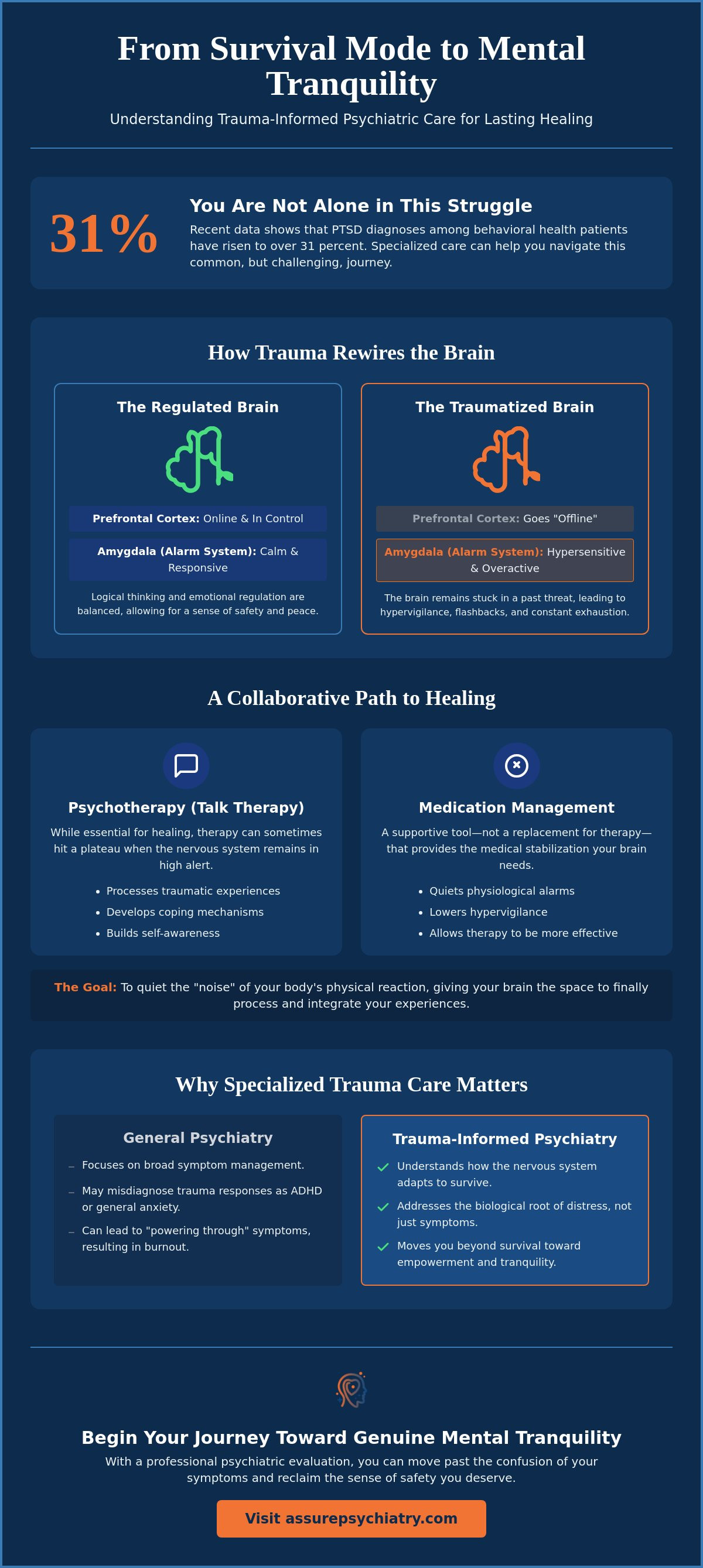
Recent data shows that PTSD diagnoses among behavioral health patients have risen to over 31 percent, proving that you’re certainly not alone in this struggle. We understand that while therapy is essential, sometimes your nervous system needs medical support to find its baseline again. This guide explains how specialized medication management acts as a supportive tool, not a replacement, for your healing. You’ll discover how a clear diagnostic path can reduce your trauma responses and help you reclaim the sense of safety you deserve. We’ll explore the specific ways psychiatric care helps you navigate recovery and restores the balance your mind and body have been seeking.
Key Takeaways
- Learn the difference between general care and specialized support for trauma, ensuring you find the right level of clinical expertise for your journey.
- Understand the neurobiology of your “survival brain” and how psychiatric evaluation can help move you from a state of constant threat toward mental tranquility.
- Discover how medication management serves as a foundation for healing by stabilizing physiological responses so that your therapeutic work can be more effective.
- Explore how a psychiatrist specializing in trauma Seattle provides accessible care through telepsychiatry, allowing you to prioritize your recovery from a safe, familiar environment.
- Gain clarity on a collaborative treatment path that focuses on your individual identity and long-term wellness rather than just a diagnosis.
Understanding the Need for a Trauma-Informed Psychiatrist in Seattle
Living in the Pacific Northwest often means balancing a fast-paced career with the desire for a peaceful, outdoor-oriented lifestyle. However, when you’re carrying the weight of past experiences, even the most serene environments can feel threatening. Many people find that a general mental health approach doesn’t quite reach the core of their distress. Seeking a psychiatrist specializing in trauma Seattle isn’t just about finding a doctor; it’s about finding a partner who understands that trauma changes the way your brain processes the world. While a general psychiatrist might focus on broad symptom management, a trauma-informed specialist looks specifically at how your nervous system has adapted to survive. The ultimate goal of this specialized care is to move you beyond mere survival toward a state of empowerment and lasting mental tranquility.
The Impact of Trauma on Daily Life in the City
Urban life in Seattle presents unique challenges for those living with Post-Traumatic Stress Disorder or chronic stress. The constant hum of the light rail, the crowded sidewalks of South Lake Union, or the unpredictable nature of city traffic can keep a traumatized nervous system in a state of high alert. This hypervigilance isn’t a choice; it’s a physiological response that can leave you feeling utterly exhausted by midday. We often see this manifest as difficulty concentrating at work or irritability in relationships, which can lead to a mistaken diagnosis of ADHD or simple anxiety. When you try to “power through” these feelings without addressing the underlying trauma, the result is almost always burnout. Your body is working overtime to protect you from perceived threats, leaving very little energy for the life you actually want to lead.
When to Move Beyond Traditional Counseling
Many of our patients come to us after years of dedicated talk therapy. While counseling is a beautiful and necessary part of healing, it sometimes hits a plateau. If you find yourself “knowing” you are safe intellectually but still feeling a racing heart, shallow breath, or a sense of impending doom, your nervous system may need medical stabilization. This is where the role of a psychiatric evaluation in Portland or Seattle becomes essential. By working with a psychiatrist specializing in trauma Seattle, you can explore how medication management can quiet the “noise” of your physiological responses. This transition from just talking about the past to actively treating the body’s physical reaction allows your brain the space it needs to finally process and integrate your experiences. It’s about providing the clinical support necessary for your mind to find its way back to a baseline of peace.
The Neurobiology of PTSD: How Psychiatry Facilitates Healing
When you experience a traumatic event, your brain’s priority shifts entirely to survival. This shift is led by the amygdala, your brain’s alarm system, which becomes hypersensitive to any hint of danger. Meanwhile, the prefrontal cortex, the part of your brain responsible for logical thinking and emotional regulation, often goes offline during these high-stress moments. PTSD is a physiological state where the brain remains stuck in a past threat. For many, this means the alarm system never quite turns off, even when the environment is safe. Working with a psychiatrist specializing in trauma Seattle allows you to address this biological imbalance directly. By using targeted medical interventions, we can effectively lower the volume on that constant alarm, giving your thinking brain the chance to come back online.
This process relies on the concept of neuroplasticity, which is the brain’s remarkable ability to reorganize itself and form new neural connections. Through consistent care and medical stabilization, it’s possible to retrain your brain to recognize safety once again. You aren’t just managing symptoms; you’re restoring the biological foundation of your well-being. The amygdala doesn’t care about your goals or your schedule; it only cares about your safety. A psychiatrist specializing in trauma Seattle understands that you can’t simply think your way out of a physiological response. Medication acts as a vital buffer, providing the stability needed for neuroplasticity to take root and for you to build a more resilient mind.
The Role of Neurotransmitters in Trauma Recovery
Your body’s “fight or flight” response is fueled by neurotransmitters like cortisol and adrenaline. In a healthy system, these levels spike during danger and then return to a resting state. In trauma survivors, these chemicals can stay elevated, leading to the physical exhaustion and hyper-arousal you likely feel every day. Specialized medication targets these specific pathways to reduce the intensity of flashbacks and night terrors that disrupt your rest. Because every person’s biology is unique, a customized medical approach is vital for success. It ensures that we aren’t just masking symptoms but are supporting your body’s natural restorative processes. Understanding these PTSD Treatment Essentials is a key part of our collaborative journey toward health.
Why Diagnosis is the First Step Toward Peace
A clear diagnosis provides a reliable roadmap for your recovery. It’s important to distinguish between single-event PTSD and complex trauma, often referred to as C-PTSD, which results from prolonged or repeated exposure to distress. A specialist is trained to see past symptoms that might mimic other conditions, such as mood disorders, to find the trauma at the root. We believe that your history and individual identity are central to this process. If you’re ready to explore a path tailored to your unique needs, you can learn more about our approach to evaluation. Every diagnostic step we take together is designed to validate your experience and create a stable environment where mental tranquility can finally grow.
Medication Management vs. Psychotherapy for Trauma
Choosing the right path for recovery often involves a dual approach that addresses both the mind and the body. While many people start their journey with counseling, they may eventually find that their progress has stalled because their nervous system remains in a state of high alert. A psychiatrist specializing in trauma Seattle provides a different, complementary set of tools focused on your biological stability. At Assure Psychiatry, our role isn’t to replace your long-term talk therapy, but to provide the medical foundation that makes that work possible. We focus on psychiatric evaluation and ongoing medication management to ensure your body isn’t constantly overwhelmed by its own survival instincts.
Some people worry that medication might “numb” their emotions or distance them from the hard work of healing. In reality, the goal of a psychiatrist specializing in trauma Seattle is to create clarity, not avoidance. When your system is flooded with stress hormones, it’s nearly impossible to engage deeply in therapeutic exercises or process difficult memories. By stabilizing these physiological responses, medication acts as a supportive bridge. It allows you to participate more fully in your recovery without being hijacked by a racing heart or sudden panic. This medical support provides the internal quiet necessary for your psychological work to truly take root.
What is Psychiatric Medication Management?
Psychiatric medication management is much more than just receiving a prescription. It’s a recurring safety check where we carefully monitor how you’re feeling and how your body is responding to treatment over time. We look at everything from the efficacy of the plan to potential side effects, adjusting dosages as your needs evolve. This process is very similar to medication management in Portland, where the focus remains on finding your specific “therapeutic window.” This is the delicate space where symptoms are minimized enough for you to feel like yourself again, creating a stable environment where mental tranquility can finally be sustained.
The Benefits of an Integrated Treatment Plan
An integrated treatment plan recognizes that the mind and body heal best when they’re addressed together. Research into Current PTSD Treatment Strategies highlights that combining medication with trauma-focused therapies like EMDR or CBT often leads to the most significant outcomes. When we help you stabilize your sleep and regulate your mood, you gain the emotional bandwidth needed for deeper therapeutic work. We view ourselves as a collaborative guide in this journey, frequently coordinating with your therapist to ensure your care is seamless. You aren’t just a passive recipient of care; you’re an active participant in a plan designed to restore your sense of safety and empowerment.
Telepsychiatry: Accessing Trauma Care Across Washington
For many trauma survivors, the act of leaving the house to visit a clinical office can trigger the very hypervigilance they’re trying to heal. The unpredictable nature of a commute, the noise of the city, and the unfamiliarity of a medical waiting room can cause the nervous system to spike before the appointment even begins. Finding a psychiatrist specializing in trauma Seattle doesn’t have to mean navigating I-5 traffic or sitting in a sterile environment that feels unsafe. Telepsychiatry offers a bridge to recovery by allowing you to receive expert care from the sanctuary of your own home. By removing the physical barriers of travel, we help you preserve your emotional energy for the actual work of healing.
Our commitment to compassionate and culturally competent care remains the same regardless of the screen between us. Just as we provide comprehensive telepsychiatry in Oregon, our virtual services in Washington ensure that high-quality psychiatric support is accessible to everyone in the Seattle area. This model of care is particularly beneficial for those who struggle with “waiting room anxiety” or social triggers that make in-person visits overwhelming. Working with a psychiatrist specializing in trauma Seattle through a secure, virtual platform allows you to remain in a space where you feel in control, which is often the first step toward restoring mental tranquility.
Is Virtual Trauma Care Right for You?
Discussing sensitive history requires a space where you feel completely private and secure. Virtual care allows you to choose your surroundings, whether that’s your favorite armchair or a quiet corner of your home. To ensure a seamless experience, you’ll simply need a stable internet connection and a device with a camera. Assure Psychiatry utilizes HIPAA-compliant technology to protect your privacy, ensuring that your sessions remain confidential and safe. This controlled environment often makes it easier to open up about complex symptoms without the added stress of an unfamiliar clinical setting.
The Process of Starting Care Remotely
Starting your recovery journey shouldn’t be a complicated administrative burden. The process begins with a simple inquiry, followed by a thorough diagnostic assessment conducted via video. During this initial evaluation, we’ll discuss your history and goals to create a customized treatment plan. If medication is part of your path, prescriptions are handled electronically and sent directly to your preferred local pharmacy. Consistency is vital for trauma recovery, and our virtual follow-up appointments make it easy to stay on track with your medication management without disrupting your daily routine. If you are ready to prioritize your well-being from a place of comfort, you can schedule your virtual consultation today to begin your journey toward peace.
Choosing Assure Psychiatry for Your Recovery Journey
Choosing a psychiatrist specializing in trauma Seattle is a significant step toward reclaiming a life that feels safe and predictable. At Assure Psychiatry, our philosophy is rooted in the belief that mental tranquility is the ultimate goal of every treatment plan. We understand that trauma often leaves you feeling fragmented, but our approach focuses on the whole person rather than just a diagnosis. When you seek a psychiatrist specializing in trauma Seattle, you deserve a collaborative guide who values your individual identity and lived experience. We are dedicated to maintaining inclusive and diverse care standards, ensuring that every member of the Seattle community feels seen, heard, and respected throughout their healing journey.
Your First Appointment: What to Expect
Your path toward restoration starts with a comprehensive initial psychiatric evaluation. This session is designed to be a safe, non-judgmental space where we can explore your medical history and conduct a thorough symptom analysis together. We don’t just look at what is “wrong”; we look at how your nervous system has adapted to your history and what tools will best support its return to balance. This first meeting is the foundation for a personalized treatment plan that aligns with your specific lifestyle and recovery goals. By the end of our initial consultation, you’ll have a clear diagnostic path and a professional perspective on the next steps for your wellness.
Insurance and Accessibility
We recognize that the logistics of seeking help can sometimes feel overwhelming, especially when you’re already managing the weight of trauma. To make specialized care more accessible, Assure Psychiatry accepts many major insurance plans, helping to reduce the barriers that often prevent people from seeking the support they need. We are committed to transparent communication regarding fees and any associated medication costs, ensuring there are no surprises in your care. Our goal is to provide a stable and reliable environment where your only focus is your recovery. If you’re ready to take the first step toward a more stable and peaceful future, you can Contact Assure Psychiatry to schedule your evaluation today. We are here to act as a compassionate ally in your journey back to yourself.
Your Path to Restored Mental Tranquility
Healing from trauma is a deeply personal journey that requires a balance of emotional processing and physiological stabilization. We’ve explored how trauma reshapes the brain’s alarm system and why addressing these biological changes is essential for long-term recovery. By combining specialized medication management with your existing therapeutic work, you can finally move beyond survival mode and reclaim a sense of safety. Finding a psychiatrist specializing in trauma Seattle ensures that your care is grounded in clinical expertise and a profound understanding of complex trauma.
Assure Psychiatry is committed to providing compassionate and culturally competent care that respects your unique history. We focus on treating PTSD and complex trauma with a collaborative approach that empowers you to be an active participant in your wellness. To help lower the barriers to support, we accept most major insurance plans and offer the convenience of telepsychiatry across Washington. You don’t have to navigate this journey alone. Begin your journey toward tranquility, schedule a trauma-informed psychiatric evaluation today. A life of peace and stability is possible, and we’re here to support you every step of the way.
Frequently Asked Questions
Can a psychiatrist diagnose PTSD during a virtual visit?
Yes, a psychiatrist specializing in trauma Seattle can provide a complete diagnostic evaluation and PTSD diagnosis through a secure, HIPAA-compliant video platform. Virtual assessments are just as thorough as in-person visits, allowing the clinician to observe symptoms and discuss your history in detail. Many patients find that being in their own safe environment makes it easier to speak openly about sensitive experiences.
Will I have to stay on medication forever if I have trauma?
Medication isn’t always a lifelong requirement for trauma recovery. For many, it serves as a temporary bridge to stabilize the nervous system while they engage in intensive therapy. We view medication as a supportive tool that we adjust according to your progress. Our collaborative goal is to help you reach a state of mental tranquility where you feel empowered to make decisions about your long-term care.
How does medication help with flashbacks and night terrors?
Medication works by targeting the specific neurotransmitters, such as adrenaline, that keep your body in a state of high alert. By regulating these chemical signals, we can “lower the volume” on the physiological triggers that cause flashbacks and night terrors. This reduction in symptoms provides your brain with the rest and safety it needs to begin the deeper work of healing.
Do I need a referral from my therapist to see a trauma psychiatrist in Seattle?
You don’t need a formal referral from a therapist to begin care with a psychiatrist specializing in trauma Seattle. While we highly value the collaborative relationship between medical and therapeutic providers, you can reach out to us directly to schedule your initial evaluation. We’re here to help you navigate the medical side of your recovery whenever you feel ready to take that step.
What is the difference between a psychiatrist and a trauma therapist?
A psychiatrist is a medical doctor who focuses on the biological and physiological aspects of trauma, primarily through psychiatric evaluation and medication management. A trauma therapist focuses on the psychological processing of events through talk therapy or specialized techniques like EMDR. Both roles work together as partners to address the mind and body simultaneously for a more complete recovery.
Is telepsychiatry covered by insurance for Washington residents?
Most major insurance plans in Washington provide coverage for telepsychiatry services just as they would for an in-person office visit. Washington state regulations have established uniform standards to ensure that virtual mental health care is accessible and reliable. We recommend checking with your specific provider to understand your copay or deductible responsibilities before your first session.
How long does a typical psychiatric evaluation take for trauma?
An initial psychiatric evaluation for trauma typically lasts between 60 and 90 minutes. This extended time is necessary to ensure we conduct a comprehensive review of your medical history and current symptoms without rushing. We want to make sure you feel seen and heard, allowing us to formulate a personalized treatment plan that truly aligns with your recovery goals.
What if I am already taking medication from my primary care doctor?
We can easily review your current prescriptions and take over your medication management during your evaluation. Primary care doctors provide excellent general care, but a psychiatrist brings a specialized focus to the nuances of PTSD and complex trauma. We can fine-tune your dosages or explore more targeted options that specifically address the way trauma impacts your unique nervous system.
Recent Comments