

What if the goal of your ADHD treatment isn’t just to boost productivity, but to help you finally feel like yourself? Many people fear that starting adhd medication management means choosing between focus and their personality, or they worry about feeling like a “zombie” in exchange for a quiet brain. You might already feel the weight of executive dysfunction making it hard to track your symptoms, or perhaps you’re anxious about the recurring stimulant shortages listed on the FDA database. It’s completely normal to feel overwhelmed by the technical details of titration and the rising costs of brand-name prescriptions.
We believe your path to mental tranquility should be a collaborative partnership rather than a confusing solo mission. This guide is designed to help you navigate your medication journey safely and effectively through the end of 2026. You’ll learn how to work with a professional to find the right dosage, understand the current telehealth flexibility rules extended through December, and discover why generic options can be 80% to 90% cheaper while maintaining high effectiveness rates. We’ll walk through everything from managing side effects to staying informed about supply updates so you can focus on living a balanced, empowered life.
Key Takeaways
- Understand the “Pills vs. Skills” framework and how medication creates a stable foundation for improving your executive function.
- Navigate the clinical titration process to find the lowest effective dose that supports your focus without compromising your personality.
- Compare the mechanisms of stimulants and non-stimulants to determine the most supportive first line of care for your unique needs.
- Master daily adhd medication management using habit-stacking routines and symptom tracking to ensure your treatment remains effective and consistent.
- Learn how a collaborative, culturally competent partnership with your psychiatrist can help you achieve a state of sustainable mental tranquility.
What is ADHD Medication Management and Why Does It Matter?
Think of adhd medication management as a living, breathing process rather than a static destination. It’s a structured clinical partnership where you and your provider work together to prescribe, monitor, and fine-tune your treatment. While many people view a prescription as the final step, it’s actually the beginning of a journey toward mental tranquility. This process ensures your treatment remains safe, effective, and aligned with the changing rhythms of your life. It isn’t just about picking up a pill; it’s about the professional oversight that keeps your health and progress at the center of the conversation.
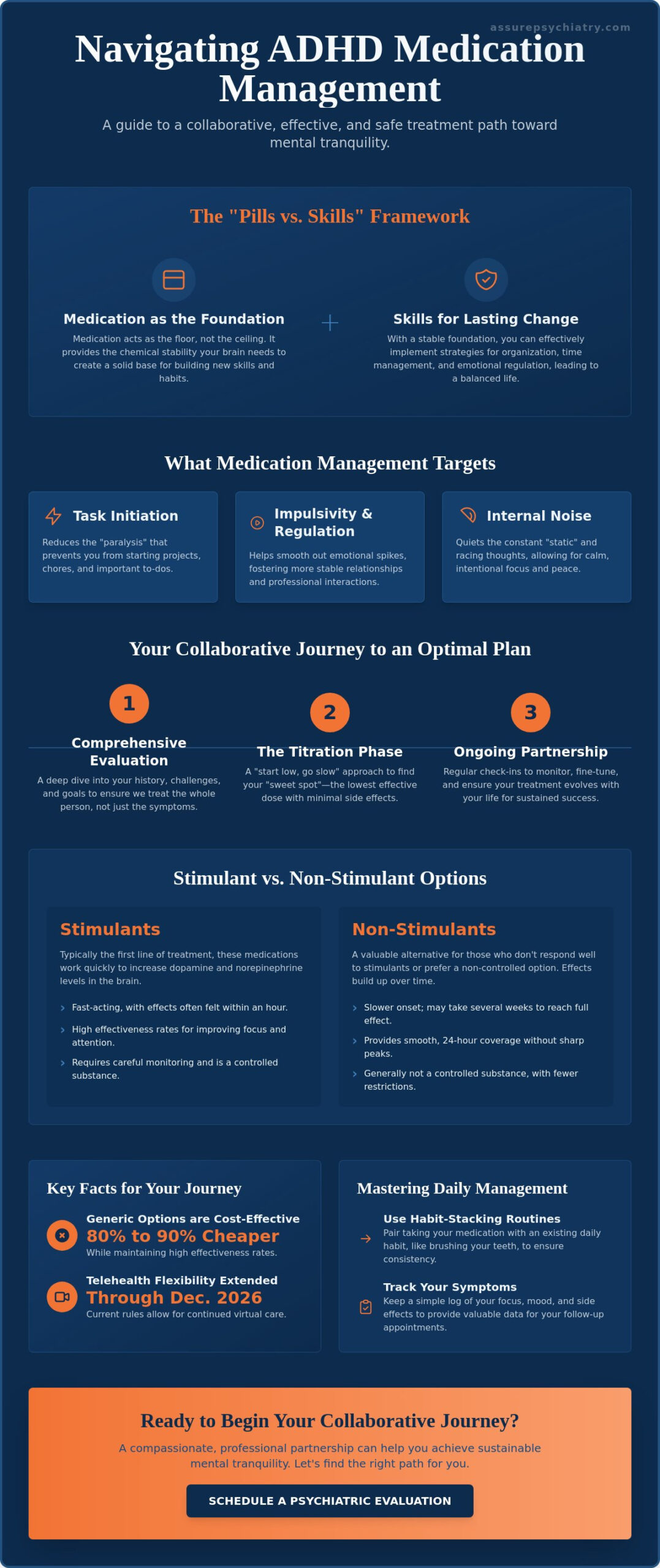
A helpful way to view this is through the “Pills vs. Skills” framework. Medication acts as the floor, not the ceiling, for your executive function. It provides the chemical stability your brain needs to build the skills you’ve always struggled to maintain. Without that solid foundation, trying to stay organized or manage time can feel like building a house on shifting sand. When we look at comprehensive ADHD management, we see that medication creates the quiet space necessary for you to finally implement the lifestyle changes you desire. However, a “set it and forget it” approach rarely works. Your body’s chemistry, your external stressors, and even your sleep patterns evolve. Professional management ensures your dosage and timing evolve with you.
Beyond the Prescription: The Clinical Partnership
When you work with a psychiatrist or PMHNP in Portland, you’re gaining a collaborative guide who understands the nuances of neurobiology. This relationship is distinct from a standard primary care visit, where time is often limited and focus is split across many physical health concerns. Specialized adhd medication management offers the depth required to explore how your treatment affects your mood, sleep, and overall sense of self. In Oregon, regular follow-up appointments are a legal requirement for those taking controlled substances. These check-ins aren’t just administrative hurdles; they’re vital safety nets that allow your provider to monitor your vitals and screen for any subtle side effects that might need addressing.
Symptoms That Medication Management Targets
The goal of treatment is to lower the barrier to daily functioning. We focus on specific areas of executive dysfunction that often lead to burnout and frustration:
- Task Initiation: Reducing the “paralysis” that happens when you’re faced with a complex project or a simple chore.
- Impulsivity and Regulation: Smoothing out the emotional spikes that can make relationships and professional life feel volatile.
- Internal Noise: Silencing the constant “static” or racing thoughts that prevent you from reaching a state of calm focus.
By targeting these areas, we help you transition from a state of constant catching up to a life of intentional action and peace.
The Process: Finding Your Optimal ADHD Treatment Plan
Finding the right path toward focus starts with a thorough psychiatric evaluation in Portland. This isn’t a rushed checklist; it’s a deep dive into your history, your challenges, and your goals. Because ADHD often overlaps with anxiety or sleep issues, this clarity is essential for effective adhd medication management. We look at the whole picture to ensure we aren’t just treating symptoms, but supporting the person behind them. If you’re ready to begin this collaborative journey, our team is here to provide a comprehensive psychiatric evaluation to get you started.
Everyone’s brain chemistry is unique. A medication that works wonders for one person might leave you feeling “foggy” or restless. It’s common for your first prescription not to be your last. This isn’t a failure of the treatment; it’s simply your biology providing valuable data. We use that data to refine our approach until we find a match that feels restorative and natural. Understanding that biological individuality is part of the process helps lower the pressure to get it “perfect” on day one. This is especially true for women, who are frequently misdiagnosed for years before receiving an accurate assessment; if this resonates with you, our guide to ADHD diagnosis for women in Portland explores why symptoms are so often overlooked and what a late-life diagnosis can mean for your treatment path.
The Titration Phase: What to Expect
Patience is your greatest ally during the early stages of treatment. We follow a “start low and go slow” philosophy to ensure your safety and comfort. This phase is about identifying the “sweet spot” where you experience maximum cognitive benefits with the fewest possible side effects. Titration is the iterative adjustment of dosage to maximize efficacy while minimizing adverse effects. By moving slowly, we can distinguish between temporary adjustment effects and the actual impact of the FDA-approved ADHD treatments we’ve selected together. This careful observation prevents the “zombie” feeling many patients fear.
Monitoring for Efficacy and Safety
Effective adhd medication management requires consistent check-ins to track how your body responds. We monitor physical markers like heart rate and blood pressure, alongside lifestyle factors like your sleep patterns and appetite. It’s vital to be honest about your daily habits, including caffeine intake or recreational substance use, as these can significantly alter how your medication performs. Thanks to the extension of telehealth flexibilities through 2026, telehealth ADHD medication management in Oregon and Washington makes this frequent monitoring more accessible than ever. You can stay connected with your provider from the comfort of your home, ensuring your treatment plan stays on track without the stress of a long commute.
Setting realistic expectations for the first few months can help you stay grounded. During the first 30 days, you’ll mostly be adjusting to the medication and noticing small shifts in focus. By the 60 day mark, we’re often fine-tuning the dose based on your real-world experiences at work or school. By 90 days, most patients have found a stable routine where their executive function feels supported and their mental tranquility is noticeably improved.
Navigating Stimulant and Non-Stimulant Options
Understanding the different classes of medication is a cornerstone of effective adhd medication management. Most treatments fall into two primary categories: stimulants and non-stimulants. Stimulants are generally considered the first line of care because they have a 70% to 80% effectiveness rate in reducing symptoms. These medications work by increasing the availability of dopamine and norepinephrine in the brain, which helps improve focus and impulse control. You’ll often hear them divided into two families: methylphenidates (like Ritalin or Focalin) and amphetamines (like Adderall or Vyvanse). While they both target similar areas of the brain, your unique biology might respond much better to one family over the other.
Non-stimulants, such as Atomoxetine or alpha-agonists like Guanfacine, offer a different path toward mental tranquility. These are often the preferred choice if you have a history of heart concerns, severe anxiety, or if stimulants cause too many side effects. They don’t provide the “immediate” effect that stimulants do; instead, they build up in your system over several weeks. We also consider whether a long-acting or short-acting formulation fits your lifestyle. Long-acting options provide a steady release throughout the day, which is ideal for a standard work or school schedule. Short-acting “boosters” can be helpful for those who need focus during specific windows of time, such as evening classes or a late shift.
One of the most common fears we hear is the “zombie” myth. Many patients worry that medication will dull their sparkle or change their personality. In reality, the right dose should feel like “glasses for the brain.” It doesn’t change who you are; it simply makes the world feel less blurry and overwhelming. If you feel flat, irritable, or “spaced out,” it’s a sign that your current plan needs adjustment, not that medication isn’t right for you.
Choosing the Right Class of Medication
Your provider looks far beyond a simple diagnosis when selecting a treatment. We consider your entire medical history, including cardiovascular health and sleep patterns. Co-occurring conditions play a massive role in this decision. For example, if you’re also managing PTSD or depression, certain stimulants might increase your heart rate or exacerbate jitteriness. In these cases, we might lean toward non-stimulant options or specific formulations that are gentler on the nervous system. Modern psychiatry also utilizes pharmacogenomics, or genetic testing, to help predict how your body metabolizes certain drugs, taking some of the guesswork out of the initial selection process. It’s also worth noting that hormonal fluctuations can significantly affect how women respond to these medications, which is one reason why pursuing a thorough ADHD diagnosis for women in Portland before starting treatment can lead to a more accurate and effective medication plan from the start.
Managing the “Rebound Effect” or Crash
The “rebound effect” happens when a long-acting medication begins to wear off in the evening. As the levels in your bloodstream drop, you might experience a sudden return of symptoms, often accompanied by irritability or fatigue. This doesn’t mean the medication has failed. We can often smooth out this transition through strategic timing and proper nutrition. Eating a protein-rich meal in the afternoon or staying hydrated can significantly reduce the severity of a crash. If the rebound remains disruptive to your evening peace, talk to your Portland psychiatrist about a small “booster” dose or adjusting your titration schedule to ensure a gentler descent into your evening routine.
How to Manage Your ADHD Medication Daily: A Patient Guide
Living with ADHD often means that the very thing you need to help you stay organized, your medication, is the easiest thing to forget. Effective adhd medication management isn’t just about the science of the drug; it’s about the systems you build to support your success. To help you stay consistent and achieve sustainable mental tranquility, follow these five practical steps for your daily routine:
- Step 1: Habit Stacking. Anchor your medication to an existing habit you never miss. Place your pill bottle next to your coffee maker or your toothbrush. By stacking it with a morning ritual, you reduce the mental load of remembering.
- Step 2: Use a Symptom Log. Spend sixty seconds each evening reflecting on your day. Use an app or a simple notebook to track your focus, mood, and appetite. This record is invaluable for your next appointment.
- Step 3: Support Your Body. Manage potential side effects with proactive self-care. Prioritize hydration and protein-rich meals, especially if your appetite dips during the day. Good sleep hygiene ensures your brain is ready for the next day’s dose.
- Step 4: Proactive Communication. Don’t wait for your next visit if something feels off. Use your provider’s secure portal to report significant changes in mood or physical health.
- Step 5: Plan for Refills. Because most states limit Schedule II stimulants to a 30-day supply, you have very little room for error. Contact your pharmacy at least 7 days in advance to ensure they have your medication in stock.
If you’re struggling to find a routine that works for you, our team at Assure Psychiatry offers specialized ADHD Treatment to help you find your rhythm and stay on track.
Tracking Your Progress
When you fill out your symptom log, try to be specific. Instead of writing “I felt okay,” try using a scale: “Focus was 7/10, but appetite was 3/10.” It’s also helpful to ask for feedback from a partner or family member. They often notice subtle shifts in your impulsivity or “internal noise” that you might miss while you’re in the thick of a busy day. Objective tracking helps your provider make data-driven dosage adjustments during your adhd medication management sessions.
Handling Common Side Effects
Many patients experience mild side effects like dry mouth or “jitters” when they first start a new plan. Most of these are temporary adjustment periods that resolve as your body acclimates. However, if you experience a racing heart or significant sleep disruption, it’s time for a conversation with your provider. Your medication should support your sleep tranquility, not hinder it. If a stimulant keeps you awake at night, we might need to adjust the timing of your dose or explore a different formulation to ensure you’re getting the rest you need.
Compassionate Medication Management in Portland and Beyond
Finding a provider who truly understands the Pacific Northwest lifestyle can make a significant difference in your wellness journey. At Assure Psychiatry, we provide culturally competent care that respects your individual identity and lived experience. Whether you’re navigating the busy streets of Portland or seeking a quieter life in the surrounding areas, our goal is to offer a stable environment where you can find mental tranquility. We believe that adhd medication management is most effective when it’s delivered in a supportive, non-judgmental space where you feel seen rather than just diagnosed. Many individuals with ADHD carry years of shame or frustration from previous clinical experiences. We work to dismantle those barriers by acting as your compassionate ally. This partnership is built on the understanding that your diagnosis does not define you; instead, it is a tool that helps us unlock your potential and restorative health.
Localized Care for Oregon and Washington
Our hybrid model of care prioritizes both clinical safety and your personal convenience. For those who prefer a face-to-face connection, we provide in-person visits in Portland. At the same time, we recognize that many of our patients across Oregon and Washington, including our Seattle-based community, benefit from the flexibility of virtual care. Our telehealth ADHD medication management services allow you to maintain consistent treatment, which is particularly helpful given the extension of federal telehealth flexibilities through December 31, 2026. We help you navigate the complexities of insurance, working with major providers like Aetna and BCBS to ensure your care is accessible. Our commitment to inclusive and diverse care standards ensures that all identities are honored and respected throughout every stage of the treatment process.
Starting Your Journey with Assure Psychiatry
Your path toward a more focused life begins with a comprehensive psychiatric evaluation. During this first meeting, we’ll listen to your story, review your medical history, and discuss your specific goals for treatment. This isn’t just a clinical intake; it’s the beginning of a collaborative partnership designed to empower you. Once your plan is in place, we schedule regular follow-up appointments to monitor your vitals and fine-tune your dosage. These sessions are essential for your safety and help us ensure your adhd medication management plan continues to serve you well as your life evolves. We understand that starting this journey can feel daunting, but you don’t have to navigate it alone. Our team is here to provide the ongoing support and reliability you need to thrive. Are you ready to move past the internal noise and find a sense of lasting peace? Schedule your ADHD medication management consultation today.
Embracing a Future of Mental Tranquility
Managing ADHD is a marathon, not a sprint, and you don’t have to run it alone. We’ve explored how medication acts as a vital foundation for your executive function and why the titration process requires patience to find your unique “sweet spot.” By building a consistent daily routine and tracking your progress, you gain the clarity needed to make your treatment plan truly work for your lifestyle. Remember that your diagnosis is just one part of your story; finding the right support is the key to unlocking your full potential and achieving lasting health.
At Assure Psychiatry, we’re dedicated to providing the culturally competent and inclusive care you deserve. Whether you’re visiting us in person in Portland or utilizing our telehealth services across Oregon and Washington, our team acts as your compassionate ally. We accept major insurance plans, including Aetna and BCBS, to make professional adhd medication management as accessible and straightforward as possible. You deserve a life defined by peace rather than the constant noise of executive dysfunction.
Begin your journey to mental tranquility with Assure Psychiatry today. We’re ready to help you rediscover your focus and your sense of self in a supportive, non-judgmental environment where you’re always seen and heard.
Frequently Asked Questions
How long does it take for ADHD medication to start working?
Stimulant medications typically begin working within 30 to 60 minutes of your very first dose. Non-stimulant options take much longer, often requiring two to four weeks of consistent use before you notice a significant shift in your symptoms. This difference is why we work closely with you to set realistic expectations during the early stages of your treatment journey.
Can I take ADHD medication only on work or school days?
You can take “medication holidays” on weekends or vacations, but it’s essential to discuss this strategy with your provider first. While some people only need support for professional tasks, ADHD often impacts your personal relationships and emotional regulation too. Staying consistent can help you maintain a sense of mental tranquility throughout your entire week, not just during business hours.
What should I do if my ADHD medication makes me feel anxious?
If your medication causes increased anxiety, you should reach out to your psychiatrist immediately to discuss a dosage adjustment or a change in medication class. Sometimes a “jittery” feeling is a sign that the dose is too high or that your nervous system would respond better to a non-stimulant. We also offer specialized anxiety treatment if you’re managing both conditions simultaneously.
Are there non-stimulant options for adult adhd medication management?
Yes, there are several effective non-stimulant options available for adult adhd medication management, including Atomoxetine and alpha-agonists like Guanfacine. These are excellent choices for individuals who don’t tolerate stimulants well or who have specific health concerns like high blood pressure. They provide steady, 24 hour coverage that some patients prefer over the “on-off” nature of traditional stimulants.
How often do I need to see my psychiatrist for ADHD medication follow-ups?
You’ll typically see your provider every two to four weeks when you first start treatment or change your dose. Once you’ve reached a stable “sweet spot” where your symptoms are well managed, Oregon law generally requires a follow-up every 90 days for controlled substances. These regular check-ins are vital to ensure your vitals remain healthy and your treatment plan stays effective.
What happens if there is a stimulant medication shortage in Oregon?
If you encounter a shortage, your first step should be to check the official FDA Drug Shortages Database for real-time updates. We can work with you to contact different pharmacies or switch to a comparable formulation that is currently in stock. Planning your refills at least 7 days in advance is the best way to prevent a stressful gap in your daily care.
Is it safe to take ADHD medication if I have a history of heart issues?
Taking ADHD medication with a heart history is possible, but it requires a very careful psychiatric evaluation and often clearance from your cardiologist. We prioritize your physical safety above all else. In these cases, we frequently look toward non-stimulant options that don’t put the same level of stress on your cardiovascular system while still providing cognitive support.
Can I switch from one ADHD medication to another easily?
Switching medications is a common part of adhd medication management and can be done safely under professional supervision. If your current plan isn’t providing the focus you need or is causing unwanted side effects, we can transition you to a different family of medications. This process helps us find the most restorative option for your unique brain chemistry without causing a major disruption to your life.
Recent Comments