

Being honest with a psychiatrist doesn’t mean sharing everything at once. Learning how to be honest with your psychiatrist can start with describing what you’re experiencing, what feels difficult to discuss, and what you hope will change. Clear, accurate details help your psychiatrist understand your needs and discuss possible next steps.
It’s understandable to worry about being judged, misunderstood, or offered treatment that doesn’t feel right. You can name those concerns, ask questions, and speak up if you feel unheard. A good conversation is collaborative, and building trust can take time.
This article offers practical ways to prepare, talk about symptoms and personal history, and raise concerns about medication or other treatment options. You’ll also learn how to approach the conversation if you’re unsure the relationship is a good fit, so you can take part in care at a manageable pace.
Key Takeaways
- Share how symptoms affect your daily life so your psychiatrist can better understand what support may fit your needs.
- Bring up medication, substance use, health history, and recent life changes, even if some details feel difficult to discuss.
- You can name sensitive topics, ask about privacy, and speak up if you feel unheard or uncomfortable.
- Jot down key concerns and questions before your appointment to help guide the conversation.
1. Why Is Trust So Important?
Trust gives your psychiatrist a clearer picture of what you’re experiencing and what support may suit you. Honest details about symptoms, medication use, and substance use help your psychiatrist assess your needs. For example, describing both a medication’s benefits and unwanted effects helps inform a discussion about treatment choices. The more complete the information, the more informed the conversation about a personalized plan can be.
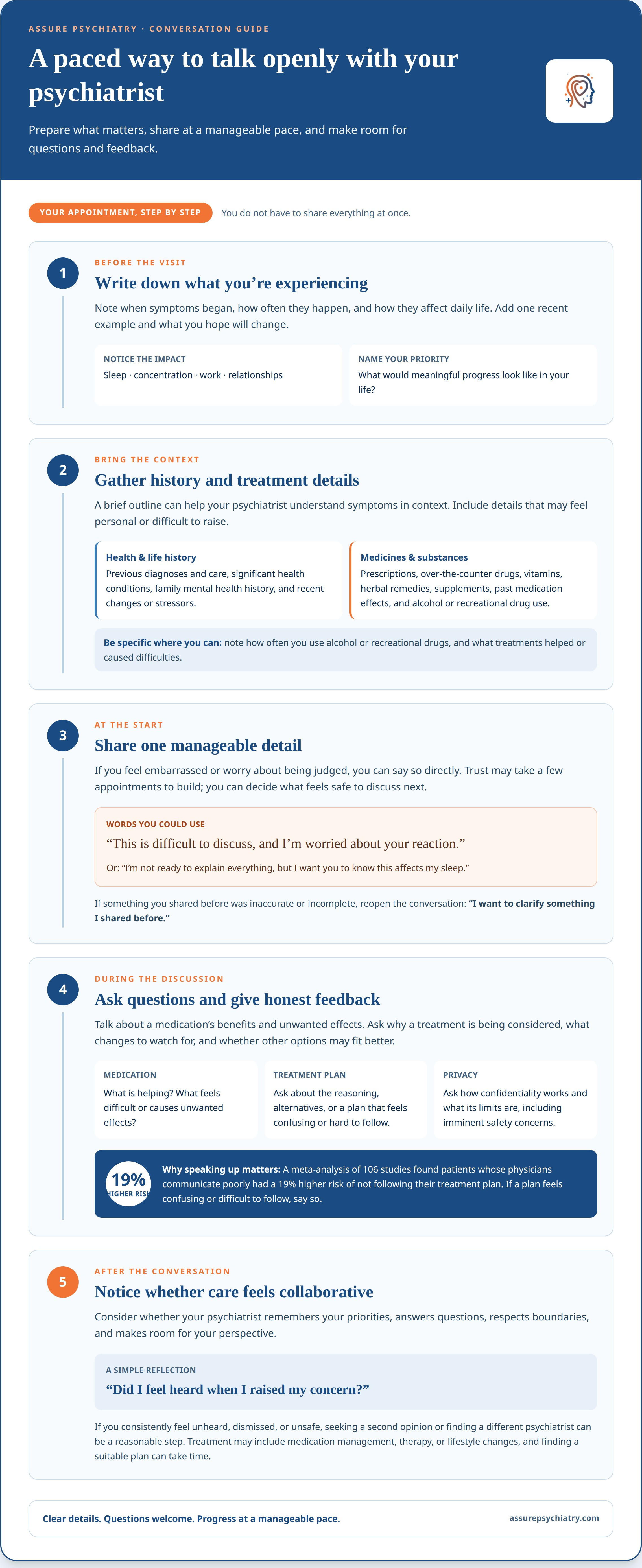
Include current medications, supplements, and relevant treatment history. Explain what you’ve tried, what helped, and what caused difficulties. A meta-analysis of 106 studies found that patients whose physicians communicate poorly had a 19% higher risk of not following their treatment plan. This highlights why open discussion matters: if a plan feels confusing or difficult to follow, say so during the appointment.
If you previously gave inaccurate or incomplete information, correct it at your next appointment, or sooner if it affects your care. You could say, “I want to clarify something I shared before,” then explain what was inaccurate and what’s correct. You don’t need a perfect explanation to reopen the conversation.
Your priorities help shape realistic treatment goals. Tell your psychiatrist what you most want to improve, such as sleeping more consistently, managing anxiety at work, or having more energy for daily routines. Discuss what progress would look like in your life and mention any concerns about possible changes. These details connect treatment discussions to what matters to you, not just to symptoms.
There isn’t one treatment approach that works for everyone, and finding a suitable plan can take time. Medication management, therapy, and lifestyle changes may all be considered. Give feedback about how treatment affects you and whether appointments leave enough room for your concerns. If you’re uncomfortable with a recommendation, ask about the reasoning or other options. Honest feedback helps your provider understand what’s working and what needs further discussion.
2. Being open about symptoms, fears, history, and substance use
If you’re embarrassed or afraid of being judged, tell your psychiatrist directly. You might say, “This is difficult to discuss, and I’m worried about your reaction,” then share one concern at a time.
Before an appointment, jot down when symptoms began, how often they occur, and how they affect daily life. For example, note whether anxiety disrupts sleep, concentration, work, or relationships. Include thoughts that feel confusing or uncomfortable, even if they seem minor. These details help your psychiatrist understand your concerns in context.
Prepare a brief history of your mental and physical health. Include previous diagnoses, past psychiatric care, treatments you’ve tried, and significant health conditions. Mention recent life changes or stressors, such as grief, a move, or changes at work. If you know of mental health conditions in your family, share which relatives were affected and what you know. Family history can help your provider consider patterns and explore relevant symptoms.
Write down every medication you take, including prescriptions, over-the-counter drugs, vitamins, herbal remedies, and supplements. Note past medications that caused side effects or didn’t help. Be candid about alcohol or recreational drug use, including how often you use them. These details help your psychiatrist consider medication effects and safety. If you’re not ready to explain everything, say what feels difficult and ask to discuss it gradually.
A psychiatric evaluation can provide structured time to discuss symptoms, history, and questions. If you’re considering that step, learn about psychiatric evaluation and prepare a few notes to help guide the conversation.
3. Building trust through openness and honesty
Trust rarely develops before the first conversation. It may take a few appointments to feel able to discuss sensitive concerns. At an early visit, try sharing one manageable detail, then notice whether your psychiatrist listens without rushing or dismissing you. For example, say, “I’m not ready to explain everything, but I want you to know this affects my sleep.” Their response can help you decide what feels safe to discuss next.
Privacy questions can also shape trust. Psychiatrists are ethically and legally bound to protect patient privacy and maintain confidentiality about treatment, but there are limits. Ask the psychiatrist to explain the confidentiality policy during the initial consultation, including what may happen if they believe you’re at imminent risk of harming yourself or someone else. Knowing those boundaries helps you choose what to share and understand how sensitive information is handled.
Trust grows through clear exchanges, not simply agreement. You can ask why a prescription is being considered, what changes to watch for, and when to report a concern. If therapy or another recommendation feels uncomfortable, explain what worries you and ask about alternatives. Your psychiatrist should be able to discuss the reasoning in language you understand. Giving feedback about how you feel is part of collaborative care, not a challenge to your provider’s expertise.
To assess whether a provider is a good fit, notice whether they remember your priorities, answer questions, respect boundaries, and make room for your perspective. You might ask yourself after each appointment, “Did I feel heard when I raised my concern?” If someone consistently leaves you feeling unheard, dismissed, or unsafe, you can seek a second opinion or find a different psychiatrist. Changing providers can be a reasonable step toward care that feels more respectful.
4. Preparing notes about feelings, symptoms, and questions
A short written outline can help you use an appointment well, especially when describing symptoms feels difficult. Before seeing a psychiatrist for the first time, note what brought you in, when concerns began, and what you hope will change. Include one recent example, such as trouble sleeping before work or feeling overwhelmed during routine tasks. An initial psychiatry intake typically lasts 45 to 60 minutes, so a few clear prompts can help you remember important points without scripting every answer.
Keep your notes simple. A page or phone note can track changes in mood, sleep, appetite, energy, concentration, and physical symptoms. Add when each change occurs and how it affects daily activities. Between appointments, record what has improved, stayed the same, or become more difficult. Specific details can help when a general question like “How have you been feeling?” is hard to answer.
Prepare questions about your diagnosis, treatment plan, and any recommendation you don’t understand. For example, ask what a proposed treatment is meant to address, what changes to watch for, and when to share concerns. Write down worries about side effects, schedule, cost, or how treatment may affect work or relationships. Prioritize the questions that matter most so you can raise them even if the conversation takes an unexpected direction.
If you forget an answer or feel unable to respond, pause and say so. Ask your psychiatrist to repeat or rephrase the question, or explain that you need time and would like to return to it later. You can also point to a note instead of finding the words immediately.
Ready to discuss your concerns and next steps? Schedule a psychiatric evaluation to begin a conversation about your needs.
Assure Psychiatry
Assure Psychiatry provides psychiatric evaluations and medication management for people seeking support with mental health concerns. An evaluation gives you space to discuss your symptoms, history, questions, and goals with a psychiatric provider. If you’re considering ADHD or anxiety treatment, sharing what you’re experiencing and what you hope to improve can help guide the conversation.
You don’t need to have every detail perfectly organized before seeking care. Bring notes about your main concerns, current medications, and questions you want answered. You can also say if a topic feels difficult to discuss, then work through it at a pace that feels manageable. Assure Psychiatry provides in-person visits in Portland and virtual telepsychiatry services.
If you’re ready to discuss your needs, contact Assure Psychiatry.
Take the Next Step at Your Own Pace
Being open in a psychiatric appointment isn’t a test you have to pass. You can begin with one sentence about what feels hardest or ask for a moment before answering. Learning how to be honest with your psychiatrist can start with sharing one concern, then deciding what you’re ready to discuss next. You can return to a topic later or ask for a question to be rephrased.
If you’re wondering how to be honest with your psychiatrist, remember that the conversation can unfold gradually. Your perspective deserves a place in care, even if you’re still finding the words. If you’re ready to talk about what you need, contact Assure Psychiatry. Start where you are and let the next step feel manageable.
Frequently Asked Questions
Why Is Trust So Important?
Trust helps you share concerns and gives your psychiatrist a clearer understanding of your experience. It also gives you room to question a recommendation or explain why a plan feels difficult to follow. For example, if you leave an appointment unsure about the next step, say so before the conversation ends. Clear communication helps address misunderstandings and keeps treatment discussions connected to your needs.
Why is it important to be honest with your psychiatrist?
Honest information helps your psychiatrist make better-informed decisions about your care. If you leave out a side effect or a symptom that feels embarrassing, the provider may not understand what needs attention. You can correct or update something you said earlier, too. Try saying, “I didn’t explain this clearly before,” then share the detail that changes your understanding of the situation.
How can I prepare to talk honestly with my psychiatrist?
Choose the concerns you most want addressed, then bring a brief timeline or a few reminders. For instance, note whether a mood change began before or after a life event or medication change. Put your hardest question near the top so it’s easier to raise. If speaking feels difficult, read from your notes or ask your psychiatrist to help you get started.
What should I tell my psychiatrist about symptoms, medications, substance use, and self-harm?
Describe symptoms in your own words, including how they affect daily activities. Share prescription and nonprescription medications, supplements, alcohol or recreational drug use, and any changes in use. If you have thoughts of self-harm, say so directly and describe whether you feel at immediate risk. Clear information helps your psychiatrist respond to your safety and care needs. You don’t need perfect wording.
What happens if I tell my psychiatrist I’ve stopped taking medication?
Your psychiatrist can discuss why you stopped and what you’ve noticed since, then consider next steps. Explain when you stopped, which medication was involved, and whether side effects, cost, or another concern influenced your decision. Be direct, even if you’re worried about disappointing your provider. Ask for guidance before restarting or changing a medication, since your circumstances matter.
Can a psychiatrist keep what I say confidential in the United States?
Psychiatrists are ethically and legally bound to protect patient privacy, but confidentiality has limits. A psychiatrist may need to act if they believe you’re at imminent risk of harming yourself or someone else. Ask your provider to explain how confidentiality works in your situation, including what information may be shared and under what circumstances. Knowing the boundaries can make it easier to decide what to discuss.
Recent Comments