

A psychiatrist for insomnia in Seattle can assess how sleep problems relate to mood, anxiety, medications, and other health concerns, then discuss appropriate psychiatric care. A medical evaluation may also help identify conditions such as sleep apnea or restless legs syndrome, which need medical assessment. Insomnia isn’t simply a matter of trying harder to sleep; persistent sleeplessness deserves thoughtful attention.
If you’re exhausted from nights that won’t settle, it makes sense to want a clear explanation and support that considers the whole picture. Seattle’s limited daylight and demanding work schedules can make sleep routines more challenging, but care can focus on the concerns affecting you.
This article explains how psychiatrists may help with insomnia, what an evaluation can involve, and how related concerns such as anxiety or depression may factor into care. You’ll also learn what to consider when looking for sleep-focused psychiatric support in Seattle, so you can take a steadier next step toward rest.
Key Takeaways
- A psychiatric evaluation can connect sleep concerns with medications, mood, and daily functioning to inform a personalized care plan.
- Seattle’s daylight patterns and work demands may shape sleep routines, so care can account for the pressures affecting your rest.
- Anxiety, trauma, and substance use can intersect with insomnia; understanding those connections helps guide appropriate support.
- When looking for sleep-focused psychiatric care, consider how the provider evaluates insomnia and addresses related concerns.
How can I find a psychiatrist who specializes in sleep issues?
Look for a psychiatrist who evaluates sleep alongside emotional and behavioral health, rather than treating sleeplessness in isolation. A focused assessment can shape a care plan around your symptoms, health history, and daily routine.
Insomnia Evaluation and Personalized Care Plans
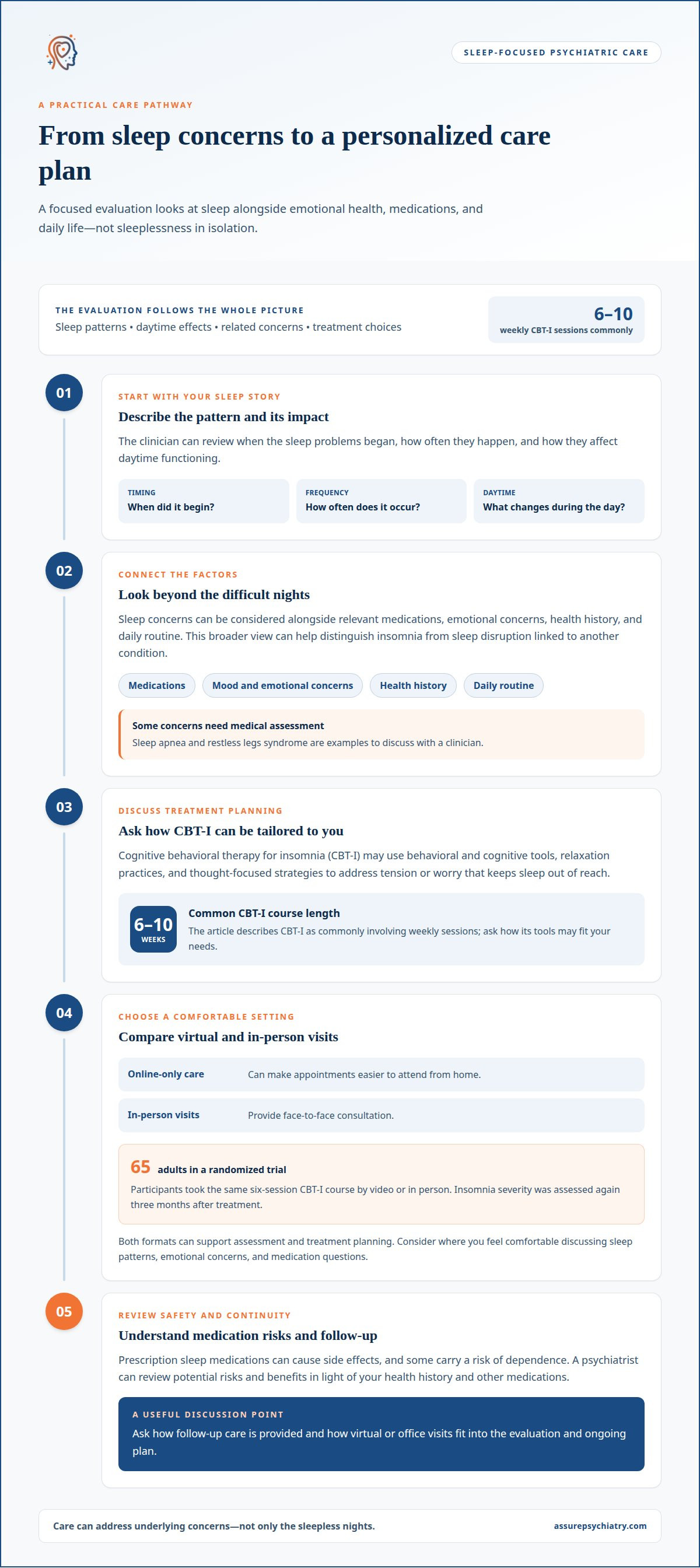
During a psychiatric evaluation, the clinician can review when sleep problems began, how often they occur, their effects on daytime functioning, and relevant medications or emotional concerns. This can help distinguish insomnia from sleep disruption linked to another condition. Sleep apnea and restless legs syndrome also need medical assessment. A useful care plan addresses the underlying concerns, not just the difficult nights.
Ask how the clinician approaches cognitive behavioral therapy for insomnia, often called CBT-I, and whether they can tailor behavioral and cognitive tools to your needs. CBT-I commonly involves 6 to 10 weekly sessions. Relaxation practices and thought-focused strategies may address the tension or worry that keeps sleep out of reach.
Virtual and In-Person Treatment Options
Online-only care can make appointments easier to attend from home, while in-person visits provide face-to-face consultation. Both formats can support assessment and treatment planning; consider which setting helps you discuss sleep patterns, emotional concerns, and medication questions comfortably. A randomized trial included 65 adults taking the same six-session CBT-I course through video or in-person treatment. Insomnia severity was assessed again three months after treatment.
Ask how follow-up care is provided and which visit format may suit your needs. A clinician should explain how virtual or office visits fit into the evaluation and ongoing plan, rather than assuming one format works for everyone.
Prescription sleep medications can cause side effects, and some carry a risk of dependence. A psychiatrist can review potential risks and benefits in light of your health history and other medications.
Seattle sleep challenges, including limited daylight and work demands
Seattle’s light and work patterns can complicate a consistent sleep schedule. The city has 201 cloudy days each year and about 71 clear days, figures that illustrate how often daylight may feel limited. Early shifts, late meetings, and screen-heavy work can also push bedtime later. A clinical assessment can consider these patterns alongside mental health concerns, rather than treating every difficult night as the same problem.
Testing depends on the concern being assessed. Polysomnography, an overnight sleep study, records sleep throughout the night and is used to evaluate sleep concerns. Multiple sleep latency testing measures how quickly someone falls asleep during scheduled daytime opportunities, helping assess concerns such as narcolepsy. A psychiatrist can discuss whether testing fits your symptoms and coordinate with sleep medicine when a sleep disorder needs evaluation.
For an overnight study, Pacific Medical Centers advises avoiding caffeine and other stimulants in the hours beforehand. The clinician can explain what the planned test involves and how medications or mental health conditions may affect preparation. Sharing concerns about depression, anxiety, or other disorders helps the care team interpret sleep patterns in context.
Midlife changes and menopause can also coincide with disrupted sleep. A clinician can ask whether symptoms such as night sweats, mood changes, or shifts in sleep timing occur together. This context can help distinguish a behavioral sleep pattern from concerns that need broader clinical attention.
Behavioral therapy may include stimulus control and sleep restriction. In stimulus control, someone unable to sleep after 20 minutes leaves the bedroom and returns when sleepy. One sleep-restriction example starts with five hours in bed for someone sleeping five hours despite spending eight hours there. A psychiatric evaluation can consider how these approaches fit your mental health and sleep concerns. Psychiatric evaluation for sleep concerns can be a next step when these patterns persist.
Insomnia alongside anxiety, trauma, and substance use
Anxiety and insomnia can reinforce each other: worry about sleep may keep the mind alert, while a poor night can make daytime anxiety harder to manage. DSM-5 criteria describe insomnia difficulty occurring at least three nights per week and lasting at least three months. These markers help a clinician understand whether sleep disruption has become persistent and how it affects an adult’s ability to function.
Depression can also overlap with insomnia. Some people struggle to fall asleep, while others wake during the night or earlier than intended. A psychiatric assessment explores how sleep, mood, and morning energy change together, rather than treating each concern as unrelated. This can inform a practical care plan and identify whether depression or anxiety needs attention alongside sleep.
Trauma can make bedtime emotionally difficult. A clinician may ask whether distressing memories, heightened alertness, or fear of being asleep affect your rest. These details help distinguish sleep concerns occurring alongside trauma from other patterns. Sharing what happens before bed and after waking gives the clinician useful information for a more focused evaluation.
Substance use is another part of an assessment, including what substances are used and when. A clinician can consider whether substance use, changes in use, or relying on a substance to sleep coincide with insomnia. The goal is to understand the connection without judgment and identify appropriate support. This context matters because a care plan should account for both sleep and substance-related concerns.
When insomnia occurs alongside anxiety or depression, a psychiatrist reviews symptom timing, emotional triggers, medications, and daytime effects. For example, difficulty falling asleep before a stressful event may call for a different clinical focus than repeated early waking with low mood. The clinician can discuss options that address the overlapping concerns, monitor sleep and mood patterns, and adjust the approach as new information emerges. Describing the full picture is a useful first step toward care that fits.
Seattle insomnia-focused psychiatric providers
In Seattle, look for psychiatric care that considers sleep patterns alongside mental health, medications, and daytime functioning. A focused evaluation can explore whether stress, anxiety, depression, or another concern is affecting rest. Ask how the clinician uses those findings to guide treatment and follow-up. For example, repeated difficulty falling asleep with rising anxiety may call for a different plan than sleep disruption linked to a medication change.
If you’re seeking a psychiatrist for insomnia in Seattle, ask how the provider approaches cognitive behavioral therapy for insomnia (CBT-I), a structured behavioral treatment. Clarify how psychiatric care may fit alongside it, including medication review, cognitive strategies, or coordination with sleep medicine when medical assessment is needed. If a provider describes a certification, ask what training and role it represents; credentials can clarify who provides each part of care.
Telehealth may make appointments easier to attend from home, while in-person care offers face-to-face visits. Consider which format helps you discuss sensitive concerns comfortably and maintain follow-up. For example, someone managing work stress may value remote visits, while someone needing further medical evaluation may require an in-person assessment or coordinated testing. A psychiatrist for insomnia in Seattle should explain the purpose of visits and how care can address your concerns.
For urgent mental health concerns or severe insomnia, seek prompt clinical assessment. If you’re in immediate danger or can’t stay safe, contact local emergency services or go to an emergency department. Persistent sleeplessness that seriously affects daily functioning also deserves timely attention, especially alongside worsening mood, distress, or substance-related concerns.
A useful next step is to arrange an evaluation that addresses insomnia and related psychiatric concerns together. Explore insomnia-focused psychiatric care to discuss a care plan shaped around your sleep and mental health needs.
Assure Psychiatry: Sleep or Insomnia Treatment
Assure Psychiatry offers Sleep or Insomnia Treatment for people whose ongoing sleep difficulties affect their well-being or daily life. A Psychiatric Evaluation can help explore sleep concerns alongside emotional health, medications, and other relevant factors, creating a clearer starting point for care.
Medication Management may be part of the conversation when medication questions relate to sleep or another concern. If attention difficulties also affect routines or rest, ADHD Treatment may be relevant to the broader assessment. Care is guided by the concerns you bring forward, with space to discuss what feels most disruptive and what support you’re seeking.
If insomnia continues to affect your life, contact Assure Psychiatry to discuss care.
Take a Steady Step Toward More Restful Nights
You don’t need to have every detail figured out before getting started. Begin with what feels most disruptive now, whether that’s lying awake, waking unrefreshed, or finding that poor sleep affects your daily life. A clear starting point can make it easier to talk about what kind of support may help.
Finding a psychiatrist for insomnia in Seattle means looking for care that treats your concerns with attention and respect. You deserve space to describe what you’re experiencing and discuss a path forward that reflects your needs. It’s okay if the connection between sleep and other parts of your well-being isn’t clear yet; that uncertainty can be part of the conversation.
If you’re ready to take that step, contact Assure Psychiatry about insomnia. You can move toward support at a pace that feels manageable, one thoughtful conversation at a time.
Frequently Asked Questions
How can psychiatrists help with insomnia?
Psychiatrists can assess sleep problems in relation to mental health, medications, and daily functioning. For example, if your sleep changes after starting a medication, you can discuss the timing during an evaluation. The psychiatrist can consider relevant treatment options and follow-up. If symptoms suggest a sleep disorder that needs specialized testing, an evaluation can help clarify what additional medical assessment may be appropriate.
Why is quality sleep important?
Quality sleep supports daytime concentration, emotional balance, and the ability to manage everyday demands. For instance, someone who sleeps poorly may find it harder to focus at work or respond calmly to stress. Persistent disruption can also make existing mental health concerns harder to manage. Noticing changes in mood, attention, or energy can help you describe how sleep difficulties affect your life.
Won’t focusing on my sleep in therapy just make me more anxious about it?
Talking about sleep doesn’t have to mean monitoring every night or pressuring yourself to fall asleep. A clinician can keep the discussion practical, focusing on patterns and concerns that matter to you. If keeping records or discussing bedtime increases anxiety, say so; the approach can be adjusted. You can also discuss whether psychiatric care or a therapy referral feels like the right starting point.
How to find a sleep medicine doctor versus a psychiatrist for insomnia in Seattle
A psychiatrist can assess how insomnia relates to mood, anxiety, medications, and daily functioning, then discuss psychiatric care. Sleep medicine can evaluate medical sleep disorders such as sleep apnea or restless legs syndrome. A psychiatrist can coordinate with sleep medicine when testing or medical assessment is needed.
Recent Comments