

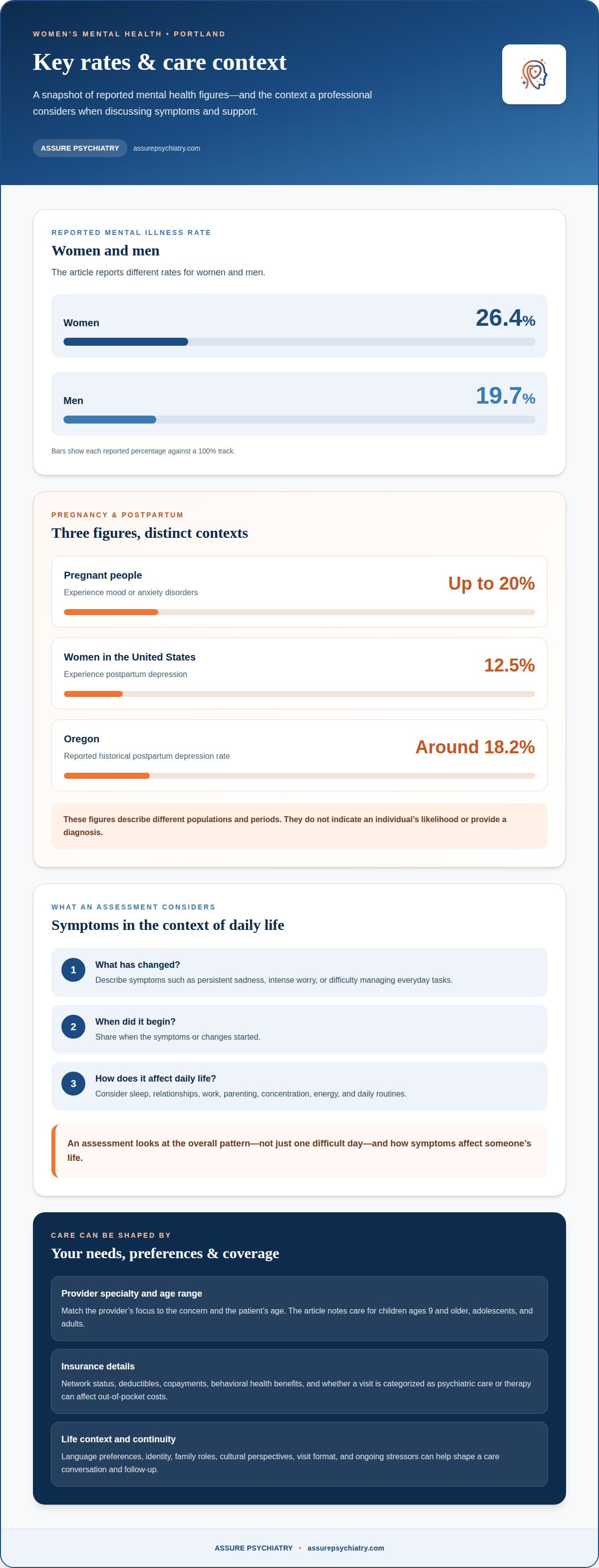
Women experience mental illness at a rate of 26.4%, compared with 19.7% of men. If you’re considering a women’s mental health clinic in Portland, the cost of care depends on the services involved and how your insurance applies; there isn’t one price that fits every person. Anxiety, depression, and ongoing stress can affect daily life in different ways, and finding support can feel like one more thing to manage.
You deserve clear information and care that takes your concerns seriously. This guide explains what can affect costs, what to expect when requesting an appointment, and how provider specialties and insurance coverage may shape access. It also outlines mental health services and how psychiatric evaluations and medication management can support people dealing with concerns such as anxiety and depression. Understanding the process can make your next step feel clearer and more manageable.
Key Takeaways
- Understand why care costs vary and which service and insurance details can shape your out-of-pocket expenses.
- Learn what information can help make an appointment request and first steps feel more manageable.
- Use provider specialties to identify support that fits concerns such as anxiety, depression, pregnancy-related changes, or stress.
- Explore how psychiatric evaluations and medication management may fit into mental health care in Portland.
Anxiety and depression
Anxiety and depression can affect sleep, relationships, work, and parenting in different ways. A mental health assessment considers the symptoms, when they began, and how they affect daily life.
Postpartum Depression and Anxiety
Pregnancy and the months after birth can bring emotional changes that deserve attentive care. Up to 20% of pregnant people experience mood or anxiety disorders, and 12.5% of women in the United States experience postpartum depression. Oregon has a reported historical postpartum depression rate of around 18.2%. These figures describe different populations and periods, not an individual’s likelihood or diagnosis.
When seeking support, describe changes such as persistent sadness, intense worry, or difficulty managing everyday tasks. Include when the symptoms began and how they affect sleep, relationships, or parenting. This context helps a professional assess whether depression, anxiety, or another concern may be involved and discuss appropriate care.
Mood and Anxiety Disorders
Mood and anxiety concerns can overlap, so an assessment looks at the overall pattern, not just one difficult day. For example, someone might describe ongoing low mood alongside worry that makes work or family responsibilities harder. Adults can explain their experience directly, while care planning for children may involve age-appropriate conversations and family context.
Helpful details include changes in sleep, concentration, energy, and daily routines. A behavioral health professional uses these examples to understand what support may fit. The focus is not only on naming symptoms, but also on how they affect someone’s life.
Treatment planning for depression and anxiety depends on the concern, its effects, and the patient’s preferences. A professional may discuss medication as one possible part of care, including its intended role and how progress will be reviewed. Patients can also raise questions about past treatment, current symptoms, and work or parenting demands so the plan reflects their circumstances.
Before an appointment, write down a few specific examples, such as avoiding a usual activity or struggling to settle at bedtime. Note when each change began and what feels most disruptive. These details provide a practical starting point and help keep the discussion focused on your priorities.
Choosing a provider based on specialties and insurance coverage
Start with the concern you want help addressing, such as anxiety during pregnancy or stress disrupting sleep. A psychiatric provider’s specialty and age range matter: Tara Ericksen says she has practiced as a psychiatric mental health nurse practitioner in Oregon since 2018, while Dr. Uhunoma Osadolor provides care to children ages 9 and older, adolescents, and adults. These examples show why matching a provider’s focus to the patient’s needs matters.
Language options vary among Portland clinics. Culturally responsive care can take account of language preferences, identity, family roles, and cultural perspectives on mental health. These details may affect how you describe your experience or what support feels appropriate, so include them when requesting an appointment.
Insurance coverage depends on your plan’s behavioral health benefits and the service you need. Network status, deductibles, copayments, and whether a visit is categorized as psychiatric care or therapy can affect your out-of-pocket costs. Review the plan’s behavioral health terms and identify the service you’re seeking. This makes it easier to understand how coverage may apply before care begins.
Continuity can also shape the care experience. Seeing the same provider over time lets them follow changes in symptoms, treatment preferences, and daily stressors. For example, someone managing anxiety alongside parenting demands may value a provider who understands how these concerns affect routines. Consider whether in-person visits in Portland or virtual appointments better fit your schedule and support consistent follow-up.
Referrals can connect a specific life stage with relevant care. Women’s Healthcare Associates recommends that patients seeking behavioral health care during or after pregnancy, or after pregnancy loss, talk with their obstetric care provider about a referral. A referral can give context for the request and help focus the appointment on pregnancy-related concerns.
If anxiety is the main concern, a psychiatric evaluation can provide a focused starting point for discussing symptoms and care options.
Women’s mental health challenges and stress
Stress can become harder to manage when several demands collide. Caregiving, work pressure, financial strain, and a health condition may all affect daily life. In Oregon, women may seek mental health care for concerns such as anxiety, depression, or trouble sleeping. A useful starting point is to identify what has changed and which parts of daily life feel most affected.
A focused appointment connects a concern with its context. Describe a specific example, such as difficulty concentrating at work or feeling overwhelmed by family responsibilities. Note when it began and whether sleep, relationships, or routine tasks have changed. These details help a provider understand how stress may interact with other health concerns.
Women’s experiences and concerns can shift across life stages. Pregnancy, pregnancy loss, parenting, and menopause may raise distinct questions about emotional health. Someone balancing caregiving with a demanding schedule, for instance, may want to discuss both immediate symptoms and the pressures around them. Clear, respectful communication keeps the conversation centered on your concerns and priorities.
To prepare for mental health care, choose the concern that feels most urgent and share one or two recent examples. Mention current health care, medications, and major changes that may help explain the situation. A brief, focused account can make an appointment more useful. You do not need a perfect description of every feeling or challenge.
For urgent mental health support in Portland, call 988 for crisis support; call 911 for a mental health emergency. In Washington County, the crisis line at 503-291-9111 is available 24 hours a day, 7 days a week.
The key is to connect stress with its effects on daily life. Naming a concrete concern, such as disrupted sleep or difficulty completing everyday tasks, gives a provider a clearer starting point for discussing appropriate support.
Mental health services at Portland women’s clinics
Services can address both common mental health concerns and experiences linked to reproductive health. A Portland clinic lists perimenopause, pregnancy and reproductive health, other women’s health concerns, and PMS and PMDD among the areas it treats. This range can help patients connect emotional changes with the life stage or health concern they’re experiencing.
For example, someone noticing mood changes around perimenopause may want to discuss when they occur and how they affect sleep or daily routines. Someone experiencing anxiety during pregnancy may describe its impact on work, relationships, or preparation for parenting. These details help a provider understand the concern and discuss a relevant next step in care.
PMS and PMDD are distinct concerns named in the Portland clinic’s list. When seeking support, describe when mood symptoms occur, how they affect daily life, and whether the pattern recurs. For pregnancy-related or reproductive health concerns, explain any connection you notice between emotional changes and that experience. Specific examples help focus the appointment conversation.
“Women’s health” covers varied needs, so the right service depends on the concern. You may want help understanding symptoms, discussing treatment options, or addressing how a health condition affects emotional wellbeing. When requesting an appointment, clearly name the concern, such as distress related to PMS or anxiety during pregnancy, to help establish what support is relevant.
Care approaches depend on the person’s needs. A clinic’s listed conditions describe areas of focus, not a single treatment plan for everyone. The provider considers symptoms, their effects, and the patient’s priorities when discussing care. Someone seeking support for PMDD may have different questions from someone experiencing pregnancy-related anxiety or mood changes during perimenopause.
For a first appointment, bring a clear example of the concern and its effect on daily life. For instance, describe a recurring mood change, a stressful transition, or disrupted sleep. This gives the conversation a practical starting point and keeps care centered on your experience.
Assure Psychiatry
Assure Psychiatry provides outpatient mental health care in Portland for people seeking support with concerns such as anxiety, depression, or ADHD. A psychiatric evaluation reviews symptoms and helps guide a care plan. When medication is part of the plan, medication management provides ongoing review of treatment and how it fits your needs.
Care is available through in-person visits at the Portland office and virtual telepsychiatry. That flexibility can help patients choose a visit format that fits their circumstances. If you’re weighing next steps for anxiety, depression, or another mental health concern, contact Assure Psychiatry to discuss care.
Take the next step toward support that fits
Choosing a women’s mental health clinic in Portland is a personal decision shaped by your concerns, preferences, and access to care. You don’t need to have every question settled before starting. A clear conversation about what feels hardest right now can help bring the next step into focus.
Assure Psychiatry provides psychiatric evaluations, medication management, and ADHD treatment. These services support people seeking professional help with mental health concerns through a care plan shaped around their needs. An evaluation can help clarify what support may be appropriate.
If you’re ready to explore care, contact Assure Psychiatry to get started. Reaching out is a meaningful first step toward finding steadier support and greater peace of mind.
Frequently Asked Questions
How much do services cost?
Costs depend on the service, appointment type, and insurance benefits, so there isn’t one price for every patient. Psychiatric evaluations and follow-up medication visits are different appointment types, and coverage can affect out-of-pocket expenses. For services provided by Assure Psychiatry, the price depends on the case and is given after a quote request.
What women’s mental health clinics are in Portland, Oregon?
Assure Psychiatry is an outpatient psychiatric clinic in Portland, Oregon, providing care for concerns such as anxiety, depression, and postpartum depression. Clinics in Portland differ in their specialties and appointment formats, so consider whether psychiatric care matches the support you’re looking for. Assure Psychiatry offers psychiatric evaluations, medication management, and telepsychiatry for patients who meet specific criteria.
Which Portland clinics specialize in women’s mental health, including perinatal and reproductive mental health?
Assure Psychiatry treats depression and postpartum depression. For pregnancy or reproductive health concerns, describe the life stage and symptoms when seeking care, such as anxiety during pregnancy or mood changes after birth. That context helps clarify whether the care being discussed addresses your needs. A clinic’s stated areas of focus can help distinguish general psychiatric support from care centered on reproductive experiences.
Which Portland women’s mental health clinics accept new patients and how long are wait times?
Assure Psychiatry is accepting new patients in Oregon. Appointment timing depends on current schedules and the type of visit, such as an initial evaluation or a follow-up. No fixed wait time applies across Portland clinics. If you’re planning care around work or family responsibilities, include your scheduling needs in your appointment request so the available options can be discussed clearly.
What are the costs for therapy, psychiatry, and evaluations at Portland clinics?
Therapy, psychiatric appointments, and evaluations can have different costs because they involve different services and may receive different insurance coverage. Assure Psychiatry provides psychiatric care and can refer patients for therapy or psychologist services. To understand your likely costs, identify the service you need and review your plan’s behavioral health benefits. Assure Psychiatry accepts most major insurance plans, and coverage varies by plan.
Which clinics accept insurance, Oregon Health Plan, or offer sliding-scale fees?
Assure Psychiatry accepts most major insurance plans and offers discounted cash rates for patients without insurance. Coverage varies by plan, so verify benefits for the appointment type you’re considering, including whether your specific policy or Oregon Health Plan is covered. If paying without insurance, ask about the discounted cash rate.
Recent Comments