

Telehealth may be one option to discuss as part of integrated treatment for PTSD and anxiety in Washington. A coordinated plan can consider how PTSD symptoms and anxiety affect one another, so care reflects each person’s needs as a whole.
It makes sense to want support that feels practical, safe, and connected, especially when symptoms make daily life harder. This guide explains how coordinated care may work, what PTSD symptoms and medication management can involve, and how telehealth might fit into treatment. You’ll learn what an assessment and follow-up may cover, how treatment choices can reflect personal needs and goals, and when a psychiatric evaluation or medication management may be useful next steps.
Key Takeaways
- Telehealth can support PTSD care in Washington, including online follow-up when medication is clinically appropriate.
- A thoughtful assessment connects your symptoms, goals, and needs to a personalized treatment plan.
- Medication management can address PTSD symptoms such as sleep disruption and hyperarousal, with follow-up guiding care over time.
- Learn what to consider when looking for coordinated trauma-focused and anxiety care, and how psychiatric services may fit into your next step.
Are there telehealth options for PTSD treatment?
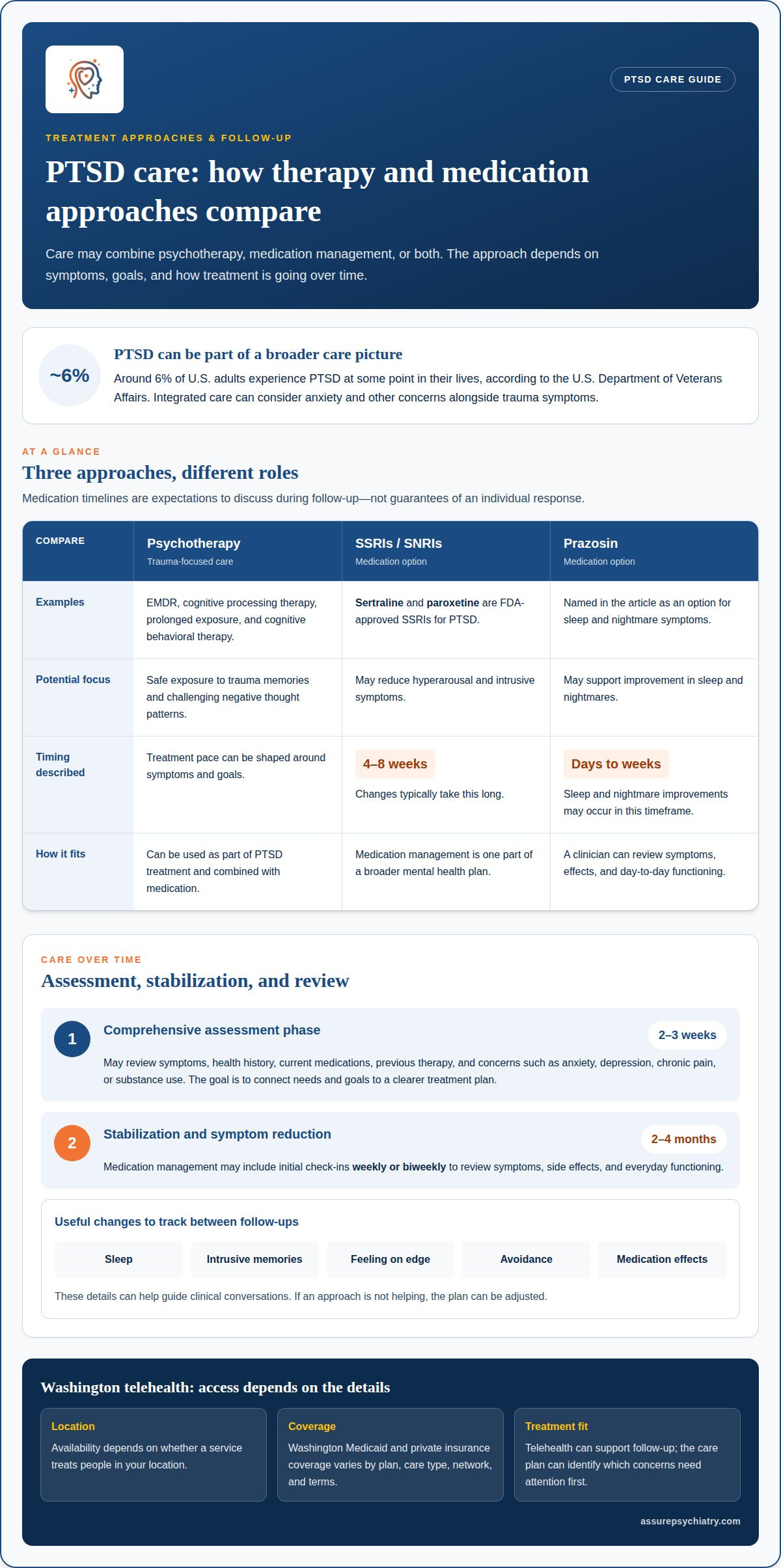
Yes. Telehealth is an option for PTSD care in Washington, including online follow-up when medication is clinically appropriate. Availability depends on whether a service treats people in your location; telehealth access in Washington should not be assumed for every clinic. Around 6% of U.S. adults experience PTSD at some point in their lives, according to the U.S. Department of Veterans Affairs.
Integrated care considers PTSD alongside other concerns that affect daily life. Depression, substance use, chronic pain, and anxiety can overlap with PTSD symptoms, so a treatment plan should reflect a person’s broader needs and goals. For example, a clinician may discuss how disrupted sleep, pain, and trauma reminders interact, then consider appropriate next steps. A diagnosis is one part of that discussion, not a complete picture of someone’s health.
For PTSD with co-occurring anxiety, an assessment can explore how fear, avoidance, and reminders of a traumatic event affect daily functioning. Trauma-focused approaches may include exposure or cognitive strategies, with the pace shaped around symptoms and goals. Telehealth can support follow-up, while the plan identifies which concerns need attention first.
Washington Medicaid and private insurance coverage depends on the individual plan. Benefits may vary based on the type of care, network, and coverage terms, so telehealth and in-person services may be handled differently.
Integrated PTSD and anxiety care may be available by telehealth in areas such as Seattle, Spokane, and Tacoma. Remote care depends on the service’s coverage area and the patient’s location.
Trauma-focused treatment can bring difficult memories and emotions into focus, which may feel distressing. Pacing, coping strategies, and clinician support can help address that strain during treatment.
If you’re in immediate danger or unable to stay safe, contact local emergency services. Telehealth treatment is not a substitute for urgent crisis support.
PTSD assessment and personalized treatment planning
A trauma-informed assessment helps connect symptoms with daily needs, emotional health, and treatment goals. It may explore when stress began, how reminders affect sleep or concentration, and whether anxiety, depression, or substance use also needs attention. In the described process, the initial comprehensive assessment phase lasts 2-3 weeks. That time can support a clearer picture before a treatment plan takes shape.
A phone screening is an initial conversation, not a complete diagnosis. It can help identify the main concern, immediate support needs, and topics to cover in a fuller assessment. For example, someone might mention panic while driving after a traumatic event or difficulty sleeping because of recurring memories. Those details can guide the next discussion without defining the person.
During an assessment, a clinician can review symptoms, relevant health history, current medications, and previous therapy. The conversation may also cover chronic pain, substance use, or other mental health concerns, since these can affect goals and care choices. Evidence-informed planning connects those findings to practical priorities, such as improving sleep, reducing avoidance, or managing distress during everyday activities.
A personalized plan should make the next steps understandable. It may identify the focus of treatment, how progress will be discussed, and when the plan should be revisited. Outpatient sessions can provide opportunities to review what feels manageable and what needs adjustment. A structured assessment process can help organize those questions and support a more informed conversation about care.
PTSD symptoms and medication management
PTSD symptoms can begin soon after a traumatic event or appear months or years later. Intrusive memories, avoidance, disrupted sleep, and feeling constantly on guard can affect work, relationships, and daily routines. A clinical review considers the timing, intensity, and impact of symptoms rather than treating one behavior as the whole picture.
Medication management can be one part of a broader mental health plan. Sertraline and paroxetine are FDA-approved SSRIs for PTSD. SSRIs or SNRIs may reduce hyperarousal and intrusive symptoms, but those changes typically take 4-8 weeks. Sleep and nightmare improvements with medications such as prazosin may occur within days to weeks. These timelines can help set expectations during follow-up.
During the stabilization and symptom reduction phase, medication management may last 2-4 months. Initial check-ins may happen weekly or biweekly, giving the clinician opportunities to review symptoms, side effects, and day-to-day functioning. For example, a person experiencing fewer nightmares but ongoing avoidance may need a different discussion than someone whose sleep remains disrupted.
Medication is not the only treatment approach. Psychotherapy and medication are both used for PTSD, and medication may be combined with trauma therapies such as EMDR, cognitive processing therapy, or prolonged exposure. Cognitive behavioral therapy can use safe exposure to trauma memories and help challenge negative thought patterns. The right fit depends on symptoms, goals, and how the person responds as care progresses.
Track changes to discuss at follow-up, including sleep, intrusive memories, feeling on edge, avoidance, and any medication effects. These details can make clinical conversations more useful. If an approach isn’t helping, the plan can be adjusted. The aim is to support healing while monitoring changes and preserving a sense of control throughout care.
Which Washington clinics offer trauma-focused therapy and anxiety treatment together?
Integrated care can bring PTSD and anxiety treatment into one coordinated plan. In practice, this may mean a clinician considers trauma symptoms and anxiety together, rather than treating each concern in isolation. A clinic may provide trauma-focused therapy directly, coordinate with a separate therapist, or focus on psychiatric evaluation and medication management. Those models differ, so the care team and services matter more than a clinic’s label.
Trauma-focused approaches include cognitive processing therapy, prolonged exposure, and EMDR. They address traumatic memories and their effects, while anxiety treatment can address fear, avoidance, and related symptoms. These approaches may be coordinated with medication management when that fits the person’s plan. For instance, a patient might work on trauma-related avoidance in therapy while discussing persistent sleep or hyperarousal symptoms during psychiatric follow-up.
To understand how a Washington clinic connects these parts of care, look at the pathway it describes. Consider whether the assessment addresses both PTSD and anxiety, whether therapy and medication decisions can inform one another, and how progress shapes changes to the plan. Ask how the clinic coordinates care when different clinicians provide therapy and psychiatric services. These details clarify whether “integrated” means shared planning or simply separate services in one location.
Location can shape practical access, but a clinic’s city alone doesn’t show how care is coordinated. Someone in Seattle, Spokane, or Tacoma can look for services that explain their approach to trauma-focused therapy and anxiety support. Telehealth availability varies by clinic and service area, so a remote appointment doesn’t necessarily mean a clinic serves every Washington community.
Choose care based on the needs an assessment identifies. A person seeking trauma processing may prioritize access to a relevant therapy, while someone focused on medication questions may prioritize psychiatric care. For help with PTSD or anxiety treatment planning, explore psychiatric care options.
Assure Psychiatry: Anxiety Treatment
Assure Psychiatry offers anxiety treatment and PTSD treatment for people seeking psychiatric support when symptoms overlap or feel difficult to manage. A psychiatric evaluation can help clarify concerns and inform a personalized care plan. If medication is part of that plan, medication management offers a way to review its effects and discuss next steps over time.
These services can be a useful next step when anxiety or PTSD symptoms affect daily life and you want clinical guidance on treatment options. Medication management can also complement trauma-focused therapy provided separately, supporting coordinated care without replacing that therapy. Your needs and goals can guide the conversation.
If you’re ready to discuss anxiety or PTSD care, contact Assure Psychiatry.
Take the Next Step at Your Own Pace
Choosing care can start with naming what you want help to change. You might focus on feeling safer in daily situations, managing anxiety, or finding support for symptoms affecting sleep and concentration. These priorities can guide a conversation about what kind of care may fit your needs.
For integrated treatment for PTSD and anxiety in Washington, a psychiatric evaluation can help clarify concerns and inform next steps. Assure Psychiatry offers psychiatric evaluation, medication management, and ADHD treatment. Sharing your questions and goals can help make the discussion more focused and useful.
You don’t need to have every answer before reaching out. A first conversation can be a steady starting point for exploring care. Contact Assure Psychiatry when you’re ready to discuss your next step. Support can begin with one thoughtful conversation.
Frequently Asked Questions
Can I use medication along with trauma therapy?
Yes. Medication and trauma-focused therapy can be used together as parts of a treatment plan. The combination depends on symptoms, goals, and how treatment is progressing. For example, someone may discuss medication for persistent symptoms while working with a therapist on trauma-related memories. Keep clinicians informed about other treatments and medications so they can consider the full picture when planning care.
How Do I Get Help for PTSD?
Start by arranging an assessment with a mental health professional in Washington. Describe what’s troubling you, how it affects daily activities, and what kind of support you’re seeking. You don’t need to know which treatment you want before asking for help. If discussing the traumatic event feels difficult, begin with symptoms you’re comfortable talking about, such as sleep problems or avoiding certain situations.
How long until I notice improvements?
There isn’t one timeline for everyone, because progress depends on the symptoms being treated and the approach used. Notice changes in areas such as sleep, concentration, or willingness to return to an avoided activity. Bring those observations to follow-up appointments. If the first approach isn’t helping enough, the treatment plan can be adjusted rather than treated as a fixed path.
When should I seek treatment for trauma?
Consider seeking support when trauma-related distress interferes with sleep, relationships, work, or everyday choices. For instance, persistent avoidance of a place or activity, or recurring memories that disrupt your routine, can be reasons to request an assessment. You don’t need to wait until symptoms feel overwhelming or decide on a diagnosis first. A professional conversation can help clarify what support may fit.
What integrated PTSD and anxiety treatments are available in Washington state?
Options may combine medication with trauma-focused approaches such as cognitive processing therapy, prolonged exposure, or EMDR. Cognitive behavioral therapy can address patterns of thought and avoidance, while medication may be considered for PTSD symptoms. Some people receive therapy and psychiatric care from separate clinicians, with planning coordinated around shared goals. The right mix depends on the concerns identified during assessment.
How do integrated treatments for PTSD and anxiety work?
Integrated care connects treatment decisions so PTSD symptoms and anxiety are considered together. The care plan can set shared goals, such as improving daily functioning, then review whether each part is helping. For example, a therapist and psychiatric clinician may coordinate around a patient’s priorities, adjusting the plan based on progress and concerns. Coordination can make care more coherent without requiring every service to happen in one appointment.
Recent Comments