

Depression treatment has no single finish line. Some people experience significant improvement after 8-12 weeks of therapy, while others benefit from therapy lasting 6 or more months. A personalized depression treatment plan in Seattle can be shaped around your symptoms, preferences, and response to care, rather than a fixed timeline.
If you’re wondering how long care might take, whether medication could help, or how to manage the cost, those are understandable questions. The right approach depends on your symptoms and the support that fits your needs. This guide explains what can affect treatment, how insurance and private-pay options may factor in, and how medication can fit into depression care. You’ll also learn what a personalized depression treatment plan may involve, so you can consider next steps with clearer expectations.
Key Takeaways
- Depression treatment timelines vary: some people improve after 8-12 weeks of therapy, while others benefit from care lasting 6 or more months.
- Insurance coverage and out-of-pocket costs depend on your plan, so understanding your benefits can help you plan for care.
- Medication isn’t necessary for everyone; treatment choices can reflect your symptoms, preferences, and response over time.
- A personalized care plan can help align psychiatric evaluation and medication management with your needs and treatment goals.
How Long Does Mental Health Treatment Last?
Depression treatment has no fixed end date. Some people experience meaningful improvement after 8-12 weeks of therapy; others benefit from therapy lasting 6 or more months. The timeline depends on symptom severity, daily functioning, treatment response, and whether depression returns. Persistent depressive disorder lasts two years or longer, so support may continue over a longer period.
A psychiatric evaluation helps clarify symptoms, how long they have lasted, and how they affect work, relationships, sleep, and daily routines. Major depressive disorder involves five or more symptoms during an episode lasting at least two weeks. Sharing changes in mood, energy, appetite, concentration, and thoughts can help a mental health professional understand what support may fit. Follow-up visits provide an opportunity to review progress and adapt care as needs change.
Support between appointments can include practical steps in everyday life. A consistent sleep routine, gentle movement, regular meals, and contact with someone you trust can support emotional well-being. A short walk or a planned check-in, for example, may make a difficult day feel more manageable. These habits can complement professional care, but they don’t replace an assessment or treatment for depression.
If suicidal thoughts or a mental health crisis arise, tell someone you trust and seek immediate support. People experiencing a mental health crisis can call or text 988 in the United States, according to the Substance Abuse and Mental Health Services Administration. In Seattle and King County, the Crisis Line is 206-461-3222 or 1-866-427-4747. Call 911 in an emergency. Ongoing coping support can include identifying personal warning signs, naming a trusted contact, and discussing a plan for difficult moments with a mental health professional.
Insurance, financing, and private-pay options
The cost of mental health care depends on your insurance plan, network, and the services you receive. Under the Affordable Care Act, mental health and substance use disorder services are essential health benefits, but coverage and out-of-pocket costs vary by plan. Two people seeking help for similar symptoms may therefore pay different amounts. Your plan determines how deductibles, copayments, and coinsurance affect your share.
Begin by reviewing your insurer’s behavioral health benefits. Ask whether psychiatric evaluations and follow-up visits are covered, whether you need a referral, and how your deductible applies. A deductible is the amount you pay for covered care before your plan starts sharing costs. A copayment is a set charge for a service, while coinsurance is a percentage of its allowed cost. Knowing these terms can help you understand your expected expenses.
Network status matters, too. In-network care uses rates negotiated with your plan; out-of-network care may involve different reimbursement rules or higher costs for you. Some plans reimburse part of an out-of-network visit after you submit a claim, while others provide limited or no reimbursement. Your benefits document explains whether this applies and what paperwork is required. Payment arrangements vary, so don’t assume a payment plan is available.
For private pay, ask for the fee and payment terms before scheduling, then consider how ongoing sessions fit your budget. If you’re using insurance, gather your member ID and plan details, then confirm coverage and any referral requirements with the insurer. These steps can make the financial side less uncertain while you focus on care. For support with depression-related needs, explore psychiatric depression care as one possible next step.
Is Medication Necessary for Treating Depression?
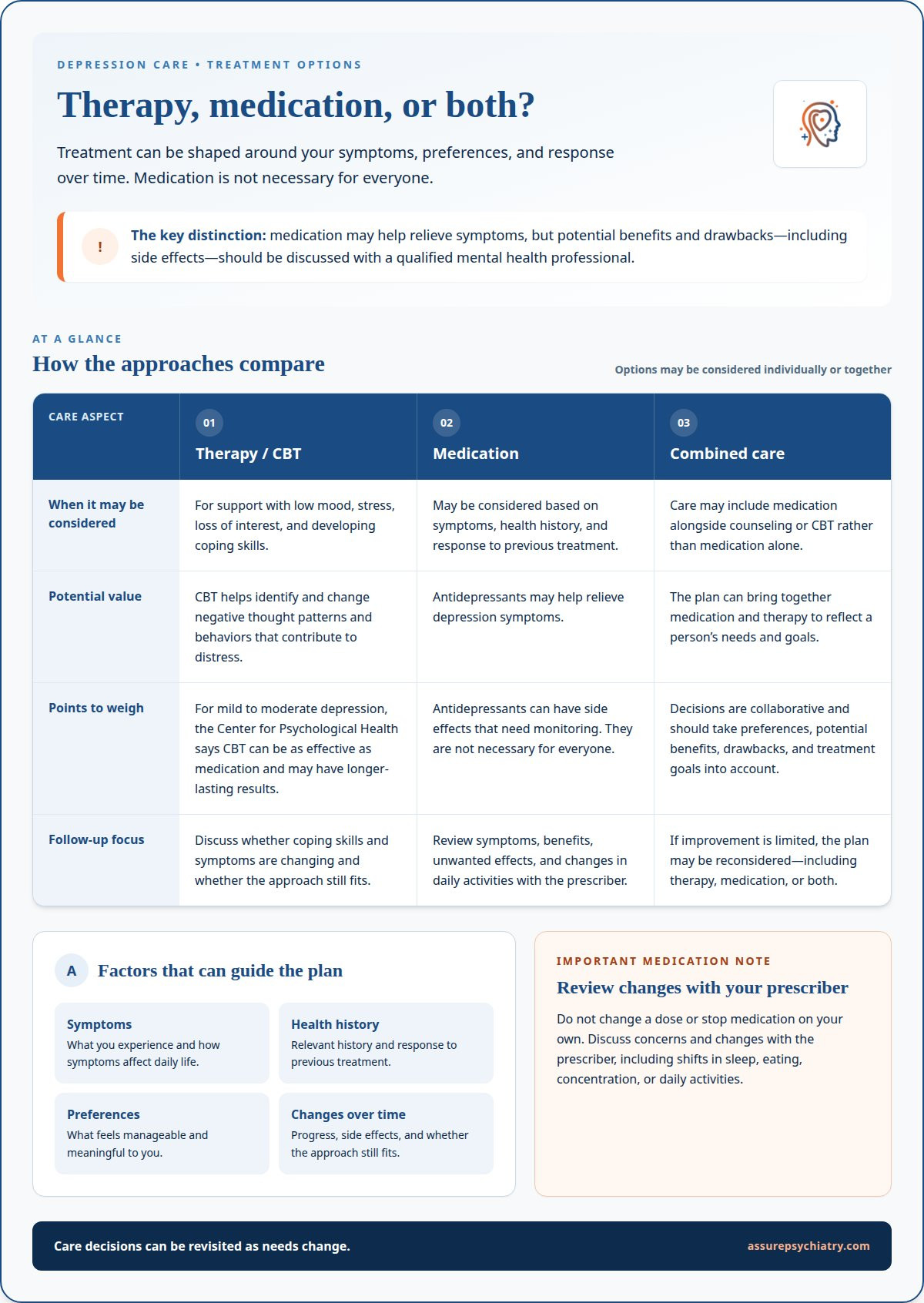
Antidepressants aren’t necessary for everyone with depression. They may help relieve symptoms, but can also have side effects that need monitoring. Medication decisions are individual and should be discussed with a qualified mental health professional, including the potential benefits and drawbacks.
For mild to moderate depression, the Center for Psychological Health says cognitive behavioral therapy (CBT) can be as effective as medication and may have longer-lasting results. CBT helps people identify and change negative thought patterns and behaviors that contribute to distress. Therapy can also help someone develop coping skills for stress, low mood, or loss of interest. A compassionate, collaborative approach can consider what feels manageable and meaningful to you.
When medication is part of care, follow-up medication management gives the prescriber a way to review symptoms, benefits, and unwanted effects. Antidepressants belong to different medication classes, and the choice depends on factors such as symptoms, health history, and response to previous treatment. Don’t change a dose or stop medication on your own. Discuss concerns and changes with the prescriber, including shifts in sleep, eating, concentration, or daily activities.
Care can be reviewed as your needs change. A follow-up conversation can clarify whether symptoms are easing, side effects are affecting daily life, and the current approach still fits. If improvement is limited, the plan may be reconsidered, including medication, therapy, or both. Depression care may combine medication with counseling or CBT rather than rely on medication alone. Tracking a few concrete changes, such as sleep quality or completing routine tasks, can make these discussions more useful. Decisions are collaborative and should include your preferences and treatment goals.
Personalized depression care and provider matching
A useful care match considers your symptoms, preferences, daily activities, and clinical needs. In Seattle, the level and format of support can shape how care fits into everyday life.
Collaborative Personalized Care
Personalized care is developed collaboratively by the patient, practitioner, and therapist. That conversation can connect patterns in mood, sleep, stress, and functioning with treatment priorities. When considering a provider, look for a process that invites your perspective and explains how progress will be reviewed. For example, you might discuss whether depressive symptoms interfere most with work, relationships, or daily routines.
Outpatient and residential care differ in structure. Outpatient care lets a person live at home while attending scheduled appointments, which may make it easier to maintain work, school, or family activities. Residential care offers a more structured setting for people who need more intensive support. The setting should reflect clinical needs and safety concerns, not just a depression diagnosis. If symptoms become severe or immediate safety is at risk, urgent support may be more appropriate than routine outpatient visits.
Psychiatric Care in Seattle
Seattle residents can consider how location and appointment format fit their routines. A psychiatric evaluation can explore symptoms, health history, and whether medication management belongs in the care plan. Washington also has telepsychiatry, which can make appointments possible remotely. Ask how follow-up care will address changes in symptoms, treatment response, and daily activities, so the plan can keep pace with your needs.
Bring concrete examples to an evaluation, such as when low mood disrupts sleep or makes familiar activities difficult. Sharing what matters to you helps the conversation focus on workable goals and care preferences. Explore care options as a next step toward finding support that fits.
Assure Psychiatry: Depression Treatment
Assure Psychiatry offers depression treatment for people seeking clinical guidance with symptoms affecting daily life. A psychiatric evaluation can help clarify your concerns and inform a care approach that reflects your needs, preferences, and goals. If medication is part of that approach, medication management supports ongoing review of treatment and response.
Consider reaching out when low mood, reduced interest, or changes in sleep and concentration make everyday activities harder, or when you want professional input about treatment options. If attention concerns also affect your functioning, ADHD treatment may be relevant to discuss as part of your care needs. You can take the next step at a pace that feels manageable. Contact Assure Psychiatry to discuss depression treatment and the support you’re looking for.
Take a Thoughtful Next Step Toward Care
You don’t need to have every answer before beginning a conversation about care. Start by identifying what you most want help with, such as managing daily responsibilities, feeling more connected, or understanding changes in your mood. Those priorities can guide a discussion about what may be useful now and what you want to work toward over time.
A personalized depression treatment plan in Seattle should make room for your perspective, questions, and changing needs. It can be helpful to share what you’ve already tried, what concerns you about treatment, and what progress would look like in your own life. Your experiences matter, and asking for help is a meaningful step toward greater steadiness.
If you’re ready to explore support, contact Assure Psychiatry to discuss what you’re looking for. You can take the next step at a pace that feels manageable, with your needs at the center of the conversation.
Frequently Asked Questions
How is depression different from just feeling sad?
Depression usually involves more than a temporary low mood. A major depressive episode includes five or more symptoms lasting at least two weeks and meaningfully affecting daily functioning. Symptoms may include losing interest in usual activities, changes in sleep or appetite, fatigue, difficulty concentrating, or hopelessness. An evaluation can help assess whether symptoms may indicate a depressive disorder or relate to a specific event.
Is depression something that can be cured?
Depression has no guaranteed outcome or fixed course. Treatment may help reduce symptoms and support daily functioning, while some people experience recurring episodes or need longer-term follow-up. Persistent depressive disorder, for example, involves low-grade depression lasting two years or longer. Alongside discussing treatment, consider what meaningful improvement would look like for you, such as reconnecting with activities or managing daily responsibilities.
How to find personalized depression treatment in Seattle, WA?
For a personalized depression treatment plan in Seattle, start by identifying the support you’re seeking, such as diagnostic assessment, medication evaluation, or help coordinating care. Then consider whether the appointment format and provider’s location work for you. Bring examples of how symptoms affect routines, relationships, or work. These details can help a clinician understand your priorities and discuss an approach that reflects your needs.
Which Seattle mental health providers offer individualized depression treatment plans?
When choosing psychiatric care in Seattle, look for a provider who explains how evaluation informs treatment recommendations and follow-up. Ask how your goals, symptoms, other health concerns, and preferences shape decisions. Assure Psychiatry provides tailored mental health services, offering accessible care options for individuals seeking comprehensive support. For care in Seattle, consider location and appointment eligibility as part of finding an appropriate match.
How much do depression therapy, psychiatry, and medication visits cost in Seattle?
Costs vary based on the type of appointment, insurance benefits, and whether care is in network. An initial psychiatric evaluation and a medication follow-up may be billed differently, while therapy has its own coverage and payment terms. Insurance plans also differ in deductibles and patient cost-sharing. For a specific service, the cost depends on the case and is provided after a quote request.
Does Washington Apple Health or private insurance cover depression treatment in Seattle?
Mental health services are essential health benefits under the Affordable Care Act, but coverage and out-of-pocket costs vary by plan. Washington Apple Health benefits depend on a member’s coverage and the service. Review your plan information for covered appointment types, network rules, referrals, and cost-sharing. This can clarify whether psychiatric visits, therapy, or medication-related care fit your benefits.
Recent Comments