

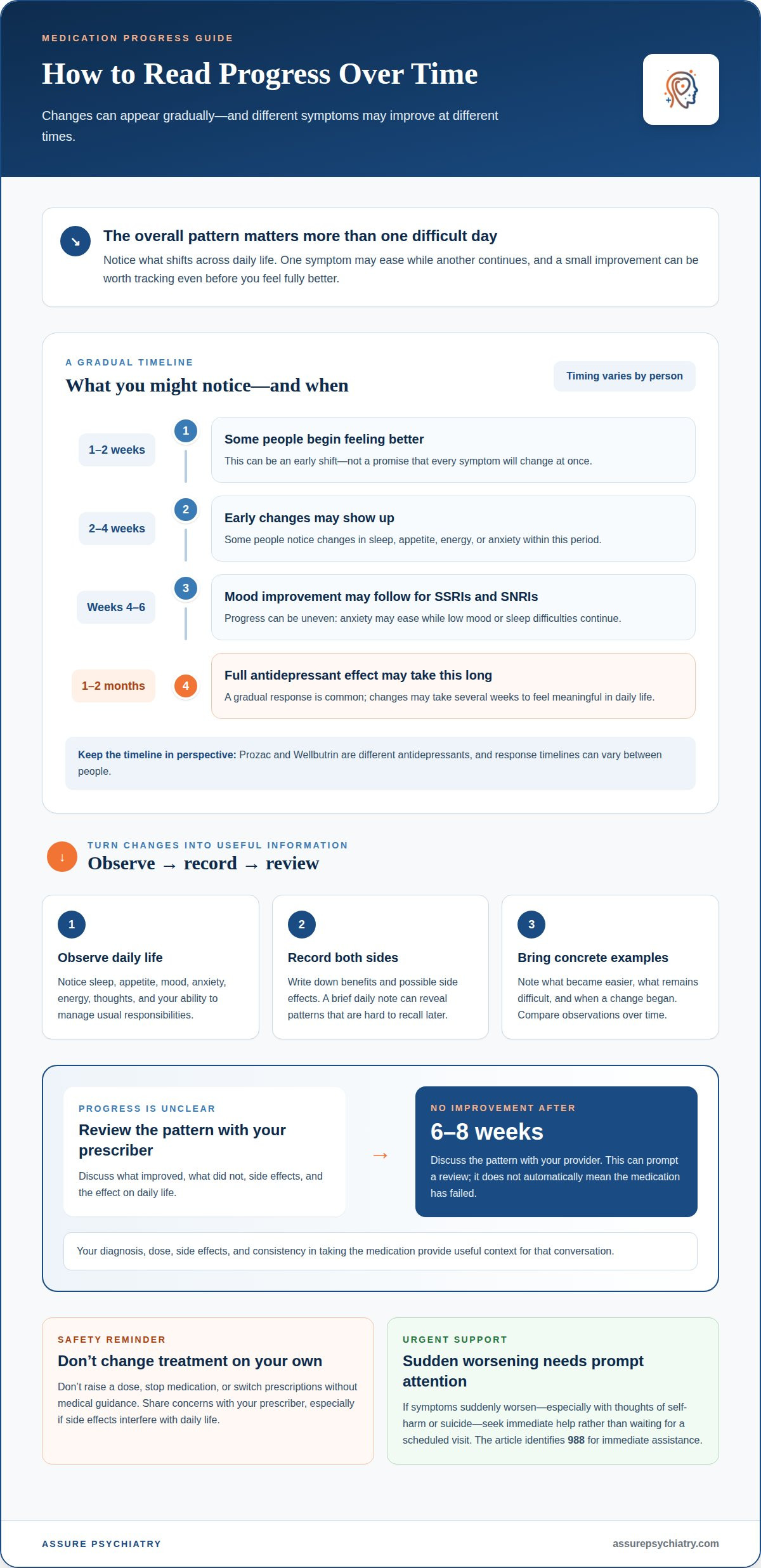
A medication that doesn’t seem to be helping yet isn’t a reason to stop taking it on your own. Some people notice early changes in sleep, appetite, energy, or anxiety within two to four weeks of starting an antidepressant, while its full effect may take one to two months.
It’s understandable to wonder whether treatment is working, especially if you’re noticing side effects or don’t feel better right away. If you’re looking for signs that psychiatric medication is working in Portland, this guide explains what progress can look like and why it may take time.
You’ll learn what changes to watch for, how to track benefits and side effects, and what to discuss with your prescriber. You’ll also learn why you shouldn’t stop or change medication without medical guidance, even when improvement feels slow.
Key Takeaways
- Medication choices can reflect your symptoms, health conditions, current medications, and past experiences with treatment.
- Notice changes in daily life, such as sleep, appetite, mood, and ability to manage usual responsibilities.
- Keep track of possible side effects alongside benefits so you can describe the pattern during follow-up care.
- Feeling better doesn’t automatically mean it’s time to stop; discuss ongoing treatment with your prescriber before making changes.
Is it normal to go through multiple medications before finding the right one?
Treatment may need adjustments because people respond differently to psychiatric medication. A prescriber considers your symptoms, medical conditions, current medications, and past treatment experience when shaping a plan.
Dose and Treatment Changes
An antidepressant adjustment means changing the dose or switching to another medication to better address symptoms or side effects. A dose change keeps the same medication, while a switch changes the prescription. Your prescriber weighs how depression or anxiety affects daily life, what benefits you notice, and any unwanted effects. Share concrete examples, such as sleeping better but still struggling to focus, to clarify what you’d like the next treatment decision to address.
Shifts in Anxiety and Mood Symptoms
Symptom shifts include changes in anxiety, sleep, mood, or self-critical thoughts. They can help show how treatment is affecting you, but one difficult day doesn’t tell the whole story. Note whether you’re sleeping more restfully, finding a daily task easier, or experiencing less harsh self-talk. Some people notice early changes in sleep, appetite, energy, or anxiety within two to four weeks of starting an antidepressant.
Look at the pattern across different parts of daily life. For example, anxiety may ease while sleep remains disrupted, or depression may feel less intense while self-criticism continues. Poor sleep, diet, and lack of exercise can also affect how well medication works. Sharing these details helps your prescriber understand what’s changing and consider whether medication adjustments, therapy, or lifestyle factors belong in the treatment plan.
Don’t change a dose or stop medication on your own; discuss concerns with your prescriber so changes can be considered safely. Therapy may complement medication, and the combination can be useful, particularly when symptoms are moderate to severe. If anxiety or depression worsens, describe the change and when it began. According to the Substance Abuse and Mental Health Services Administration, people needing immediate assistance can call 988 for the National Suicide Prevention Lifeline.
How long for Prozac, Wellbutrin & antidepressants to work?
Antidepressant effects often build gradually rather than appearing all at once. For people in Portland, signs that psychiatric medication is working may emerge at different times, depending on the symptom being treated.
Gradual Emergence of Effects
Some symptoms may shift before others as the medication continues to take effect. Some people begin feeling better within one to two weeks, but antidepressants can take one to two months to reach their full effect. It may take several weeks for changes to feel meaningful in daily life. A small improvement, such as getting out of bed more easily, is worth tracking even if low mood remains. It may be an early sign that treatment is beginning to help, not a reason to expect every symptom to resolve at once.
Signs of Limited Progress
Limited progress means symptoms remain difficult or worsen without noticeable benefit as treatment continues. If depression, anxiety, sleep problems, or everyday functioning show no improvement after six to eight weeks, discuss the pattern with your provider. This timeframe can prompt a review, but doesn’t automatically mean the medication has failed. Your diagnosis, dose, side effects, and consistency in taking the medication all provide useful context.
Track specific changes rather than relying only on an overall impression. Note whether you’re sleeping longer, returning to an activity, or still missing work because of depression. Compare your observations over time. This gives your provider clearer information than “I feel the same,” especially when one symptom improves while another persists.
Prozac and Wellbutrin are different antidepressants, and response timelines can vary between people. Don’t raise a dose, stop treatment, or switch prescriptions without medical guidance. If symptoms worsen or side effects interfere with daily life, tell your provider instead of waiting silently for a particular milestone. For Portland readers considering the signs that psychiatric medication is working, a review can also consider whether bipolar symptoms may be relevant, including whether bipolar disorder treatment fits their care needs.
So how can you tell when your mental health medication starts working?
Contact your prescriber when progress feels unclear or side effects interfere with daily life. If symptoms suddenly worsen, especially if you have thoughts of self-harm or suicide, seek immediate help rather than waiting for a scheduled visit.
Less Preoccupation With Symptoms
Reduced preoccupation means symptoms take up less of your attention, leaving more room for ordinary activities. For example, you may finish a meal, conversation, or work task without repeatedly checking whether anxiety is returning. This can indicate progress even if difficult thoughts still appear. Notice whether mental health concerns interrupt plans less often, rather than expecting every symptom to disappear at once.
Progress may be uneven. Mood improvement from SSRIs and SNRIs typically follows by weeks four to six. Anxiety may ease while low mood or sleep difficulties continue. If depression still leads you to miss two days of work each week, describe that concrete impact at follow-up. Persistent symptoms and limits on daily life are useful clinical information, not proof that treatment has made no difference.
Symptom Tracking and Follow-Up
Symptom tracking means recording changes in mood, thoughts, daily functioning, and side effects over time. A brief daily note can reveal patterns that are hard to recall during an appointment. Record one example, such as whether you completed a task, felt less anxious in a familiar situation, or noticed a new unwanted effect. Bring these observations to follow-up so the conversation reflects your experience.
Improvement doesn’t necessarily mean it’s time to stop medication. Most patients taking antidepressants continue them for at least six to twelve months after symptoms improve to help prevent relapse. Keep taking medication as prescribed and discuss any changes with your prescriber. If symptoms return after improvement or side effects become difficult, explain what changed and when. That timeline can help guide decisions about ongoing treatment.
Monitoring medication effectiveness and side effects
Tracking benefits and unwanted effects together can show how treatment is affecting your daily routine. Most psychiatric medications need four to eight weeks to take full effect.
Time for Medication Effects
The time to effect is the period between starting medication and noticing its full benefit. For SSRIs and SNRIs, that often means four to six weeks, so early changes may not reflect the eventual response. Record when you start and note changes in sleep, mood, or concentration. This timeline helps you discuss progress without expecting every symptom to improve at once.
Dose Adjustments and Side-Effect Checks
A dose adjustment means changing how much medication you take to improve benefits or address side effects. During the first three months, treatment may be adjusted to fine-tune the dose and manage unwanted effects. Keep a simple log of the medication, dose, timing, and symptoms. Note when an effect began and whether it followed a dose change, as this gives your prescriber useful context.
Impact of Medication Side Effects
Side effects are unwanted changes that can affect your comfort, routines, or willingness to continue treatment. Antidepressants may cause nausea, dizziness, weight gain, sexual dysfunction, or sleep disturbances. For example, daytime dizziness might make commuting or household tasks harder. Note how often an effect occurs and what it interrupts. This detail helps clarify how much it affects daily life.
Overwhelming Side Effects
Overwhelming side effects are difficult to tolerate or disrupt everyday activities. If nausea prevents meals or sleep problems leave you unable to function, contact your prescriber to discuss options. Don’t stop or change the dose on your own. If you’ve taken an antidepressant for at least one month without benefits, talk with a healthcare professional. Finding a tolerable plan may involve reviewing the dose, timing, or treatment.
If side effects or uncertainty about your dose are making treatment hard to manage, explore medication management support to discuss your experience and possible next steps.
Assure Psychiatry: Medication Management
Assure Psychiatry offers medication management for people reviewing benefits, side effects, or possible treatment changes. A psychiatric evaluation can help clarify symptoms and inform care when your current approach doesn’t feel like the right fit. The clinic also provides care for concerns such as anxiety or ADHD.
At follow-up, you can discuss what has changed in your mood, sleep, focus, or daily routines, along with any unwanted effects. Bringing notes about your experience can help make those conversations more specific. Visits are available in person at the Portland office and through virtual telepsychiatry.
If you’d like support reviewing your medication or considering next steps, contact Assure Psychiatry to discuss your needs.
Make your next step a thoughtful one
Deciding what to do next can start with noticing what matters most to you: more steadiness, fewer interruptions from symptoms, or greater confidence in daily choices. If you’re weighing the signs that psychiatric medication is working in Portland, consider what you’d like to do more comfortably, then bring that goal into a conversation about your care.
Your experience deserves to be heard without judgment. A clear discussion can help you consider whether your current approach still fits, what concerns you want addressed, and what support would feel useful. The right next step is personal, and asking for guidance can be a meaningful way to care for yourself.
Contact Assure Psychiatry to start a conversation about your needs and possible next steps. You don’t have to have every answer before reaching out. A thoughtful first conversation can help you move forward with greater clarity and make space for the steadiness you’re working toward.
Frequently Asked Questions
Can I stop taking my psychiatric medication if it’s not working?
Don’t stop or reduce psychiatric medication without discussing it with your prescriber, even if you feel no benefit. Explain what feels ineffective, any side effects, and when they began. Your prescriber can consider those details alongside your health conditions, other medications, and treatment history. This conversation can help clarify whether the next step is to continue, adjust, or reconsider the treatment plan.
How do you know if your antidepressant is working?
An antidepressant may be helping if the symptoms it targets interfere less with routines or concentration. Compare how you’re feeling now with your experience before treatment: are you completing tasks, connecting with people, or recovering from stress more easily? The PHQ-9 screens for depression symptoms, and the GAD-7 helps identify and measure anxiety symptoms. Bring scores and specific examples to follow-up.
How long should I really wait before deciding my medication isn’t working?
If you’ve taken an antidepressant for six to eight weeks without meaningful improvement, discuss the response with your prescriber. That timeframe signals a reason to review treatment, not proof by itself that the medication has failed. Share when you started, any dose changes, and which symptoms remain. Raise concerns sooner if symptoms worsen or side effects become difficult.
When should an antidepressant start helping?
Some people notice early improvement within one to two weeks, while the full effect may take one to two months. Symptoms don’t always shift together, so you might notice a change in one area before another. If you’re unsure whether anything has changed, describe what remains difficult, such as getting started in the morning or managing worry, rather than changing your dose on your own.
What are common signs psychiatric medication is working?
Possible signs include feeling less consumed by distressing thoughts, sleeping or eating more steadily, and returning to activities that had become difficult. Progress can be subtle: answering a message, finishing a meal, or completing a routine may feel more manageable. Look for changes that continue across different situations, not just one unusually good day, and notice whether side effects interfere.
How long does psychiatric medication take to work?
Many psychiatric medications need four to eight weeks to reach their full effect, though timing varies with the medication and symptoms being treated. Some changes may become noticeable sooner, while others take longer to assess. Track which symptoms change and how they affect daily routines. This information can help your prescriber evaluate the medication’s effects at follow-up.
Recent Comments