

Many insurance plans cover mental health care, but coverage for a psychiatrist in Washington depends on your plan’s benefits and provider network. Finding a psychiatrist covered by my insurance in Washington starts with checking those details, including any authorization requirements and your share of the cost. Your plan’s directory is a useful starting point, but confirm network status before scheduling.
It’s understandable to want clear answers before arranging care, especially when visits, therapy, and medication may be covered differently. This guide explains how Washington plans handle psychiatrist appointments, therapy, prescriptions, and managed care, and what can affect out-of-pocket costs. You’ll also learn how to use your plan’s network information and what to consider if the psychiatrist you need isn’t listed as in network.
Key Takeaways
- Use your insurer’s directory to identify in-network psychiatrists, then treat it as a starting point rather than a final confirmation.
- Review your deductible, copay or coinsurance, and any authorization rules to understand how visits and prescriptions may affect your costs.
- If you have Apple Health, contact your managed care plan for help finding mental health care within its network.
- Check whether your plan offers partial reimbursement for out-of-network care before deciding how to arrange treatment.
Does insurance cover psychiatrist visits in Washington?
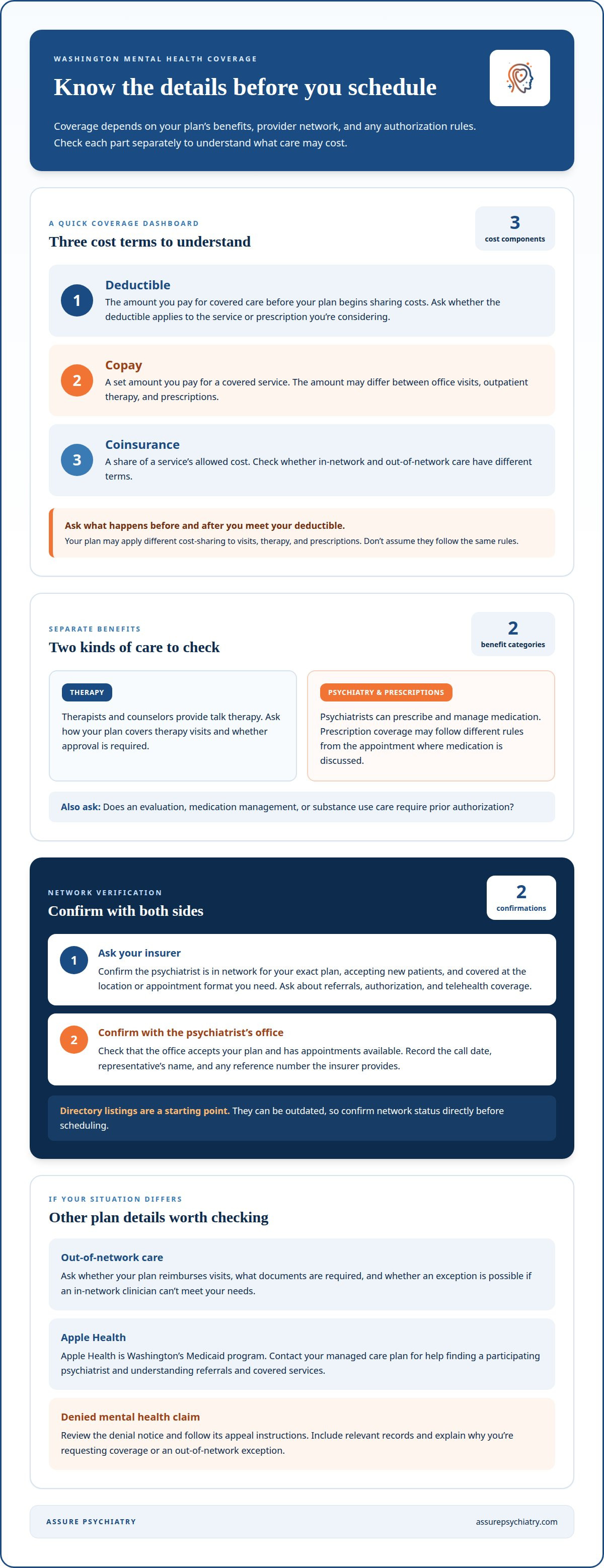
Insurance coverage means your plan pays part or all of eligible mental health care. In Washington, coverage for psychiatrist visits depends on your benefits, provider network, and any authorization rules. A network is the group of clinicians and facilities contracted with your plan. Finding a psychiatrist covered by your insurance in Washington starts with searching your insurer’s directory for psychiatrists in your area. Treat the directory as a starting point: listings can be outdated, so confirm the details with your insurer.
An in-network psychiatrist has a contract with your plan; an out-of-network psychiatrist does not. Ask your insurer whether the clinician is in network for your exact plan, whether they are accepting new patients, and whether the location or appointment format affects coverage. Then confirm with the psychiatrist’s office that they accept your plan and have appointments available. Record the call date and representative’s name, along with any reference number provided.
Telepsychiatry means meeting with a psychiatrist remotely by video or another approved format. Washington coverage depends on your plan’s telehealth benefits and the clinician’s network status. Ask whether remote evaluations and follow-up visits are covered and whether they have the same cost-sharing as office visits. For care received in Washington, confirm that the clinician is licensed in the state.
Out-of-network reimbursement is payment your plan may provide for care outside its contracted network. Ask the insurer whether your plan reimburses these visits, what documents it requires, and whether it offers an exception when an in-network clinician can’t meet your needs. For a denied mental health claim, review the denial notice and follow its appeal instructions. Include relevant records and explain why you’re requesting coverage or an out-of-network exception. To check credentials, match the psychiatrist’s full name and listed credential against Washington’s state licensing lookup. If depression or another concern becomes a life-threatening emergency, call 911, according to Washington State Emergency Management Division.
Does insurance cover therapy, prescriptions and other behavioral health services?
Coverage for behavioral health depends on your plan and the service. Review how it treats therapy, prescriptions, and outpatient care before scheduling.
Deductibles and Authorization
A deductible is the amount you pay for covered care before your plan begins sharing costs. Prior authorization is approval your plan may require before certain mental health services. Ask whether an evaluation, therapy visits, medication management, or substance use care requires approval, and what happens if care is received without it. Keep the answer with your plan notes, since requirements can vary by service.
Copays and Coinsurance
A copay is a set amount you pay for a covered service, while coinsurance is a share of its allowed cost. Your plan may apply different cost-sharing to a clinician’s office visit, outpatient therapy, and prescriptions. Check whether the deductible applies first and whether in-network and out-of-network care have different terms. For example, prescription coverage may follow different rules from the appointment where the medication is discussed.
Therapy coverage and medication coverage are related, but they are not the same benefit. Therapists and counselors provide talk therapy; psychiatrists can prescribe and manage medication. Ask your insurer how it covers each service, including care for children and community-based behavioral health services. If you’re enrolled in Apple Health, contact your managed care plan for help accessing covered mental health services.
Before arranging care, review your plan documents and ask about the specific service, clinician type, and prescription. Find out whether approval is required and how costs apply before and after you meet the deductible. Checking each benefit separately helps you estimate your share without assuming every behavioral health service follows the same rules.
For care that includes a psychiatric evaluation or medication management, psychiatric evaluation and medication management can be part of a coordinated treatment plan.
Getting help through a managed care plan
A managed care plan coordinates covered health services through its provider network. In Washington, contact your plan for help finding an in-network psychiatrist and understanding any referral steps.
Call the member services number on your insurance card. Describe the care you’re seeking, such as an evaluation for anxiety, and ask for in-network clinicians who are accepting new patients. If a clinic is outside your plan’s network for mental health services, ask the insurer about in-network options. Before scheduling, find out whether your plan requires a referral or authorization, and write down the instructions.
A referral is a recommendation or approval that connects a patient with specialist care. Requirements depend on your plan, so ask whether psychiatric care requires one and who must submit it. If your primary care clinician is involved, clarify how the referral reaches the plan and specialist. Ask whether it applies to the initial evaluation, follow-up visits, or both. Knowing the steps can help prevent confusion before an appointment.
Apple Health is Washington’s Medicaid program, and enrollees have mental health service coverage. Contact your managed care plan for help finding a participating psychiatrist, understanding referrals, and learning how to access covered services. If a suggested clinician isn’t a good fit, explain whether the concern is location, specialty, or appointment format.
Financial assistance can help make care more affordable. Start with your plan’s benefits: ask about covered providers, cost-sharing, and help accessing in-network care. Apple Health members can contact their managed care plan about mental health services and how to connect with care. If you’re arranging treatment for a family member, have their plan details ready. Asking clear questions about coverage, referrals, and clinical needs can make the next step easier to identify.
Insurance coverage and out-of-pocket costs
Out-of-pocket cost is the amount you pay yourself for care. Mental health coverage varies by plan, and your share depends on the service, network status, deductible, copay, and coinsurance. An adult’s therapy visit and a psychiatric evaluation, for example, may follow different benefit rules. Review coverage for each service separately.
A deductible is the amount you pay toward eligible services before your plan shares costs. A copay is a set payment, while coinsurance is a percentage of the allowed cost. Check your plan summary for the remaining deductible, visit copay, and any coinsurance, and confirm that the amounts apply to in-network care. These details can help you estimate costs for repeated visits and plan for ongoing treatment.
Therapy cost with insurance means your share after the plan applies its benefits. The plan’s network, deductible, and cost-sharing rules shape that amount. That broad range isn’t specific to Washington or a particular clinician. Use your own plan benefits to estimate covered therapy costs, including sessions supporting recovery from depression or anxiety.
Self-pay cost is the full amount paid directly when insurance isn’t used. Psychiatric visit charges depend on the type of appointment and care provided, so an industry range shouldn’t be treated as a clinic’s price. Before booking, ask for the self-pay amount for the specific visit and whether follow-up appointments are priced separately. If you’re experiencing symptoms and weighing care options, explore psychiatric evaluation and medication management as possible parts of a treatment plan.
Assure Psychiatry
Assure Psychiatry provides psychiatric evaluations and medication management for people seeking support with mental health concerns. For ADHD or anxiety, an evaluation can help clarify clinical needs and inform a personalized treatment plan. Assure Psychiatry offers in-person care in Portland, Oregon, and telepsychiatry for eligible patients; specific criteria must be fulfilled to access remote appointments. Your plan’s network and benefits determine coverage and costs.
Understanding insurance can feel like another burden alongside deciding whether to seek care. You can bring questions about your coverage and care needs into a conversation with the practice, then consider whether its services fit your situation. Treatment is collaborative, and a diagnosis doesn’t define who you are.
Contact Assure Psychiatry to discuss your care needs and take a thoughtful next step.
Take the next step at your pace
Choosing care involves more than finding an appointment. Consider the concerns you want addressed, the kind of support you’re seeking, and the questions you want answered before beginning. Taking those points into a conversation can help you make a considered decision without feeling rushed.
If finding a psychiatrist covered by my insurance in Washington is your next step, bring your plan details and care questions together. Understanding your benefits can help frame the conversation, while a clinician can discuss your needs and possible treatment options. You deserve care that treats you as a person, not a diagnosis, and supports your goals with respect.
Assure Psychiatry welcomes conversations about psychiatric care and whether its services fit your needs. Contact Assure Psychiatry to discuss a possible next step. Moving toward support can begin with one thoughtful conversation.
Frequently Asked Questions
What is the difference between in-network and out-of-network insurance coverage?
In-network clinicians have a contract with your insurance plan; out-of-network clinicians do not. Your plan may apply different deductibles, copays, or coinsurance to each. Some plans offer partial reimbursement for out-of-network care, while others provide little or none. If a psychiatrist isn’t listed in your plan’s network, ask your insurer how the visit would be processed before scheduling.
Can I go straight to a psychiatrist, or do I need a referral first?
You may be able to book directly, but referral requirements depend on your insurance plan. Check your member materials or call your plan to ask whether psychiatric care requires a referral from a primary care clinician. If it does, clarify who submits it and whether approval is needed before the appointment. This can help you avoid a preventable coverage issue.
How do I find an in-network psychiatrist through my health insurance in Washington state?
Sign in to your insurer’s member portal and search its mental health provider directory for psychiatrists in Washington. Filter by location and specialty, then note clinicians who match your needs. Before booking, confirm with the plan and the psychiatrist’s office that the clinician participates in your exact plan. Directory listings can change, so verify current network status and appointment availability.
Where is the mental health provider directory for my Washington insurance plan?
Your plan’s provider directory is usually available through its member portal or the insurer’s website. The phone number on your insurance card can connect you with member services, which can explain how to find the mental health provider search tool. Use the exact plan name on your card, since an insurer may manage several networks with different participating psychiatrists.
Do I need a referral or prior authorization to see a psychiatrist in Washington?
Whether you need a referral or prior authorization depends on your plan and the service. A referral may direct you to specialist care; prior authorization is the plan’s approval for specified services. Ask your insurer about the initial evaluation and planned follow-up visits separately. If approval is required, clarify who submits the request and what information the plan needs before care begins.
How do I find a psychiatrist covered by insurance near me in Washington?
Search your insurer’s directory using your Washington ZIP code or city, then select psychiatry or mental health care as the specialty. Compare in-network results by clinical focus and appointment format. Before scheduling, confirm the exact plan and clinician, since directory information may be outdated. If you’re finding a psychiatrist covered by your insurance in Washington, ask whether the office is accepting new patients.
Recent Comments