

Finding a psychiatrist who listens in Portland means choosing someone who takes your concerns seriously, explains recommendations, and involves you in treatment decisions. A good fit also includes an evaluation and plan shaped around your needs, with appointment options that work for your life.
It’s understandable to want more than a rushed conversation or a one-size-fits-all plan. You deserve time to explain what’s going on, ask questions, and understand your care options.
This guide covers what to look for in a psychiatrist, what a personalized evaluation and treatment plan may involve, and how to weigh in-person and virtual appointments. You’ll have practical ways to recognize a supportive fit and take a collaborative next step.
Key Takeaways
- Learn what a psychiatric evaluation can cover and how your priorities can shape a personalized treatment plan.
- See how care for anxiety, depression, ADHD, bipolar disorder, and PTSD can be considered around your symptoms and goals.
- Recognize signs of a collaborative relationship, including feeling heard and included in treatment decisions.
- Compare in-person and virtual appointment formats to identify what may fit your routine and care needs.
Psychiatric evaluations and personalized treatment plans
A psychiatric evaluation brings together symptoms, health history, and day-to-day concerns to inform possible next steps. For example, trouble sleeping may be considered alongside anxiety, low mood, medication history, and changes in daily functioning. The aim is to understand the whole picture, not reduce you to a diagnosis.
In Oregon, psychiatrists are medical doctors who can prescribe medication, provide therapy, and develop individualized treatment plans. Psychiatric mental health nurse practitioners can also provide medication management. Their professional training differs: psychiatrists complete medical training, while nurse practitioners pursue advanced nursing education. For medication management, either may be a relevant clinician. Discuss your symptoms, treatment goals, and care needs during an evaluation.
A useful evaluation gives you time to explain what has changed and what you hope will improve. Bring a short list of symptoms, when they occur, and how they affect work, relationships, or sleep. Include current medications and previous treatment experiences. These details help the clinician consider a plan that fits your circumstances, rather than relying on a standard template.
Common areas of psychiatric care include anxiety, depression, ADHD, bipolar disorder, PTSD, obsessive-compulsive disorder, and sleep concerns. Similar symptoms can have different causes, so an evaluation should explore their timing, patterns, and impact. For example, difficulty concentrating may be discussed alongside sleep problems, anxiety, or possible ADHD, rather than treated as proof of one condition.
A personalized treatment plan may include medication, therapy, or other care approaches, guided by your evaluation and preferences. Before deciding on next steps, make sure you understand each recommendation and how progress will be reviewed. Consider these practical questions:
- Which symptoms or daily challenges should treatment address first?
- What options fit your preferences and medical history?
- How will you and the clinician assess whether the plan is helping?
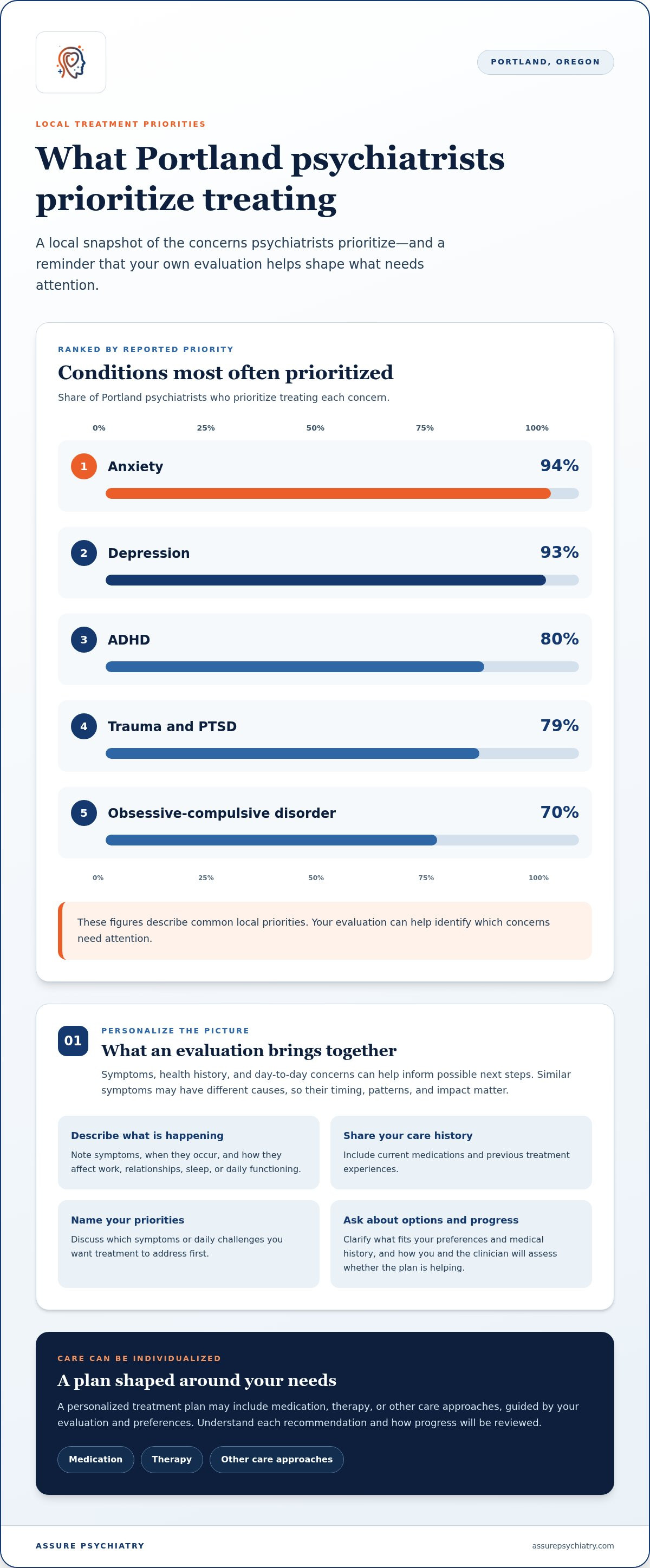
Many psychiatrists require the first appointment to be in person, especially when a psychiatric evaluation is needed. In Portland, Oregon, 94% of psychiatrists prioritize treating anxiety and 93% prioritize treating depression. These figures describe common local priorities, while your evaluation can help identify which concerns need attention.
In Portland, Oregon, 80% of psychiatrists prioritize treating ADHD, 79% prioritize treating trauma and PTSD, and 70% prioritize treating obsessive-compulsive disorder. You can ask how a clinician’s areas of focus relate to your symptoms and the goals you want your treatment plan to address.
How can I find a psychiatrist in Portland?
To find a psychiatrist in Portland who listens and communicates clearly, compare their areas of focus, appointment options, and approach to shared decisions. Look for clear explanations and enough time to discuss your concerns.
Online Care and Location Requirements
Portland residents can consider in-person psychiatric care or online appointments. The format may vary by visit: an initial evaluation may be in person, while follow-up medication management can take place online. Consider which option makes it easier to attend consistently and speak openly about your symptoms.
For virtual care, consider whether the practice serves Oregon residents and whether online appointments suit your needs. Think about privacy, reliable access to a quiet space, and whether video visits feel comfortable. A mix of office and online appointments may also work when your needs or schedule change.
Psychiatric care includes evaluation and treatment planning for concerns such as anxiety, depression, ADHD, bipolar disorder, or PTSD. A provider’s areas of focus can help you assess relevant experience, while your symptoms, history, and wellness goals inform care decisions. For example, if you’re seeking support for anxiety, discuss how symptoms affect sleep, work, or relationships.
Finding a Communicative Provider
During an initial conversation, notice whether the psychiatrist listens without interrupting, answers questions directly, and explains recommendations in accessible language. Ask how patients are involved in treatment decisions. A collaborative approach makes room for your priorities, whether you’re discussing medication, therapy, or other treatment options.
Before an appointment, write down the concerns you most want to address and your questions about care. You might ask how the provider evaluates depression or ADHD, or how you’ll discuss possible treatment plans together. Notice whether the conversation feels respectful and attentive to your experience. Clear communication can help you understand your options and choose a practical next step.
Finding a provider who listens and builds trust
Trust builds through clear answers, respectful attention, and shared decisions. Use the steps below to assess whether the provider’s communication, approach, and care feel right for you.
Choosing Questions and Provider Directory
A Portland-area psychiatric provider directory lists more than 800 psychiatrists, so narrow your search by care needs and appointment preferences. Ask whether the provider treats concerns such as bipolar disorder, discusses medication options clearly, and involves adults in decisions. Also ask how they approach stress, treatment goals, and follow-up.
To review an Oregon psychiatrist’s license and disciplinary history, use the Oregon Medical Board’s official license lookup. Search the provider’s name, confirm the identity and license details, and review any disciplinary information displayed.
Listening and Provider Communication
During a visit, notice whether the psychiatrist lets you finish describing your symptoms and responds directly to your questions. For example, if you’re concerned about medication, a listening provider takes that concern seriously and explains possible next steps.
For culturally responsive or LGBTQ+-affirming psychiatric care in Portland, look for clinics that clearly describe these commitments. You can ask how the practice respects names, pronouns, identity, and cultural context in care.
Responding to a Poor Treatment Fit
If a Portland psychiatrist doesn’t listen or the treatment doesn’t feel right, explain what isn’t working and give a specific example. You might say that a concern about side effects or daily functioning wasn’t addressed, then ask to revisit the plan and clarify your options.
If communication still feels unproductive, consider finding another psychiatric provider whose approach better fits your needs. Keep notes about symptoms, medication questions, and your goals; these details can help make a future conversation more focused.
Alongside specialty and communication fit, check whether the listed age range matches the person seeking care. The Portland provider listings include providers serving patients ages 18-64, a provider serving patients ages 6-75+, a provider serving patients ages 3-17, a provider serving patients ages 6-21, and a provider serving patients ages 18-75+. When choosing a psychiatrist, patients should look for someone who listens to their concerns, answers their questions, and involves them in treatment decisions; these qualities can help make care feel collaborative.
Provider availability and appointment formats
Appointment access depends on clinician schedules, care needs, insurance, and whether you prefer in-person or online visits. Consider these factors together as you plan your first appointment and ongoing care.
Availability and Wait Times
Openings and wait times vary with provider schedules, patient demand, and the type of psychiatric care you’re seeking. Availability may differ between clinicians who treat trauma and those who provide medication management or focus on other areas. Ask about the next available evaluation and whether the practice is accepting new patients. If timing is difficult, consider whether online visits or a flexible appointment time could work for you.
Insurance and Appointment Access
Insurance acceptance can shape which appointments are accessible. In Portland, 87% of psychiatrists accept Aetna, 78% accept BlueCross and BlueShield, and 69% accept Cigna and Evernorth. These figures describe local provider listings, not a guarantee of coverage for a particular appointment. Review your plan’s mental health benefits, network rules, and any referral requirements before scheduling.
Consider how follow-up care fits your routine, too. Medication management appointments can often take place online, potentially reducing travel and making ongoing care easier to attend.
In-Person and Online Formats
In Portland, 60% of psychiatrists see patients both in person and online, while 40% offer online-only visits. An office appointment may suit an initial evaluation or a conversation where you prefer face-to-face contact. Virtual visits can be more convenient for follow-up care, especially when work, transportation, or physical health concerns make travel harder.
Before your first appointment, note your main concerns, current medications, relevant physical health changes, and treatment questions. Include examples, such as disrupted sleep or anxiety affecting work. This can help the clinician understand your priorities and support a compassionate, focused conversation.
If medication management is a care option you’re considering, explore medication management as a possible next step.
Assure Psychiatry: Medication Management
Assure Psychiatry provides psychiatric evaluations and medication management for people seeking attentive, individualized mental health care. An evaluation can help clarify concerns and inform treatment planning, including options for ADHD or anxiety. Medication management gives you an opportunity to discuss medication as part of your care and review how it fits your needs over time.
Assure Psychiatry offers in-person visits at its Portland office and virtual telepsychiatry, giving patients options for appointments. If you’re looking for a thoughtful evaluation or support with medication management, you can visit Assure Psychiatry online.
Take the Next Step at Your Pace
Finding a psychiatrist who listens in Portland isn’t about settling for a quick answer. It’s about care that reflects what matters to you and gives you room to speak openly as your needs evolve. Make your next step practical: identify the concern you most want support with and decide what you’d like to discuss at an initial visit.
Assure Psychiatry offers psychiatric evaluations, medication management, and ADHD treatment. These services can help you explore concerns, understand possible approaches, and take an active role in care decisions. Bring questions about symptoms, preferences, or what has and hasn’t helped before. An initial conversation can help you express your priorities and consider a path forward at a manageable pace.
If you’re ready to explore care, contact Assure Psychiatry. You deserve support that respects your experience and helps you move toward greater mental well-being.
Frequently Asked Questions
Do you serve patients in Portland?
Yes. Assure Psychiatry serves Portland and other communities in Oregon through in-person office visits and virtual telepsychiatry. Specific criteria must be fulfilled to access remote appointments, so virtual care isn’t automatically available for every situation. If getting to an office is difficult, ask whether your circumstances meet the requirements for a virtual visit. The practice serves Oregon residents seeking psychiatric care in Portland and beyond.
What Can a Psychiatrist Help With?
A psychiatrist can evaluate mental health concerns and discuss treatment options, including medication. Assure Psychiatry provides psychiatric evaluations and care for ADHD, anxiety, depression, bipolar disorder, OCD, PTSD, and sleep concerns. For example, you can discuss persistent difficulty concentrating or recurring panic symptoms during an evaluation. The clinician considers your concerns and history when discussing next steps, rather than relying on a symptom label alone.
Which Portland psychiatrists accept my insurance or offer sliding-scale fees
Portland listings show 87% of psychiatrists accept Aetna, 78% accept BlueCross and BlueShield, and 69% accept Cigna and Evernorth. Check your plan’s mental health benefits, network rules, and referral requirements before scheduling.
Recent Comments