

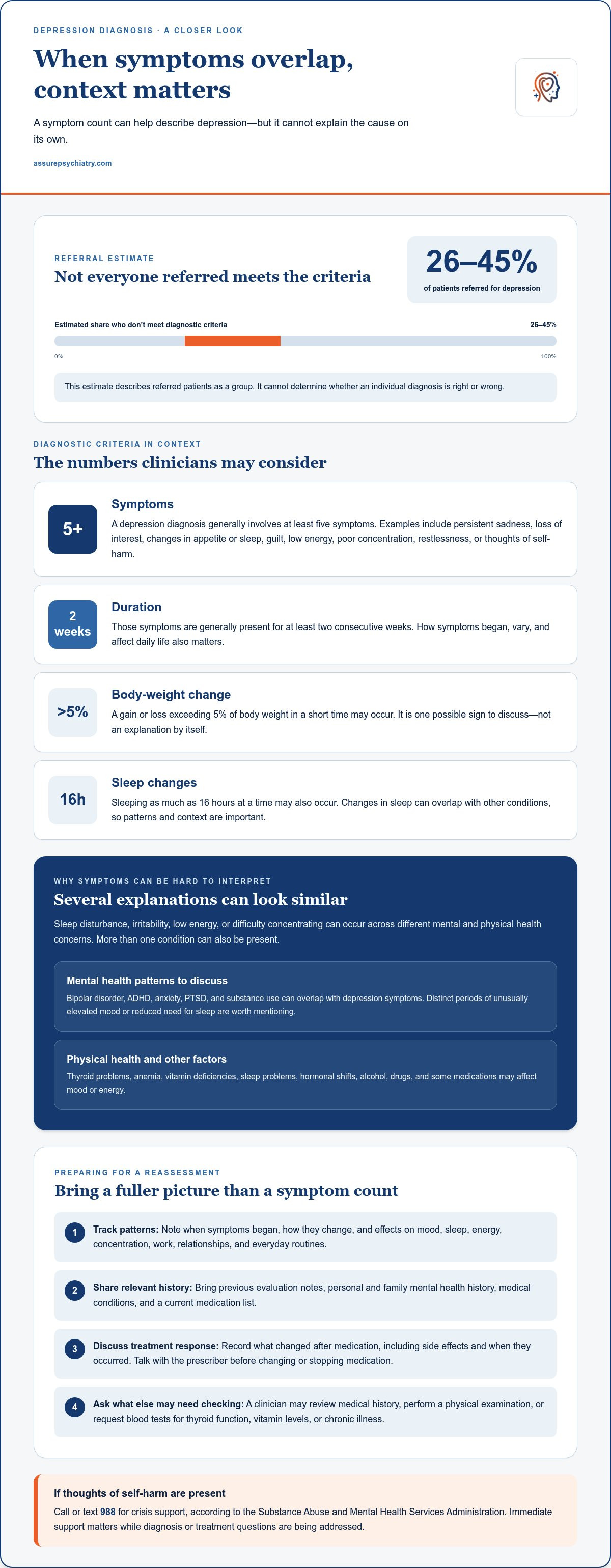
An estimated 26 to 45 percent of patients referred for depression don’t meet the diagnostic criteria. If you’re worried you were misdiagnosed with depression in Portland, that figure may raise questions, but it can’t determine whether your own diagnosis fits. Depression symptoms can overlap with other mental health conditions and physical health concerns, so a closer evaluation can help clarify what’s going on.
It’s understandable to feel unsettled when treatment hasn’t helped or a diagnosis doesn’t match your experience. Your symptoms and concerns deserve to be taken seriously, without letting a label define you. If you’re worried you were misdiagnosed with depression in Portland, this guide explains how that can happen, which conditions may have overlapping symptoms, and what a psychiatric reassessment may involve. Before an appointment, note changes in mood, sleep, concentration, and daily functioning to help describe the full picture.
Key Takeaways
- Notice patterns in mood, sleep, energy, and daily functioning, and keep notes to make changes easier to describe during an evaluation.
- Ask how other explanations, including bipolar disorder, ADHD, anxiety, medication effects, and physical health conditions, were considered.
- A second opinion from a mental health professional can help clarify a diagnosis when it doesn’t fit your experience or treatment isn’t helping.
- A psychiatric evaluation can review your symptoms and history, while medication management can support discussion of treatment options and next steps.
1. How Common is a Depression Misdiagnosis?
Estimates suggest that 26 to 45 percent of patients referred for depression don’t meet its diagnostic criteria. That doesn’t show whether your diagnosis is wrong, but it explains why questions about fit deserve attention. If you’re worried you were misdiagnosed with depression in Portland, focus on how your symptoms developed and affect daily life.
A depression diagnosis generally involves at least five symptoms present for at least two consecutive weeks. Symptoms can include persistent sadness, loss of interest, appetite or sleep changes, guilt, low energy, poor concentration, restlessness, or thoughts of self-harm. Changes such as weight gain or loss exceeding 5% of body weight in a short time, or sleeping as much as 16 hours at a time, may also occur. A symptom count alone doesn’t explain its cause.
Anxiety, depression, and PTSD can all involve sleep disturbances, irritability, and concentration difficulties. Adult ADHD can also affect focus, organization, and impulse control, sometimes resembling a mood disorder. Physical conditions matter, too: hypothyroidism, anemia, or vitamin deficiencies may bring fatigue or low mood. Depression itself can involve headaches, muscle aches, or chronic fatigue, symptoms that may be mistaken for another physical disorder.
To explore whether a diagnosis needs another look, consider whether it fits your experience, whether important mood patterns were overlooked, and how well it accounts for changes in daily life. Write down when symptoms began, how they vary, and specific examples to discuss during an evaluation.
If an antidepressant isn’t helping or is causing concerning effects, note what changed and when, then discuss it with your prescriber. Mention any periods of unusually elevated mood. For people with bipolar disorder, antidepressants prescribed for depression may trigger manic episodes.
Before changing or stopping medication, tell your prescriber what you take, any side effects, and what concerns you. Ask for a clear plan, including whether a dose adjustment or gradual reduction is appropriate. Don’t change medication on your own.
If thoughts of self-harm are present, call or text 988 for crisis support, according to the Substance Abuse and Mental Health Services Administration. Immediate support matters while questions about diagnosis or treatment are being addressed.
2. Conditions That Mimic Depression: What Are They?
Several mental and physical health conditions can involve symptoms that overlap with depression. Bipolar disorder may be mistaken for major depression if periods of elevated mood or hypomania go unrecognized. ADHD can affect focus, organization, and impulse control; anxiety may involve fatigue, sadness, irritability, or difficulty concentrating. Sleep problems may also affect energy and mood.
Medical causes deserve attention, too. An underactive thyroid can contribute to fatigue, weight gain, and sadness. Anemia and vitamin B12 or vitamin D deficiencies may affect energy and mood. Hormonal shifts during puberty, menstruation, postpartum, or menopause can also change mood and energy. Alcohol, drugs, and some medications may cause depression-like symptoms, so include all substances and prescriptions in a medication review.
Conditions that may be confused with depression include bipolar disorder, ADHD, thyroid problems, and sleep disorders. Anxiety disorders, PTSD, anemia, and vitamin deficiencies may also be relevant. Symptoms alone don’t establish a diagnosis, and more than one condition can be present.
Depression can occur alongside anxiety, PTSD, ADHD, or substance use disorders. This overlap can make symptoms harder to interpret: someone may have low mood and difficulty concentrating as well as trauma-related symptoms or persistent worry. A careful evaluation considers when symptoms began, how they change, and how they affect work, relationships, and everyday routines.
To explore physical causes, describe changes in sleep, appetite, energy, and medication use during an appointment. A clinician may review medical history, perform a physical examination, or request blood tests to assess thyroid function, vitamin levels, or chronic illness. These checks can help identify issues that may need medical attention alongside mental health care.
If mood changes include distinct periods of unusually high energy or reduced need for sleep, raise that pattern during an evaluation. Learning about bipolar disorder treatment can also help you understand why recognizing mood episodes matters when discussing care.
3. What Is Misdiagnosis in Mental Health?
A mental health misdiagnosis happens when an evaluation misses the condition driving someone’s emotional or behavioral symptoms, or overlooks co-occurring conditions. Anxiety, PTSD, bipolar disorder, and substance use can overlap with depression. Diagnosis can be challenging when symptoms are self-reported, change over time, or occur alongside health conditions such as thyroid disorders.
If you’re seeking a second opinion in Portland, consider a psychiatric evaluation that reviews your symptoms, history, and current treatment. A primary care clinician can also assess mental health concerns; a psychiatrist can evaluate complex patterns, including possible bipolar disorder. A second opinion may help clarify a diagnosis that doesn’t seem to fit your experience or response to treatment.
A thorough evaluation considers more than a symptom checklist. It may include your personal and family mental health history, medical conditions, medications, screening tools, and mood patterns over time. Bring a symptom timeline, previous evaluation notes, a current medication list, and examples of how symptoms affect work, relationships, or sleep. Write down questions you want answered.
In Oregon, insurance coverage for a psychiatric evaluation depends on your plan, including behavioral health benefits, network status, and billing category. Review your plan documents for coverage and any applicable cost-sharing details before scheduling. Assure Psychiatry accepts most major insurance plans; verify your coverage with your insurer.
If you’re looking for a Portland psychiatrist to assess a possible misdiagnosis, seek a psychiatric evaluation that reviews your history and current symptoms rather than relying on a label alone. Ask how the assessment considers mood patterns, physical health factors, and medication effects.
If you feel unsafe or might harm yourself, call or text 988 for crisis support, according to the Substance Abuse and Mental Health Services Administration. Tell the responder you’re in Portland and describe what’s happening now.
4. Depression misdiagnosis
A depression diagnosis may need to be reconsidered if symptoms are attributed to another condition or an additional condition is missed. Misdiagnosis can involve overdiagnosis, underdiagnosis, or confusion between conditions with overlapping symptoms. It doesn’t mean someone’s feelings are imagined; it means the explanation may deserve a closer review.
An analysis of 118 studies found that general practitioners correctly identified depression in only 47 percent of cases. That finding highlights why assessment matters, but it doesn’t determine whether any individual diagnosis is correct. Symptoms, history, and changes over time all shape the clinical picture. Depression can also occur alongside anxiety, PTSD, ADHD, or substance use, so identifying one condition shouldn’t automatically rule out another.
Bipolar disorder is one important possibility to discuss. If depressive periods are assessed without recognizing episodes of mania or hypomania, an important mood pattern may be missed. Antidepressants prescribed for major depression may trigger manic episodes in people with bipolar disorder. During an evaluation, share any history of unusually elevated mood, increased energy, impulsive behavior, or needing less sleep.
For a focused discussion, ask why the diagnosis was made and which other conditions were considered. Bring a timeline of mood changes, treatment history, medication effects, and examples from work or relationships. Explain what has improved, what hasn’t, and what doesn’t seem to fit. These details can help a clinician revisit the diagnosis and consider whether further assessment is appropriate.
Feeling uncertain about a diagnosis is a reason to seek clarification, not a conclusion that the original assessment was wrong. If depression symptoms persist or treatment isn’t addressing your concerns, discuss a fresh evaluation and possible next steps. You can explore depression treatment as part of that conversation.
Assure Psychiatry: Medication Management
Assure Psychiatry offers Psychiatric Evaluation for people who want to revisit a depression diagnosis or discuss symptoms that don’t seem to fit. The evaluation provides an opportunity to review your mental health history, current concerns, and questions about overlapping conditions, including anxiety or ADHD.
Medication Management can provide an opportunity to discuss how medication is working, side effects, and appropriate next steps. Don’t change or stop medication on your own; discuss concerns with your prescriber. Assure Psychiatry offers in-person visits at its Portland office and telepsychiatry in Oregon. Specific criteria must be fulfilled to access remote appointments.
If you’d like to explore a psychiatric evaluation or medication management, contact Assure Psychiatry to discuss your next step.
Take the Next Step Toward Clarity
A diagnosis should help explain what you’re experiencing and guide care, not define who you are. If you’re worried you were misdiagnosed with depression in Portland, bring that concern to a new conversation. Write down what you hope to understand, which symptoms feel unexplained, and what you’d like to revisit. Clear questions can help make an appointment more focused and collaborative.
Assure Psychiatry offers Psychiatric Evaluation to review mental health concerns, Medication Management to discuss medication as part of care, and ADHD Treatment when attention or organization difficulties are part of the picture. A conversation about your concerns can help identify a suitable next step.
Contact Assure Psychiatry today to discuss your next step. You deserve care that listens closely and supports a clearer path forward.
Frequently Asked Questions
How Common is a Depression Misdiagnosis?
Estimates suggest 26 to 45 percent of patients referred for depression don’t meet its diagnostic criteria. This range describes referred patients, not the likelihood that your individual diagnosis is inaccurate. To understand your situation, consider what prompted the assessment, which symptoms were discussed, and whether your mood and daily functioning have changed since then. Those details can help guide a useful follow-up conversation.
What Is Misdiagnosis in Mental Health?
A mental health misdiagnosis occurs when an assessment identifies the wrong condition or overlooks another condition affecting the person. It can also mean a co-occurring concern wasn’t recognized initially. For example, a diagnosis may need reconsideration if new symptoms emerge or the original explanation no longer fits. Asking what evidence supports the diagnosis can help make the discussion specific and collaborative.
Conditions That Mimic Depression: What Are They?
Bipolar disorder, anxiety, PTSD, ADHD, sleep disorders, thyroid conditions, anemia, and vitamin deficiencies may involve symptoms that overlap with depression. Alcohol, drugs, and some medications can also affect mood or energy, and more than one condition may be present. Note changes in mood, sleep, concentration, and medication use, then describe how they relate over time during an evaluation.
Does depression feel different for everyone?
Yes. One person may notice persistent sadness, while another may feel emotionally numb, lose interest in familiar activities, or have trouble concentrating. Sleep, appetite, energy, and irritability can vary, too. Rather than comparing yourself with someone else, describe what has changed for you and how it affects routines, relationships, work, or school.
How can I tell the difference between sadness and clinical depression?
Sadness may follow a difficult event and change as circumstances or support change. Clinical depression involves a broader pattern of symptoms that persists and interferes with functioning, including relationships, work, or self-care. The distinction isn’t based on how serious someone’s problems seem. Track duration, triggers, daily impact, and loss of interest to explain your experience during an evaluation.
How to Get the Right Diagnosis?
Arrange an evaluation with a mental health professional and explain what feels missing from the current picture. Bring a symptom timeline, medication list, relevant medical history, and examples of changes in daily life. Ask which other explanations were considered and what information could help clarify the assessment. If symptoms change, share those developments at follow-up so the discussion reflects your experience over time.
Recent Comments