

What if new dizziness, nausea, or anxiety after a missed dose isn’t a sign that your depression is returning? The risks of stopping antidepressant medication suddenly can include discontinuation symptoms, and not knowing what’s causing them can feel unsettling. If you’ve stopped or are thinking about stopping, you’re not alone in wondering what’s happening or what to do next.
Discontinuation symptoms can be hard to distinguish from a return of depression because some emotional changes overlap. Timing and symptoms such as flu-like feelings or dizziness may offer clues, but they can’t confirm the cause on their own. A prescriber can review what you’re experiencing and help you consider a safer next step based on your medication and history.
This article explains common discontinuation symptoms, how they may differ from relapse, and which changes call for prompt clinical attention. You’ll also find practical ways to contact your prescriber, even if arranging follow-up feels difficult, and prepare for a clear, nonjudgmental conversation about your options.
Key Takeaways
- The risks of stopping antidepressant medication suddenly vary by medication and personal history; new symptoms deserve attention, not self-blame.
- Discontinuation symptoms are not automatically a sign of addiction, and symptom patterns alone can’t confirm what’s causing them.
- If you’ve missed doses or stopped, check your immediate safety and contact your prescriber with the medication name, dose, and timing.
- Avoid doubling a dose, restarting, or making further changes based only on general advice; ask your prescriber what’s appropriate for you.
- Medication management can help you review symptoms, treatment goals, and whether an individualized taper discussion makes sense.
What can happen when you stop antidepressant medication suddenly?
Stopping an antidepressant unexpectedly can feel unsettling, especially if unfamiliar symptoms appear. Experiences differ: some people notice changes after reducing a dose or missing doses, while others have no discontinuation symptoms. These reactions don’t automatically mean you’re addicted, that treatment has failed, or that lasting harm has occurred.
Antidepressant discontinuation symptoms are new physical or emotional changes that can occur as the body adjusts after an antidepressant dose is reduced or stopped. The term is also called antidepressant withdrawal, but that does not mean addiction. Addiction involves patterns such as compulsive use despite harm; discontinuation symptoms can happen when someone takes medication as prescribed. The Antidepressant discontinuation syndrome overview discusses symptoms and possible causes.
What are antidepressant discontinuation symptoms?
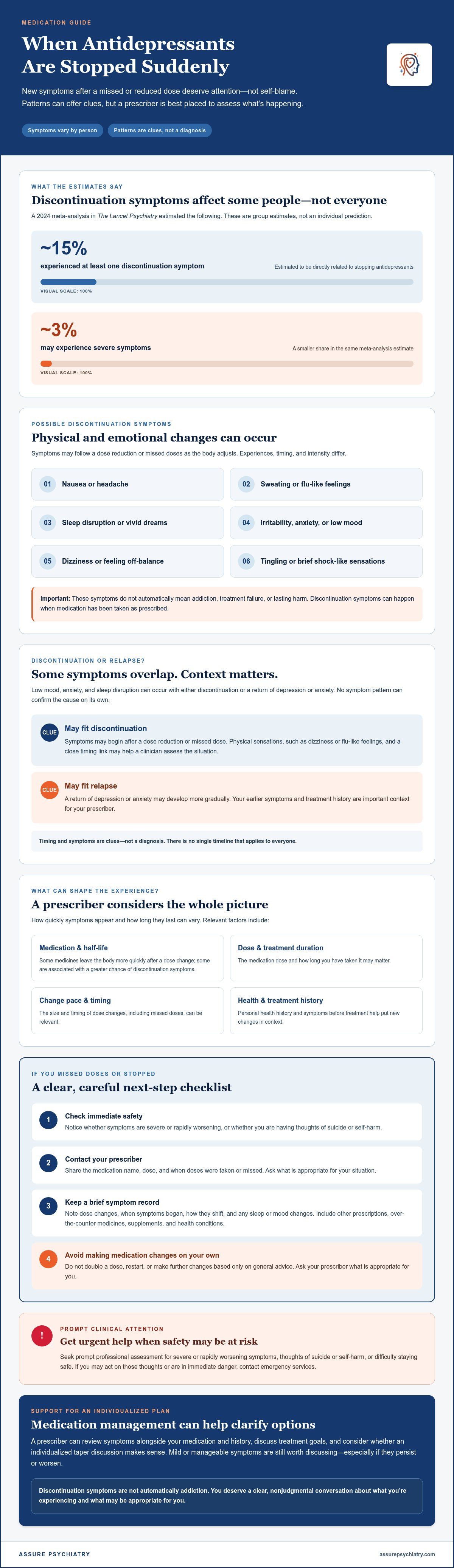
Possible symptoms include nausea, headache, sweating, sleep disruption, vivid dreams, irritability, or unusual sensations such as tingling. Some people describe feeling off-balance or having brief, shock-like sensations. These are examples, not a checklist: symptoms, timing, and intensity vary, and no single symptom establishes the cause.
A 2024 meta-analysis in The Lancet Psychiatry estimated that about 15% of people experience at least one discontinuation symptom directly related to stopping antidepressants, while about 3% may experience severe symptoms. These estimates describe groups, not an individual’s likelihood or experience.
Why can symptoms differ from person to person?
One factor is a medication’s half-life, the time it takes for the amount of medicine in the body to fall by half. A shorter half-life can mean levels decline more quickly after a dose change, and some antidepressants are associated with a greater chance of discontinuation symptoms than others. The medication, dose, how long you’ve taken it, the size and timing of dose changes, and your health history may all matter.
The risks of stopping antidepressant medication suddenly are not the same for everyone. A prescriber can interpret symptoms in the context of your treatment rather than relying on a general timeline. Keep a brief record of when you took or missed doses, any changes made, when symptoms began, and how they’ve shifted. Include sleep and mood changes, too. These details can make a conversation with your prescriber clearer and help guide a plan suited to you.
Why can sudden antidepressant changes affect mood and physical well-being?
An antidepressant dose change can shift the amount of medication in the body before the brain and body have had time to adjust. That transition may affect physical comfort, sleep, or mood. It doesn’t mean you’ve done anything wrong, but it can help explain why symptoms may emerge after a sudden stop or missed doses.
Symptom timing and duration vary by medication, dose, treatment duration, pace of change, and individual health history. Some discontinuation symptoms can begin within days of a reduction or missed dose, while others may appear later. How long they last also differs. There isn’t one timeline that applies to everyone.
Which factors can affect the experience?
Your clinician will consider which antidepressant you take, your dose, how long you’ve taken it, and how quickly it was reduced or stopped. Missed doses may matter, too. Other prescriptions, over-the-counter medicines, supplements, and health conditions can affect the assessment, so share a complete and accurate list rather than trying to sort out the cause alone.
Note when changes happened and when symptoms began, along with any sleep or mood shifts. Mild or manageable discomfort is still worth discussing with your prescriber, especially if it persists or worsens. Seek prompt professional assessment for severe or rapidly worsening symptoms, thoughts of suicide or self-harm, or difficulty staying safe. If you may act on those thoughts or are in immediate danger, contact emergency services.
How are discontinuation symptoms different from relapse?
Some changes, such as low mood, anxiety, or sleep disruption, can occur with either discontinuation or a return of depression or anxiety. Physical sensations or a close timing link to a dose change may help a clinician assess what’s happening, while a relapse may develop more gradually. These patterns are clues, not a diagnosis.
Your treatment history matters, including what symptoms you had before starting medication, how well it helped, and when the current changes began. Harvard Medical School explains why a clinician-guided plan matters when you taper off your antidepressant. The risks of stopping antidepressant medication suddenly are individual, so avoid making further medication changes based on symptoms alone. A medication-management appointment can help you review the full picture; if you’re in Portland or elsewhere in Oregon, Assure Psychiatry’s medication management may be one option to explore.
Are discontinuation symptoms the same as depression returning?
They can feel similar, but they aren’t necessarily the same. Discontinuation symptoms may follow a dose change, while depression or anxiety can return after treatment changes. Both can also happen at once, so don’t assume a single cause based only on how you feel.
| Clue | Possible discontinuation symptoms | Possible returning condition symptoms |
|---|---|---|
| Onset | May appear after a dose reduction, missed doses, or stopping medication. | May emerge more gradually, though timing can vary. |
| Pattern | May include physical or sensory changes, sleep disruption, or emotional symptoms. | May resemble earlier depression or anxiety symptoms, such as persistent low mood, loss of interest, or ongoing worry. |
| Course | May shift over time, but duration and intensity differ between people. | May persist or affect daily life in ways that resemble a previous episode. |
These patterns are clues, not a diagnostic test. The American Academy of Family Physicians’ overview of Antidepressant Discontinuation Syndrome describes symptoms clinicians may consider, but your history and circumstances matter, too. The risks of stopping antidepressant medication suddenly don’t reveal by themselves whether symptoms are withdrawal, relapse, or both.
What clues may help a clinician tell them apart?
Write down when your dose changed or a dose was missed, when each symptom began, and whether it’s improving, worsening, or changing. Note shifts in mood, sleep, physical sensations, and your ability to manage everyday tasks. Include any safety concerns, too. A prescriber can review these details alongside your medication history, previous symptoms, treatment response, and broader health picture. Feeling unwell doesn’t automatically mean you should restart medication; don’t restart or change your dose without guidance from a clinician.
When should symptoms receive urgent attention?
Get urgent help for suicidal thoughts, feeling unable to stay safe, or severe symptoms that are rapidly worsening. In the United States, call or text 988 for crisis support. If there’s immediate danger, call 911 or go to an emergency department. You deserve support while the cause of symptoms is being assessed.
What should you do if you have stopped or missed antidepressant doses?
If you’ve missed doses or stopped taking an antidepressant, try not to panic or blame yourself. The safest next step depends on your medication, how long it’s been since your last dose, and how you’re feeling. The risks of stopping antidepressant medication suddenly can differ from person to person, so seek individualized guidance rather than guessing what to take next.
- 1. Check your immediate safety. If you have severe or rapidly worsening symptoms, suicidal thoughts, or feel unable to stay safe, seek urgent help. In the United States, call or text 988 for crisis support. If you’re in immediate danger, call 911 or go to an emergency department.
- 2. Contact your prescriber. Call or message the prescribing clinician or clinic and explain that you stopped or missed doses. Ask what to do next. Don’t double a dose, restart medication, or make another treatment change based only on this article or a general online recommendation.
- 3. Gather the details. A clear timeline can help your clinician assess your situation and advise you. Include the medication name, prescribed dose, date and time of your last dose, missed doses, and any recent dose changes.
What information should you share with your prescriber?
Describe each symptom, when it started, how severe it feels, and whether it’s affecting sleep, daily activities, or your sense of safety. Mention other medicines and supplements, as well as relevant health changes or pregnancy. If you’re unsure about a detail, say so. You don’t need to have everything figured out before asking for help.
What if you cannot reach your regular clinician?
Try the prescribing clinic’s usual contact method and ask how to reach a qualified healthcare professional for advice. If you’re between prescribers or having trouble maintaining follow-up, a guide on How to Switch Psychiatrists may help you think through continuity of care. If you’re in Oregon, you can also explore Telepsychiatry in Oregon as a possible way to seek psychiatric follow-up. These options aren’t substitutes for emergency care: call or text 988 for crisis support, and call 911 or go to an emergency department if there’s immediate danger.
If you’d like support reviewing medication concerns and next steps, explore medication management with Assure Psychiatry.
How can medication management support a safer antidepressant plan?
Deciding whether to continue, adjust, or stop an antidepressant is a personal choice best made with clinical guidance. A prescriber can help you weigh how the medication has affected your symptoms, any side effects or concerns, and what matters to you in treatment. This conversation can help whether you’re considering a change or have already stopped taking your medication.
If stopping is one of your goals, ask about an individualized tapering plan rather than trying to create a schedule yourself. The pace and approach depend on your medication, treatment history, current symptoms, and other health factors. There’s no single plan that fits everyone, and an appointment doesn’t automatically mean you’ll be prescribed medication or make a change.
What may a medication-management appointment cover?
You and the clinician can review your current symptoms, medication and dose history, benefits, side effects, and treatment preferences. Share what feels manageable or difficult in daily life, along with questions about stopping or changing medication. Together, you can discuss appropriate options and what follow-up may make sense. The goal is a considered plan that reflects your needs, not pressure to choose a particular treatment.
How can you explore psychiatric care in Portland or virtually?
Assure Psychiatry offers psychiatric evaluations and medication management, with in-person visits in Portland and virtual telepsychiatry services. If you’re considering care, confirm directly whether the appointment format is available and appropriate for your location, and check current insurance participation and coverage. A medication-management follow-up can provide space to review concerns and discuss next steps collaboratively.
The risks of stopping antidepressant medication suddenly can feel worrying, but you don’t have to sort through medication questions alone. If you’d like to explore whether this practice may be a fit, learn about medication management in Portland and ask about the options available to you. This is a routine-care option, not emergency support. If you have suicidal thoughts or can’t stay safe, call or text 988 in the United States for crisis support. If there’s immediate danger, call 911 or go to an emergency department.
Choose a safer next step with support
The risks of stopping antidepressant medication suddenly can include symptoms that are unsettling, but experiences differ. Discontinuation symptoms and returning depression or anxiety can overlap, so timing and symptom patterns may offer clues without confirming the cause. A prescriber can review your medication history and help you consider an individualized plan, including whether tapering is appropriate.
If you’ve missed doses or stopped, share the medication name, dose, last dose, and any changes in symptoms with your prescriber. Don’t double a dose, restart, or make further changes based only on general guidance. You deserve a thoughtful conversation about your concerns and treatment goals, without judgment.
Assure Psychiatry offers psychiatric evaluations and medication management, with in-person visits in Portland and virtual telepsychiatry services. You can explore medication management with Assure Psychiatry and ask about care options that may fit your needs. For immediate safety concerns, seek urgent support rather than waiting for a routine appointment. One clear next step can help you move forward with greater confidence.
Frequently Asked Questions
Is it dangerous to stop antidepressants suddenly?
Stopping suddenly can cause uncomfortable discontinuation symptoms or a return of the condition being treated, but not everyone experiences symptoms, and not every symptom is dangerous. The risks of stopping antidepressant medication suddenly depend on your medication, dose, treatment history, and health. Contact your prescriber for advice specific to you. Seek urgent help if you have suicidal thoughts, can’t stay safe, or experience severe or rapidly worsening symptoms.
Can stopping antidepressants suddenly cause withdrawal symptoms?
Yes, some people experience discontinuation symptoms after stopping an antidepressant or missing doses, while others don’t. Possible changes can be physical, emotional, or related to sleep, and may overlap with depression or anxiety symptoms. A clinician can consider when symptoms began alongside your medication history. Don’t change your dose or restart medication based only on general information. Contact your prescriber or another qualified healthcare professional for guidance tailored to you.
How long do antidepressant discontinuation symptoms last?
There’s no single duration that applies to everyone. Symptoms can vary with the medication, dose, how long you’ve taken it, how it was stopped, and individual health factors. If symptoms are severe, persistent, or worsening, contact a healthcare professional. Tell them when you took your last dose and when symptoms began, and describe how they’ve changed. This timeline can help a clinician assess your situation and discuss appropriate next steps.
What happens if I miss several antidepressant doses?
The effects of missed doses vary by medication and individual circumstances. You may notice no change, a return of symptoms, or possible discontinuation effects. Check the instructions that came with your medication and contact your prescriber or pharmacist for personalized advice. Don’t take extra doses to make up for missed ones unless a qualified professional specifically tells you to. If you’re in Portland or elsewhere in Oregon, include your location when asking about follow-up options.
How can I tell withdrawal symptoms from depression coming back?
It can be difficult to tell because some symptoms overlap, and discontinuation effects and depression can occur around the same time. When the dose changed, physical sensations, mood and sleep changes, effects on daily functioning, and your treatment history may help a clinician assess possible causes. No single clue confirms the answer. Write down what changed and when, then share those details with your prescriber instead of trying to diagnose yourself.
Should I restart my antidepressant after stopping it?
Don’t restart or adjust a prescription solely on the basis of an online article. What’s appropriate depends on the medication, dose, time since your last dose, current symptoms, and other health factors. Contact your prescriber or another qualified healthcare professional for individualized guidance. If you have thoughts of suicide or feel unable to stay safe, seek immediate crisis or emergency support rather than waiting for a routine appointment.
When should I seek emergency help after stopping an antidepressant?
Seek immediate help if you may harm yourself, can’t stay safe, or have a severe, rapidly worsening emergency. In the United States, call or text 988 for crisis support. If there’s immediate danger, call 911 or go to an emergency department. For concerning symptoms that aren’t immediately life-threatening, contact your prescriber or a healthcare professional promptly. If you’re in Portland, Oregon, don’t wait for a routine visit when safety is at risk.
Can a psychiatrist help me stop or change an antidepressant safely?
A psychiatrist can review your symptoms, medication history, side effects, and goals, then discuss appropriate options with you. Any medication change should be individualized, not based on a generic schedule, and an appointment doesn’t necessarily mean you’ll receive a prescription or change your treatment. Assure Psychiatry offers psychiatric evaluations and medication management, with in-person visits in Portland and virtual telepsychiatry. If you’re in Oregon or elsewhere, including Washington or Seattle, confirm service availability and eligibility directly with the practice.
Recent Comments