

If you’re searching “my ADHD medication isn’t working anymore Seattle,” it can be unsettling to find your focus slipping or everyday tasks becoming harder again. A change in how treatment feels is worth taking seriously, but it doesn’t automatically mean your medication has stopped working or that you need a different dose.
Symptoms, side effects, or changes in your routine may all be relevant. A careful review with a qualified prescriber can help you consider these factors and identify safe next steps. Don’t stop, increase, or otherwise change your medication without guidance from the clinician who prescribes it.
This article covers factors that may affect treatment response, what to track, and how to prepare for a medication review. If you’re considering virtual care from Seattle, confirm that the clinician is licensed to treat patients located in Washington and has current telehealth availability for your situation. Assure Psychiatry offers ADHD treatment and medication management from its Portland practice; contact the clinic to confirm Seattle-area eligibility.
Key Takeaways
- A perceived drop in effectiveness is a change to explore with your prescriber, not proof that your medication has failed or that you’ve done anything wrong.
- Consider symptom patterns alongside sleep, stress, schedule changes, side effects, and other context before drawing conclusions about treatment.
- Keep a dated log of symptoms, side effects, medication timing, and effects on daily activities to help guide your appointment.
- If you’re searching “my ADHD medication isn’t working anymore Seattle,” gather observations and questions for your prescriber before considering any clinician-guided treatment changes.
- Assure Psychiatry offers ADHD treatment and medication management from its Portland-based practice. Confirm Washington licensure and Seattle-area virtual availability before asking about an appointment.
When ADHD Medication Feels Less Effective: What That Change Can Mean
If focus has become harder or familiar tasks are piling up again, it makes sense to wonder whether your ADHD medication is helping as much as before. That experience deserves attention, but it doesn’t prove the medication has stopped working or that you’ve done something wrong. A change in perceived benefit is a reason to review your experience with your prescriber, not a diagnosis on its own.
A perceived change in benefit is a signal to review, not proof of medication failure. A clinician can assess your treatment response in context.
What does it mean when ADHD medication seems less effective?
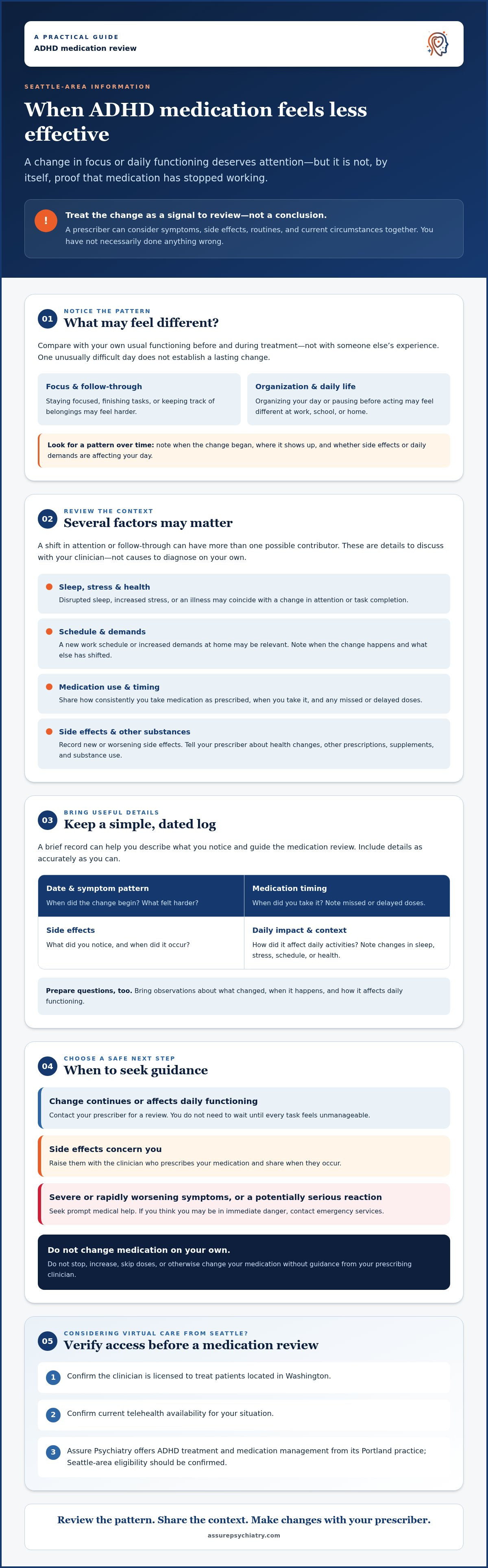
You might notice more difficulty staying focused, finishing tasks, keeping track of belongings, organizing your day, or pausing before acting. Compare these areas with your own usual functioning before and during treatment, rather than measuring your experience against someone else’s. ADHD symptoms and daily demands vary from person to person.
One unusually difficult day doesn’t establish a lasting change. Look for a pattern over time, including what’s happening at work, school, or home and whether side effects are affecting your day. A simple record of dates, symptoms, and daily impact can help you explain what you’re noticing. If you’re searching “my ADHD medication isn’t working anymore Seattle,” remember that the phrase describes a concern, not a clinical conclusion. For a broad overview of treatment approaches, see this guide to management of ADHD.
When should you bring the change to a prescriber?
Contact your prescriber if the change continues, interferes with daily functioning, or occurs alongside side effects that concern you. You don’t need to wait until every task feels unmanageable. A routine check-in can help you explain what has shifted and ask whether your treatment plan needs a closer review.
Seek prompt medical help for severe or rapidly worsening symptoms or a potentially serious reaction. If you think you may be in immediate danger, contact emergency services. For non-urgent questions, reach out to the clinician who prescribes your medication. Don’t change the dose, skip doses, or stop the medication on your own. Your prescriber can advise you on safe next steps by considering symptoms, functioning, side effects, and your circumstances together.
Why ADHD Medication May Feel Different: Factors to Review Before Changing Treatment
A shift in focus or follow-through can have more than one possible contributor. Rather than assuming the medication has failed, your prescriber can review what has changed and how treatment fits your current circumstances. A perceived change in benefit can have several possible contributors, so understanding it calls for an individualized review, not guesswork.
The review may include symptom patterns, how consistently you take medication as prescribed, when you take it, side effects, and changes in daily functioning. Share details as accurately as you can, including any missed or delayed doses. This isn’t about blame; it gives your prescriber a clearer picture of your experience.
Could sleep, stress, or routine changes affect how treatment feels?
Think about what else was happening when you first noticed a difference. Disrupted sleep, a new work schedule, increased demands at home, or an illness may coincide with changes in attention or task completion. These are possibilities to discuss, not explanations you need to diagnose yourself.
Note when the change began and whether it seems connected to particular circumstances. For example, does staying organized feel harder during a new shift pattern, or do concentration difficulties seem different after several nights of poor sleep? The timing may help your clinician explore the pattern, but it doesn’t establish a cause on its own.
Could side effects or other health changes be part of the picture?
Record any new or worsening side effects and when they occur in relation to your medication. Also tell your prescriber about changes in your health, other prescriptions, supplements, and substance use. Include what you take and when, if you know. Don’t stop or adjust anything based on a suspected connection; let the clinician assess the details.
A medication review may also consider whether other health concerns or co-occurring symptoms could be affecting how you feel and function. You don’t need to arrive with a diagnosis. If you’re searching “my ADHD medication isn’t working anymore Seattle,” bring your observations and questions to a qualified prescriber rather than trying to identify the cause alone.
Assure Psychiatry offers ADHD treatment and medication management through its Portland-based practice. To learn about ADHD treatment and medication management, contact the practice to confirm current Washington licensure and Seattle-area virtual availability before arranging care from Seattle.
Medication Adjustment or Reassessment? How to Compare Safe Next Steps
A return of ADHD symptoms doesn’t automatically mean you’ve developed tolerance or need a higher dose. The same concern can have different explanations, and a treatment change is only one possible outcome of a review. If you’re searching “my ADHD medication isn’t working anymore Seattle,” treat the next step as gathering information with your prescriber, not testing changes on your own.
A clinician may recommend continued monitoring while you track symptoms, functioning, and side effects. After reviewing the full picture, they may also discuss an adjustment or another treatment option. There isn’t one pathway that fits everyone. Medication class, dose, and timing depend on your individual history, treatment goals, response, and health needs.
What might a prescriber discuss during a medication review?
Expect a collaborative conversation about what’s helping and what isn’t. Your prescriber may ask about symptom patterns, how consistently you take the medication as prescribed, when its effects seem to change, side effects, health history, and your goals for daily functioning. Share what you’ve noticed, even if the pattern seems inconsistent.
Depending on the assessment, the clinician may suggest monitoring or discuss a treatment adjustment. Don’t raise or lower your dose, change when you take it, skip doses, stop the medication, or borrow someone else’s prescription. These aren’t safe substitutes for individualized medical guidance. Ask your prescriber before making any change, and contact them if you’re unsure what to do about a dose.
When might a broader ADHD evaluation be worth discussing?
If difficulties persist across settings, or you have questions about the original assessment or how your needs have changed, ask whether a broader psychiatric evaluation could help clarify the picture. It can revisit your history, symptoms, and treatment needs without assuming that a different diagnosis or medication is the answer. This may be useful if you’re unsure what information your current treatment plan was based on.
Choosing a clinician who can review your experience thoughtfully can make the conversation feel more manageable. A guide to finding the right ADHD psychiatrist in Portland may offer useful questions to consider when selecting a specialist. If you’re seeking care from Seattle, confirm that any clinician you contact is licensed to treat patients located in Washington and currently offers virtual appointments for your situation.
How to Prepare for an ADHD Medication Appointment in Seattle
A little preparation can make it easier to explain what’s changed and use appointment time well. If you’re looking up “my ADHD medication isn’t working anymore Seattle,” start with observations rather than trying to decide what adjustment you need. A prescriber can consider the details with you and discuss appropriate next steps.
A useful medication log records dated observations. It doesn’t establish why treatment feels different. Keep it brief and practical. Note when symptoms or side effects happen, how long they last, and what they make harder in daily life, such as finishing a work task or keeping up with a routine.
What should you track before the appointment?
Use a notebook or phone note to gather a few key details. You don’t need a perfect record; a clear snapshot is a helpful starting point.
- Symptoms and impact: Write down what you notice, when it occurs, and how it affects daily activities.
- Side effects: Note what you experience and when it happens in relation to taking medication.
- Context: Record sleep, schedule changes, major life events, and any missed doses. Don’t change how you take prescribed medication to test a theory.
- Medication details: Bring medication names and current instructions, along with relevant health updates and a list of other prescriptions or supplements.
- Questions and goals: Identify the changes that concern you most and what you hope treatment will support, such as staying organized or completing everyday tasks.
This information can help your prescriber understand the pattern without requiring you to have the answers in advance.
What should Seattle residents confirm before booking virtual care?
Before scheduling, ask whether the clinician is currently licensed to treat patients located in Washington and whether virtual appointments are available for Seattle residents. Confirm the appointment format and any requirements, and check whether the practice participates in your specific insurance plan. These are practical details to verify, not assumptions to make based on a provider’s location or website.
Assure Psychiatry is based in Portland, Oregon, and offers virtual care, but Seattle-area eligibility and availability must be confirmed. You can ask about an evaluation or medication management appointment through Assure Psychiatry’s appointment information. The Oregon telepsychiatry guide may help explain virtual-care basics, but it doesn’t establish whether a clinician can treat someone located in Washington.
Getting ADHD Medication Management: Safe Next Steps With Assure Psychiatry
If you’re looking for help after searching “my ADHD medication isn’t working anymore Seattle,” a medication review can offer space to describe what has changed and consider next steps with a qualified clinician. Assure Psychiatry is a Portland-based outpatient practice offering ADHD treatment, psychiatric evaluations, and medication management. The practice provides virtual care, but that alone doesn’t confirm that Seattle residents are eligible to receive care.
Before considering an appointment, confirm that a clinician is currently licensed to treat patients located in Washington and that telehealth is available for your situation. Assure Psychiatry does not have a Seattle office. Checking location eligibility first can help you determine whether the practice may be an appropriate option.
What can you expect from medication management?
A medication management appointment is an opportunity to review how treatment is going, including perceived benefits, side effects, progress toward your goals, and questions or concerns. Bringing your medication details and notes about changes in daily functioning can make the discussion more specific. You don’t need to arrive with a preferred medication change in mind.
Medication decisions depend on an individualized clinical assessment. A clinician may consider your history and current needs before discussing possible next steps. An appointment does not guarantee a particular prescription or outcome, and timing and insurance coverage depend on the practice’s current arrangements and your circumstances. Assure Psychiatry accepts most major insurance plans, but confirm participation for your specific plan.
For a general overview of follow-up care, see the medication management guide for Portland. It may help you understand what to ask, while Seattle-area eligibility still needs to be checked directly.
How can you ask about care from Seattle?
Start with a brief message or call asking whether a clinician is currently licensed in Washington and accepting Seattle-area virtual appointments. You can also confirm the appointment format, any requirements, and whether your insurance plan is accepted. If the practice can consider your situation, ask which records or medication information would be useful to prepare for an initial conversation.
A brief inquiry can help you determine whether the practice is a fit before taking another step. Ask about clinician licensure, current availability, insurance participation, and what to bring to an evaluation or follow-up appointment. You deserve clear answers as you explore safe, collaborative ADHD medication management.
Take the Next Step Toward a Thoughtful Medication Review
If you’re searching “my ADHD medication isn’t working anymore Seattle,” remember that a perceived change is a reason to review your treatment, not proof that medication has failed. Tracking symptoms, side effects, timing, and changes in daily life can help your prescriber understand what’s happening. Don’t adjust or stop medication without their guidance.
Assure Psychiatry offers ADHD treatment, psychiatric evaluations, and medication management from its Portland-based practice, with virtual care and in-person visits at its Portland office. The practice describes its care as compassionate and culturally competent. If you’re in Seattle, first confirm whether a clinician is currently licensed to treat patients in Washington and whether Seattle-area virtual appointments are available. You can contact Assure Psychiatry to ask about medication management and Seattle-area telehealth eligibility.
A clear conversation with a qualified prescriber can help you explore safe, individualized next steps. You don’t have to figure it out alone.
Frequently Asked Questions
Is it normal for ADHD medication to stop working?
It can feel that way, but a change in symptoms alone doesn’t show that medication has stopped working or explain why treatment feels different. Sleep, stress, routine changes, side effects, missed doses, or other health factors may be relevant. If you’re thinking, “my ADHD medication isn’t working anymore Seattle,” note when the change began and how it affects daily tasks, then discuss it with your prescriber. Don’t adjust or stop medication on your own.
Can you develop a tolerance to ADHD medication?
Tolerance is one possibility to ask your prescriber about, but a perceived drop in benefit can’t establish that it’s the cause. Your clinician can review symptom patterns, how you take the medication, side effects, and changes in health or routine before discussing options. Keep taking medication as prescribed while you seek guidance. Don’t increase the dose or change when or how you take it without direction from the clinician managing your treatment.
Should I increase my ADHD medication dose if it is not working?
No. Don’t increase, decrease, or change the timing of your prescribed dose on your own. A clinician needs to assess what has changed, your health history, treatment benefits, and side effects before recommending next steps. If symptoms have worsened or side effects are concerning, contact your prescriber and describe what you’ve noticed. Bring medication details and questions to the conversation, and follow your current instructions unless your clinician advises otherwise.
What should I track if my ADHD medication seems less effective?
Record dates and times when symptoms or side effects occur, how long they last, and what daily activities they affect. Note sleep changes, schedule shifts, missed doses, and other relevant context, but don’t change prescribed use to test a possible explanation. Bring your medication names, current instructions, observations, and questions to your appointment. The goal is to share what happened, not to diagnose the cause yourself.
Can stress or poor sleep make ADHD symptoms feel worse?
Stress, disrupted sleep, or changes in routine may affect how someone experiences attention and daily functioning, but they don’t identify the cause of a particular change. Keep a brief record of when these circumstances occur and whether symptoms seem to shift alongside them. Share that information with your prescriber, who can consider it alongside your symptoms, treatment history, medication use, and side effects.
Can I see Assure Psychiatry for ADHD medication management from Seattle?
Possibly, but Seattle-area eligibility depends on current clinician licensure and availability. Assure Psychiatry is based in Portland, Oregon, and offers virtual care; contact the practice to confirm that a clinician is licensed to treat patients located in Washington and whether Seattle telehealth appointments are available. Ask about appointment options and verify insurance participation for your specific plan before scheduling. The practice does not have a Seattle office.
What happens during an ADHD medication management appointment?
A clinician may review your current symptoms, daily functioning, medication use, perceived benefits, side effects, and changes since your previous visit. Bring notes and questions so you can describe what’s different and what you hope treatment will support. After considering your individual situation, the clinician can discuss appropriate next steps. An appointment doesn’t guarantee a particular prescription, medication change, or treatment outcome.
Recent Comments