

What if discussing medication didn’t mean agreeing to take it? If you’re typing “fear of medication side effects psychiatrist Oregon” into a search bar, you may be worried about more than a list of possible reactions. Side effects could affect your sleep, work, relationships, or routines, and alarming online stories can make it hard to judge what may be relevant to you. Those concerns deserve a thoughtful conversation, not pressure or dismissal.
It’s reasonable to want clear information before making a treatment decision. A psychiatric evaluation can help clarify your needs and explore potential benefits, risks, and alternatives. You can ask questions, explain what matters in your daily life, and discuss how a plan could be monitored or adjusted with your clinician.
This article explains how to bring medication concerns to a psychiatrist, weigh your options, and find psychiatric medication management in Oregon. At Assure Psychiatry, medication management includes follow-up to review how treatment is working and discuss possible side effects. The outpatient clinic in Portland offers in-person visits and virtual telepsychiatry, subject to eligibility and availability, so you can ask which care format may fit your circumstances.
Key Takeaways
- Medication concerns are valid questions to raise with a psychiatrist, and your preferences can help shape the discussion.
- Compare potential benefits, risks, alternatives, and follow-up plans in the context of your symptoms and goals.
- When comparing psychiatrists, notice whether they listen, explain medication clearly, and revisit concerns over time.
- Prepare for a medication conversation by noting your concerns, treatment goals, current medicines, and relevant history.
- If you’re seeking a fear of medication side effects psychiatrist Oregon residents can consult, consider whether in-person or virtual care may fit, and confirm eligibility and availability.
Fear of medication side effects: what an Oregon psychiatrist can help you explore
Questions about side effects are reasonable, especially if you’re concerned that a change in sleep, concentration, or energy could disrupt daily life. A psychiatrist can help you sort through those worries without treating them as a reason to rush into medication or rule it out. Searching for a fear of medication side effects psychiatrist Oregon may be a first step toward finding a clinician who makes room for your questions.
Medication management involves more than selecting a prescription. It includes assessing your needs, discussing a plan, and following up to review how treatment is working and whether you’re experiencing unwanted effects. Possible effects differ by medication and person, so general information can’t predict your experience. An evaluation also doesn’t commit you to starting medication. It can help clarify what you’re experiencing and which options may be worth discussing.
What does a psychiatrist consider before discussing medication?
A clinician may ask about your symptoms, health history, current medicines, and what you hope treatment will help you do. Your priorities matter too. If protecting sleep or staying alert at work is a major concern, say so directly. Depending on your situation, the conversation may include medication, non-medication approaches, or a combination. Learn more about what to expect from a psychiatric evaluation in Portland.
Does being afraid of side effects mean medication is not right for me?
No. Fear alone doesn’t determine whether medication is suitable. It’s one part of a broader, individual discussion. Try naming the specific effects you’re worried about and why they matter. Are you concerned because of a past experience, something you read, or the way a possible effect could affect caregiving or your workday? Those details can guide questions about benefits, risks, alternatives, and how a response would be monitored.
Informed caution is a reason to ask questions, not a decision about treatment. The choice should reflect your needs and a clear discussion with your clinician. This collaborative process is often called shared decision-making. You can ask what might happen if you wait, which alternatives could be considered, and how concerns could be revisited. You deserve enough information to make a considered choice without feeling pressured.
How psychiatrists weigh possible medication side effects and benefits
A medication decision isn’t a contest to find an option with no risks. A psychiatrist considers potential benefits and drawbacks in light of your symptoms, health history, current medicines, preferences, and goals. For example, you might discuss how a treatment’s intended benefit relates to priorities like sleep or concentration, then ask which side effects and monitoring steps are relevant to that specific option. The FDA offers guidance on weighing the risks and benefits of medicines.
Use a comparison like this to organize the conversation. It’s a prompt for questions, not a universal ranking. Suitable options and possible effects depend on the person and clinical context.
| Option | Intended goal | Possible effects | Questions to ask | Follow-up plan |
|---|---|---|---|---|
| Medication | Address symptoms or support a treatment goal | Effects vary by medication and individual; review its FDA-approved prescribing information | Which effects are common? Which need urgent attention? | Ask how response and side effects will be reviewed |
| Non-medication approach | Support a goal without starting medication | Depends on the approach; ask about its demands and limitations | Is this appropriate for my symptoms and circumstances? | Agree on when to check progress or revisit options |
| Combined approach | Use more than one suitable form of support | Consider the effects and practical demands of each part | How will the parts work together? | Clarify what will be monitored and when |
Which questions help clarify potential side effects?
Ask the prescriber to distinguish effects that may be expected from symptoms that need prompt or urgent attention. Find out when to call, how monitoring will work, and what follow-up options are available. Share all medicines and supplements you take, any known allergies, and relevant health history. This context can help the clinician discuss the specific option and its safety information with you.
What alternatives can be discussed if medication worries you?
Alternatives depend on your symptoms, diagnosis, and clinical situation. You can ask whether therapy, lifestyle supports, watchful follow-up, or a combination of approaches may be appropriate. These are possibilities to explore with a clinician, not options that fit everyone or services Assure Psychiatry necessarily provides. For a closer look at psychiatric care options, see anxiety treatment in Portland.
If you’re looking for a fear of medication side effects psychiatrist Oregon residents can consult, Assure Psychiatry offers psychiatric evaluations and medication management in Portland. You can learn about Assure Psychiatry’s care and ask whether its services fit your needs. Confirm current availability and, for virtual care, eligibility.
How to compare Oregon psychiatrists when medication side effects worry you
Notice how a clinician responds when you raise a concern. Do they listen without minimizing it, explain options in plain language, and make room for your priorities? Medication management includes follow-up, so ask how changes in symptoms or possible side effects will be recorded and revisited. You’re looking for a process that helps you stay informed and involved.
As you compare psychiatrists, consider whether they can clearly explain:
- How appointments address your treatment goals, questions, and medication concerns.
- How follow-up works and how your response or side effects are documented.
- How to contact the clinic about non-emergency medication concerns and what response process to expect.
- Whether in-person or virtual appointments fit your needs and circumstances.
Confirm practical details directly with the clinic. Ask whether the clinician is licensed to provide care where you live in Oregon, whether your location and clinical needs are eligible for the appointment format, and whether appointments are currently available. Assure Psychiatry is a Portland outpatient clinic offering in-person visits and virtual care, subject to current eligibility and availability. The clinic accepts most major insurance plans, but check whether your specific plan is accepted and what it covers.
What should I ask before choosing a medication management psychiatrist?
You might ask, “How will we discuss my goals and concerns before making a medication decision?” and “How will possible side effects be reviewed at follow-up?” Also ask whom to contact about non-emergency medication concerns and how the clinic handles those messages. The answers can help you assess whether the follow-up process is clear to you. For more about this type of care, see medication management in Portland.
Is virtual psychiatry an option for patients in Oregon?
Virtual visits may offer a convenient format, but eligibility can depend on your location and clinical needs. Assure Psychiatry offers virtual telepsychiatry, subject to current eligibility. Before scheduling, confirm whether the clinic can see you where you live, which appointment formats are available, and whether virtual care suits your situation. The guide to telepsychiatry in Oregon can help you understand what to ask.
If you’re searching for a fear of medication side effects psychiatrist Oregon residents can consult, use these questions to assess whether the clinician’s communication and follow-up approach match what you need. A clear process can make it easier to discuss concerns and decide on next steps together.
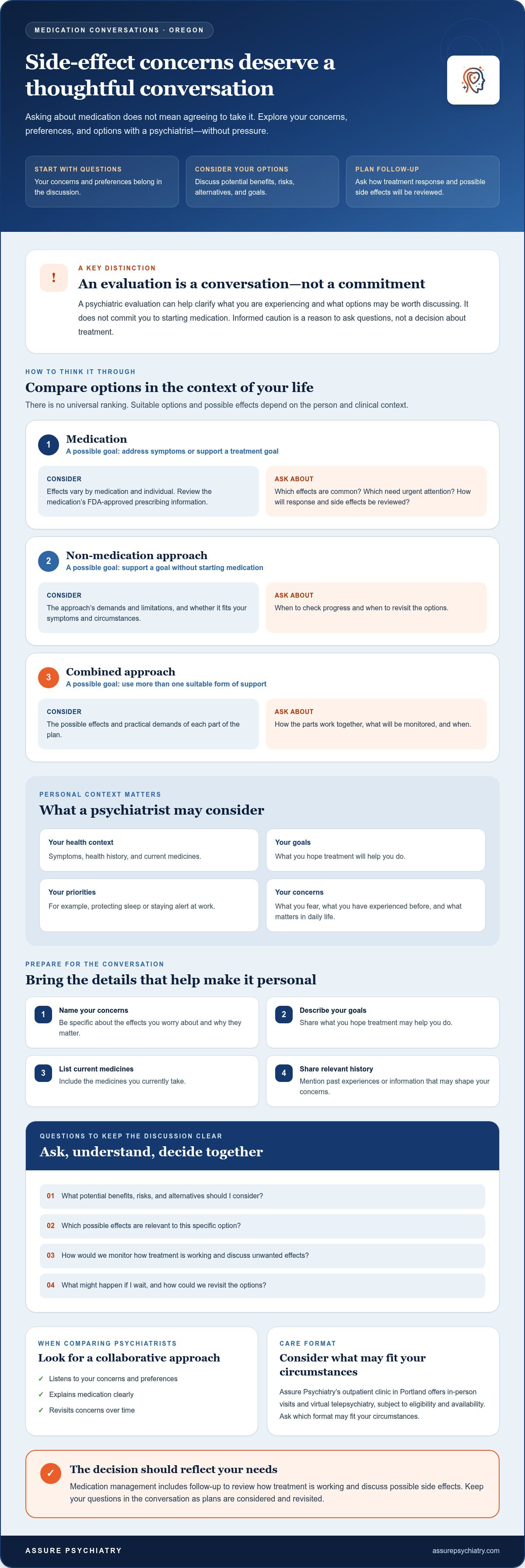
Preparing for Medication Talks and Managing Side Effects
Preparing before an appointment can make it easier to explain your concerns and get useful answers. Gather information your clinician may need, then leave with a clear plan for follow-up. If you’re searching for “fear of medication side effects psychiatrist Oregon,” look for care that treats your questions as part of the conversation, including after a medication decision.
What information should I bring to a psychiatric appointment?
Bring a current list of prescription and over-the-counter medicines, vitamins, and supplements, along with known allergies and relevant health or treatment history. Write down the effects you fear and how they could affect daily life, such as sleep, driving, work, or caregiving. Add your treatment priorities, questions, and any practical barriers that could make follow-up difficult.
- What symptoms or daily challenges would you most like help with?
- What possible effects worry you, and what makes them especially concerning?
- What questions do you want answered before deciding on a plan?
- What could make it hard to attend follow-up or contact the clinic?
Before you leave, confirm the next step, when follow-up is planned, and whom to contact about a non-emergency medication concern. If a new symptom appears, note what it feels like, when it began, how severe it is, and whether it followed a medication change. That record can give your prescriber useful context.
What should I do if I notice a possible side effect?
Contact your prescriber for advice tailored to your medication and health history. Don’t stop, change the dose, or combine prescribed medicines on your own. Check with the prescriber before making changes or adding medicines or supplements. If symptoms are severe or immediately dangerous, seek urgent medical care or contact local emergency services rather than waiting for a routine appointment. For less urgent concerns, ask the clinic how to reach the care team and what follow-up to expect.
Assure Psychiatry’s medication management includes follow-up to review treatment response and possible side effects. If you’d like to discuss your concerns as part of a psychiatric evaluation or medication management, contact Assure Psychiatry to learn about its care and confirm current availability.
Finding a psychiatrist in Oregon who takes medication concerns seriously
Choosing psychiatric care is not only about finding someone who can discuss medication. It’s also about feeling able to speak honestly about what worries you, understand the options, and know how follow-up will work. If you’re looking for a fear of medication side effects psychiatrist Oregon residents can consult, consider whether the clinician welcomes questions and treats medication decisions as a conversation, not a foregone conclusion.
Assure Psychiatry is a Portland outpatient clinic offering psychiatric evaluations and medication management. Patients can ask about in-person visits in Portland or virtual care, subject to current eligibility and availability. The clinic accepts most major insurance plans, but accepted plans and individual coverage can vary, so confirm details directly. Check appointment availability with the clinic as well.
What can I expect from medication management at Assure Psychiatry?
Medication management includes follow-up to discuss how treatment is going, any concerns or side effects, and possible next steps. Recommendations are individualized, and an evaluation or appointment doesn’t guarantee that medication will be recommended or prescribed. Sharing your fears early can help the clinician understand what matters most to you, such as protecting sleep, staying focused at work, or avoiding a difficult past experience.
You can ask how follow-up appointments review your response, how to raise concerns between visits, and how your preferences will be considered if the plan needs to change. The aim is a clear, ongoing process, while recognizing that no clinician can promise a particular medication, outcome, or absence of side effects.
How can I take a first step without committing to medication?
Ask what an initial psychiatric evaluation involves and what information may be helpful to bring. You can explain that you’re seeking guidance, not agreeing in advance to start medication. Use the appointment to discuss your symptoms, priorities, concerns, and possible approaches. You can also ask what options may be appropriate for your situation and take time to consider the information before deciding on treatment.
If you’re ready to learn more, reach out with questions about the clinic’s services, current appointment availability, in-person or virtual care eligibility, and insurance coverage. A conversation about an evaluation can help you understand the next step without deciding on medication beforehand.
Explore care options with Assure Psychiatry
Take the next step at your own pace
Worries about side effects deserve a place in your treatment conversation. A psychiatrist can help you compare possible benefits, risks, and alternatives in light of your goals, and an evaluation doesn’t obligate you to start medication. If you choose medication management, follow-up provides an opportunity to review how treatment is working and discuss side effects or concerns.
Assure Psychiatry is a Portland outpatient clinic offering psychiatric evaluations and medication management, with in-person visits in Portland and virtual telepsychiatry options subject to current eligibility and availability. The clinic accepts most major insurance plans, but confirm whether your individual plan is accepted and what it covers.
If you’re searching for a fear of medication side effects psychiatrist Oregon patients can speak with, start by asking questions about the evaluation, care options, appointment availability, and coverage. Explore care options with Assure Psychiatry. You deserve care that takes your concerns seriously, and you can move forward one informed conversation at a time.
Frequently Asked Questions
Can I see a psychiatrist if I am afraid of medication side effects?
Yes. You can see a psychiatrist to discuss your concerns and explore possible care options without agreeing to take medication. A clinician can ask what effects worry you, explain relevant risks and benefits, and consider your symptoms, history, and preferences. If you’re searching for a fear of medication side effects psychiatrist Oregon patients can consult, look for a practice where questions are welcomed. Assure Psychiatry is based in Portland, Oregon. Confirm eligibility if you’re elsewhere.
How can a psychiatrist help me manage medication side effects?
A psychiatrist can help you identify possible side effects, discuss whether a symptom may relate to medication, and decide on appropriate next steps with you. Medication management may include follow-up to review how treatment is working and any concerns. Keep notes about a symptom’s timing and severity, and contact your prescriber for individualized guidance. Don’t change or stop a prescribed medication on your own. Seek urgent medical care for severe or immediately dangerous symptoms.
Do I have to take medication after a psychiatric evaluation?
No. A psychiatric evaluation is a chance to discuss your symptoms, history, goals, and possible approaches. It doesn’t automatically mean you must start medication. You can ask about potential benefits, risks, and alternatives, share what you’re comfortable considering, and discuss what might happen if you wait. The clinician can make recommendations based on your individual situation, but medication isn’t guaranteed. You can take time to understand the options before making a treatment decision.
What should I ask a psychiatrist about possible side effects?
Ask which side effects are common for the specific medication being discussed, which symptoms need urgent attention, and whom to contact if you notice a change. You can also ask how possible effects might relate to your health history and other medicines, and what follow-up is planned. Share prescriptions, over-the-counter medicines, supplements, and allergies. For medication-specific details, ask the prescriber to review current FDA-approved prescribing information with you.
Can I get virtual medication management with a psychiatrist in Oregon?
Virtual medication management may be an option, but eligibility and availability depend on your location and clinical needs. Assure Psychiatry offers virtual telepsychiatry as well as in-person visits at its Portland, Oregon, office. Before scheduling, confirm whether virtual care is available where you live and whether it fits your needs. If you’re in Seattle or elsewhere in Washington, ask the clinic directly about eligibility rather than assuming it can provide care there.
Should I stop taking medication if I notice a possible side effect?
Don’t stop or adjust a prescribed medication without first contacting your prescriber for advice tailored to your situation. Note what you’re experiencing, when it began, its severity, and any recent medication changes. Ask the clinician what to do and how soon to follow up. If symptoms are severe or immediately dangerous, seek urgent medical care or contact local emergency services instead of waiting for a routine appointment or message response.
Recent Comments