

Imagine staring at a calendar, counting the days since your first dose, and wondering if that slight lift in your chest is the medicine or just a lucky morning. It’s common to feel like a passive observer in your own treatment, caught between the anxiety of a four week waiting period and the confusion of new side effects. You might find yourself constantly searching for how to know if your psychiatric medication is working because you expect a sudden, dramatic shift in your mood. However, effective treatment isn’t a light switch; it’s the gradual restoration of your capacity to engage with life.
We understand that the path to mental tranquility is rarely a straight line. True progress often appears in quiet ways, like a more stable appetite or the ability to finish a task without feeling overwhelmed. This guide will help you identify these subtle emotional and functional shifts so you can manage your recovery with confidence. We’ll provide you with a clear vocabulary to discuss your progress with your psychiatrist, ensuring you’re a collaborative partner in your care. By learning to distinguish between temporary adjustments and restorative action, you can move toward a more stable, predictable daily life.
Key Takeaways
- Recognize that most psychiatric medications require a biological waiting period of four to eight weeks before you experience their full therapeutic effect.
- Discover how to know if your psychiatric medication is working by observing subtle shifts in daily function, such as improved sleep patterns and a more stable appetite.
- Distinguish between temporary “start-up” side effects, which often fade within ten days, and the long-term emotional benefits of your treatment plan.
- Identify the “gap,” or the newfound space between an emotional trigger and your reaction, as a primary sign of restorative progress and mental tranquility.
- Learn to use symptom journaling and feedback from trusted friends to provide your psychiatrist with the clear vocabulary needed for a collaborative follow-up.
Understanding the Timeline: Why Psychiatric Medications Take Time to Work
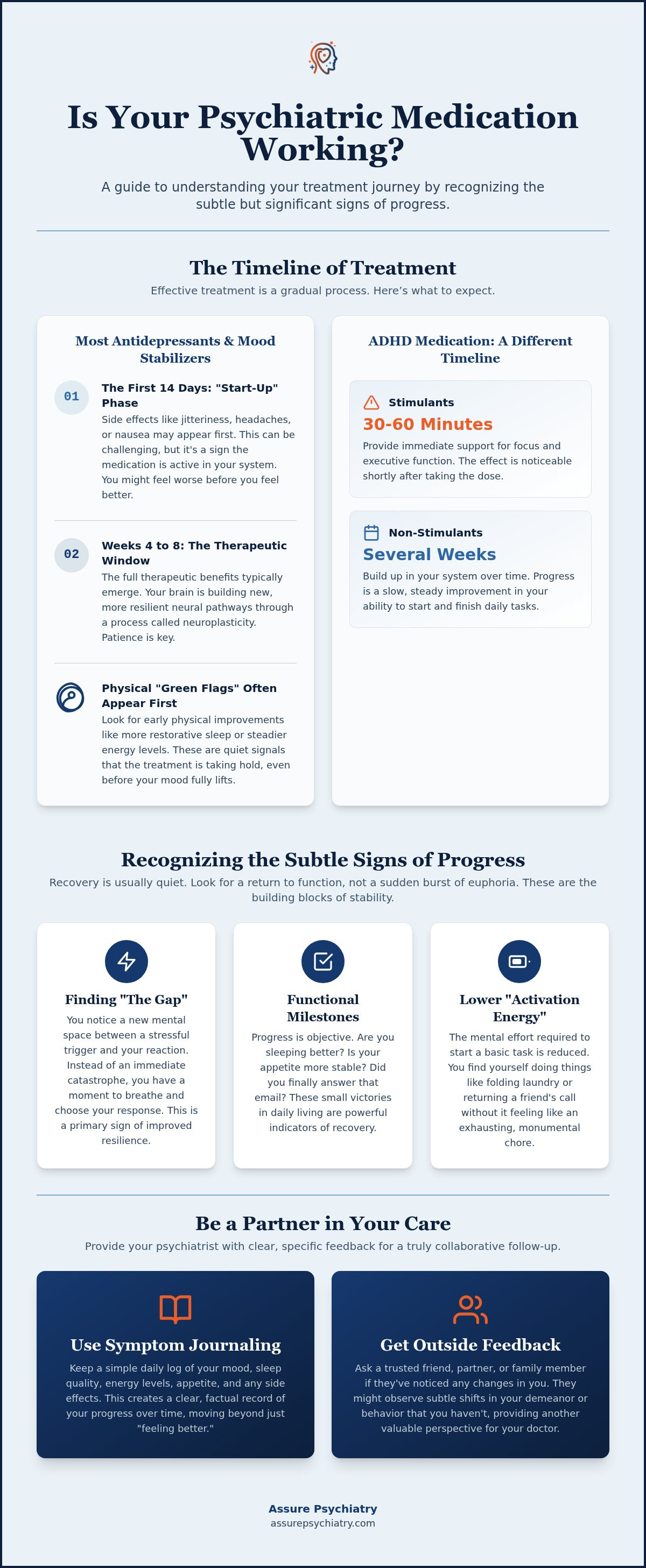
When you begin a new prescription, the silence from your symptoms can feel deafening. You might check the mirror or your mood every hour, wondering how to know if your psychiatric medication is working. It’s helpful to remember that your brain is a complex biological system, not a simple circuit. Most psychiatric medication, such as SSRIs, SNRIs, and mood stabilizers, requires a significant waiting period. While the chemicals enter your bloodstream quickly, your brain needs four to eight weeks to truly integrate these changes. This delay is a normal part of the process, not a sign that the medication is ineffective for you.
The first 14 days are often the most challenging because side effects like jitteriness, mild headaches, or nausea tend to peak before the therapeutic benefits arrive. It’s a frustrating paradox: you may feel worse before you feel better. If you don’t feel a lift in your emotional state immediately, you aren’t failing. Your body is simply doing the heavy lifting of adjusting to a new baseline. Staying patient during this window is easier when you view these early physical sensations as evidence that the medication is active in your system.
The Science of Neuroplasticity and Symptom Relief
Neuroplasticity is the brain’s ability to reorganize itself by forming new neural connections in response to treatment. This process takes time because the medication is encouraging your brain to build more resilient pathways rather than just flooding it with chemicals. Often, physical improvements appear before emotional ones. You might notice that your sleep is more restorative or your energy levels are steadier within the first week or two. These are early, quiet signals that the treatment is taking hold, even if your internal emotional landscape still feels heavy. Understanding how to know if your psychiatric medication is working involves looking for these physical “green flags” while the mood centers of your brain continue to heal.
Stimulants vs. Non-Stimulants: Different Timelines for ADHD
Medication for ADHD follows a unique set of rules. When seeking an adhd psychiatrist portland patients often learn that stimulants and non-stimulants have very different timelines. Stimulants typically work within 30 to 60 minutes, providing immediate support for focus and executive function. In contrast, non-stimulants build up in your system over several weeks. Your provider will help you manage expectations for that first week. They’ll ensure you understand whether to look for immediate clarity or a slow, steady improvement in your ability to start and finish daily tasks.
Recognizing the Subtle Signs of Emotional and Functional Progress
Many patients expect a sudden burst of euphoria when their treatment begins. However, recovery is usually much quieter. You might find that you aren’t necessarily “happier” in a traditional sense, but you’re suddenly more capable. This shift from feeling paralyzed to feeling functional is often the first real sign of progress. If you find yourself wondering how to know if your psychiatric medication is working, look at your to-do list. Did you answer that email you’ve been avoiding for weeks? Did you manage to fold the laundry without needing a nap afterward? These small victories are the building blocks of a stable recovery.
Another vital marker is the creation of “the Gap.” This is the mental space between a stressful trigger and your emotional reaction. Before treatment, a minor inconvenience might have felt like a catastrophe; now, you might notice you have a few seconds to breathe and choose your response. This improved resilience means you’re bouncing back from bad days much faster than before. You’re no longer a passive observer of your own distress. You might even find yourself re-engaging with small joys, like picking up a book or returning a friend’s phone call, without it feeling like an exhausting chore.
Functional Milestones in Daily Living
Functional progress is often more objective than emotional progress. You might notice your sleep hygiene improving, meaning you’re falling asleep easier and waking up feeling rested. Your physical energy levels and appetite might also return to a more natural baseline. A major sign is the reduction in “activation energy.” This is the mental effort required to start a basic task. When you stop dreading daily chores, it’s a clear indicator of restorative action. Many patients find that tracking your mood each day helps them see these functional wins that might otherwise go unnoticed. If you’re seeking specialized support to manage these changes, finding an adhd psychiatrist portland can help you navigate these milestones with expert guidance.
Emotional Regulation and Mental Tranquility
Mental tranquility isn’t just the absence of sadness; it’s the presence of peace. You might notice your racing thoughts have slowed down, or that you’re less prone to rumination. Patients often describe feeling less “brittle.” This means you aren’t as easily shattered by minor stressors or unexpected changes in your day. You’re developing a thicker skin, not because you’re numb, but because your brain is better equipped to regulate its responses. This steady, quiet strength suggests your treatment is working effectively. As you continue to monitor how to know if your psychiatric medication is working, these moments of internal calm will become your new baseline.
Many patients feel discouraged when they experience physical discomfort before mental relief. Nausea, jitteriness, or mild headaches are common “start-up” side effects that can make you question the value of your treatment. These symptoms typically occur because your brain and body are recalibrating to the new medication levels. Most of these sensations subside within seven to ten days as you move through the initial adjustment phase. If you’re wondering how to know if your psychiatric medication is working, remember that these early physical signals are often separate from the long-term emotional benefits you’re seeking.
Sometimes, a side effect is a signal that the dosage isn’t quite right for your specific biology. If you feel like a “zombie” or find yourself completely disconnected from your surroundings, the dose might be too high. You shouldn’t have to sacrifice your quality of life for symptom relief. You’re an active participant in your treatment, and you have the authority to decide which side effects are deal-breakers. Collaborative care means discussing these barriers openly with your provider to find a path that honors both your physical comfort and your goal of mental tranquility.
Red Flags vs. Normal Adjustments
It’s vital to distinguish between “feeling weird” and a true adverse reaction. While mild dizziness or a dry mouth are often normal adjustments, symptoms like a high fever, a severe rash, or sudden, intrusive thoughts of self-harm are red flags. These require immediate contact with your psychiatric provider or emergency services. Finding the right balance is about staying within the therapeutic window. The therapeutic window is the delicate balance between achieving significant symptom relief and maintaining manageable side effects. When you stay within this range, the medication acts as a supportive ally rather than a burden.
The ‘Blunting’ Effect: When You Feel Too Little
A frequent fear among patients is the loss of their personality or creative spark. If you feel emotionally numb or “flat,” you may be experiencing emotional blunting. This isn’t a permanent change to your character; it’s a sign that your medication needs a fine-tuning adjustment. You don’t have to accept a life without color to stay stable. By collaborating with your provider, you can find the “sweet spot” where your symptoms are managed without dampening your authentic identity. This ensures your treatment supports how to know if your psychiatric medication is working while preserving the traits that make you who you are.
How to Track Your Progress for Your Next Follow-Up Appointment
To get the most out of your treatment, you need to transition from being a passive observer to an active participant in your recovery. Relying on memory during a 30 minute appointment can be difficult, especially when you’re already feeling overwhelmed. A simple symptom journal is your most powerful tool for objective tracking. Every evening, take two minutes to rate your sleep quality, mood, and focus on a scale of 1 to 10. Over several weeks, these numbers create a visual map of your progress. This record is the most reliable way for you and your provider to determine how to know if your psychiatric medication is working.
Don’t overlook the observations of those who see you every day. Often, a partner, close friend, or colleague will notice you’re more engaged in conversation or less irritable before you feel the shift yourself. Ask them if they’ve seen a change in your “activation energy” or your ability to handle small stressors. Distinguishing between a “response” and “remission” is also crucial. A response means you’re feeling better than before, but remission means your symptoms have largely subsided and you feel like yourself again. If you’ve only achieved a partial response, it’s a sign that your treatment plan may still need adjustment to reach true mental tranquility.
Coming prepared for your medication management portland visit with these notes ensures your appointment is focused and productive. It moves the conversation away from vague feelings and toward concrete data points that help your doctor help you.
Questions to Ask Your Psychiatrist
During your follow-up, use your journal entries to guide the conversation. Consider asking these specific questions to gain clarity on your path forward:
- Is the level of improvement I’m seeing the maximum benefit I should expect from this specific dose?
- How can we distinguish between my original symptoms and these new physical sensations I’m tracking?
- What is our collaborative plan if we don’t see more significant functional progress in the next month?
The Role of the Collaborative Ally
Your subjective experience isn’t just a list of feelings; it’s the most valuable clinical data point your doctor has. While your initial psychiatric evaluation portland set the baseline, your ongoing tracking builds the story of your healing. We view our role as a collaborative guide rather than a paternalistic authority. By sharing your daily ratings and third-party observations, you provide the clear vocabulary needed to fine-tune your care. This partnership is essential for understanding how to know if your psychiatric medication is working at its highest potential. If you’re ready to partner with a provider who values your voice as much as their clinical expertise, contact Assure Psychiatry to schedule your next visit.
Partnering with Assure Psychiatry for Long-Term Mental Wellness
Finding the right balance in your treatment requires more than just a prescription; it requires a compassionate ally who understands the nuances of your unique biology. At Assure Psychiatry, we specialize in helping patients navigate the complexities of medication management with a focus on restorative action. If you’ve been struggling with how to know if your psychiatric medication is working, you don’t have to search for answers in isolation. Our approach is grounded in cultural competence and clinical expertise, ensuring that every patient feels seen, heard, and validated throughout their wellness journey.
For those managing neurodivergence, finding a specialized adhd psychiatrist portland is often the first step toward reclaiming focus and executive function. Precise tracking is especially vital here, as the difference between a successful dose and one that feels overwhelming can be quite narrow. To make this process as seamless as possible for busy patients in Seattle, Portland, and throughout the Pacific Northwest, we offer telepsychiatry oregon and Washington services. This virtual access allows for consistent follow-ups, which are essential for monitoring your progress and making safe, timely adjustments to your treatment plan.
A Stable Environment for Your Healing Journey
Healing happens best in a predictable, stable environment. We believe that regular medication management follow-ups are a cornerstone of safety and efficacy. These sessions aren’t just about renewing a script. They’re an opportunity to review your symptom journal and refine your path toward mental tranquility. We see the human behind the diagnosis, treating you as an individual rather than a list of symptoms. Whether you’re scheduling an initial psychiatric evaluation or looking to transition your care to our clinic, our process is designed to lower the barrier to high-quality mental health support.
Achieving Mental Tranquility Together
Our promise to you is one of reliability and ongoing support. We view a diagnosis as a tool for empowerment, providing you with the clarity needed to take charge of your health. You don’t have to navigate the difficult question of how to know if your psychiatric medication is working alone. We’re here to act as your collaborative guide, helping you interpret the subtle shifts in your mood and function. Together, we can find the “sweet spot” of treatment that allows you to engage with life fully and peacefully. Your journey toward mental tranquility is a partnership, and we’re honored to walk that path with you.
Your Path to Lasting Mental Tranquility
True healing isn’t marked by a sudden burst of joy, but by the quiet return of your capacity to engage with the world. You’ve learned that neuroplasticity takes time and that functional wins, like a restored appetite or the ability to finish a task, are significant milestones. Understanding how to know if your psychiatric medication is working involves looking beyond immediate mood shifts toward the subtle, functional restoration of your daily life. By tracking these changes and distinguishing between temporary side effects and therapeutic progress, you become an empowered partner in your own wellness journey.
Led by Dr. Olumide Aruwajoye, Assure Psychiatry provides compassionate, culturally competent care designed to meet your individual needs. We offer convenient telepsychiatry across Oregon and Washington, ensuring you have consistent support no matter where you are in the Pacific Northwest. You don’t have to navigate the complexities of medication alone. Schedule a consultation with Assure Psychiatry to find your path to tranquility. We’re here to help you move toward a life of consistent peace and reliability.
Frequently Asked Questions
How long does it typically take to feel the effects of an antidepressant?
Most antidepressants require four to eight weeks to reach their full therapeutic effect. While you might notice small improvements in your sleep, appetite, or energy levels within the first two weeks, significant shifts in your mood usually take longer. It’s helpful to monitor these early physical changes as you wait for the medication to fully support your emotional well-being and mental tranquility.
What should I do if I feel like my medication has stopped working?
If your symptoms begin to return after a period of stability, contact your psychiatric provider immediately to discuss a collaborative plan. You should never stop taking your medication abruptly, as this can cause uncomfortable withdrawal symptoms. Your provider can help determine if you need a dosage adjustment or a different treatment strategy to regain your sense of balance and daily function.
Can I tell if my ADHD medication is working on the very first day?
Stimulant medications for ADHD typically begin working within 30 to 60 minutes, so you may notice improved focus and clarity on your very first day. However, non-stimulant options often take several weeks to build up in your system. When considering how to know if your psychiatric medication is working for ADHD, look for a reduction in “activation energy” and a greater ability to finish daily tasks.
Is it normal to feel worse before I start feeling better on new meds?
Yes, many patients experience “start-up” side effects like nausea, mild headaches, or increased jitteriness during the first 14 days of treatment. These physical sensations often peak before the therapeutic benefits arrive. This adjustment phase is a normal part of the process. If these feelings don’t subside after ten days, reach out to your provider to discuss whether the current dose is the right fit for you.
How do I know if my dose needs to be increased or decreased?
You might need a dose increase if you’ve achieved a partial response but still struggle with lingering symptoms that prevent full remission. Conversely, a dose decrease may be necessary if you feel emotionally “blunted” or experience persistent, intrusive side effects. Tracking your progress in a daily journal provides the vocabulary needed to discuss these precise adjustments during your next medication management visit in Portland.
What are the signs that a psychiatric medication is NOT the right fit for me?
A medication may not be the right fit if you experience severe adverse reactions or if side effects remain unmanageable after the initial two week adjustment period. Another sign is a total lack of functional improvement after eight weeks of consistent use. We work as a collaborative guide to help you identify these markers so we can pivot toward a treatment plan that better honors your individual identity.
How often should I have medication management appointments in Portland?
When you’re starting a new treatment or adjusting a dose, you’ll likely meet with your provider once a month to monitor safety and efficacy. Once you’ve achieved a stable state of mental tranquility, these follow-up visits typically occur every three to six months. Consistent monitoring is the most reliable way how to know if your psychiatric medication is working effectively over the long term.
Does insurance usually cover the cost of monitoring psychiatric medication?
Most major insurance plans cover medication management and psychiatric evaluations as standard outpatient mental health services. At Assure Psychiatry, we accept a wide range of insurance providers for our patients in Portland, Seattle, and across the Pacific Northwest. We recommend contacting your insurance carrier directly to verify your specific coverage details and any potential out of pocket costs for your recurring follow-up appointments.
Recent Comments