
What if your path to focus didn’t have to end with a jittery heart or a 4:00 PM emotional crash? For many seeking adult adhd treatment options Oregon providers offer, the traditional reliance on stimulants often feels like a difficult trade-off. You might value the clarity they bring, yet find yourself struggling with the subsequent insomnia, anxiety, or the frustration of finding a provider who truly listens to your preference for a gentler approach. It’s a heavy burden to carry when you’re simply trying to feel grounded and productive.
You deserve a treatment plan that feels both safe and sustainable for the long term. In this guide, you’ll discover how non-stimulant ADHD medications provide a calm, consistent path to focus and mental tranquility without the harsh peaks and valleys of traditional stimulants. We’ll explore the latest 2026 treatment landscape, including evidence-based options like atomoxetine and viloxazine. You’ll learn how these alternatives work with your brain’s chemistry to provide 24-hour support, helping you manage emotional dysregulation and maintain steady concentration from the moment you wake up until you’re ready for a restful night’s sleep.
Key Takeaways
- Learn how non-stimulant medications provide a steady, 24-hour foundation for focus without the daily “crash” or anxiety often associated with traditional stimulants.
- Understand the science behind SNRIs and alpha-2 agonists, which offer a smooth, sustained rise in mental clarity rather than a rapid dopamine spike.
- Explore diverse adult adhd treatment options Oregon residents can access, including modern, FDA-approved alternatives like Atomoxetine and Guanfacine.
- Discover how a collaborative psychiatric evaluation helps you determine if a non-stimulant approach aligns with your specific heart health and lifestyle needs.
- Find out how telepsychiatry simplifies the process of medication management, allowing you to partner with a compassionate provider from the comfort of your home.
Understanding Non-Stimulant ADHD Medication: An Alternative Path to Focus
For many years, stimulants were seen as the only “real” way to manage ADHD. However, as we move through 2026, the medical community is embracing a more personalized approach that prioritizes your comfort and preference. Non-stimulant ADHD medications are valid, FDA-approved alternatives that offer a different path to clarity. When you explore adult adhd treatment options Oregon residents often find that non-stimulants provide a sense of mental tranquility that stimulants simply cannot match. This isn’t about finding a “weaker” version of treatment. Rather, it’s about matching the unique chemistry of your brain with a medication that supports your whole self without the unwanted “buzz.”
One common misconception is that non-stimulants are less effective than their stimulant counterparts. This isn’t true. While they may take longer to reach their full effect compared to the immediate “kick” of a stimulant, they build a steady, reliable foundation in your system. This allows for a consistent experience of focus that doesn’t disappear when the sun goes down. The Oregon Health Authority’s updated 2026 guidance reflects this growing emphasis on evidence-based, diverse treatment pathways for adults who need sustained support.
Why Patients Seek Non-Stimulant Options
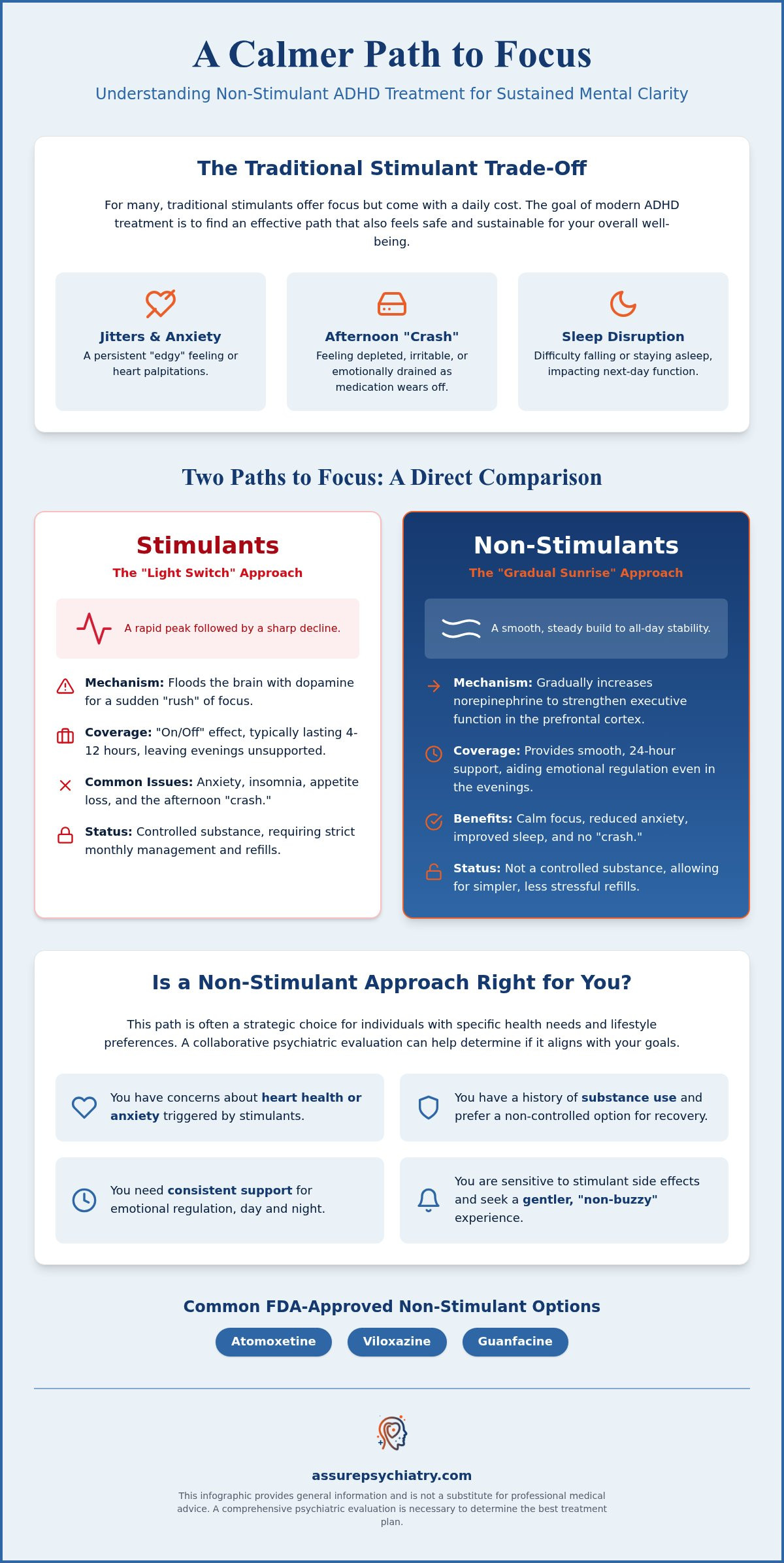
Choosing a non-stimulant is often a deeply personal decision rooted in a desire for a more comfortable daily experience. Many patients find that traditional stimulants trigger physical discomfort, such as heart palpitations, significant appetite loss, or a persistent sense of “edginess” that mimics anxiety. For others, a history of substance use disorders makes non-controlled substances a safer, more restorative choice for their recovery journey. Additionally, because these are not controlled substances, managing refills becomes much simpler. This reduces the administrative stress often associated with adult adhd treatment options Oregon healthcare systems require for stimulants, such as strict monthly check-ins or paper trail requirements.
The Role of Non-Stimulants in Comprehensive Care
A successful treatment plan begins with a thorough psychiatric evaluation in Portland or via telepsychiatry. During this process, we look at your life as a whole, not just your symptoms. Non-stimulants offer the unique benefit of 24-hour coverage. Unlike the “on/off” nature of stimulants, which can leave you feeling depleted or irritable during evening hours, non-stimulants provide a smooth, continuous level of support. Non-stimulants act as a strategic choice for emotional regulation and sustained mental peace. By providing a stable baseline, these medications empower you to participate fully in your life, whether you’re at work, at home, or simply enjoying a quiet moment with family.
How Non-Stimulants Work: The Science of Sustained Stability
While stimulants often work like a light switch, non-stimulants are more like a gradual sunrise. They don’t flood the brain with dopamine all at once. Instead, many of these approved non-stimulant medications act as Selective Norepinephrine Reuptake Inhibitors (SNRIs). By increasing the availability of norepinephrine, they strengthen the communication signals in your prefrontal cortex. This is the area of your brain responsible for executive functions like planning, organizing, and resisting distractions. Because the medication builds up gradually, you won’t feel a sudden “rush” or “buzz.” This steady rise is a cornerstone of adult adhd treatment options Oregon patients choose when they want to avoid the intensity of traditional stimulants. It’s a method that respects your body’s natural rhythm and supports a more grounded experience.
It’s vital to set realistic expectations for your journey. Unlike stimulants that work in thirty minutes, non-stimulants require patience and consistency. You’ll typically notice a significant difference in your symptoms over the course of two to six weeks as the medication reaches a therapeutic level in your system. This gradual onset allows your brain to adjust gently. It minimizes the physical shock often associated with psychiatric care and supports a more stable, long-term transition toward mental clarity. We view this period as an investment in your future stability rather than a delay in care.
Stimulants vs. Non-Stimulants: A Direct Comparison
Choosing between these two paths depends on your unique lifestyle and health history. Here is how they generally compare:
- Speed of effect: Stimulants are immediate, providing focus within an hour. Non-stimulants require a cumulative build-up over several weeks to be fully effective.
- Duration of coverage: Stimulants typically last 4 to 12 hours, often leading to a “crash” when they wear off. Non-stimulants provide 24-hour consistent levels, covering you through both work and home life.
- Abuse potential: Non-stimulants are non-controlled substances. This makes them a safer, more accessible option for individuals with a history of substance use or those who prefer a less regulated prescription process.
The ‘Mental Tranquility’ Factor
Have you ever felt the “rebound effect” as your medication wears off? Many people experience a sharp return of “brain fog” or intense irritability in the late afternoon. Non-stimulants help eliminate this daily rollercoaster. By maintaining a steady state in your bloodstream, they target emotional impulsivity and distractibility throughout the day and night. This leads to a lasting sense of mental tranquility, where your thoughts feel organized rather than chaotic. This consistency is essential for achieving long-term mental wellness and restorative sleep. If you’re looking for a sustainable way to manage your symptoms, exploring these paths during a medication management consultation can help you find a plan that feels right for your identity.
Primary Types of Non-Stimulant ADHD Medications in 2026
The variety of adult adhd treatment options Oregon providers can now offer has expanded significantly, providing more tailored paths to mental tranquility. We no longer rely on a one size fits all approach. Instead, we look at how different classes of medication interact with your specific symptoms and lifestyle. Understanding these adult adhd treatment options Oregon patients have available is the first step toward a collaborative plan that respects your individual needs.
Atomoxetine (Strattera) remains a cornerstone of non-stimulant care. As the first FDA approved non-stimulant, it has a long track record of helping adults improve focus and reduce impulsivity by increasing norepinephrine. For many, it provides a reliable, 24 hour baseline of support. Viloxazine (Qelbree) is a newer SNRI that has become an established choice for adults by 2026. It works similarly to atomoxetine but may offer a different side effect profile, making it a valuable alternative if other medications haven’t felt quite right. Additionally, Alpha-2 Adrenergic Agonists like Guanfacine (Intuniv) and Clonidine (Kapvay) are often used to address the more physical or emotional aspects of ADHD, such as hyperactivity and intense emotional responses.
We also occasionally explore off-label options like Wellbutrin (Bupropion). While primarily an antidepressant, its effect on dopamine and norepinephrine can be very helpful for individuals who experience both ADHD and co-occurring depression or seasonal mood changes. This flexibility allows us to treat the whole person, not just a diagnosis.
Choosing the Right Class for Your Symptoms
Which medication should you prioritize? If your primary struggle is task initiation, sustained focus, or cognitive “fog,” an SNRI like Strattera or Qelbree is often the most effective starting point. However, if your ADHD manifests as physical restlessness, sleep disturbances, or rejection sensitivity, alpha-agonists may provide the calming effect you need. In some cases, we might even discuss combination therapy. This involves using a low dose non-stimulant alongside a stimulant to provide 24 hour coverage while minimizing the side effects of higher stimulant doses. This partnership between different medication classes can create a more balanced, sustainable daily experience.
Managing Expectations and Side Effects
It’s natural to feel a bit hesitant about starting something new. During the first few weeks, you might experience mild symptoms like fatigue, dry mouth, or a slight stomach upset as your body adjusts. This is why consistent medication management in Portland is so vital. We monitor your progress closely through telepsychiatry or in person visits to ensure the dosage is supporting your goals without causing undue discomfort. Most of these initial side effects often dissipate after the initial adjustment period, leaving you with the steady, quiet focus you’ve been seeking.
Is a Non-Stimulant Right for You? A Collaborative Framework
Deciding on a treatment path isn’t just a clinical checklist; it’s a conversation about your life. When exploring adult adhd treatment options Oregon residents often find that their medical history dictates the safest route. If you have concerns about blood pressure or heart health, non-stimulants offer a gentle alternative that doesn’t place extra stress on your cardiovascular system. We also look at your lifestyle. Do you need to stay focused during evening classes or late-night parenting? Since non-stimulants provide 24-hour coverage, they often fit better for those who need mental tranquility beyond the standard workday. This consistency helps you avoid the “off” hours where symptoms can otherwise flare up.
Co-occurring conditions also play a major role in this decision. For individuals who struggle with anxiety, PTSD, or tic disorders, stimulants can sometimes amplify those symptoms, leading to more distress. Non-stimulants, however, tend to have a neutral or even stabilizing effect on these areas. You shouldn’t feel pressured into a treatment that makes you feel uneasy. A non-judgmental provider will respect your preferences and help you weigh the benefits of each path without bias. We believe that your comfort is just as important as the clinical outcome. Our practice ensures all state-level regulations are handled seamlessly, so you can focus on your wellness rather than paperwork.
Questions to Ask Your Psychiatrist
Entering a consultation with a list of questions can help you feel more empowered. Consider asking these during your next visit:
- How will we measure success during the first month of treatment?
- What is the plan if I experience initial drowsiness or fatigue?
- How does this medication interact with my existing prescriptions for other conditions?
- What should I do if I miss a dose, given the medication’s 24-hour nature?
Transitioning from Stimulants
Switching medications can feel like a significant shift. Some patients require a “washout” period to clear their system, while others benefit from cross-tapering, where we slowly decrease one while introducing the other. This process requires careful monitoring of your emotional state. You might feel temporary shifts in your mood or energy as your body finds its new balance. This is why finding the right ADHD psychiatrist in Portland is crucial for this transition. Having a guide who understands the nuances of these changes ensures you feel supported every step of the way. When navigating adult adhd treatment options Oregon patients deserve a partner who prioritizes their long-term health over quick fixes. If you’re ready to explore a more sustainable path, schedule a consultation today to discuss your options.
Personalized ADHD Care with Assure Psychiatry
At Assure Psychiatry, we believe that your journey toward focus should be as unique as you are. Led by Dr. Olumide Aruwajoye, our practice is built on a foundation of collaborative care, where you’re seen as an active partner rather than just a patient. We understand that finding the right adult adhd treatment options Oregon offers can feel overwhelming. That’s why we prioritize an empathetic, non-judgmental environment where your preferences for non-stimulant medications are not only heard but respected. Our goal isn’t just symptom management; it’s about helping you achieve true mental tranquility in every aspect of your life.
One of the biggest hurdles to consistent care is often the commute. We’ve removed that barrier by offering telepsychiatry in Oregon and Washington, allowing residents from Portland to Seattle to access expert care from the comfort of their own homes. This virtual approach makes it much easier to monitor your progress on non-stimulant medications, adjust dosages under professional guidance, and maintain the steady rhythm of support necessary for long-term success. You get the same clinical expertise and culturally competent care without the stress of a crowded waiting room or a long drive.
A Compassionate Ally in Your Wellness Journey
We move beyond the diagnosis to treat the whole person. Our practice is a safe space for diverse identities and neurodivergent experiences, ensuring that every individual feels validated and understood. We know that ADHD doesn’t exist in a vacuum; it interacts with your culture, your history, and your daily responsibilities. By focusing on restorative action, we help you optimize your treatment plan so it feels sustainable for years to come. Dr. Aruwajoye’s approach ensures that adult adhd treatment options Oregon patients select are integrated into a lifestyle that promotes long-term peace and reliability.
Getting Started: Your Path to Mental Tranquility
Your path forward begins with a comprehensive psychiatric evaluation. During this initial meeting, we’ll discuss your history, your goals, and any concerns you have about medication side effects or past experiences. We value transparency, which is why we accept most major insurance plans and provide clear information about our processes from day one. After your evaluation, we’ll work together to create a plan that might include non-stimulant medication management, lifestyle adjustments, or a combination of supportive strategies. You don’t have to navigate ADHD alone. We’re here to provide the consistency and reliability you need to finally feel at home in your own mind.
Embracing a Sustainable Path to Mental Tranquility
Choosing a non-stimulant medication is a powerful step toward a more consistent and grounded life. You’ve learned how these treatments provide 24-hour stability and help you avoid the daily “crash” often associated with traditional stimulants. By focusing on steady neurochemical support and emotional regulation, non-stimulants offer a reliable foundation for long-term mental wellness. When you explore the variety of adult adhd treatment options Oregon residents have available in 2026, it’s clear that your comfort and safety should always be the priority.
At Assure Psychiatry, we’re here to act as your compassionate ally. Led by board-certified expertise, our practice offers insurance-friendly medication management tailored to your unique identity. Whether you prefer in-person visits in Portland or the convenience of telehealth across Oregon and Washington, we provide the steady support you deserve. You don’t have to navigate this transition alone. Take the first step toward a calmer, more focused future today.
Schedule Your ADHD Evaluation at Assure Psychiatry
Frequently Asked Questions
How long does it take for non-stimulant ADHD medication to start working?
It typically takes 2 to 6 weeks for non-stimulant medications to reach therapeutic levels in your system. Unlike stimulants that work within an hour, these options require a build-up period to stabilize your brain’s norepinephrine levels. You’ll likely notice gradual improvements in focus and emotional regulation rather than a sudden shift. We’ll monitor your progress closely during this time to ensure the medication is supporting your mental tranquility effectively.
Can I take a non-stimulant and a stimulant together?
Yes, many adult adhd treatment options Oregon providers manage involve combination therapy. This approach can be particularly helpful if a stimulant provides focus but wears off too quickly; or if you need 24-hour coverage for emotional symptoms. By pairing a low-dose stimulant with a non-stimulant, you can often achieve better symptom control with fewer side effects. We’ll discuss if this collaborative strategy fits your specific lifestyle and health goals during our session.
Are non-stimulants safer for people with heart conditions?
Non-stimulants are generally considered safer for individuals with specific cardiovascular concerns because they don’t typically cause the rapid heart rate or significant blood pressure spikes seen with stimulants. However, they still require professional oversight. We’ll review your medical history and monitor your vitals during your psychiatric evaluation. This ensures your treatment plan remains sustainable and respects your body’s physical health while we work toward a sense of lasting mental peace.
Do non-stimulant ADHD meds have a ‘crash’ like stimulants do?
Non-stimulants don’t cause the “crash” or rebound effect often experienced as stimulants wear off. Because these medications maintain a steady, 24-hour concentration in your bloodstream, your focus and mood remain stable throughout the evening and night. This leads to more consistent emotional regulation and better sleep quality. You won’t have to worry about the sudden irritability or exhaustion that frequently disrupts the end of a productive day.
Are non-stimulants effective for adults with ADHD?
Non-stimulants are highly effective for many adults, especially those who struggle with executive function and emotional impulsivity. Clinical evidence shows that medications like atomoxetine and viloxazine significantly reduce core ADHD symptoms in adult populations. While they work differently than stimulants, they provide a reliable, long-term path to clarity. They’re an excellent choice if you’ve found stimulants to be too intense or if they simply didn’t align with your unique identity.
What happens if I miss a dose of my non-stimulant medication?
If you miss a dose, you should generally take it as soon as you remember unless it’s almost time for your next scheduled dose. Don’t double up to “catch up.” Because these medications rely on a steady build-up in your system, missing a single dose won’t immediately cause your symptoms to return, but consistency is key for long-term success. If you find yourself frequently forgetting, we can discuss strategies to help you stay on track.
Can non-stimulants help with ADHD-related anxiety?
Non-stimulants are often a preferred choice for individuals who experience co-occurring anxiety. Stimulants can sometimes worsen feelings of jitteriness or panic, whereas non-stimulants like Guanfacine or Strattera tend to have a more grounding, calming effect. By stabilizing your internal environment without over-stimulating your nervous system, these medications help reduce the “noise” in your mind. This allows you to navigate your day with a greater sense of tranquility and control.
Is it easier to get refills for non-stimulant medications in Oregon?
It’s often much simpler to manage refills for non-stimulants because they aren’t classified as controlled substances. This means you don’t face the same strict federal and state regulations that apply to stimulants. While adult adhd treatment options Oregon patients use still require regular provider check-ins, you can often receive longer prescriptions. This reduces the monthly administrative burden and makes your journey toward mental health feel more reliable and much less stressful.
Recent Comments