

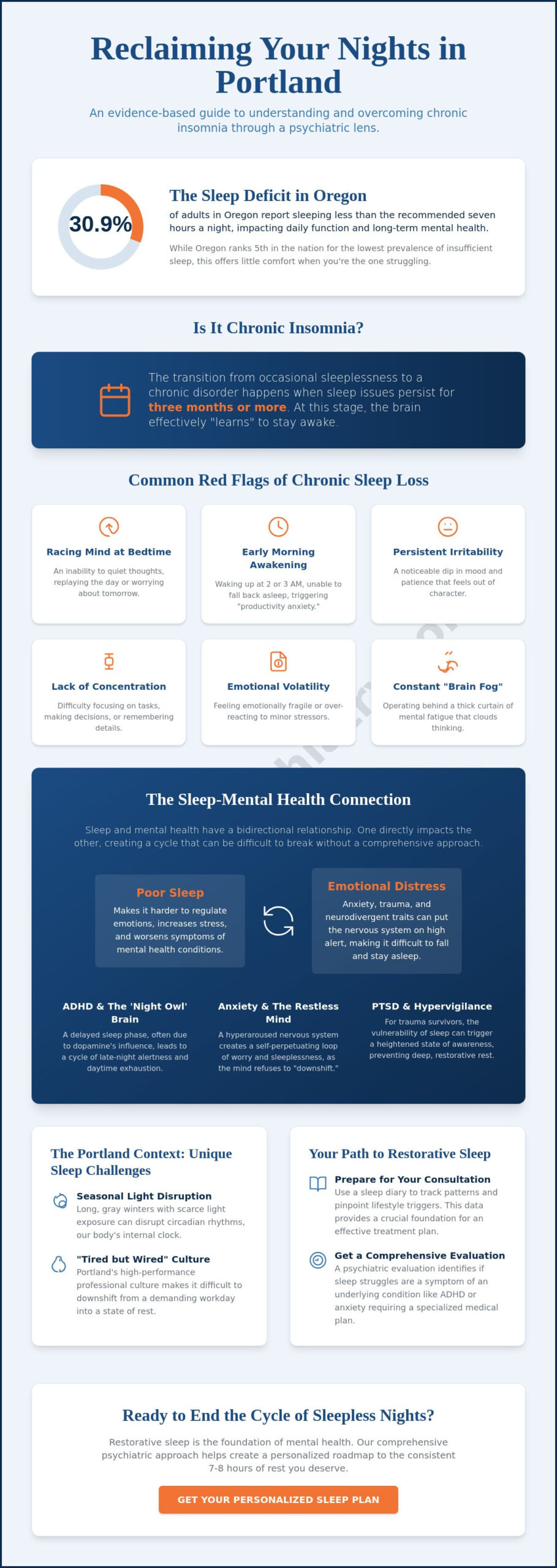
Did you know that 30.9% of adults in Oregon report sleeping less than seven hours a night? While our state ranks fifth in the nation for the lowest prevalence of insufficient sleep, that statistic offers little comfort when you’re the one staring at the ceiling at 3:00 AM. If you’ve been searching for insomnia treatment portland or, you likely know the heavy weight of persistent brain fog and the mounting anxiety that arrives as soon as the sun goes down.
It’s incredibly frustrating to follow every generic sleep tip on the internet only to find yourself still wide awake and worried about how you’ll function tomorrow. We believe that restorative sleep is the foundation of mental health, and you deserve a path to mental tranquility that respects your unique biology. This article explores how a comprehensive psychiatric approach can resolve chronic sleep struggles and help you reclaim your nights. You’ll discover how understanding the link between sleep and conditions like ADHD or anxiety can lead to a personalized medical plan for the consistent seven to eight hours of rest you’ve been missing.
Key Takeaways
- Learn why chronic sleep struggles are often a signal for underlying emotional health and how identifying these links can lead to more effective, lasting relief.
- Understand the differences between medication management and specialized therapy to determine which clinical approach best supports your restorative sleep goals.
- Discover practical ways to prepare for a professional consultation, including how to use a sleep diary to pinpoint specific lifestyle triggers.
- Explore how a specialized psychiatric evaluation for insomnia treatment portland or provides a comprehensive roadmap to reclaiming your nights and daytime focus.
- Gain insight into the unique sleep challenges posed by the Pacific Northwest climate and how to adjust your environment for improved mental tranquility.
Understanding Insomnia Treatment in Portland, OR
True insomnia involves a persistent pattern of difficulty that leaves you feeling depleted long after the sun comes up. It isn’t just the occasional night of tossing and turning before a big presentation. Instead, it’s a cycle where sleep becomes a source of stress rather than a sanctuary for rest. For many seeking insomnia treatment portland or, the journey often begins with a realization that standard advice, like avoiding screens or keeping the room cool, simply isn’t enough to quiet a restless mind. While these habits are helpful, they rarely address the deeper biological or psychological roots of chronic sleeplessness.
The transition from acute sleeplessness to a chronic disorder happens when sleep issues persist for three months or more. At this stage, the brain effectively “learns” to stay awake, creating a self-perpetuating loop of exhaustion and hyperarousal. Understanding Insomnia as a complex medical condition is the first step toward reclaiming your health. When sleep hygiene fails, it’s usually because the underlying “sleep engine” is being disrupted by factors that go beyond bedroom environment, such as neurotransmitter imbalances or untreated secondary conditions.
Common Symptoms and Red Flags
Insomnia manifests differently for everyone. You might find it impossible to quiet your thoughts at 10:00 PM, or you might fall asleep quickly only to wake up at 2:00 AM, unable to drift back off. These early morning awakenings are particularly taxing, as they often trigger a flood of “productivity anxiety” about the coming day. Beyond the bedroom, the red flags of chronic sleep loss include persistent irritability, a noticeable dip in concentration, and an emotional volatility that feels out of character. If you feel like you’re constantly operating behind a thick curtain of brain fog, your body is signaling that it needs more than just a better pillow.
The Portland Context: Stress and Sleep
Living in the Pacific Northwest introduces unique variables to our internal clocks. Our significant seasonal light changes can easily disrupt your circadian rhythm, especially during the long, gray stretches of winter when natural Vitamin D and light exposure are scarce. This environmental factor, combined with Portland’s high-performance professional culture, often creates a perfect storm for sleep-onset anxiety. Many local professionals find themselves “tired but wired,” unable to downshift from a demanding workday into a state of rest. If you’ve reached a point where your efforts to fix your sleep have only led to more frustration, it may be time for a professional psychiatric evaluation in Portland. This collaborative assessment helps identify if your sleep struggles are an isolated issue or a symptom of something like ADHD or anxiety that requires a more specialized medical plan.
The Link Between Sleep and Mental Health
Sleep disturbances often act as the ‘canary in the coal mine’ for our emotional well-being. When your mind refuses to settle, it’s rarely a standalone glitch in your biology. Instead, it’s frequently a signal that your nervous system is working overtime to process stress, trauma, or neurodivergent traits. When you seek insomnia treatment portland or, it’s vital to look at the whole picture rather than just the hours spent in bed. We view sleep as an integral part of your overall psychiatric health. This perspective allows us to move beyond surface-level fixes that only provide temporary relief.
The relationship between sleep and mental health is bidirectional. Poor sleep makes it harder to regulate emotions, while emotional distress makes it harder to fall asleep. For those living with PTSD, sleep can feel like a vulnerable state that triggers hypervigilance. A trauma-informed approach acknowledges this safety need, ensuring that any medical plan respects your history and your need for security. By exploring various insomnia treatment options, we can address these root causes and build a foundation for lasting tranquility.
ADHD and the ‘Night Owl’ Brain
Adults with ADHD frequently experience what feels like a ‘night owl’ brain. This isn’t a lack of discipline; it’s often a delayed sleep phase caused by how dopamine influences the sleep-wake cycle. Your brain might feel most creative or alert just as the rest of the world is winding down. This misalignment creates a punishing cycle of late-night productivity followed by daytime exhaustion. Working with an adhd psychiatrist portland allows you to develop strategies that respect your neurobiology while helping you get the rest you need to thrive during the day.
Anxiety and Depression: The Sleep Disruptors
Anxiety is a notorious sleep disruptor, often creating a ‘tired but wired’ sensation. You might feel physically exhausted, yet your mind is busy with ruminations or future-focused worries the moment your head hits the pillow. Depression presents its own challenges, sometimes leading to hypersomnia (sleeping too much) or making it impossible to stay asleep. For residents in the region looking for online depression treatment in Washington, we find that improving sleep quality is a powerful lever for lifting mood. If you’re ready to explore how your sleep and mood are connected, a comprehensive psychiatric evaluation can help you find the right path forward and secure the insomnia treatment portland or you’ve been looking for.
Comparing Treatment Options: Therapy vs. Medication
Deciding on the right path for insomnia treatment portland or often feels like a choice between behavioral changes and medical support. While many local resources focus exclusively on one side of the coin, a comprehensive approach recognizes that biology and behavior are deeply intertwined. Some individuals find relief through shifting their habits, while others require clinical intervention to reset a dysregulated nervous system. A collaborative psychiatric perspective ensures that your treatment plan is built around your specific needs rather than a rigid, one-size-fits-all philosophy. The National Heart, Lung, and Blood Institute highlights several insomnia treatment options that range from behavioral therapies to clinical prescriptions, providing a framework for evidence-based care.
Safety and ethics sit at the heart of modern sleep medicine. We understand the hesitation many feel regarding sleep aids, particularly the fear of long-term dependency or morning grogginess. Our goal is to use the most advanced, targeted interventions available to minimize risks while maximizing restorative results. By prioritizing a safety-first approach, we help you find a sustainable way to achieve mental tranquility without compromising your long-term health.
Behavioral Interventions (CBT-I)
Cognitive Behavioral Therapy for Insomnia (CBT-I) is widely considered a gold-standard approach. It focuses on practical techniques like stimulus control, which strengthens the association between your bed and sleep, and sleep restriction to improve sleep efficiency. Perhaps most importantly, it addresses the “fear of not sleeping.” This cognitive reframing helps quiet the performance anxiety that often keeps people awake. However, therapy alone isn’t always enough for complex psychiatric cases. If your insomnia is tied to a primary condition like bipolar disorder or severe PTSD, behavioral changes may require medical support to be truly effective.
Psychiatric Medication Management
Modern psychiatry offers a sophisticated array of tools beyond traditional sedatives. We often look toward newer classes of medications, such as orexin antagonists or melatonin agonists, which work with your body’s natural sleep-wake signals rather than simply “knocking you out.” This nuanced approach is essential for managing side effects and ensuring you wake up feeling refreshed. Utilizing medication management portland allows for precise adjustments based on how your body responds. We monitor your progress closely, ensuring that any medication serves as a bridge to natural, restorative rest rather than a permanent crutch.
When we combine these strategies, the results are often transformative. We can use medication to stabilize your sleep in the short term, giving you the energy and mental clarity needed to engage fully in behavioral changes. This integrated model provides the most reliable path to reclaiming your nights and your daytime vitality.
Preparing for Your Sleep Consultation
Taking the first step toward professional help can feel overwhelming, but a little preparation can significantly lower that barrier. When you arrive for your initial consultation for insomnia treatment portland or, having a clear picture of your current habits allows us to build a more accurate and effective medical plan. We view this process as a partnership. By gathering specific data about your nights, you’re giving us the tools to understand your unique biology and lifestyle. This collaborative approach ensures that your treatment isn’t just a generic suggestion, but a tailored path toward mental tranquility.
A simple sleep diary is one of the most effective tools you can bring to your appointment. We aren’t looking for perfection; we’re looking for patterns. Are you consuming caffeine late in the afternoon? Is blue light from a laptop suppressing your natural melatonin production? Sometimes, the very things we do to try and fix our sleep, like high-intensity exercise late in the evening, can actually keep us in a state of hyperarousal. Identifying these lifestyle triggers helps us differentiate between behavioral habits and biological disruptions that may require medication management.
It’s also helpful to gather your medical and psychiatric history. Because sleep is so closely tied to conditions like ADHD, Anxiety, or Depression, knowing what has or hasn’t worked for you in the past is vital. This is also the time to think about your long-term goals. Are you looking for a short-term bridge to get through a high-stress period, or are you seeking a sustainable, long-term strategy for restorative rest? If you’re ready to start this journey, you can schedule your sleep consultation today to begin exploring your options.
What to Track Before Your Appointment
In the week leading up to your visit, try to jot down a few key metrics each morning. Focus on how long it took to fall asleep, how many times you woke up during the night, and your general energy levels throughout the following day. It’s also helpful to track your mood fluctuations; do you feel more irritable or anxious on days following a poor night’s sleep? Finally, try to write a single sentence that defines your primary sleep goal. For example: “I want to wake up feeling refreshed without a heavy sense of brain fog.” This clarity helps us stay focused on the outcomes that matter most to you.
Navigating Insurance and Access
Understanding your coverage is a practical step that can reduce the stress of seeking care. Many patients in the Portland area find that virtual visits offer the most flexibility, especially when balancing a demanding work schedule. If you have specific insurance questions, it’s helpful to check your benefits for psychiatric sleep evaluations. For those looking for in-network options, exploring aetna telepsychiatry oregon can provide a clear path to accessible, professional support from the comfort of your own home. Whether you prefer virtual or in-person care in Portland, we’re here to guide you toward a more restful future.
Restoring Rest with Assure Psychiatry
Finding a path back to restful nights shouldn’t feel like moving through a cold, institutional maze. We believe that true healing begins with a partnership built on trust, clinical expertise, and deep empathy. When you choose Assure Psychiatry for your insomnia treatment portland or, you aren’t just a chart number or a list of symptoms. You’re working with a compassionate ally dedicated to your long-term wellness. Our approach is fundamentally collaborative; we don’t simply hand you a prescription and send you on your way. Instead, we conduct comprehensive evaluations that look at the whole person, considering how your professional lifestyle, personal history, and neurobiology intersect.
For many busy Portland professionals, finding time for a traditional office visit is its own source of stress. We’ve designed our practice to meet you where you are through the flexibility of telepsychiatry. This modern approach allows you to receive high-level care without the frustration of a commute, making it easier to stay consistent with your medical plan. We’re also deeply committed to providing culturally competent and inclusive care. We believe everyone deserves a safe, non-judgmental space where their individual identity is respected throughout the restorative process. By prioritizing safety and understanding, we lower the barrier for those who have felt unheard in larger hospital systems.
Personalized Treatment Plans
Effective care goes far beyond suppressing symptoms with a sedative. We work with you to understand your specific “sleep architecture,” which is the unique way your body moves through the stages of rest. By identifying where your sleep cycle is breaking down, we can create a plan that addresses the root cause. This often involves medication management tailored to your body’s response, with ongoing support to make adjustments as your sleep quality improves. Our ultimate goal is to help you achieve lasting mental tranquility, ensuring that sleep becomes a reliable foundation for your health rather than a source of nightly anxiety.
Getting Started Today
Reclaiming your nights is a straightforward process that begins with an initial psychiatric evaluation. During your first virtual or in-person session, we’ll discuss your history, your current struggles, and your specific goals for rest. It’s a low-pressure environment where your voice is heard and your experiences are validated. We’ll explore how our specialized services, from medication management to targeted insomnia treatment portland or, can best support your journey toward peace. If you’re ready to find a stable environment where you can finally rest, Schedule your consultation with Assure Psychiatry and take the first step toward reclaiming your nights and your vitality.
Reclaiming Your Nights and Your Peace of Mind
Restoring sleep is about more than just closing your eyes; it’s about aligning your biological needs with your mental health goals. We’ve explored how identifying the root causes of sleeplessness, whether they stem from anxiety or neurodivergent traits like ADHD, is the first step toward lasting relief. By choosing a specialized path for insomnia treatment portland or, you’re opting for a medical plan that respects your unique sleep architecture and values your overall tranquility. You’ve learned that while behavioral changes are vital, expert medical intervention often provides the necessary bridge to consistent, restorative rest.
At Assure Psychiatry, Dr. Olumide Aruwajoye provides expert medication management within a compassionate, culturally competent environment. We’re proud to be in-network with major providers like Aetna and BCBS to ensure your care is as accessible as it is effective. You don’t have to navigate the heavy fog of exhaustion alone anymore. Take the first step toward restorative sleep; schedule your evaluation today. We’re here to help you find the quiet strength and reliability you need to finally rest well.
Frequently Asked Questions
What is the most effective medical treatment for chronic insomnia?
Evidence-based care typically combines behavioral strategies with targeted medication management to achieve the best results. While Cognitive Behavioral Therapy for Insomnia (CBT-I) is a primary recommendation, many patients find that short-term clinical support is necessary to stabilize their sleep cycle. We focus on modern, non-habit-forming options like orexin antagonists that work with your body’s natural signals to restore rest without the heavy side effects of older sedatives.
Can a psychiatrist prescribe sleep medication during the first visit?
Yes, we can provide prescriptions during your initial appointment if our comprehensive evaluation confirms it’s the right step for your safety and recovery. Dr. Aruwajoye conducts a thorough assessment of your history and symptoms to ensure any medication is appropriate. This immediate support helps lower the barrier to rest while we build a collaborative, long-term plan for your mental tranquility.
How do I know if my insomnia is caused by anxiety or ADHD?
Distinguishing between these conditions requires a professional look at your specific “nighttime brain” patterns. Does your mind race with specific worries and ruminations, which is common with anxiety, or does your brain simply feel more alert and creative as the sun goes down? ADHD often involves a delayed sleep phase where your internal clock is naturally shifted. A psychiatric evaluation helps pinpoint these differences so we can treat the actual root cause.
Is telepsychiatry as effective as in-person visits for sleep disorders?
Virtual care is an exceptionally effective and convenient way to access insomnia treatment portland or. Research and clinical practice show that psychiatric evaluations and medication management conducted via video are just as successful as traditional office visits. Telepsychiatry allows you to stay in your own environment, which can actually reduce the anxiety often associated with seeking mental health support.
Does Assure Psychiatry accept insurance for insomnia treatment in Oregon?
We’re proud to be in-network with several major insurance providers, including Aetna and Blue Cross Blue Shield, for insomnia treatment portland or. We believe that professional psychiatric care should be accessible and sustainable. It’s always a good idea to verify your specific plan benefits for outpatient mental health services to understand your expected co-pay or deductible requirements.
Will I have to stay on sleep medication for the rest of my life?
Not necessarily; we often use medication as a temporary bridge to help reset your nervous system. Our goal is to provide the stability you need to implement lifestyle changes and address underlying emotional triggers. Once your sleep engine is functioning more reliably, we can work together to safely taper your medication while ensuring your mental tranquility remains intact.
What is the difference between a sleep study and a psychiatric sleep evaluation?
A sleep study is a physical test, often done in a lab, to identify issues like sleep apnea or restless leg syndrome. In contrast, a psychiatric sleep evaluation explores how your brain chemistry, mood disorders, and neurobiology impact your ability to rest. We look at the “why” behind your sleeplessness from a mental health perspective to determine if medication management can help you find relief.
Can untreated insomnia lead to other mental health problems?
Chronic sleep deprivation is a significant risk factor for developing or worsening conditions like depression and anxiety. When you don’t get enough rest, your brain’s ability to regulate emotions and process stress is severely compromised. Treating your sleep struggles isn’t just about ending exhaustion; it’s a vital form of preventive care that protects your long-term emotional stability and cognitive health.
Recent Comments