

What if your first appointment wasn’t just a clinical interview, but a mutual interview where you held the power? Many people walk into a psychiatric evaluation feeling like a list of symptoms rather than a person. You might feel anxious about being over-medicated or confused about how medication management differs from traditional therapy. It’s common to feel unheard by previous providers, especially when you’re seeking clarity for complex conditions like ADHD or mood disorders. Preparing a specific set of questions to ask a new psychiatrist can transform this experience from a source of stress into a foundation for healing.
You deserve a provider who acts as a collaborative guide and respects your unique lived experience. This article provides a comprehensive framework to help you find a clinician who values cultural competence and shares your vision for mental tranquility. We’ll walk through 25 critical inquiries that cover clinical expertise, treatment philosophies, and the practicalities of a stable medication regimen. By the end, you’ll have the tools to ensure your new psychiatrist is the right clinical and personal fit for your long term wellness journey.
Key Takeaways
- Reframe your initial visit as a collaborative psychiatric evaluation where your voice is as vital as the clinical data.
- Learn the essential questions to ask a new psychiatrist to ensure their treatment philosophy aligns with your need for culturally competent care.
- Gain a clear understanding of medication management, including how to monitor side effects and measure progress for conditions like ADHD or mood disorders.
- Confirm vital logistics for telepsychiatry in Oregon and Washington, including HIPAA-compliant platforms and insurance coverage.
- Discover how a transparent partnership with your provider builds the foundation for long term mental tranquility and a stable treatment plan.
Why Your First Appointment is a Partnership, Not Just an Evaluation
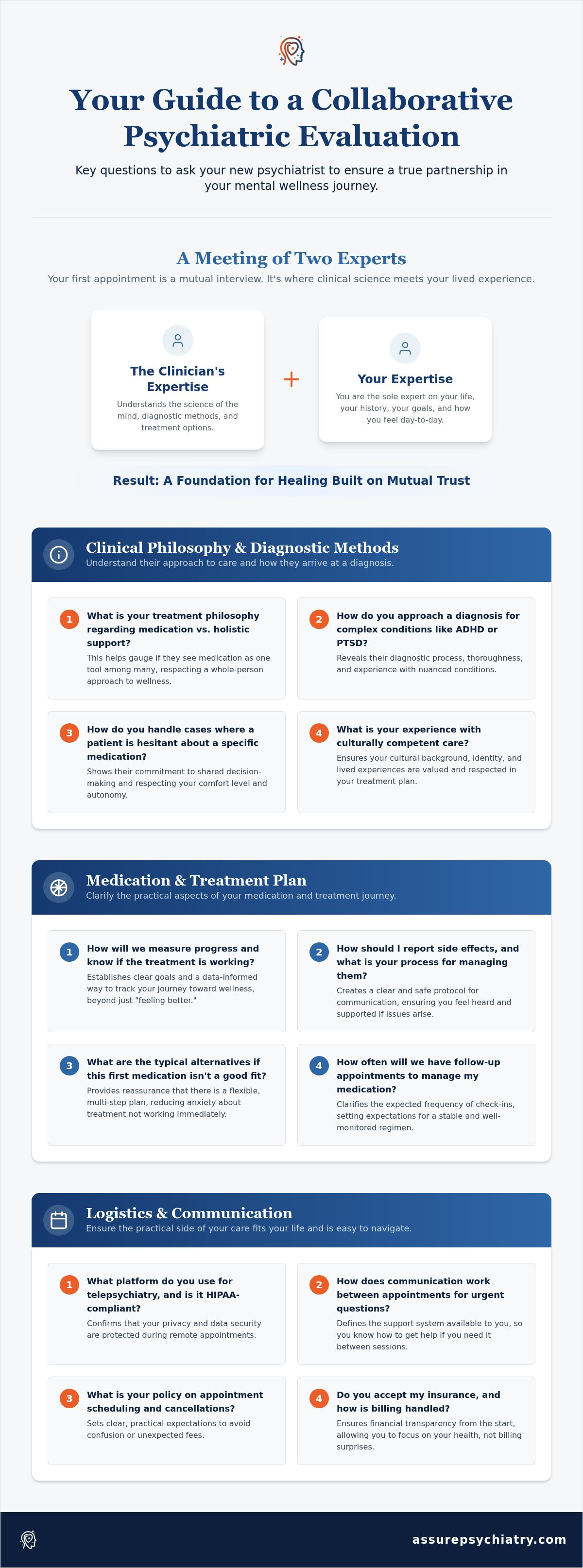
Entering a psychiatric office often feels like stepping into a cold environment where you’re the subject of a study. We believe the dynamic should be a meeting of two experts. The clinician understands the science of the mind, while you are the sole expert on your own life. This initial Psychiatric Evaluation serves as a deep dive into your medical history and symptom analysis. It isn’t just a checklist. It’s the moment we begin building a foundation for mental tranquility through mutual trust. A psychiatric evaluation is a diagnostic roadmap for your mental health journey.
We move away from the paternalistic medical model, where a doctor simply dictates a plan. Instead, we embrace the role of a collaborative ally. To understand What is Psychiatry? in a modern context, one must view it as a partnership where your input is as valuable as the clinical data. When you come prepared with specific questions to ask a new psychiatrist, you’re setting a tone of mutual respect from the very first minute.
The Difference Between a Prescriber and a Partner
Medication management is a delicate process that requires more than just a signature on a prescription pad. It requires a provider who listens to the subtle ways a treatment affects your daily life. If you feel like a number in a waiting room, you’re less likely to share the small side effects or emotional shifts that could change your treatment path. Feeling seen and heard is the antidote to the anxiety many feel when starting a new regimen. When you prioritize specific questions to ask a new psychiatrist about their clinical methods, you lower the power imbalance that often exists in medical spaces. You transform from a passive recipient of care into an active participant in your own restorative journey.
Setting the Stage for Your Consultation
Your first visit is where we align our clinical expertise with your personal goals. Whether you’re seeking help for sleep, focus, or mood stability, transparency is vital. Don’t feel pressured to have all the answers; simply being honest about what you want to achieve is enough. For those looking for psychiatric evaluations in Portland or through telepsychiatry, this consultation is the first step toward clarity. When you share your history openly, you give your provider the tools to build a plan that respects your individual identity and your personal path to health.
Core Questions About Clinical Philosophy and Diagnostic Methods
The clinical philosophy of your provider dictates the rhythm of your care. It’s the difference between a doctor who simply manages symptoms and one who seeks to restore your overall well-being. When gathering your list of questions to ask a new psychiatrist, focusing on their diagnostic methods is a powerful way to gauge if their style matches your needs. You deserve a clinician who views you as a whole person, not just a collection of data points.
Consider starting your conversation with these specific inquiries:
- “What is your treatment philosophy regarding medication vs. holistic support?”
- “How do you approach a diagnosis for complex conditions like ADHD or PTSD?”
- “How do you handle cases where a patient is hesitant about a specific medication?”
- “What is your experience with culturally competent care and diverse populations?”
As you listen to their responses, look for answers that emphasize evidence-based care balanced with deep empathy. A provider who values clinical excellence will be transparent about their methods and open to your concerns. For a broader list of general inquiries to bring to your appointment, you can review these questions for your provider to ensure every detail of your care is covered.
Understanding the Diagnostic Process
A diagnosis shouldn’t feel like a life sentence or a permanent label. It’s a clinical tool designed to guide your treatment plan toward success. Ask your psychiatrist which specific tools or assessments they use to confirm a diagnosis. Do they rely on standardized scales, clinical interviews, or a combination of both? It’s helpful to know how long the evaluation phase typically lasts before a treatment plan is finalized. Some conditions require multiple sessions to ensure the plan is accurate and safe. At Assure Psychiatry, we view this phase as a collaborative discovery rather than a one-sided judgment. If you’re ready to start this process, you can schedule a consultation to meet our team and discuss your goals.
Inclusivity and Culturally Competent Care
One of the most vital questions to ask a new psychiatrist involves their commitment to diversity. Cultural context deeply influences how symptoms are expressed and how treatment is accepted. A provider who lacks cultural competence might miss subtle cues or misunderstand your unique perspective. Asking about their experience with diverse populations ensures you’re entering a safe, non-judgmental environment. This is especially important for patients who have felt marginalized in traditional medical settings. We believe every individual deserves care that respects their identity, heritage, and personal values. Your background isn’t a footnote in your chart; it’s a central part of your path toward mental tranquility.
Specific Questions for Medication Management and Condition Care
While the initial evaluation sets the direction, the path to mental tranquility is paved with consistent, safe medication management. This phase of care is where your symptoms are monitored and your dosage is refined to ensure the best possible outcome. When preparing your final questions to ask a new psychiatrist, you should pivot toward the practical realities of daily treatment. Understanding the “how” and “why” behind your prescriptions reduces anxiety and empowers you to be an advocate for your own health.
Your safety depends on clear communication regarding the following topics:
- “What are the short-term and long-term side effects I should monitor?”
- “How do we measure progress; is it through clinical scales, self-reporting, or both?”
- “What is the protocol if I have an adverse reaction to a new prescription after office hours?”
- “How often will we meet for medication management follow-ups once I am stable?”
By clarifying these points early, you establish a safety net. It’s also helpful to consult resources like NAMI Spokane for additional questions to ask a psychiatrist to ensure your checklist is as thorough as possible.
Navigating ADHD and Mood Disorder Treatment
Treating complex conditions like ADHD requires a nuanced approach. If you are searching for an ADHD psychiatrist in Portland, ask about their stance on stimulants versus non-stimulant options. Some patients thrive on traditional focus medications, while others require alternative strategies to avoid side effects like insomnia or appetite loss. Additionally, ask how the provider coordinates with your existing therapist. Medication works best when it supports the work you do in talk therapy. Your psychiatrist should be willing to share insights with your other providers to create a unified front for your wellness.
The Logistics of Medication Adjustments
Healing isn’t always a straight line. There may be times when a dosage needs to be adjusted or shifted entirely. Ask your provider about their process for these transitions to ensure you never feel abandoned during a change. Understanding the fee structure for brief follow-ups is also essential for long-term planning. Our approach to medication management in Portland focuses on ongoing safety and dose optimization. These visits aren’t just for refills. They are critical checkpoints where we verify that your treatment continues to serve your goal of tranquility without compromising your physical health.
Navigating Telehealth, Insurance, and Communication Logistics
Finding a provider who is a clinical match is vital, but the relationship often succeeds or fails based on the practical details of daily access. You don’t want to discover a licensing hurdle or an unexpected insurance cost after you’ve already shared your history. Including logistical questions to ask a new psychiatrist during your initial outreach ensures your journey remains stable and predictable. These details create the structure that allows you to focus on your healing rather than administrative stress.
Before your first session, clarify these essential points:
- “Are you licensed to treat patients in my specific state, such as Oregon or Washington?”
- “What platform do you use for telepsychiatry, and is it HIPAA-compliant?”
- “How do I reach you between appointments if I have an urgent question about my medication?”
- “Do you accept my specific insurance plan, and what are my expected out-of-pocket costs per visit?”
Confirming these facts early protects your peace of mind. If you’re ready to find a provider who prioritizes both clinical excellence and logistical transparency, you can learn more about our approach and how we support patients across the region.
The Nuances of Telepsychiatry in the Pacific Northwest
Living in the Pacific Northwest means managing care across state lines can be complex. For those utilizing telepsychiatry in Oregon or Washington, state regulations require your provider to be licensed exactly where you are physically located during the call. This is a vital safety and legal requirement. Ask about the “virtual exam room” experience; it should feel as private and secure as an in-person office. You should also verify that your provider can e-prescribe to your local Portland or Seattle pharmacy. This prevents unnecessary delays when you need to start a new medication regimen or secure a refill.
Communication and Crisis Protocols
Clarity in communication prevents the anxiety of feeling “lost” in a medical system. It’s helpful to ask how the office differentiates between clinical questions and administrative ones like scheduling or billing. We emphasize steady, calm, and organized communication to help you feel supported throughout your experience. However, it’s also critical to understand the limits of outpatient care. Always ask what the specific protocol is for a true psychiatric emergency. While we act as your collaborative ally for ongoing wellness, a crisis usually requires immediate stabilization services. Knowing the difference helps you build a comprehensive safety plan for your mental tranquility.
Finding Your Ally: Why Assure Psychiatry Values Your Questions
Preparing a list of questions to ask a new psychiatrist is more than just an organizational task. It’s a powerful act of self-advocacy. At Assure Psychiatry, we don’t just welcome your inquiries; we value them as the foundation of a restorative and safe relationship. Dr. Olumide Aruwajoye leads our practice with a focus on combining high-level clinical expertise with a deeply compassionate approach. We believe that a diagnosis is never a label that defines you. Instead, it’s the beginning of a personalized wellness plan designed to guide you toward mental tranquility. By asking the questions we’ve discussed, you’re ensuring that your provider is a collaborative guide who respects your lived experience.
Our philosophy is rooted in the belief that peace and health are inseparable. When you engage with your clinician as a partner, you lower the barriers to effective care and create a stable environment for healing. This collaborative alliance is especially vital for those managing complex conditions like ADHD or mood disorders. You deserve a space where you feel validated and heard. By prioritizing transparency from day one, you’re setting the stage for a treatment journey that is as unique as you are. We’re here to help you navigate the science of medication management while keeping your personal goals at the center of every decision.
Preparing for Your Evaluation at Assure Psychiatry
To make your first visit as productive as possible, it helps to arrive prepared. We suggest bringing a clear list of any current medications, including dosages and any supplements you take. It’s also beneficial to have a record of previous diagnoses or treatments that you’ve tried in the past. Beyond the clinical data, take a moment to reflect on your “emotional history.” Consider when your symptoms first appeared and how they affect your daily life now. Whether you’re visiting our Portland office or attending via telepsychiatry, our sessions are designed for your absolute comfort. We want you to feel safe and supported as we build your diagnostic roadmap together.
Take the First Step Toward Peace of Mind
Your journey toward mental tranquility deserves a provider who values your voice and respects your identity. We’re committed to offering inclusive, culturally competent care that acknowledges the diverse backgrounds of every patient we serve. If you’ve felt unheard or misunderstood by previous doctors, we invite you to experience a different kind of partnership. You have the tools and the framework to find the right fit for your mental health needs. Don’t let uncertainty hold you back from the stability you deserve. Schedule your initial psychiatric evaluation with Assure Psychiatry today. We’re ready to act as your ally in reclaiming your peace of mind.
Empowering Your Path to Mental Tranquility
Finding the right provider is a deeply personal step that requires both clinical precision and human connection. By preparing a thoughtful list of questions to ask a new psychiatrist, you shift the dynamic from a passive evaluation to a collaborative partnership. You now have a framework to verify diagnostic methods, understand medication protocols, and ensure your provider respects your cultural identity. Remember that a diagnosis is simply a tool to help us build your personalized roadmap toward peace of mind.
At Assure Psychiatry, we specialize in treating ADHD and complex mood disorders with compassionate, culturally competent care. Whether you prefer in-person visits at our Portland office or the convenience of telepsychiatry across Oregon and Washington, we’re here to act as your ally. You don’t have to navigate this journey alone. Schedule your initial psychiatric evaluation with Assure Psychiatry today to begin a treatment plan designed specifically for your needs. We look forward to supporting you as you take this courageous step toward lasting stability and restorative health.
Frequently Asked Questions
What if I feel uncomfortable asking my psychiatrist personal questions?
It’s completely natural to feel hesitant, but remember that your psychiatrist is a professional ally who values your privacy. You don’t have to share every detail of your life in the first ten minutes. Start with the most pressing clinical concerns and build trust over time. A collaborative provider will respect your pace and help you feel safe during the evaluation process. Focus on the questions to ask a new psychiatrist that relate to your immediate safety and treatment goals first.
How long does a typical new patient psychiatric evaluation take?
A comprehensive initial psychiatric evaluation usually lasts between 60 and 90 minutes. This extended time allows Dr. Olumide Aruwajoye to perform a deep dive into your medical history, symptom patterns, and lifestyle factors. Unlike brief follow-up visits, this first session is a diagnostic roadmap designed to ensure your treatment plan is accurate and safe. Whether in our Portland office or via telepsychiatry in Washington or Oregon, we prioritize giving you the time needed to feel heard.
Should I ask about my psychiatrist’s specific credentials or education?
Yes, verifying a provider’s credentials is a vital step in establishing trust and clinical authority. You should feel empowered to ask about their medical degree, residency training, and board certifications. At Assure Psychiatry, we believe transparency regarding Dr. Aruwajoye’s background helps patients feel confident in the care they receive. Knowing your provider has specialized expertise in ADHD and complex mood disorders provides a sense of security and professional reliability for your wellness journey.
Can I bring a family member or friend to my first appointment to help ask questions?
You are absolutely welcome to bring a supportive advocate to your initial consultation. A trusted friend or family member can provide additional perspective on your symptoms or help you remember specific questions to ask a new psychiatrist. Their presence can lower the anxiety often associated with seeking mental health care in the Pacific Northwest. However, the final treatment decisions will always be a collaborative choice made between you and your clinician to protect your personal autonomy and privacy.
What is the most important question to ask if I think I have ADHD?
The most critical inquiry is asking how the provider differentiates ADHD from other mood disorders like anxiety or depression. ADHD symptoms often overlap with other conditions, so a thorough diagnostic assessment is essential for safety. Ask about their philosophy on using stimulants versus non-stimulants and how they monitor the long-term efficacy of your medication regimen. This ensures your treatment plan targets the root cause of your focus or hyperactivity challenges while maintaining your physical health.
How do I know if a psychiatrist is ‘culturally competent’ based on their answer?
A culturally competent provider will respond with humility and an explicit commitment to understanding how your heritage, identity, and values influence your health. Look for answers that go beyond surface-level statements and demonstrate an awareness of social factors. They should be willing to discuss how cultural context affects symptom expression and treatment acceptance. This level of restorative care ensures you are seen as a whole person rather than just a clinical diagnosis in a chart.
What should I ask if I am transitioning from a different provider?
Ask how the new psychiatrist plans to coordinate the transfer of your medical records and whether they intend to maintain or adjust your current medication regimen. It’s helpful to discuss what worked well with your previous doctor and what felt missing. Clear communication about your history helps prevent gaps in care for patients in Portland or Seattle. This transition is an opportunity to refine your treatment plan and move closer to achieving lasting mental tranquility.
What happens if the psychiatrist and I aren’t a good fit after the first session?
If you don’t feel a sense of mutual trust or safety, it’s perfectly acceptable to seek a second opinion. The relationship between a patient and a psychiatrist is a partnership that requires a strong personal and clinical fit. You aren’t obligated to continue if you feel unheard or uncomfortable. A professional provider will understand that finding the right ally is a critical part of your journey toward emotional and mental wellness and long term stability.
Recent Comments