

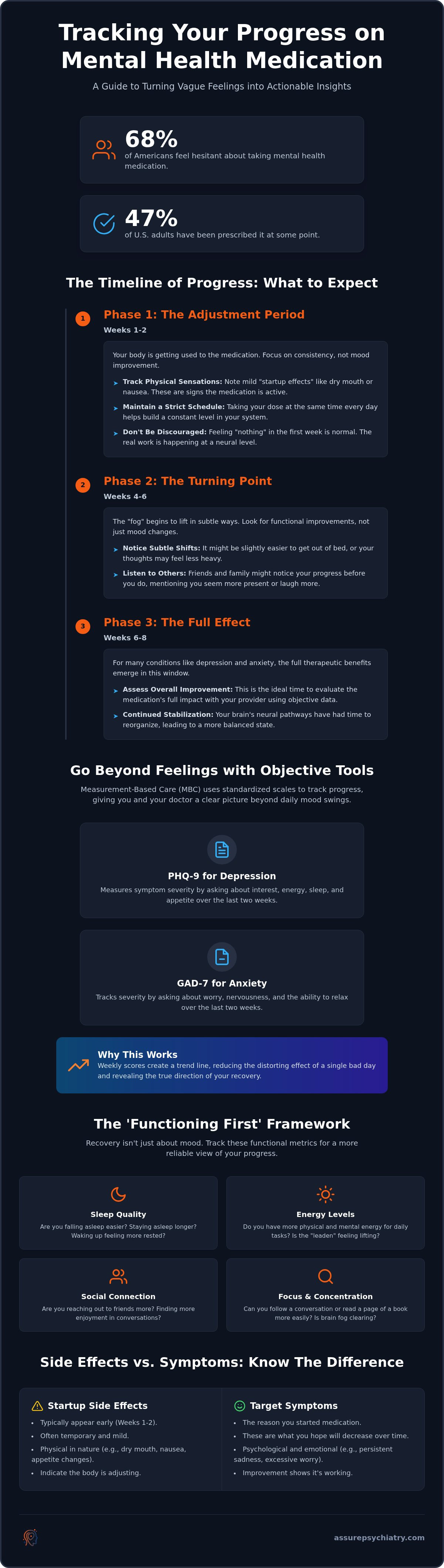
Did you know that 68% of Americans still feel hesitant about taking mental health medication, even though 47% of U.S. adults have been prescribed it at some point? (Source: Thriveworks, 2026). It’s completely natural to feel a sense of uncertainty when you’re waiting for a new prescription to kick in. You might find yourself questioning if that slight headache is a side effect or just stress, or wondering if you’re actually feeling better or simply having a good day. Learning how to track progress on mental health medication isn’t just about collecting data; it’s about reclaiming a sense of agency over your own wellness journey.
We understand that the path to mental tranquility often feels slow and non-linear. It’s frustrating to sit across from your psychiatrist and feel like you don’t have the “proof” to explain your experience. This guide will provide you with practical, evidence-based methods to monitor your response to treatment with confidence. We’ll explore a clear framework for measuring success, offer tips for better communication with your provider, and validate the emotional shifts you’re experiencing. By the end, you’ll have the tools to turn vague feelings into actionable insights, helping you move closer to lasting peace of mind.
Key Takeaways
- Understand the biological lag of mental health treatment and why your brain needs a specific therapeutic window to begin feeling the benefits.
- Learn how to track progress on mental health medication by using objective scales that help you and your psychiatrist see the big picture beyond daily fluctuations.
- Gain clarity on the difference between temporary startup effects and the long-term symptoms you are aiming to treat.
- Identify functional metrics like sleep quality, energy levels, and social connection that offer a more reliable view of your recovery than mood alone.
- Build a stronger partnership with your provider by presenting clear trend lines that guide your path toward restorative action and mental tranquility.
The Therapeutic Window: Understanding the Timeline of Progress
Starting a new medication often feels like waiting for a seed to sprout. You’ve done the courageous work of seeking help, and now you’re waiting for the results to take root. This waiting period is governed by the “therapeutic window,” which is the range of drug concentration in the blood where the medication is effective without causing unnecessary toxicity. Clinical processes like therapeutic drug monitoring help providers ensure you stay within this safe and effective range. Understanding this window is the first essential step in learning how to track progress on mental health medication.
Why isn’t the relief instant? Most psychiatric medications require a period of “biological lag.” While the chemicals might reach your brain within hours, your neural pathways need time to reorganize and respond to those changes. It’s a restorative process of physical healing, not a simple light switch. During the first 14 days, setting realistic expectations is vital. If you feel “nothing” in week one, don’t be discouraged. That’s a normal part of the process as your body prepares for a deeper shift in your mental tranquility.
Phase 1: The Adjustment Period (Weeks 1-2)
In these early days, your focus shouldn’t be on your mood. Instead, pay close attention to physical sensations and initial side effects. You might experience mild “startup effects” like a dry mouth, slight nausea, or a change in appetite. These are actually signs that the medication is interacting with your system. Maintaining a strict schedule is vital to building a foundation for success. A steady state is the point where medication levels remain constant in the bloodstream. This consistency allows your brain to begin the long-term work of stabilizing your emotional state.
Phase 2: The Turning Point (Weeks 4-6)
By week four, the “fog” often begins to lift in quiet ways. You might not feel a burst of joy yet, but you may notice subtle shifts in your energy levels or sleep patterns. Perhaps it’s slightly easier to get out of bed, or your thoughts feel less heavy. Interestingly, friends and family often notice your progress before you do. They might mention you’re laughing more or seem more present during conversations. For conditions like depression or anxiety, the full benefits typically emerge between weeks six and eight. Knowing how to track progress on mental health medication means looking for these small, functional improvements that signal your system is returning to a state of balance.
Objective Tools: Using Standardized Scales to Measure Wellness
When you’re in the middle of a difficult week, it’s hard to tell if you’re actually moving forward. Have you ever felt like one bad afternoon erased a month of hard work? This is where Measurement-Based Care (MBC) becomes an essential ally. By using standardized scales, we shift from vague feelings to concrete data. This objective approach is a core part of medication management in Portland, helping both you and your psychiatrist see the real story of your recovery rather than just a snapshot of a single moment.
The PHQ-9 for depression and the GAD-7 for anxiety act as emotional thermometers. They ask specific questions about your energy, focus, and worry levels over the last two weeks. These numbers are powerful because they reduce the distorting effect of a single bad day. Even if today feels heavy, your score might show that your overall symptoms have decreased by several points compared to last month. Learning how to track progress on mental health medication through these tools transforms your recovery from a mystery into a manageable plan.
Self-Report Scales You Can Use at Home
Scoring yourself once a week creates a visual map of your journey. You can find reliable, free versions of these scales through your provider’s portal or mental health advocacy websites. It’s helpful to understand the difference between “feeling better” and “clinical significance.” While feeling better is the ultimate goal, clinical significance refers to a measurable decrease in your score that indicates the treatment is working on a biological level. If you’re curious about how different mental health medications impact these scores over time, research from the NIMH offers detailed insights into expected clinical outcomes.
The Mental Status Exam (MSE) and Your Provider
While you track your internal world, your psychiatrist uses a Mental Status Exam during your appointments to observe the external signs of progress. They aren’t just listening to your words; they’re noticing your speech patterns, thought processes, and affect. Your self-tracking is the perfect partner to these clinical observations. When you share your weekly scores, you provide the “why” behind what the provider sees. Honesty is much more valuable than giving the right answer during these evaluations. If you’re ready to start this collaborative process, reaching out for a professional psychiatric evaluation can help you establish your baseline and begin your path toward mental tranquility.
Side Effects vs. Symptoms: Navigating the Middle Ground
One of the most confusing parts of a new treatment plan is the “Trade-off Period.” This is the window where your body is adjusting to a new chemical balance, often resulting in physical sensations that feel unrelated to your mental wellness. It’s easy to mistake a temporary side effect for the medication “not working” or even making you worse. Learning how to track progress on mental health medication involves distinguishing between these initial “startup effects” and the long-term “therapeutic effects” you’re seeking. Professional organizations like the American Psychological Association highlight that monitoring patients’ medications is a vital, collaborative process to ensure the treatment remains both safe and effective.
It’s a common paradox: you might actually feel slightly worse during the first few days. This happens because your body’s physical receptors often react faster than your brain’s emotional pathways. Validating this experience is key; it doesn’t mean the medication is a failure, but rather that your system is in active transition. To help your provider, try categorizing what you feel into three buckets:
- Mild: Annoying but manageable sensations, like a dry mouth or slight change in appetite.
- Moderate: Effects that interfere with your daily routine, such as significant drowsiness or jitteriness.
- Urgent: Rare but serious reactions like a skin rash, severe chest pain, or a sudden increase in suicidal thoughts. These require immediate contact with your doctor or emergency services.
Common ‘Startup’ Effects and How to Manage Them
Most “startup” effects are temporary. Physical changes like mild nausea or a “wired” feeling often dissipate after the first 10 to 14 days as your body reaches a steady state. You can often mitigate these minor discomforts with simple adjustments. For example, taking your dose with a small meal can help with stomach upset, while shifting the timing of your dose to the evening might help if the medication makes you sleepy. Keeping a simple log of these physical changes helps you stay objective during the first two weeks.
When Side Effects Signal the Need for a Change
While some discomfort is expected, you don’t have to live with “intolerable” effects that prevent you from working, sleeping, or connecting with others. If a side effect persists beyond the first few weeks or severely impacts your quality of life, it’s a signal that your dosage or the medication itself may need to be adjusted. It’s vital that you never stop your medication abruptly, as this can cause a “rebound” of symptoms. Instead, bring your tracking data to your next appointment. This clear evidence allows your provider to make informed decisions about switching your prescription or fine-tuning your dose to better support your mental tranquility.
The ‘Functioning First’ Framework for Daily Tracking
“How do you feel?” is often the hardest question to answer during a follow-up visit. Emotions are fluid, and on a Tuesday afternoon, you might feel quite different than you did on Sunday morning. This is why learning how to track progress on mental health medication often requires shifting your focus away from abstract moods and toward functional reality. Instead of asking if you feel “happy,” ask yourself: Did I have the energy to complete my work tasks? Did I feel capable of responding to a friend’s text? By focusing on functioning first, you bypass the emotional noise of a single bad day.
We look at the Three Pillars of daily life: Work or School, Relationships, and Self-Care. When your medication begins to work, these areas usually show the first signs of improvement. You might notice you’re finally tackling the laundry or that your interactions with loved ones feel less strained. These are the quiet victories that signal your path toward mental tranquility. Documenting these shifts helps you see the restorative action taking place in your life, even when your mood hasn’t quite caught up yet.
Step-by-Step: Creating Your Tracking System
Setting up a system doesn’t need to be a burden. Whether you prefer a digital app or a simple paper habit tracker, the key is consistency. Try setting a “Daily Check-in” time, perhaps right after you take your morning dose. Use a simple 1-10 scale to rate the “Target Symptoms” you identified during your initial psychiatric evaluation. This micro-journaling takes less than two minutes but provides a wealth of data for your provider. It turns your subjective experience into a clear, visual map of your progress.
What to Record: The ‘Big Four’ Indicators
When you’re considering how to track progress on mental health medication, focus on these four categories for your daily notes:
- Sleep quality: Are you resting more deeply, or are you experiencing frequent wake-ups?
- Social friction: Do interactions with family feel smoother, or do you still feel a high level of irritability?
- Executive function: Is it easier to start tasks that previously felt like climbing a mountain?
- Physical anxiety: Are you noticing a calmer heart rate or the absence of that familiar “pit” in your stomach?
Tracking these tangible indicators helps you move beyond the “I think I’m better” stage and into a place of documented healing. If you’re struggling to identify these shifts on your own, you can schedule a medication management consultation to review your progress with a compassionate ally who understands your unique journey.
Partnering with Your Provider for Mental Tranquility
When you walk into your follow-up appointment, you aren’t just a patient receiving a prescription; you’re a partner in your own wellness. Your data is the bridge between your internal experience and the clinical adjustments your provider makes. By showing your psychiatrist “The Trend Line,” which is the big picture of your sleep, energy, and social connection over several weeks, you move away from the guesswork of trial and error cycles. This collaborative approach is essential for achieving stability faster. For those living in the Pacific Northwest, the rise of virtual care makes this partnership even more accessible. You can learn how to track progress on mental health medication and share those insights from the quiet comfort of your home in Portland or Seattle.
This collaborative style of care ensures that your voice is the loudest in the room. When you provide a clear record of your journey, your psychiatrist can fine tune your treatment plan with surgical precision. It transforms the appointment from a simple check-in into a strategic session focused on your restorative action. This level of detail is especially helpful for complex conditions where symptoms can overlap, ensuring that every adjustment is backed by your real world evidence.
Preparing for Your Next Appointment in Portland or Seattle
Reviewing your tracking logs before your visit helps you stay focused on your goals. Try to identify the top three questions you want to ask based on your recent trends. You might ask if your current rate of progress matches clinical expectations, or if specific side effects warrant a dosage change. If you feel the current plan isn’t meeting your needs, your data gives you the confidence to advocate for yourself. Assure Psychiatry offers telepsychiatry in Oregon, providing a convenient way to monitor your progress without the stress of a commute or a crowded waiting room.
The Goal: Moving Beyond Symptoms to Tranquility
The ultimate destination isn’t just the absence of symptoms; it’s the presence of mental tranquility. We define this as a state of consistent, reliable wellness where you feel empowered to engage with your life fully. Maintaining this progress requires ongoing support and a commitment to the partnership you’ve built with your provider. Whether you are managing ADHD, anxiety, or depression, your journey deserves a steady hand and a compassionate guide who sees you as an individual. If you’re ready to move toward lasting peace and functional success, you can schedule a follow-up or evaluation with Assure Psychiatry today.
Embracing Your Journey Toward Restorative Health
Reaching a state of consistent wellness is a journey that requires both patience and precision. You now have a practical framework to distinguish between temporary startup effects and the meaningful functional shifts that signal real recovery. By focusing on objective scales and the daily pillars of sleep, energy, and social connection, you’ve learned how to track progress on mental health medication with clarity and confidence. This data isn’t just for your records; it’s the foundation of a restorative partnership with your provider that reduces the need for trial and error.
You don’t have to navigate this transition alone. Led by Dr. Olumide Aruwajoye, our team provides insurance friendly medication management that prioritizes your unique identity and long term goals. We offer convenient telepsychiatry for residents across Oregon and Washington, ensuring you have expert support from the comfort of your own home. Take the first step toward mental tranquility; schedule your evaluation at Assure Psychiatry today. You deserve a life defined by peace and functional success. We are here to walk beside you every step of the way.
Frequently Asked Questions
How long should I wait before deciding a medication isn’t working?
You should generally wait four to eight weeks before concluding a medication is ineffective. While some people notice small changes sooner, your brain needs this window of time to adapt to the new chemical balance. It’s helpful to maintain a steady dosing schedule during this period to ensure you’re giving the treatment a fair chance to take root. If you haven’t seen functional improvements by the two month mark, it’s time for a deeper conversation with your psychiatrist.
Can I track my progress using an app instead of a journal?
Yes, digital apps are often more convenient than traditional paper journals for many patients. Tools like Daylio or Medisafe allow you to quickly log moods and side effects with just a few taps. Using an app makes it easier to show your provider how to track progress on mental health medication through visual trend lines. This digital data helps identify patterns that might be missed in a standard conversation, leading to more precise adjustments.
What should I do if my side effects feel worse than my original symptoms?
You should contact your provider immediately if side effects become intolerable or impact your daily safety. While mild “startup” effects like nausea often fade within two weeks, you shouldn’t have to suffer through severe distress. Never stop your medication abruptly, as this can lead to a sudden rebound of your original symptoms. Your psychiatrist can help you decide if a dosage adjustment or a switch to a different medication is the safest path forward.
How often should I meet with my psychiatrist to discuss my progress?
Most patients meet with their psychiatrist every two to four weeks when starting a new medication. Once you reach a stable state and your symptoms are well managed, these appointments typically shift to every three to six months. This frequency ensures your provider can monitor your long term wellness and make minor tweaks as your life circumstances change. Consistent follow-ups are a vital part of maintaining your mental tranquility and overall health.
Is it normal for my progress to feel like ‘two steps forward, one step back’?
It is completely normal for recovery to feel non-linear and unpredictable. Many people describe their journey as a series of small victories followed by occasional difficult days. You might have a week of great focus followed by an afternoon where everything feels heavy again. This is why tracking your progress over several weeks is so important. It helps you see the upward trend of your recovery even when a single day feels like a setback.
Will my insurance cover more frequent appointments if I’m struggling with side effects?
Most insurance plans do cover more frequent medication management appointments if they are medically necessary. If you are struggling with side effects or your symptoms are spiking, your provider can document the need for closer monitoring. It’s always a good idea to call your insurance member services to verify your specific coverage for follow-up visits. This ensures you can focus on your healing without worrying about unexpected costs during a difficult transition.
What are the most important symptoms to track for ADHD medication?
For ADHD medication, the most important symptoms to track are executive functions like task initiation and sustained focus. You should also monitor your “rebound” period, which is the time when the medication wears off in the evening. Keep an eye on your appetite and sleep patterns, as these are common areas affected by stimulants. Tracking these functional markers helps your psychiatrist determine if your current dose provides enough coverage for your daily responsibilities.
Can telepsychiatry appointments be as effective for monitoring progress as in-person visits?
Telepsychiatry appointments are highly effective for monitoring medication progress and offer significant convenience for many patients. Clinical research shows that virtual follow-ups provide the same quality of care as in-person visits for medication management. For residents in Oregon and Washington, telepsychiatry removes the barrier of a long commute, making it easier to stay consistent with your appointments. This stability is a key factor in achieving and maintaining long term mental tranquility.
Recent Comments